
Life Insurance after Bariatric Surgery

Jason Stolz CLTC, CRPC
Life insurance after bariatric surgery is not only possible — in many cases it can be significantly more favorable than applying before surgery. Insurance companies do not automatically decline applicants who have undergone gastric bypass, sleeve gastrectomy, or lap band procedures. Instead, underwriting focuses on stability, sustained health improvement, current body mass index (BMI), lab trends, medication management, and complication history. If bariatric surgery successfully reduced long-term mortality risk factors such as uncontrolled diabetes, hypertension, or severe sleep apnea, your insurability may improve compared to your pre-surgery profile.
From an actuarial perspective, bariatric surgery often lowers long-term cardiovascular risk when weight loss is maintained. Insurance carriers evaluate whether the procedure led to durable improvement rather than temporary change. That means they are looking for stabilized weight, consistent follow-up care, documented lab improvement, and no ongoing surgical complications. The surgery itself is not the primary concern — instability after surgery is.
Request a Post-Surgery Underwriting Review
The most important underwriting variable is time. Most traditional carriers prefer 3 to 6 months of stable post-operative history before issuing fully underwritten policies. During the first year, weight typically drops rapidly. Underwriters consider this a transitional phase. Once weight plateaus and remains consistent across multiple medical visits, eligibility improves. Applying too early often results in postponement rather than decline. Waiting strategically can mean the difference between substandard and standard pricing.
Medical records are central to life insurance approval after bariatric surgery. Insurers will typically request operative reports, discharge summaries, primary care follow-up notes, and updated laboratory panels. They want confirmation that there were no leaks, chronic malabsorption syndromes, repeated hospitalizations, or unresolved nutritional deficiencies. If complications occurred but were resolved, documentation of resolution is essential.
Improvement in related metabolic markers is frequently the most powerful underwriting advantage. Many applicants pursued bariatric surgery due to obesity-related conditions such as type 2 diabetes. If A1C levels decline into normal or controlled ranges and remain stable, underwriting outcomes may mirror individuals researching life insurance for high A1C diabetics. Consistency across multiple lab draws strengthens credibility and improves rate classification.
Blood pressure control is another key metric. Post-surgical normalization of hypertension significantly reduces cardiovascular risk modeling. Similarly, improvements in lipid panels reduce long-term mortality assumptions used in pricing. Underwriters look for trend lines, not single data points.
BMI still matters. Insurance carriers maintain build charts that correlate height and weight to mortality tables. Even after successful surgery, if BMI remains in severe obesity ranges, pricing may reflect elevated risk. However, substantial sustained weight reduction can move applicants into preferred or standard classes that were unattainable before surgery.
Applicants who also manage digestive or inflammatory conditions must demonstrate control of those issues. For example, individuals previously evaluating life insurance for colitis and Crohn’s must show stability and absence of recent flares. Underwriting evaluates the full health profile, not just surgical history.
For those within the early post-surgical window who cannot yet qualify for fully underwritten coverage, temporary solutions may exist. In some cases, guaranteed issue life insurance provides limited interim protection without medical exams. While graded benefit periods often apply during early policy years, this approach can bridge the gap until traditional underwriting becomes available.
Tobacco use significantly impacts pricing regardless of surgical success. Applicants who continue nicotine consumption may experience higher premiums similar to those researching life insurance for cigar smokers. Quitting tobacco can have as much impact on pricing as weight stabilization.
Permanent life insurance options remain available after bariatric surgery when stability is documented. Whole life and indexed universal life policies may be considered if the applicant qualifies medically. Individuals exploring long-term capital efficiency strategies such as the Be Your Own Banker strategy should secure strong underwriting classifications before committing to high-premium structures.
Carrier selection is crucial. Underwriting philosophies vary significantly. Some insurers weigh pre-surgical BMI heavily, while others focus on current stabilized health. Reviewing financial strength and long-term claims-paying history is equally important. Applicants often research carrier reputation by exploring topics such as is MassMutual a good company or is Securian a good insurance company before finalizing decisions.
Occupational risk is evaluated independently of medical history. High-risk professions may still influence underwriting classification even if health has improved. Comprehensive disclosure is essential to avoid rescission risk.
Life insurance after bariatric surgery ultimately depends on presenting a complete, stable, and well-documented medical picture. When sustained improvement is demonstrated, many applicants qualify at competitive rates that reflect improved actuarial outlook.
Speak With a High-Risk Underwriting Specialist
Life Insurance Quoter
Compare real-time life insurance quotes from top carriers.
Related Pages
Here are a few helpful pages to explore next:
Financial Protection Essentials
Lifetime income planning resources covering payout structures, joint income options, bonus annuities, and indexed income strategies.
Talk With an Advisor Today
Choose how you’d like to connect—call or message us, then book a time that works for you.
Schedule here:
calendly.com/jason-dibcompanies/diversified-quotes
Licensed in all 50 states • Fiduciary, family-owned since 1980
Life Insurance After Bariatric Surgery – Frequently Asked Questions
Yes. Most applicants can qualify once weight has stabilized and no significant complications are present.
Most carriers prefer 12 to 24 months of stable post-surgical history before approving traditional fully underwritten policies.
Premiums depend on current BMI, stability, and related health improvements. Successful weight loss can improve rate classes compared to pre-surgery status.
Controlled conditions may still qualify for coverage. Underwriters evaluate severity, control, and overall health trends.
About the Author:
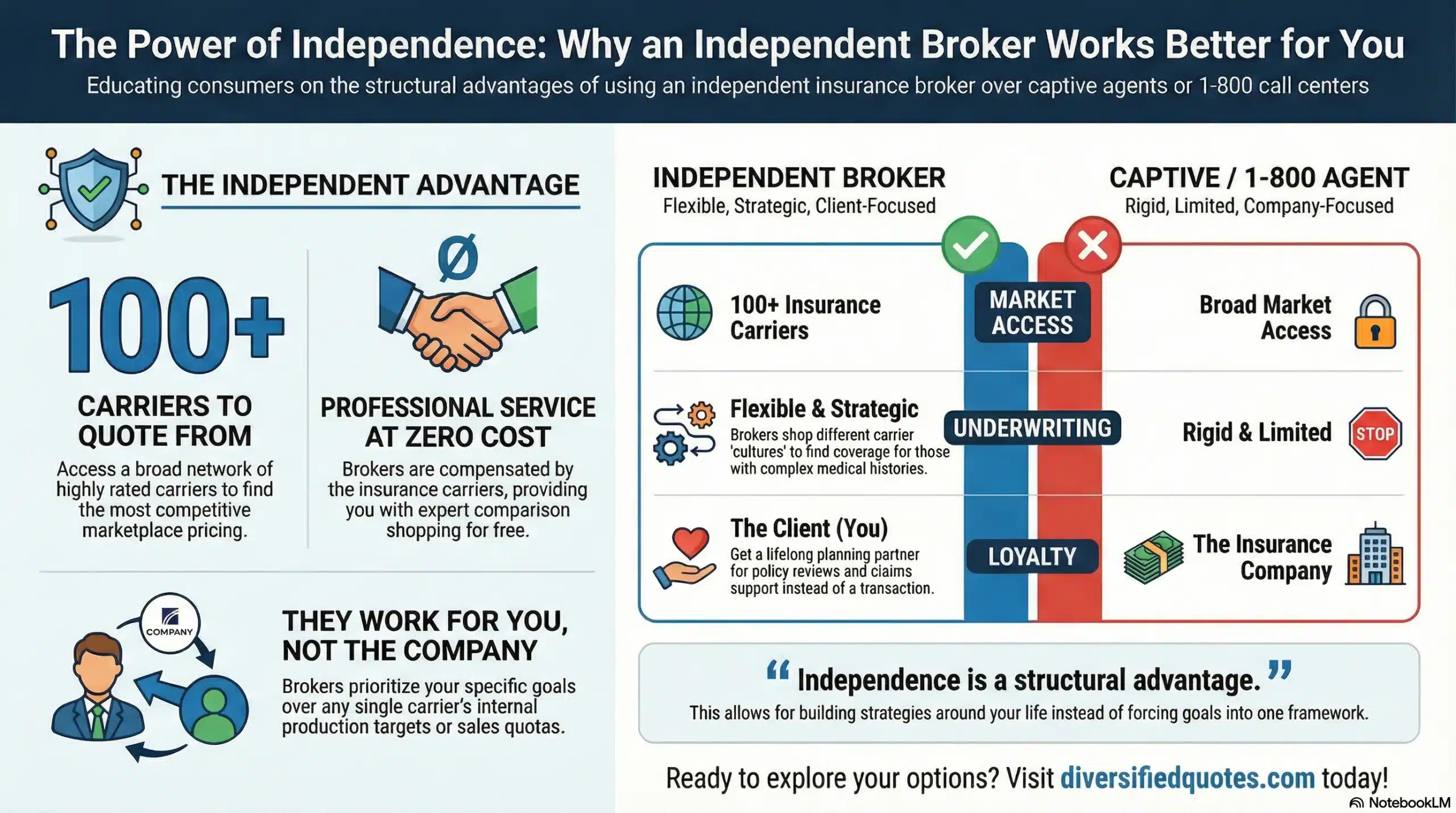
Jason Stolz, CLTC, CRPC and Chief Underwriter at Diversified Insurance Brokers, is a senior insurance and retirement professional with more than two decades of real-world experience helping individuals, families, and business owners protect their income, assets, and long-term financial stability. As a long-time partner of the nationally licensed independent agency Diversified Insurance Brokers, Jason provides trusted guidance across multiple specialties—including fixed and indexed annuities, long-term care planning, personal and business disability insurance, life insurance solutions, and short-term health coverage. Diversified Insurance Brokers maintains active contracts with over 100 highly rated insurance carriers, ensuring clients have access to a broad and competitive marketplace.
His practical, education-first approach has earned recognition in publications such as VoyageATL, highlighting his commitment to financial clarity and client-focused planning. Drawing on deep product knowledge and years of hands-on field experience, Jason helps clients evaluate carriers, compare strategies, and build retirement and protection plans that are both secure and cost-efficient.
