
Life Insurance for Colitis and Crohn’s

Jason Stolz CLTC, CRPC
Living with ulcerative colitis or Crohn’s disease can make plenty of things more complicated—diet, travel, work schedules, sleep, and stress management. It can also make life insurance feel intimidating, especially if you’ve already run into a “decline,” a “postpone,” or an online quote engine that treats all inflammatory bowel disease (IBD) the same. The reality is that many people with colitis or Crohn’s can still qualify for meaningful coverage. The key is that your application needs to be targeted to the right carriers and presented with the right medical context.
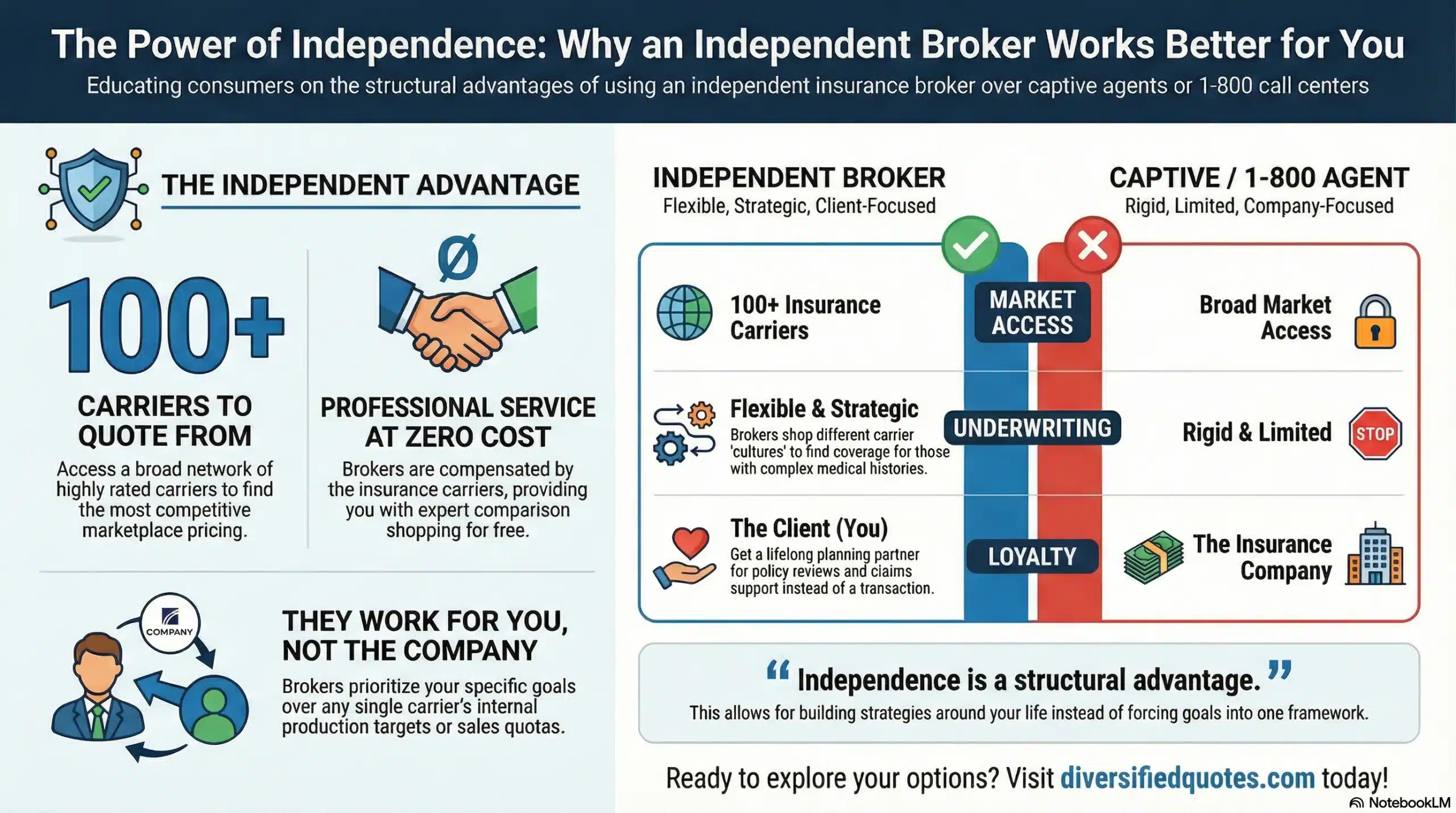
At Diversified Insurance Brokers, we help clients with chronic gastrointestinal conditions every day. Our advisors understand how underwriters actually evaluate IBD—what they care about, what they ignore, and what documentation makes a case easier (and faster) to approve. With access to over 100 top-rated carriers and decades of experience in high-risk underwriting, we know how to position a colitis or Crohn’s history so it’s evaluated based on real stability and control, not worst-case assumptions.
If your condition is mild and well-managed, you may be closer to standard pricing than you think. If your condition is moderate or you’ve had complications, you can still often qualify—sometimes with table ratings that are reasonable for the amount of protection you’re trying to secure. And if you’ve been declined before, it usually doesn’t mean you’re uninsurable; it often means the application was sent to a carrier with strict IBD rules or submitted without the clinical details that show stability.
Life Insurance with Colitis & Crohn’s
If you live with colitis or Crohn’s disease, it doesn’t mean you’re uninsurable. We specialize in matching IBD histories to carriers that evaluate stability, follow-up, and control—so you can protect your family without overpaying.
Prefer to talk? 800-533-5969
How Underwriters View Colitis and Crohn’s Disease
Colitis and Crohn’s disease fall under a broad umbrella called inflammatory bowel disease (IBD). Underwriters don’t treat “IBD” as one single risk category because the real-world outcomes vary widely. Some people have mild symptoms, remain stable for long periods, and follow a consistent maintenance plan. Others experience frequent flares, complications, steroid dependence, nutritional issues, hospital admissions, or surgical interventions.
When an insurer underwrites an IBD case, the carrier is primarily trying to answer one question: How stable is the disease over time, and what is the likelihood of complications going forward? That is why two people with the same diagnosis can receive completely different offers. The diagnosis gets you into the “IBD lane,” but stability and management determine the final pricing and policy options.
Most IBD underwriting decisions are driven by the same themes:
1) Severity and control. Are symptoms mild and infrequent? Are they moderate but controlled with a consistent plan? Or are they severe, frequent, and disruptive?
2) Treatment intensity. Underwriters look at what it takes to keep your condition stable. Needing stronger therapies doesn’t automatically mean a “no,” but it changes what the insurer expects in terms of follow-up and documentation.
3) Recent history. The last 12–24 months often matter more than a flare you had years ago, especially if the record now shows improved control.
4) Complications. Hospitalizations, surgeries, anemia, malnutrition, or other systemic issues can change the risk profile—again, often depending on what happened after those events.
When your file clearly demonstrates stability, consistent specialist care, and a plan that is working, you are giving an underwriter what they need to consider traditional coverage on reasonable terms.
The Factors That Matter Most for Life Insurance with IBD
Underwriters generally evaluate colitis and Crohn’s using a consistent set of data points. You do not need to memorize “insurance language,” but it helps to understand what they focus on so your application doesn’t get evaluated on incomplete assumptions.
Type of diagnosis. Underwriters typically distinguish between ulcerative colitis, Crohn’s disease, and indeterminate colitis. They also pay attention to disease location and extent because that can influence how likely complications are.
Age at diagnosis and disease duration. The age you were diagnosed and how long you’ve lived with the condition can influence how the insurer interprets your trendline. A stable multi-year history can be a strong positive.
Frequency and duration of flares. How often do flares happen, how long do they last, and what do they require to control? A brief flare that resolves quickly is different from a long flare that leads to steroid use or admission.
Specialist follow-up. Carriers want to see ongoing GI follow-up, adherence to recommended testing, and a documented plan of care. If there is no specialist involvement, insurers often assume the disease is uncontrolled—whether that’s true or not.
Lab patterns and nutrition status. Underwriters care about anemia, inflammatory markers (when available in notes), weight stability, nutritional issues, and any history of significant weight loss. They are not looking for perfection; they are looking for evidence that the condition isn’t causing systemic decline.
Other health factors. Blood pressure, cholesterol, diabetes, tobacco/nicotine use, and build can still affect the final offer because carriers price the entire file, not just IBD. That is why a stable IBD case can still be rated if other health items are present.
If you’re worried your history will be treated as “pre-existing condition = automatic decline,” it can help to see how carriers actually handle broader medical histories: Life Insurance with Pre-Existing Conditions.
Flares, Remission, and Stability
Most people living with IBD think about their disease in terms of symptoms: “I feel good,” “I’m in a flare,” “I’m recovering,” or “I’m stable.” Underwriters think in patterns: how the disease behaves over time and what the trajectory looks like.
Why stability matters so much: a stable year—especially a stable 12–24 months—can shift the underwriting conversation dramatically. Carriers don’t just want “no symptoms today.” They want evidence that the current plan is working and that the disease isn’t trending toward worsening severity or complications.
Underwriters often interpret your recent history like this:
Mild/stable: infrequent flares, quick response to treatment, regular follow-up, no recent admissions, no meaningful systemic complications.
Moderate: some flares, stronger maintenance therapy, occasional steroid use (or a history of it), but overall controlled with specialist oversight and no major complications in the near term.
Severe/active: frequent flares, ongoing symptoms, repeated steroid courses, admissions, recent surgery, or ongoing complications (anemia, significant weight loss, malnutrition).
If you’ve had a difficult period but have improved recently, your application should be timed to highlight that improvement. This is where pre-screening matters—submitting too early can trigger a postpone decision that could have been avoided.
Medication History: What It Signals to an Underwriter
Medication history is one of the strongest “signals” in IBD underwriting. It is not about judging your treatment plan; it’s about what the treatment plan implies about disease severity and control. Some carriers interpret medications more conservatively than others, which is why matching the case to the right carrier makes such a difference.
Maintenance therapies and stability. When a file shows consistent maintenance therapy with stable follow-up, underwriters often view it as a sign the disease is being actively managed. A consistent regimen that reduces flare frequency can work in your favor because it supports a narrative of control.
Steroid exposure. Repeated or prolonged steroid use can increase underwriting scrutiny because it often implies more active disease, and long-term steroid exposure can carry additional health concerns. That doesn’t automatically eliminate options, but it does mean insurers will look more closely at complications and recent control.
Biologics and advanced therapies. Many people worry that biologics automatically trigger a decline. In practice, insurers usually care more about whether the biologic is effective and whether you’ve achieved stability. When advanced therapy correlates with reduced flares and no recent admissions, carriers can still consider traditional coverage—especially when the specialist record is clear and consistent.
The takeaway: medication history should be presented as part of a broader stability story—what it used to look like, what it looks like now, and how well it’s working.
Complications, Hospitalizations, and Surgery
IBD can be uncomplicated for some people and complicated for others. Complications don’t automatically make coverage impossible, but they do change how you should approach underwriting. The best underwriting outcomes come when the file clearly shows what happened, what was done, and what the stability picture is now.
Hospitalizations. Admissions for severe flares, dehydration, infections, or complications are reviewed in detail—especially if they occurred in the last couple of years. Underwriters focus on frequency, recency, and what changed afterward (new meds, improved control, specialist follow-up).
Surgery. Some clients have had resections or other procedures. Underwriters want to understand why surgery was needed, when it occurred, and whether symptoms improved afterward. A history of surgery followed by long-term stability can sometimes underwrite better than a history of ongoing severe symptoms without a stable plan.
Systemic issues. Anemia, significant weight loss, malnutrition, or persistent nutritional deficiencies can trigger additional questions. Again, this is not a universal “no.” The underwriter is trying to determine whether the disease is causing systemic decline.
Other related risks. Some carriers will ask about secondary issues that can occur alongside chronic inflammatory conditions. The goal is not to create a barrier—it’s to understand the full health picture so the case can be priced accurately.
What Documents and Details Help Your Case
For IBD cases, the most important underwriting advantage is clarity. If you can quickly confirm stability, treatment effectiveness, and consistent follow-up, you reduce the chance that the case gets priced conservatively “just in case.”
Information that typically helps include:
- Diagnosis type (ulcerative colitis, Crohn’s disease, indeterminate colitis)
- Approximate diagnosis date and brief course of disease
- Flare frequency in the last 12–24 months and how flares were treated
- Medication list (current and prior) and how well the current plan is working
- Specialist follow-up cadence and most recent GI visit date
- Hospitalizations or surgeries (dates and outcomes)
- Complications such as anemia or nutritional issues, and current status
If you’ve previously been declined, it can also help to understand what caused the decline and whether it was based on simplified assumptions. Many “online declines” are not true carrier declines—they’re platform rules.
When a case is likely to be rated, it’s helpful to understand the rating structure before you see an offer: Life Insurance Table Ratings Explained.
Policy Options: Term vs Permanent Coverage
Most people start by asking, “Can I qualify?” The next question is, “What kind of policy makes the most sense for my goal?” With colitis or Crohn’s, the best structure depends on your budget, your time horizon, and how stable your medical profile is today.
Term life insurance is often the most cost-effective way to secure a larger death benefit for a defined period (10–30 years). Many stable IBD cases can qualify for term coverage, even if an online platform said otherwise. If your goal is income replacement, protecting a spouse, paying off a mortgage, or covering kids through their dependent years, term is usually the first option to explore.
Permanent life insurance (whole life or universal life) can be a fit when you want lifelong coverage, you want coverage that doesn’t expire, or you want a structure that can support longer-term planning. Some clients also consider permanent coverage when they want to “lock in” coverage while stability is strong.
If you are evaluating multiple approaches, it can also help to understand how carriers handle conversion options and longer-term flexibility: start with how pre-existing underwriting works here.
What Rate Classes You Might See
IBD outcomes can range from standard pricing to table ratings depending on severity, complications, and stability. Here’s a practical way to think about the range:
Standard or near-standard outcomes tend to show up when the disease is well controlled, flares are infrequent, there are no recent hospitalizations, and follow-up is consistent.
Table-rated outcomes often occur when the disease is moderate, when stronger therapies are needed, when the recent history includes more frequent flares, or when complications have occurred. Table ratings can still be very workable, especially when the coverage amount is meaningful and the policy structure is appropriate.
Postponements are more common when the disease is very recent, currently flaring, recently hospitalized, or when the file does not yet show a stable pattern of control. A postpone is often a timing issue rather than a permanent barrier.
One reason we focus on carrier fit is that carriers vary widely in how they weigh these categories. Some carriers are much more comfortable with IBD histories that show stable specialist oversight, even when medications are stronger.
What If You’ve Been Declined Before?
If you’ve been declined—especially by a direct-to-consumer platform—do not assume you are uninsurable. Many online systems use simplified rules that are not the same as a fully underwritten carrier decision. Others submit your application to a narrow set of carriers with stricter guidelines.
We frequently see “declines” that are really a mismatch: the applicant may be stable, but the platform flags any chronic GI condition as ineligible. When the case is reviewed with full details, the same applicant can sometimes qualify for traditional coverage.
If you are in this situation, this resource can be helpful context: Life Insurance with a Prior Decline.
The smartest next step is typically a pre-screen that focuses on recent stability and documentation—then targeting carriers that routinely underwrite IBD.
How Diversified Insurance Brokers Helps Colitis and Crohn’s Clients
Our process is built around underwriting strategy and carrier fit. We do not submit a complex history “blind” and hope for the best. We start by clarifying the key underwriting drivers, confirming what the recent stability picture looks like, and identifying which carriers are most likely to be receptive.
That usually means:
- Clarifying your disease type and recent flare pattern
- Understanding treatment history and how effective the current plan is
- Confirming recent follow-up and any notable complications
- Targeting carriers that align with your profile
- Helping you choose a policy structure that meets your goal and budget
Because we have access to a large carrier network, we can compare different underwriting philosophies rather than being forced into a single “yes/no” pathway. For many IBD clients, that difference is what turns uncertainty into a real offer.
Get Your IBD Case Pre-Screened
We’ll review your colitis or Crohn’s history, identify the best carriers to approach, and show you realistic coverage options.
Prefer to talk? 800-533-5969
Estimate Your Life Insurance Rates
Use our calculator to compare term and permanent options, then request a review so we can match your IBD history to the right carriers.
Life Insurance Quoter
Related Pages
More underwriting resources that pair well with colitis and Crohn’s applications.
Compare Term Life Insurance Lengths
Explore different term periods to find coverage that best matches your timeline and budget.
Talk With an Advisor Today
Choose how you’d like to connect—call or message us, then book a time that works for you.
Schedule here:
calendly.com/jason-dibcompanies/diversified-quotes
Licensed in all 50 states • Fiduciary, family-owned since 1980
Can I get life insurance if I have colitis or Crohn’s disease?
Yes—even with inflammatory bowel disease (IBD) such as colitis or Crohn’s you can often get coverage. The outcome depends on how active your condition is, how well you’re managed, and whether there are complications.
What condition details do insurers evaluate?
They’ll look at the specific type of IBD (colitis vs Crohn’s), how often you have flare-ups, what medications you use (milder ones vs steroids/biologics), any surgeries you’ve had, hospitalizations, and other health complications like anemia or malnutrition.
What kinds of rates or classifications are typical?
If your disease is mild or in remission with infrequent symptoms, you may qualify for standard or near-standard rates. For moderate or active disease with more frequent treatment, higher ratings or table classification are more likely.
Who tends to do best when applying?
People who’ve been symptom-free or in remission for at least a year, use mild medication, have no recent hospitalizations, and have good overall health are most likely to get favorable offers.
What policy types are available?
Term policies, whole or universal life are common choices. If underwriting is tougher because of active disease or complications, simplified-issue or guaranteed-issue policies may also be options.
How can I improve my approval chances or lower premiums?
Maintain good disease control, keep medical follow-ups consistent, avoid complications, provide clear medical documentation, avoid tobacco, and work with agents/brokers who know which carriers handle IBD cases favorably.
About the Author:
Jason Stolz, CLTC, CRPC and Chief Underwriter at Diversified Insurance Brokers (NPN 20471358), is a senior insurance and retirement professional with more than two decades of real-world experience helping individuals, families, and business owners protect their income, assets, and long-term financial stability. As a long-time partner of the nationally licensed independent agency Diversified Insurance Brokers, Jason provides trusted guidance across multiple specialties—including fixed and indexed annuities, long-term care planning, personal and business disability insurance, life insurance solutions, Group Health, and short-term health coverage. Diversified Insurance Brokers maintains active contracts with over 100 highly rated insurance carriers, ensuring clients have access to a broad and competitive marketplace.
His practical, education-first approach has earned recognition in publications such as VoyageATL, highlighting his commitment to financial clarity and client-focused planning. Drawing on deep product knowledge and years of hands-on field experience, Jason helps clients evaluate carriers, compare strategies, and build retirement and protection plans that are both secure and cost-efficient. Visitors who want to explore current annuity rates and compare options across multiple insurers can also use this annuity quote and comparison tool.
