
Life Insurance for Type 1 Diabetes

Jason Stolz CLTC, CRPC
Life insurance for Type 1 Diabetes is absolutely obtainable, and in many cases applicants qualify for excellent coverage when blood sugar levels are well managed, A1C values are stable, and there are no major complications. Type 1 Diabetes is an autoimmune condition in which the pancreas produces little to no insulin. Because this condition requires lifelong management and carries long-term health implications, insurance carriers evaluate it carefully. However, a Type 1 Diabetes diagnosis does not automatically disqualify you from life insurance. With proper endocrinologist care, documented blood glucose management, and strong metabolic control, many individuals secure meaningful coverage at competitive rates by shopping over 100 carriers.
Underwriting for Type 1 Diabetes focuses on stability and complication history. Insurance companies begin by reviewing the timeline of diagnosis, insulin therapy consistency, A1C trends, presence or history of hypoglycemia or diabetic ketoacidosis (DKA), and any microvascular or macrovascular complications. The underwriting question is not only whether you have Type 1 Diabetes, but rather how well the condition has been managed, whether complications have developed, and how your long-term metabolic control appears based on objective measures over time.
Request a Type 1 Diabetes Underwriting Review
The most important clinical variable underwriters examine is the hemoglobin A1C level, which represents average glucose exposure over the prior three months. A1C values that remain consistently within targeted ranges — often below thresholds such as 7.0% or 7.5% — signal strong metabolic control and correlate with lower long-term risk for complications. Higher A1C values or wide variability may indicate suboptimal control, and carriers may assign table ratings or require longer periods of documented stability before offering standard rate classes.
Insulin therapy history and consistency of care are also evaluated. Most applicants with Type 1 Diabetes are treated with multiple daily injections or insulin pump therapy. Underwriters assess whether insulin dosing adjustments are frequent or whether insulin regimens have been stable over time. Frequent changes due to fluctuating glucose levels may indicate less predictable control, while long-term stability and endocrinologist oversight strengthen the underwriting narrative. Applicants who provide detailed insulin logs and endocrinology reports often achieve better classification outcomes.
Hypoglycemic episodes — particularly severe episodes requiring external assistance or emergency care — are meaningful underwriting considerations. Minor and infrequent hypoglycemia under good clinical control may not significantly impact pricing if overall glucose management is documented as stable. However, frequent or severe hypoglycemia over a short period may lead carriers to assign conservative rate classes to reflect perceived instability risk. Detailed documentation regarding hypoglycemia frequency and triggers helps underwriters distinguish between isolated events and patterns requiring cautious classification.
Diabetic ketoacidosis (DKA) history is another important factor. DKA is a serious metabolic complication that can lead to hospital admissions. Carriers will analyze how long ago any DKA events occurred, the precipitating factors, and whether preventive strategies were implemented since the event. A remote history with strong preventative diabetes management since the episode is often viewed more favorably than recent or recurrent DKA events.
Long-term complications of Type 1 Diabetes such as nephropathy (kidney disease), retinopathy (eye disease), neuropathy (nerve damage), and cardiovascular disease influence underwriting outcomes significantly. Applicants without evidence of these complications typically receive more competitive ratings. In contrast, documented end-organ damage or significant cardiovascular pathology may result in higher premiums or restrictive table ratings. Demonstrating absence of complications through regular specialist visits, lab panels, and imaging studies is key to favorable underwriting classifications.
Cardiovascular health is particularly scrutinized because diabetes significantly increases long-term cardiovascular risk. Underwriters often review blood pressure control, lipid panels, EKG or stress test results, and any history of coronary artery disease. Stable cardiovascular profiles combined with strong glucose control often outweigh concerns about long-term diabetic risk when underwriting risk for life insurance.
Body mass index and overall metabolic health are analyzed alongside diabetes management. Obesity, insulin resistance, and uncontrolled metabolic syndrome features compound risk assumptions and may lead to more conservative pricing. Conversely, individuals who demonstrate a stable and healthy body weight, fitness routine, and overall metabolic balance often receive more favorable underwriting classifications. Health improvements beyond glucose control — such as consistent exercise and positive trends in metabolic markers — enhance the overall risk narrative.
Many individuals with Type 1 Diabetes also coordinate their life insurance decisions with broader financial and health planning strategies. For example, individuals may explore retirement income planning tools like a retirement annuity calculator to assess how life insurance integrates with guaranteed income goals in later years. While annuities and life insurance serve different purposes, integrating protection planning with income stability often leads to a more resilient financial foundation.
Tobacco use is another variable underwriting evaluates independently of diabetes control. Smoking increases systemic inflammation, worsens vascular risk, and compounds diabetic complications. Even occasional tobacco use can elevate risk classification similarly to what applicants encounter with life insurance for cigar smokers. Eliminating tobacco use prior to applying often leads to more favorable underwriting outcomes for individuals with Type 1 Diabetes.
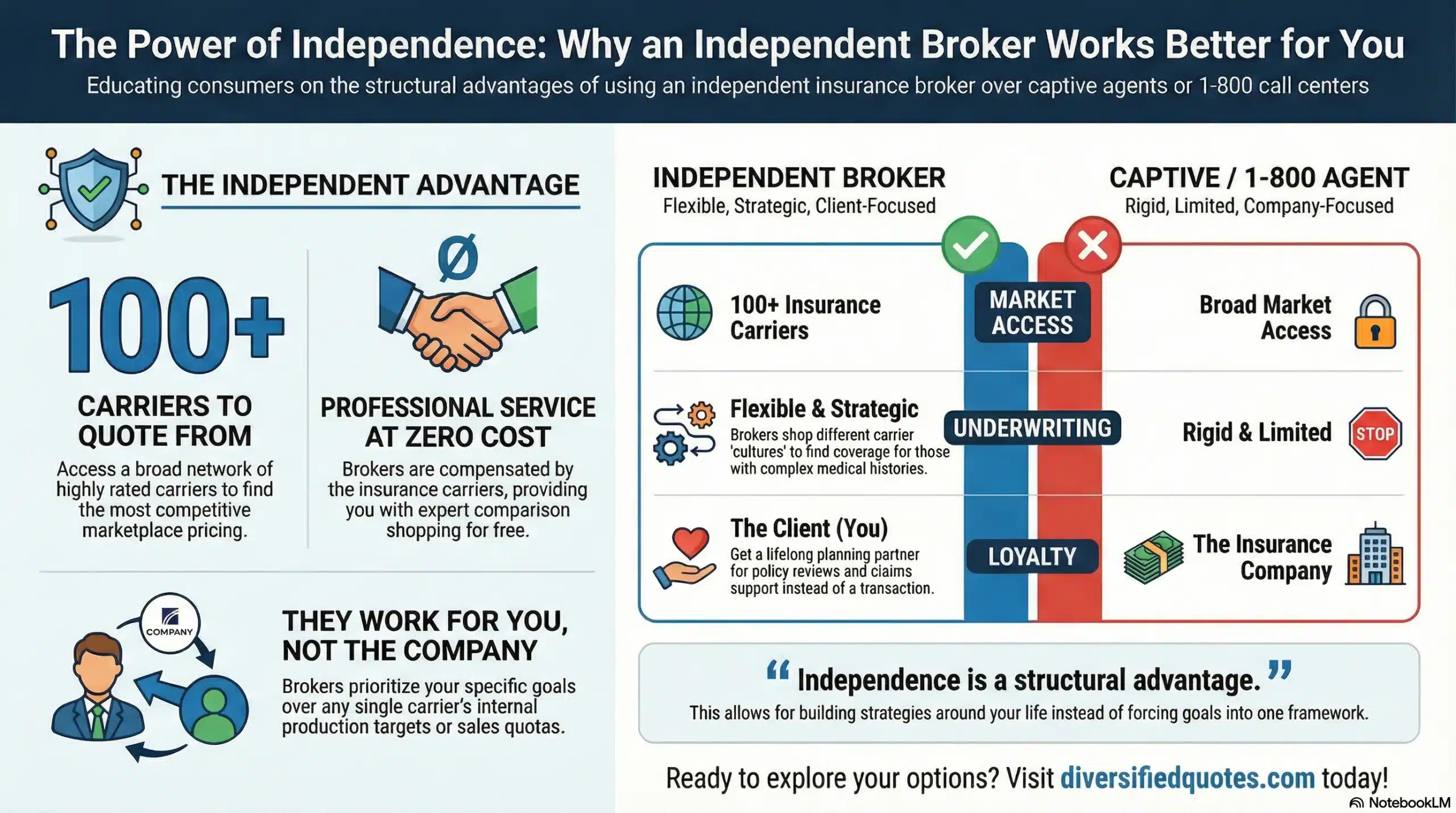
Carrier selection is critical when navigating life insurance for Type 1 Diabetes. Underwriting philosophies vary widely among insurers. Some carriers specialize in complex medical histories and focus on long-term stability and metabolic trends. Others maintain more conservative guidelines. Working with an independent brokerage that shops over 100 carriers increases the probability of aligning your profile with the most favorable underwriting guidelines available. Independent brokers can guide you toward carriers that emphasize stability and documented control when underwriting diabetic cases.
For individuals who are within waiting periods or who have had recent complications, alternative coverage options such as guaranteed issue burial insurance may provide interim protection. These policies do not require medical underwriting but often include graded benefits during the initial years. Once greater stability is documented, transitioning to fully underwritten coverage can significantly improve long-term financial outcomes.
Term life insurance is frequently the most cost-effective solution for applicants with Type 1 Diabetes once underwriting criteria are met. It provides fixed premiums for defined terms such as 10, 20, or 30 years and is commonly used for income replacement, mortgage protection, or family security. Permanent policies including whole life or indexed universal life may also be options depending on overall health and long-term risk assessment.
Preparation is a powerful advantage when applying. Before submitting applications, gather endocrinologist notes, serial A1C results, insulin therapy logs, specialist visit summaries, and recent lab panels. Documentation demonstrating stable glucose control over extended periods positions your profile favorably in front of carriers whose underwriting philosophies are receptive to controlled diabetic histories.
Compare Life Insurance Options for Type 1 Diabetes
Life insurance for Type 1 Diabetes is not determined by diagnosis alone. It is determined by stability of glucose control, absence of complications, consistency of treatment, and overall cardiovascular and metabolic health. With well-documented control and strategic carrier matching across 100+ insurers, many individuals achieve meaningful coverage at competitive rates tailored to their health history and financial protection needs.
Life Insurance Quoter
Compare real-time life insurance quotes from top carriers.
Related Pages
Explore additional insurance planning resources and underwriting guides.
Financial Protection Essentials
Explore retirement, insurance, and long-term protection planning strategies.
Talk With an Advisor Today
Choose how you’d like to connect—call or message us, then book a time that works for you.
Schedule here:
calendly.com/jason-dibcompanies/diversified-quotes
Licensed in all 50 states • Fiduciary, family-owned since 1980
Life Insurance for Type 1 Diabetes – Frequently Asked Questions
Yes. Many individuals with controlled Type 1 Diabetes qualify for life insurance, especially when glucose control has been stable and complications are absent.
Underwriters prefer consistent A1C levels within targeted ranges, often below 7.0–7.5%, as this indicates strong metabolic control.
Using advanced management tools like insulin pumps with documented follow-ups can demonstrate effective glucose control, which helps underwriting.
A remote history of diabetic ketoacidosis with strong subsequent glucose control may not prevent coverage, but carriers evaluate it carefully.
Yes. Normal blood pressure, lipids, and absence of cardiovascular disease support more favorable underwriting outcomes.
Smoking negatively impacts underwriting, especially when combined with a history of diabetes, because it increases systemic risk.
About the Author:
Jason Stolz, CLTC, CRPC and Chief Underwriter at Diversified Insurance Brokers, is a senior insurance and retirement professional with more than two decades of real-world experience helping individuals, families, and business owners protect their income, assets, and long-term financial stability. As a long-time partner of the nationally licensed independent agency Diversified Insurance Brokers, Jason provides trusted guidance across multiple specialties—including fixed and indexed annuities, long-term care planning, personal and business disability insurance, life insurance solutions, and short-term health coverage. Diversified Insurance Brokers maintains active contracts with over 100 highly rated insurance carriers, ensuring clients have access to a broad and competitive marketplace.
His practical, education-first approach has earned recognition in publications such as VoyageATL, highlighting his commitment to financial clarity and client-focused planning. Drawing on deep product knowledge and years of hands-on field experience, Jason helps clients evaluate carriers, compare strategies, and build retirement and protection plans that are both secure and cost-efficient.
