
Life Insurance for Foreign Nationals
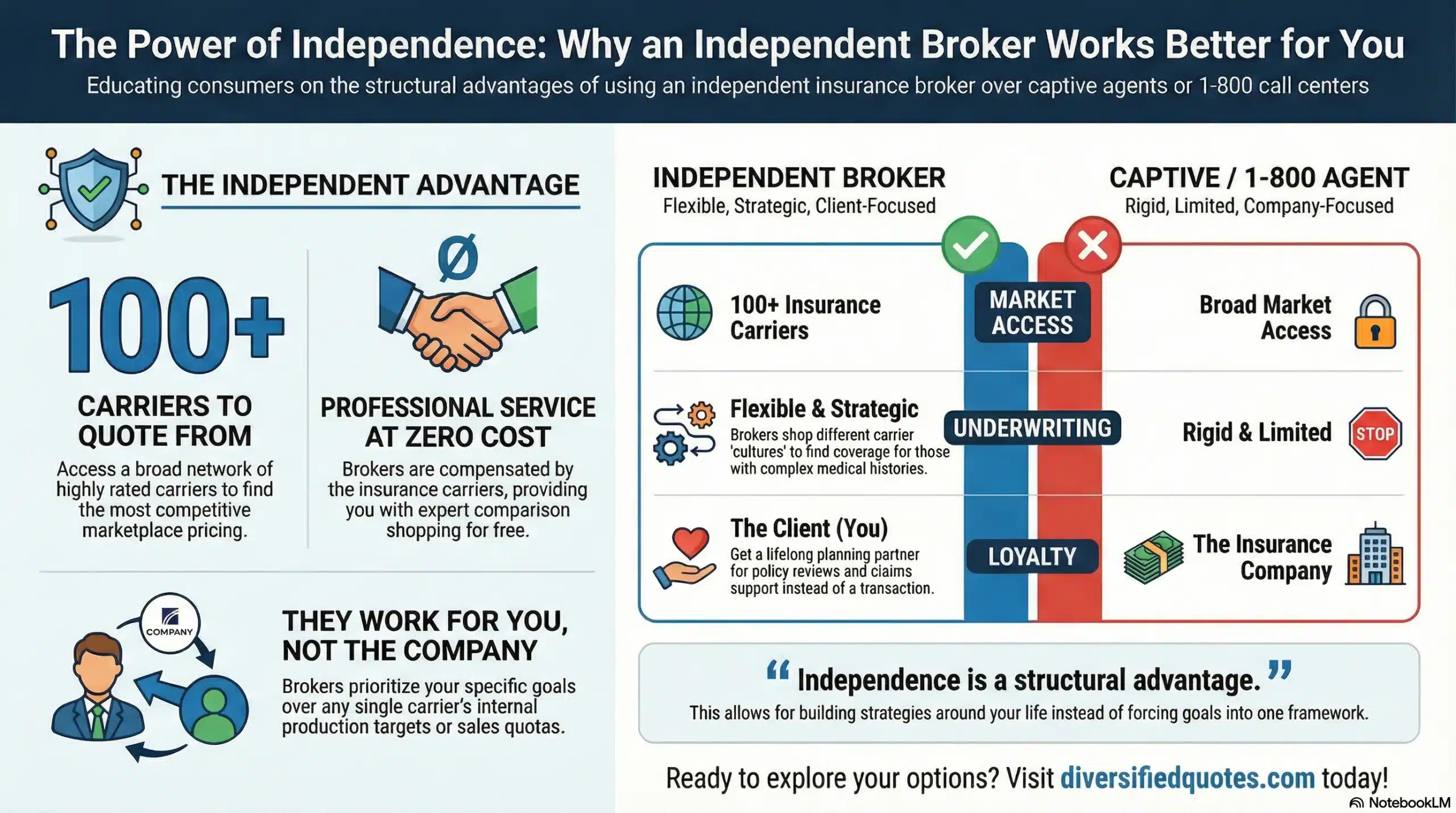
As an Independent Life Insurance Broker, we compare rates across 100+ carriers and prescreen every application before submission.
Life Insurance for Foreign Nationals

Jason Stolz CLTC, CRPC, DIA, CAA
Life insurance for foreign nationals is absolutely attainable in the United States — but only when underwriting strategy, documentation, physical presence requirements, and carrier selection are handled correctly from the beginning. Many non-U.S. citizens are incorrectly told they “don’t qualify,” when the reality is that the case was either submitted to the wrong carrier or structured without clearly presenting U.S. nexus. U.S. life insurance companies are not automatically opposed to insuring foreign nationals; they are focused on stability, documentation, lawful presence, financial justification, and verifiable ties to the United States. When those elements are clear, many applicants qualify for competitive term or permanent life insurance — sometimes even at standard pricing — without unusual exclusions. The key variables insurers evaluate include visa status, residency length, travel frequency, U.S. income footprint, tax identification (SSN or ITIN), medical history verifiable inside the U.S. healthcare system, and whether premiums are paid from a U.S. bank account. Strong U.S. nexus — meaning your life is meaningfully anchored in the United States — is often the deciding factor. That includes a U.S. residence, employment or business operations based in the U.S., predictable travel patterns, and long-term intent to remain. Applicants working in technology, medicine, engineering, finance, academia, and executive leadership frequently qualify when the file is built correctly. If you are also comparing coverage structures, reviewing what term life insurance covers can clarify whether temporary income protection or permanent coverage better fits your situation. Foreign nationals are generally eligible for the same policy categories as U.S. citizens — term life for affordable, high death benefit protection during working years, or permanent life for long-term estate planning, family security, and asset transfer objectives — provided underwriting alignment is correct. One of the most common mistakes we see is submitting applications while physically outside the United States. Most carriers require that the application, signature, medical exam (if required), and delivery occur while the insured is physically present in the U.S. Applications signed abroad are frequently declined, even when everything else looks strong. Travel disclosure is another major underwriting checkpoint. Carriers review destination countries, frequency, duration, and purpose of travel. Predictable business travel is usually manageable; unexplained or extended travel to high-risk regions can narrow options. We pre-screen travel exposure before submitting to underwriting so the carrier is never surprised mid-review. Income justification also matters. Coverage amounts must make financial sense relative to U.S. income, assets, debts, or business obligations. Excessive face amounts without documentation create friction and delays. If your financial profile is more complex — such as international assets or cross-border income — structuring coverage appropriately is critical. Applicants with medical histories can still qualify, especially when care is documented within the U.S. healthcare system. If medical complexity applies, our approach to life insurance with pre-existing conditions outlines how carriers evaluate stability and documentation. Even those who have previously been declined may qualify with a different carrier fit or improved documentation. In some cases, individuals denied traditional coverage explore alternatives such as next steps after a life insurance decline, which can include simplified underwriting or staged coverage strategies. Understanding why life insurance can be hard to get for non-standard profiles — and how carrier selection and application strategy change the outcome — is the essential context before any foreign national application is submitted. The most important takeaway is that foreign national life insurance is not about nationality — it is about underwriting presentation and selecting carriers that actively welcome international professionals with legitimate U.S. ties.
Two Program Tracks for Foreign Nationals at Diversified
At Diversified Insurance Brokers, we have access to two distinct foreign national life insurance program tracks — each designed for a different client profile. Understanding which track applies to your situation determines the documentation path, coverage capacity, and available services before a single form is completed.
The Standard Foreign National Program is available to foreign nationals residing in the United States on a valid visa OR to foreign nationals residing outside the U.S. who have a demonstrated financial connection to the United States. That connection can take the form of U.S. employment, U.S. residency, ownership of U.S. real estate, or a U.S. business interest. This program covers applicants from more than 80 countries and supports both term and permanent life insurance products. For visa holders — including H1B, L1, and other approved work visa categories — our dedicated resource covers the specific underwriting requirements: life insurance for H1B visa holders. For applicants whose situation involves meaningful international travel alongside U.S. residency, our resource on life insurance for foreign travel and residency covers how travel patterns are evaluated alongside residency status in the underwriting process.
The High-Net-Worth / Global Citizens Program is designed specifically for foreign nationals residing outside the United States who have significant multinational financial interests. This program requires the applicant to satisfy at least one of the following criteria: $250,000 or more maintained in a U.S. bank account for at least six months prior to application; ownership of U.S. real estate; an active interest in a U.S. business; or an immediate family member who is a U.S. citizen. In addition to meeting those financial connection requirements, this program adds a full suite of concierge-level services: a dedicated case manager throughout the entire application process, dedicated underwriters assigned to the case, complimentary review of U.S. trusts, professional translation services for non-English documentation, and law firm referrals when estate planning coordination is needed. For clients with complex multinational estates, cross-border assets, and sophisticated coverage needs, the Global Citizens track provides the infrastructure that standard applications cannot. Our resource on life insurance strategies used in high-net-worth planning covers the broader estate planning context — including estate liquidity, trust ownership structures, and premium financing concepts — that most commonly apply to clients in this program tier.
Coverage Capacity — What’s Available for Foreign National Applicants
Coverage capacity in foreign national underwriting depends on the country of citizenship or residence. Eligible countries are classified into two tiers — A countries and B countries — based on underwriting risk profiles. The table below maps the coverage maximums, rate class availability, and product types available by country tier and age band. These figures represent internal retention capacity before reinsurance; autobind and jumbo limits allow for significantly higher face amounts on qualifying cases.
| Country Classification | Age Range | Maximum Internal Retention | Autobind / Jumbo Availability | Rate Classes Available | Products Available |
|---|---|---|---|---|---|
| A Countries Western Europe, Canada, Australia, NZ, S. Korea, Singapore, UAE, Qatar, Kuwait, and 80+ others |
18–65 | Up to $25 million | Autobind available up to $60M whole life / $30M term — Jumbo limit up to $65M whole life | Preferred classifications available — Table ratings up to Table 4 (200%) | Permanent (whole life) and term products |
| A Countries | 66–70 | Up to $20 million | Jumbo limit $35 million (not autobind) | Preferred and standard classifications — Table ratings up to Table 4 | Permanent (whole life) and term products |
| B Countries India — specific cities only: Mumbai, Delhi, Chennai, Bengaluru, Kolkata, Surat |
18–70 | Up to $12.5 million | Case-by-case reinsurance consideration available for cases exceeding guidelines | Standard and table-rated classifications | Permanent (whole life) and term products |
| Riders Not Available For non-U.S. residents only |
Waiver of Premium, Long-Term Care Rider, and Accidental Death Benefit rider are not available for foreign nationals whose primary residence is outside the United States. These riders are available for visa holders residing in the U.S. |
Note: Israel is currently suspended from the eligible country list. Japan and Argentina have special requirements — contact us for current options related to those countries. China is eligible only for residents of Shanghai, Beijing, Tianjin, Shenzhen, Guangzhou, Chengdu, Chongqing, Shenyang, and Nanjing.
Request a Foreign National Life Insurance Quote
We align your visa status, country classification, travel profile, and documentation with the program track that fits your situation before any application is submitted.
Contact Us Today Call 800-533-5969Why Foreign Nationals With U.S. Assets Need Life Insurance
One of the most frequently overlooked financial planning realities for foreign nationals investing in the United States is the U.S. estate tax exposure that comes with owning American assets. The lifetime estate tax exemption for non-resident aliens is only $60,000. That means if a foreign national dies while holding U.S. assets — real estate, business interests, financial accounts — their estate owes U.S. estate taxes on everything above that $60,000 threshold. Depending on the value of the assets, the IRS bill can be substantial, and it is typically due within nine months of death. The estate may have very little time and very few liquid options to meet that obligation without a forced sale of the underlying assets.
This creates a specific and very practical use case for life insurance. International buyers purchased an estimated $42 billion worth of U.S. residential real estate in a single 12-month period (April 2023 through March 2024). Many of those buyers did not realize they were simultaneously creating a U.S. estate tax liability that their families would eventually have to address. A properly structured life insurance policy — most commonly a 10-pay whole life design that completes premium obligations in 10 years while providing permanent coverage — can provide the liquidity to satisfy that estate tax obligation without disrupting the underlying assets. For high-net-worth clients with more complex estate structures, reviewing how a whole life insurance policy works — including the 10-pay design and cash value mechanics — is the foundational step before any estate-driven coverage decision. For foreign nationals who own U.S. businesses, the estate planning need often extends to business succession as well — the death benefit can fund a buy-out, protect business continuity, or cover estate taxes triggered by the business valuation in the U.S. estate.
Documentation Requirements by Applicant Type
Documentation requirements differ depending on whether the applicant is a foreign national residing in the U.S. on a visa, a foreign national residing outside the U.S. with U.S. financial ties, or a U.S. citizen living abroad. The table below maps what each applicant type needs to prepare before the formal application process begins. Having these items organized before submission significantly reduces the likelihood of mid-review delays.
| Documentation Item | All Applicants | Residing Outside U.S. (Additional) | Visa Holders (Additional) |
|---|---|---|---|
| Application + exam + signatures | ✓ Must be completed IN the United States | ✓ Same — visit to U.S. required to complete | ✓ Same requirement |
| Policy delivery | ✓ Must occur IN the United States | ✓ Can coincide with a return trip to the U.S. | ✓ Same requirement |
| Premium payment | ✓ U.S. dollars from a U.S. bank account — foreign wire transfers not accepted | ✓ Same — U.S. bank account required | ✓ Same requirement |
| Cover letter | ✓ Required — must detail the U.S. insurance need and reason for coverage amount | ✓ Must specifically confirm solicitation occurred while client was in the U.S. | Same as all applicants |
| Foreign Travel / Residence Supplement | Not required for U.S. residents | ✓ Required — submitted with application | ✓ Required |
| Medical records (APS) | Standard U.S. physician records if care was received domestically | ✓ Must be translated into English — translation fee subject to underwriting approval | If applicable, translated into English |
| Tax identification | SSN or ITIN — requirements vary by carrier | ✓ IRS W8 form required when no Social Security number | ✓ SSN or tax ID number required |
| Passport | Standard identity verification | ✓ Copies of ALL pages of the passport required | Standard — copy of passport |
| Visa documentation | Not applicable for non-visa holders | Not applicable | ✓ Copy of valid visa required |
Occupation Restrictions — Who Is Not Eligible
Regardless of country classification, residency status, or financial profile, certain occupations are ineligible for foreign national life insurance coverage through the programs Diversified has access to. Applicants who are politicians, journalists, public figures, missionaries, government leaders or government employees, members of the judiciary, law enforcement officials, trade union officials, foreign military personnel, or individuals with other high-profile occupations are not eligible. This is a hard eligibility restriction that cannot be mitigated through documentation, financial strength, or carrier selection. If an applicant’s occupation falls into one of these categories, we will advise on alternative coverage strategies before any application is submitted.
Financial Underwriting — How Coverage Amounts Are Justified
Underwriting for foreign nationals revolves around four pillars: lawful presence, U.S. nexus, financial justification, and verifiable medical history. Lawful presence means appropriate visa documentation or permanent residency status. Employment-based visas and longer-duration statuses often receive the most favorable treatment because they demonstrate continuity and structured employment. However, even other visa categories may qualify when residency and income stability are strong. U.S. nexus includes proof of residence, tax filings, bank accounts, and business or employment continuity. Carriers look for consistency — your stated address must match identification, financial records, and application disclosures. Financial justification ensures the policy amount aligns with income replacement needs, debt obligations, or estate planning goals within the United States. Medical verification is often easier when you receive routine care domestically; carriers can confirm prescription databases, lab history, and attending physician statements. When medical records exist primarily overseas, underwriting may become more conservative due to verification limits.
For applicants in the standard program, financial justification is based on U.S. assets. For high-net-worth applicants with significant foreign assets seeking larger coverage amounts, the program has specific requirements: a global net worth of at least $5 million, with at least 25% of the assets used to justify coverage having been present in the United States for a minimum of six months prior to the application date. Both U.S.-based and non-U.S.-based assets must be verified. Cases meeting this threshold are eligible for whole life products only in the foreign asset justification category.
If you prefer simplified underwriting, options such as no-exam life insurance options may still require database verification but can reduce exam friction when eligibility fits. Permanent planning strategies are available in stronger cases, and individuals exploring advanced structures may find value in reviewing life insurance strategies used in high-net-worth planning to understand estate liquidity concepts. Travel transparency is critical — insurers evaluate where you travel, how often, and whether travel aligns with employment or family patterns. Predictable travel tied to work assignments is commonly manageable. Inconsistent travel narratives create underwriting pauses. Applications must be completed entirely within the United States — including paramedical exams when required. Failure to follow this rule is one of the most preventable causes of decline. Premium payments are typically required from U.S. bank accounts, reinforcing financial nexus. Some applicants also compare employer-provided protection with private coverage; understanding group versus individual life insurance clarifies portability considerations if employment changes. Foreign nationals planning long-term residence often choose individual policies for continuity and ownership control. If long-term financial planning intersects with retirement considerations, reviewing broader topics like key retirement considerations can help coordinate protection with savings strategies.
Build the Right Strategy Before You Apply
We confirm program track, country classification, carrier fit, documentation sequencing, and underwriting alignment to reduce delays or declines.
Start Your Confidential Review Call 800-533-5969Life Insurance Calculator
Estimate coverage amounts and compare pricing scenarios below. If you are a foreign national, we will confirm which program track and carriers best align with your residency, country classification, and travel profile before formal submission.
Compare Real Term Life Rates Side by Side
Related Pages to Explore
Foreign national underwriting guides, high-net-worth planning resources, and coverage strategy comparisons.
Financial Protection Essentials
International medical coverage, life insurance product types, occupation-specific underwriting, and planning strategy resources.
Compare Term Life Insurance Lengths
Explore different term periods to find coverage that best matches your timeline and budget.
Talk With an Advisor Today
Choose how you’d like to connect—call or message us, then book a time that works for you.
Schedule here:
calendly.com/jason-dibcompanies/diversified-quotes
Licensed in all 50 states • Fiduciary, family-owned since 1980
FAQs: Life Insurance for Foreign Nationals
Can foreign nationals buy life insurance in the United States?
Yes. Many non-U.S. citizens qualify for U.S. life insurance when they have lawful presence, a stable U.S. footprint (address, banking, income), and can complete the application and medical requirements inside the United States. Diversified Insurance Brokers has access to two program tracks — a Standard Foreign National Program covering applicants from more than 80 countries, and a High-Net-Worth Global Citizens track for applicants residing outside the U.S. with significant financial ties. Both programs require that the application, exam, and policy delivery occur while the applicant is physically present in the United States. The most common reason foreign nationals are incorrectly told they don’t qualify is that their application was submitted to a carrier without a dedicated foreign national underwriting program, or the case was not positioned to clearly demonstrate U.S. nexus.
What are the two program tracks for foreign nationals at Diversified?
The Standard Foreign National Program is available to applicants residing in the U.S. on a valid visa or to foreign nationals residing outside the U.S. who have a demonstrated financial connection to the United States through employment, property ownership, or a business interest. This program covers more than 80 countries and supports both term and permanent life insurance. The High-Net-Worth / Global Citizens track is designed for applicants residing outside the U.S. who have significant multinational financial interests. This track requires meeting at least one of four criteria: $250,000 or more in a U.S. bank account for at least six months; U.S. real estate ownership; an interest in a U.S. business; or an immediate U.S. citizen family member. The Global Citizens track also adds concierge-level services — dedicated case management, dedicated underwriters, complimentary U.S. trust review, translation services, and law firm referrals for complex estate planning situations.
Do I need a Social Security number to apply?
Not always. For applicants residing outside the U.S. who do not have a Social Security number, an IRS W8 form is used in place of SSN documentation. For visa holders currently residing in the U.S., a Social Security number or tax ID number is required. If you’re unsure which applies to your situation, we confirm the documentation requirements for your specific applicant type before any application is submitted.
Which visa types are commonly eligible for coverage?
Eligibility extends to all ages for temporary visa holders — not limited to specific visa types. The requirement is that the applicant has a currently approved valid visa. Long-term employment visas such as H1B and L1 tend to receive the most favorable underwriting treatment because they demonstrate structured employment and continuity of U.S. presence. Other visa categories may also qualify when residency, income stability, and financial documentation are strong. A copy of the valid visa is required as part of the application documentation for all visa holders.
Do I have to be in the U.S. when I apply?
Yes — this is one of the most important requirements. The application, all forms, insurance exam (if required), and signatures must all be completed while the applicant is physically present in the United States. Policy delivery must also occur in the United States. For applicants whose primary residence is outside the U.S., all of these steps can be coordinated around a planned visit to the U.S. A cover letter from the advisor confirming that solicitation took place while the client was in the U.S. is required for all applicants whose primary residence is outside the country. Submitting an application while physically outside the U.S. is one of the most common and preventable causes of decline in foreign national cases.
What coverage amounts are available for foreign national applicants?
Coverage capacity depends on country classification (A or B) and age. For A countries with applicants between ages 18 and 65, internal retention goes up to $25 million, with autobind available up to $60 million for whole life and $30 million for term on qualifying cases. The jumbo limit for A countries reaches $65 million for whole life. For A country applicants ages 66 to 70, the retention maximum is $20 million. For B countries (India — specific cities only), the maximum internal retention is $12.5 million for ages 18 to 70, with reinsurance consideration available for cases exceeding guidelines. Preferred rate classifications may be available. Table ratings are accepted up to Table 4 (200%). These limits are significantly higher than what most consumers expect for foreign national underwriting — the key is working with an agency that has access to the right program and can structure the case properly for the coverage amount being requested.
Will international travel make it harder to qualify?
Travel is usually manageable, but the details matter. Carriers evaluate countries visited, frequency, duration, and the purpose of travel. Predictable business travel tied to employment or family patterns is generally the easiest to underwrite. Frequent or extended travel to high-risk regions can narrow carrier options or require additional explanation. A Foreign Travel and Residence Supplement form is required for all non-U.S. residents and visa holders as part of the application package. We pre-screen travel exposure before submitting to underwriting so the carrier has a complete picture from the beginning rather than discovering travel patterns mid-review.
Why do foreign nationals with U.S. assets need life insurance?
The U.S. estate tax exemption for non-resident aliens is only $60,000. Any U.S. assets — real estate, business interests, financial accounts — above that threshold are subject to U.S. estate taxes at death, typically due within nine months. International buyers purchased an estimated $42 billion worth of U.S. residential real estate in a single 12-month period, many without realizing the estate tax liability they were creating. Life insurance — most commonly a 10-pay whole life policy that completes premium obligations within 10 years — provides the liquidity to satisfy that estate tax obligation without forcing a rushed sale of the underlying assets. For high-net-worth clients with complex multinational estates, coordinating life insurance with trust structures, U.S. asset ownership, and estate planning objectives is the core use case for the Global Citizens program track.
Can I get coverage without a medical exam?
Simplified underwriting options may be available depending on age, coverage amount, and underwriting class. Foreign national cases often still require some form of verification — prescription database checks, MIB records, or attending physician statements — even when a paramedical exam is not required. For applicants whose medical records reside primarily with foreign physicians, those records can be ordered and forwarded to underwriting with a certified English translation. We confirm the most appropriate underwriting pathway for each applicant profile before submission so there are no surprises once the process begins.
What occupations are ineligible for foreign national coverage?
Certain occupations are hard ineligible regardless of financial profile, country classification, or documentation quality. These include politicians, journalists, public figures, missionaries, government leaders or government employees, members of the judiciary, law enforcement officials, trade union officials, foreign military personnel, and individuals in other high-profile occupations. This restriction cannot be mitigated through any documentation or financial qualification. If an applicant’s occupation falls into one of these categories, we will advise on alternative coverage strategies before any application is initiated.
Can my beneficiary live outside the United States?
In many cases, yes. Carriers may have additional documentation requirements for international beneficiaries, but naming a beneficiary who resides outside the U.S. is commonly permitted. The specific requirements depend on the carrier and the beneficiary’s country of residence. We confirm the carrier’s beneficiary rules as part of the pre-submission review so there are no delays in the event of a claim due to beneficiary documentation not being in order at the time of application.
What causes foreign national life insurance applications to be declined?
The most common causes of decline in foreign national cases are: applying to a carrier that does not have a dedicated foreign national program; submitting the application while the applicant is physically outside the United States; incomplete documentation for the specific applicant type (missing W8 form, missing visa copy, missing passport pages, untranslated medical records); insufficient U.S. nexus documentation; coverage amounts that cannot be financially justified relative to U.S. assets or income; travel patterns that cannot be clearly explained; and occupation categories that are ineligible. Most of these causes are entirely preventable with proper pre-submission preparation and the right carrier match — which is exactly what Diversified’s foreign national program expertise provides before any formal application is filed.
About the Author:
Jason Stolz, CLTC, CRPC, DIA, CAA and Chief Underwriter at Diversified Insurance Brokers (NPN 20471358), is a senior insurance and retirement professional with more than 25 years of real-world experience helping individuals, families, and business owners protect their income, assets, and long-term financial stability. As a long-time partner of the nationally licensed independent agency Diversified Insurance Brokers, Jason provides trusted guidance across multiple specialties—including fixed and indexed annuities, long-term care planning, personal and business disability insurance, life insurance solutions, Group Health, Travel Medical and Evacuation Insurance, and short-term health coverage. Diversified Insurance Brokers maintains active contracts with over 100 highly rated insurance carriers, ensuring clients have access to a broad and competitive marketplace.
His practical, education-first approach has earned recognition in publications such as VoyageATL, and contributions from his agency featured in Kiplinger and GoBankingRates— highlighting his commitment to financial clarity and client-focused planning. Drawing on deep product knowledge and years of hands-on field experience, Jason helps clients evaluate carriers, compare strategies, and build retirement and protection plans that are both secure and cost-efficient. Visitors who want to explore current annuity rates and compare options across multiple insurers can also use this annuity quote and comparison tool.
Explore More Life Insurance Options: Browse our complete guide to Life Insurance for Life Stage & Situational Needs — covering new parents, single parents, special needs children, and military service from 100+ carriers.
Last Reviewed: June 14, 2026 |
Reviewed by: Jason Stolz, CLTC, CRPC, DIA, CAA
Chief Underwriter, Diversified Insurance Brokers, Inc. | NPN: 20471358 | Diversified Insurance Brokers, Inc. — Licensed in all 50 states
Fact Checked by: Tonia Pettitt, CMIP©
Medicare Specialist, Diversified Insurance Brokers, Inc. | NPN: 14374308 | Diversified Insurance Brokers, Inc. — Licensed in all 50 states
Did you find this content helpful? Leave us a Google review — it helps others find trustworthy guidance too.
Editorial Standards: Diversified Insurance Brokers maintains rigorous editorial standards to ensure accuracy, clarity, and independence in all content. Learn more about our editorial standards and commitment to transparency.
