
What is Term Life Insurance
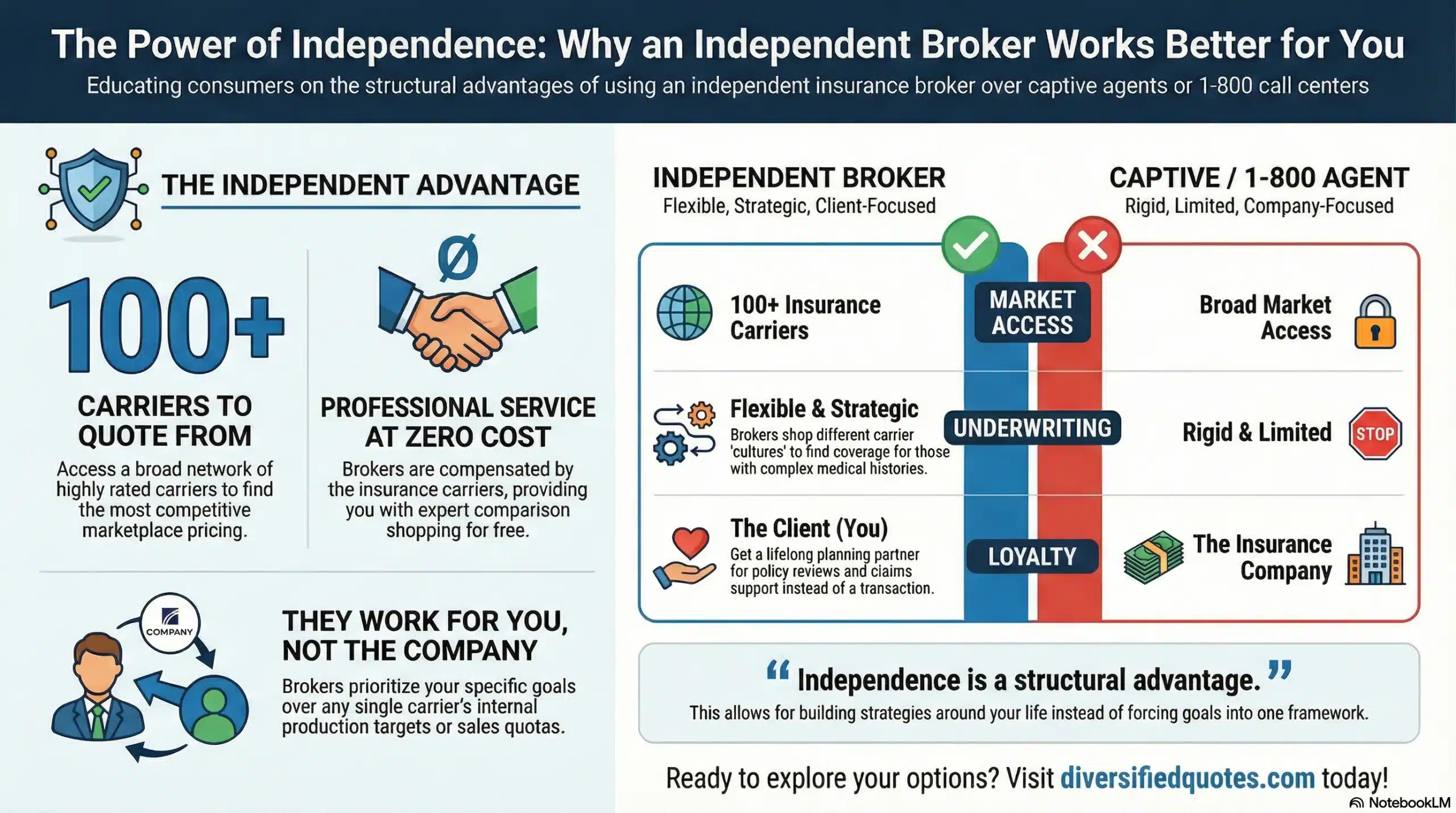
As an Independent Life Insurance Broker, we compare rates across 100+ carriers and prescreen every application before submission.
What is Term Life Insurance

Jason Stolz CLTC, CRPC, DIA, CAA
Term life insurance is the most straightforward form of life insurance available — and for most working-age adults with dependents, a mortgage, or income others rely on, it is also the most effective place to start. The product does one job: it pays a defined, lump-sum death benefit to the named beneficiaries on the policy if the insured person dies during the coverage term. That death benefit is paid income-tax free under federal law, giving beneficiaries immediate access to the full face amount of the policy without any reduction for taxes. A $500,000 term policy delivers $500,000. What makes term life particularly powerful from a planning standpoint is the cost efficiency — because premiums fund a pure death benefit with no cash value accumulation component, the same premium dollar buys dramatically more coverage than it would in a permanent life insurance policy. The simplicity of the product is a feature, not a limitation. Our resource on life insurance services covers the full life insurance landscape, and our resource on how does life insurance work covers the fundamental mechanics of life insurance across all product types.
The coverage provided by a term life policy is temporary — it lasts for a defined period called the term, which the buyer selects at the time of application. Standard term lengths available in the market include 10, 15, 20, 25, and 30 years; some carriers extend to 35 or 40 years. During this term, the premium is typically level — meaning it does not change from year to year — and the death benefit remains at the face amount chosen at issue. If the insured dies at any point during the term and premiums are current, the policy pays the full death benefit to the named beneficiaries. If the insured outlives the term, the coverage expires. No death benefit is paid for outliving the policy, and there is no cash value to receive — though some term policies include an optional return-of-premium rider that refunds all premiums paid at the end of the term if the insured survives. The temporary nature of the coverage is the fundamental characteristic that makes term life both affordable and purpose-built: it is designed to cover a specific window of financial exposure, not a lifetime obligation.
The planning logic behind term life insurance is matching the coverage period to the duration of the financial obligation it is designed to protect. A mortgage with 25 years remaining needs 25 years of coverage. A parent with three children under age 10 needs coverage long enough for the youngest to reach financial independence. An income earner with a working spouse needs replacement coverage until that spouse can sustain the household independently or until retirement savings are adequate. Term life is almost never the right product for permanent needs — estate planning, lifelong dependent support, or guaranteed cash value accumulation — but for the peak financial exposure years of a working-age household, it delivers the most coverage per premium dollar of any life insurance structure available. At Diversified Insurance Brokers, we compare term policies across dozens of top-rated carriers because underwriting criteria, pricing models, and policy features vary enough across carriers that the same buyer in the same health class can face premiums that differ by 30-50% depending on carrier selection.
Term Life Insurance at a Glance — Core Features and How Each Works
Every term life insurance policy shares a common set of features, each of which the buyer configures at application. The table below maps each feature against how it works, what options are typically available, and what buyers should understand before making each decision.
| Feature | How It Works | Typical Options | What to Know |
|---|---|---|---|
| Coverage amount (face amount) | The death benefit the insurance company will pay to beneficiaries if the insured dies during the term; set at policy issue and remains level in most designs | Typically $100,000 to $10 million+; most families need at least $500,000-$1 million; coverage amount directly drives the premium | The most common sizing formula is 10-12 times annual income; higher coverage costs proportionally more but the per-dollar cost remains level within the same policy |
| Term length | The number of years the coverage stays in force; the buyer selects the term at application and locks in the premium for that full period | 10, 15, 20, 25, and 30 years are standard; some carriers offer 35 or 40 years; annual renewable term provides year-by-year coverage | Longer terms cost more because the carrier is pricing mortality risk over a longer window; the right term matches the longest remaining financial obligation — mortgage, income dependency, or debt |
| Premium structure | The amount paid periodically (monthly or annually) to keep the policy in force; in level term designs the premium is the same every year for the entire term | Level premium (most common); annual renewable (increases each year with age); premiums are set by the carrier at issue based on underwriting | Level term provides budgeting certainty — the same payment locks in today’s pricing for the full term; annual renewable is lower initially but increases over time and becomes expensive at older ages |
| Death benefit | The lump-sum payment made to beneficiaries upon the insured’s death during the term; generally received income-tax free by beneficiaries under IRC Section 101(a) | Paid as a single lump sum by default; some policies offer structured payout options; beneficiaries can use the funds for any purpose | Tax-free receipt is one of term life’s most significant planning advantages; the full face amount is available to beneficiaries immediately without estate or income tax in most circumstances |
| Conversion right | A contractual option built into most term policies that allows the insured to exchange the term policy for a permanent life insurance policy without submitting new medical evidence or underwriting | Most policies allow conversion within the first 10-20 years of the term or before a specified age (commonly 65 or 70); the type of permanent coverage available for conversion varies by carrier | The conversion right is most valuable when the insured’s health has declined since the original application — it preserves the ability to secure permanent coverage regardless of current health |
| Underwriting | The process the carrier uses to evaluate the applicant’s health history, lifestyle, and occupation to determine eligibility and assign a health classification that determines the premium | Traditional underwriting involves a medical exam and detailed health questions; simplified issue and no-exam products skip the exam but typically cost slightly more or have lower face amount limits | Health class assignments — Super Preferred, Preferred, Standard Plus, Standard, and Substandard — directly determine the premium; the same $1M policy can have premiums that vary 30-200%+ across health classes |
| What happens at end of term | Coverage expires; no death benefit is paid for outliving the policy; there is no cash value to receive unless a return-of-premium rider was added at issue | Let the policy expire; renew at a much higher annual renewable rate; convert to permanent coverage (if within the conversion window); purchase a new policy (subject to current health) | Most policyholders who outlive their term simply let it expire — the financial obligations the policy was designed to cover have typically been eliminated or reduced by that point |
Policy features, conversion terms, and coverage availability vary by carrier and state. The descriptions above reflect general market patterns for level term life insurance. Always review the specific policy contract and carrier illustration before purchasing.
Choosing the Right Term Length — Matching Coverage to Financial Obligations
The most important structural decision in buying term life insurance is selecting the right term length — and the right approach is to match the coverage period to the duration of the financial obligation that would be most damaged by an early death. A 10-year term is appropriate for a buyer who has a 10-year business loan, needs coverage only until a specific debt is retired, or wants supplemental coverage layered on top of a longer primary policy. Our resource on 10-year term life insurance covers this specific term in detail. A 15-year term works well for buyers with mortgages of that remaining length, for parents whose youngest child will be financially independent within that window, or for business-specific obligations with a defined timeline — covered in detail at our resource on 15-year term life insurance. The 20-year term is the most widely purchased length in the market — it aligns with the most common financial planning horizon: a mortgage mid-point, the years until the youngest child reaches adulthood, or the remaining working years for a buyer in their 40s. Our resource on 20-year term life insurance covers the most popular term length in depth. The 25-year term covers buyers who need a slightly longer runway — longer mortgage terms, larger age gaps between youngest and oldest child, or late-career buyers who want coverage reaching into their 60s. Our resource on 25-year term life insurance covers this option. The 30-year term is the longest standard term available from most carriers and is appropriate for younger buyers who want coverage through their entire working life, for buyers with 30-year mortgages at purchase, or for parents with very young children whose dependency timeline extends far into the future. Our resource on 30-year term life insurance covers the longest standard term in detail. One strategy worth evaluating is term laddering — purchasing multiple shorter-term policies in different face amounts, designed so that coverage decreases as obligations are retired, at a lower total cost than buying a single large policy for the longest needed term.
How Much Coverage You Actually Need
The coverage amount question — how large a death benefit to purchase — is the second most important decision after term length, and it is the area where buyers most commonly underestimate their actual exposure. The simplest sizing framework is the income replacement approach: multiply the insured’s annual income by the number of years it needs to be replaced. A buyer earning $100,000 annually whose family needs income replacement for 20 years needs approximately $2 million in coverage — accounting for investment return on the lump sum, inflation, and reduced spending once children are independent. A more comprehensive framework is the DIME method: add Debt (all outstanding debt excluding mortgage), Income (annual income multiplied by years of replacement needed), Mortgage (full remaining balance), and Education (estimated future education costs for each child). Financial professionals commonly recommend a minimum of 10-12 times annual salary as a starting point, with adjustments upward for high-debt households, young children, a non-earning spouse, or business obligations. Our resource on how much life insurance do I need covers the coverage sizing methodology in full detail, and our resource on term life insurance calculator provides an interactive tool to estimate the right coverage amount for your specific household.
Types of Term Life Insurance
Level term is the dominant structure in the market and the one most buyers encounter — premiums and death benefit remain fixed for the entire term. It provides predictable cost and consistent protection for a defined window. Annual renewable term (ART) is a different structure: coverage is purchased one year at a time, renewing annually without new underwriting, with premiums that increase each year based on the insured’s attained age. ART starts very low but becomes expensive over time as the insured ages, making it most appropriate for buyers with very short-term needs, buyers bridging a gap while awaiting permanent coverage to be issued, or buyers who want flexibility to terminate coverage at any time without penalty. Our resource on annual renewable term life insurance covers this structure in detail. Decreasing term is a less common structure where the death benefit declines over the policy period while premiums remain level — originally designed to mirror the declining balance of a mortgage, though most buyers today find a level term policy more flexible since the coverage does not decline if the mortgage is paid off early. Return-of-premium term adds an optional rider to a level term policy that refunds all premiums paid at the end of the term if the insured survives — a feature that eliminates the “use it or lose it” concern at significantly higher premium cost. Our resource on term life insurance with return of premium covers this rider and when it makes financial sense.
The Conversion Feature — Protecting Against Future Health Changes
Most term life policies include a contractual conversion right — the option to exchange the term policy for a permanent life insurance policy without providing new medical evidence or going through underwriting again. The conversion right is one of the most strategically valuable features in a term life policy, and it is most important in scenarios the buyer hopes never to use: when their health has deteriorated since the original application. A buyer who purchased a 20-year term policy at age 35 as a “Super Preferred” non-smoker and develops a serious health condition at age 48 would be uninsurable or highly rated if they tried to purchase a new policy. The conversion right preserves their ability to obtain permanent life insurance — typically at their original health class — by simply converting the existing term policy rather than applying for new coverage. Conversion terms vary by carrier: most allow conversion within the first 10-20 years of the term or before a specified age (commonly 65 or 70), and the permanent products available for conversion are carrier-specific. Understanding the conversion terms before purchasing a term policy matters because not all term products have equally strong conversion provisions. Our resource on what happens at the end of your term life insurance policy covers the full range of options available at term expiration, including conversion, renewal, and re-application.
Term vs. Permanent — When Each Structure Fits
Term life insurance provides roughly 10-15 times more death benefit coverage per premium dollar than a comparable whole life or universal life policy — making it the clear choice for buyers whose primary goal is maximum protection during the years when financial obligations are highest. The trade-off is that term has no cash value, no investment component, and no coverage if the term expires before death. Permanent life insurance — whole life, universal life, indexed universal life — provides lifetime coverage, builds cash value over time, and may serve planning purposes beyond income replacement: estate equalization, special needs dependent funding, business succession, or guaranteed death benefit for buyers who want coverage regardless of how long they live. The two products are not competitors for the same need — they serve different planning purposes, and many buyers end up with both: a large term policy covering the income replacement and mortgage years, and a smaller permanent policy covering lifelong or estate-related needs. Our resources on mortgage protection vs. term life insurance, final expense life insurance vs. term life insurance, and the difference between term life and accidental death insurance cover specific product comparisons for buyers evaluating alternatives. Our resource on life insurance with living benefits covers the living benefit riders — such as chronic illness accelerated benefits — that are increasingly available on both term and permanent products.
Applying for Term Life — Underwriting and the No-Exam Option
Traditional term life insurance underwriting involves a medical exam, blood draw, urinalysis, and a detailed review of medical records — a process that takes several weeks to complete. The result is the most accurate health classification and the most competitive premium available for that buyer’s profile. No-exam term life insurance — increasingly available from a wide range of carriers — skips the physical exam and uses algorithmic underwriting based on medical databases, prescription records, motor vehicle records, and financial data to assign a health class. The no-exam process is typically completed in minutes to days rather than weeks, and premiums are generally within 5-15% of traditionally underwritten policies for healthy applicants. For buyers who are young, healthy, and want speed over marginal premium savings, no-exam term life is a highly practical option. Our resource on no-exam life insurance covers the carriers and products in this category, and our resource on how to buy term life insurance online covers the online application process from start to finish. Our resource on life insurance rates covers how pricing varies by age, health class, and term, and our resource on at what age should you stop buying term life insurance covers the older-buyer context where term coverage availability and pricing begin to narrow. Our resource on best term life insurance policy covers how to select among competitive options.
Business Uses for Term Life Insurance
Term life insurance serves several important business protection roles beyond personal income replacement. A buy-sell agreement — the legal contract governing what happens to a business owner’s interest if they die or become disabled — is frequently funded with life insurance so surviving partners have the cash to purchase the deceased owner’s share without liquidating business assets. Our resource on buy-sell life insurance covers this application in detail. Key person coverage — a policy owned by the business on the life of a critical employee or owner whose loss would financially damage the business — is another common term life application, providing the company with funds to recruit, train, and stabilize during a transition period. SBA loan requirements frequently mandate life insurance on the business owner as a condition of the loan, with face amounts matching the outstanding balance. Our resource on high-risk life insurance services covers buyers whose business or personal profile creates underwriting complexity, and our resource on get a 2nd opinion on your life insurance quote covers the review process for buyers who have already received a quote and want to verify they are seeing competitive pricing and appropriate coverage design.
Talk With an Advisor Today
Choose how you’d like to connect—call or message us, then book a time that works for you.
Schedule here:
calendly.com/jason-dibcompanies/diversified-quotes
Licensed in all 50 states • Fiduciary, family-owned since 1980
FAQs: What Is Term Life Insurance?
What is term life insurance and how does it work?
Term life insurance provides a defined death benefit — a lump sum paid to your named beneficiaries — if you die during the policy’s coverage period. You choose a coverage amount and a term length at application. As long as premiums are paid and you die during the term, the policy pays. The death benefit is received income-tax free by beneficiaries under federal law. If you outlive the term, coverage expires with no payout. The simplicity of this structure — a pure death benefit with no cash value component — is what makes term life both affordable and effective for income replacement, mortgage coverage, debt protection, and family financial security during working years.
How do I choose the right term length?
The right term length matches the coverage period to the duration of the financial obligation you are protecting. If your mortgage has 20 years remaining, a 20-year term covers that risk. If your youngest child is 5 and you want coverage until they reach financial independence at 25, a 20-year term accomplishes that. If you want coverage through your entire working career, a 30-year term purchased in your 30s typically bridges to retirement age. A practical approach is to identify the longest remaining financial obligation — mortgage, income dependency, or business loan — and match the term length to that timeline. Buying a longer term than needed costs more; buying a shorter term creates a coverage gap if obligations continue.
How much term life insurance coverage do I need?
Financial professionals generally recommend at least 10-12 times your annual income as a starting benchmark. A more precise calculation uses the DIME method: add all outstanding Debt (excluding mortgage), multiply annual Income by years of replacement needed, add the full remaining Mortgage balance, and add estimated Education costs for each dependent child. A $100,000/year income earner with a $400,000 mortgage, 20 years of income replacement needed, and two children’s education to fund may need $2.5-$3 million in coverage — well above the commonly cited “6-10 times salary” simplification. Coverage needs are personal and depend on your specific financial obligations, assets, and the dependents who rely on your income.
What happens if I outlive my term life insurance policy?
If you outlive your term policy, coverage expires and no death benefit is paid. There is no cash value to receive unless you purchased a return-of-premium rider at the time of application, in which case premiums paid are refunded. At expiration, most policies give you the option to renew year-by-year at annual renewable rates — which are typically much more expensive than your original level term premium. If you are within the conversion window, you can convert to a permanent life insurance policy without new medical underwriting. If you need continued coverage, applying for a new policy is also an option, subject to your current health. Most buyers who outlive their term find that the financial obligations the policy was designed to cover — mortgage, dependent children, income replacement — have been retired or reduced by that point.
What is the conversion feature and why does it matter?
The conversion feature is a contractual right included in most term policies that allows the insured to exchange the term policy for a permanent life insurance policy without providing new medical evidence — regardless of how their health has changed since the original application. This matters most when the insured develops a serious health condition during the term that would make obtaining new coverage impossible or prohibitively expensive. The conversion right preserves the ability to secure lifetime coverage at the original health class. Conversion must typically be exercised within the first 10-20 years of the term or before a specified age. The quality of the conversion provision — what permanent products are available, how long the window lasts, and whether the original health class is preserved — varies meaningfully across carriers and is worth evaluating before purchasing a term policy.
Is term life insurance better than whole life insurance?
Term and whole life serve different purposes and are not directly comparable on a better/worse basis — they are the right answer for different questions. Term life is better for buyers who need maximum income replacement coverage during their working years, have a mortgage or dependents, and want the most coverage per premium dollar. Whole life is better for buyers who need permanent coverage regardless of how long they live, want a guaranteed cash value component, need coverage for estate planning, have a lifelong dependent with special needs, or want to use life insurance as part of a business succession strategy. Many buyers end up using both: a large term policy for the income replacement years and a smaller permanent policy for permanent needs. Replacing a permanent policy with term entirely creates a risk of being uninsurable for permanent coverage later if health changes.
About the Author:
Jason Stolz, CLTC, CRPC, DIA, CAA and Chief Underwriter at Diversified Insurance Brokers (NPN 20471358), is a senior insurance and retirement professional with more than 25 years of real-world experience helping individuals, families, and business owners protect their income, assets, and long-term financial stability. As a long-time partner of the nationally licensed independent agency Diversified Insurance Brokers, Jason provides trusted guidance across multiple specialties—including fixed and indexed annuities, long-term care planning, personal and business disability insurance, life insurance solutions, Group Health, Travel Medical and Evacuation Insurance, and short-term health coverage. Diversified Insurance Brokers maintains active contracts with over 100 highly rated insurance carriers, ensuring clients have access to a broad and competitive marketplace.
His practical, education-first approach has earned recognition in publications such as VoyageATL, and contributions from his agency featured in Kiplinger and GoBankingRates— highlighting his commitment to financial clarity and client-focused planning. Drawing on deep product knowledge and years of hands-on field experience, Jason helps clients evaluate carriers, compare strategies, and build retirement and protection plans that are both secure and cost-efficient. Visitors who want to explore current annuity rates and compare options across multiple insurers can also use this annuity quote and comparison tool.
Browse More Resources: Return to our complete Life Insurance Special Topics guide — covering permanent life, estate planning, key person, IUL, infinite banking & special needs.
Last Reviewed: June 19, 2026 |
Reviewed by: Jason Stolz, CLTC, CRPC, DIA, CAA
Chief Underwriter, Diversified Insurance Brokers, Inc. | NPN: 20471358 | Diversified Insurance Brokers, Inc. — Licensed in all 50 states
Fact Checked by: Tonia Pettitt, CMIP©
Medicare Specialist, Diversified Insurance Brokers, Inc. | NPN: 14374308 | Diversified Insurance Brokers, Inc. — Licensed in all 50 states
Did you find this content helpful? Leave us a Google review — it helps others find trustworthy guidance too.
Editorial Standards: Diversified Insurance Brokers maintains rigorous editorial standards to ensure accuracy, clarity, and independence in all content. Learn more about our editorial standards and commitment to transparency.
