
Buy Sell Life Insurance
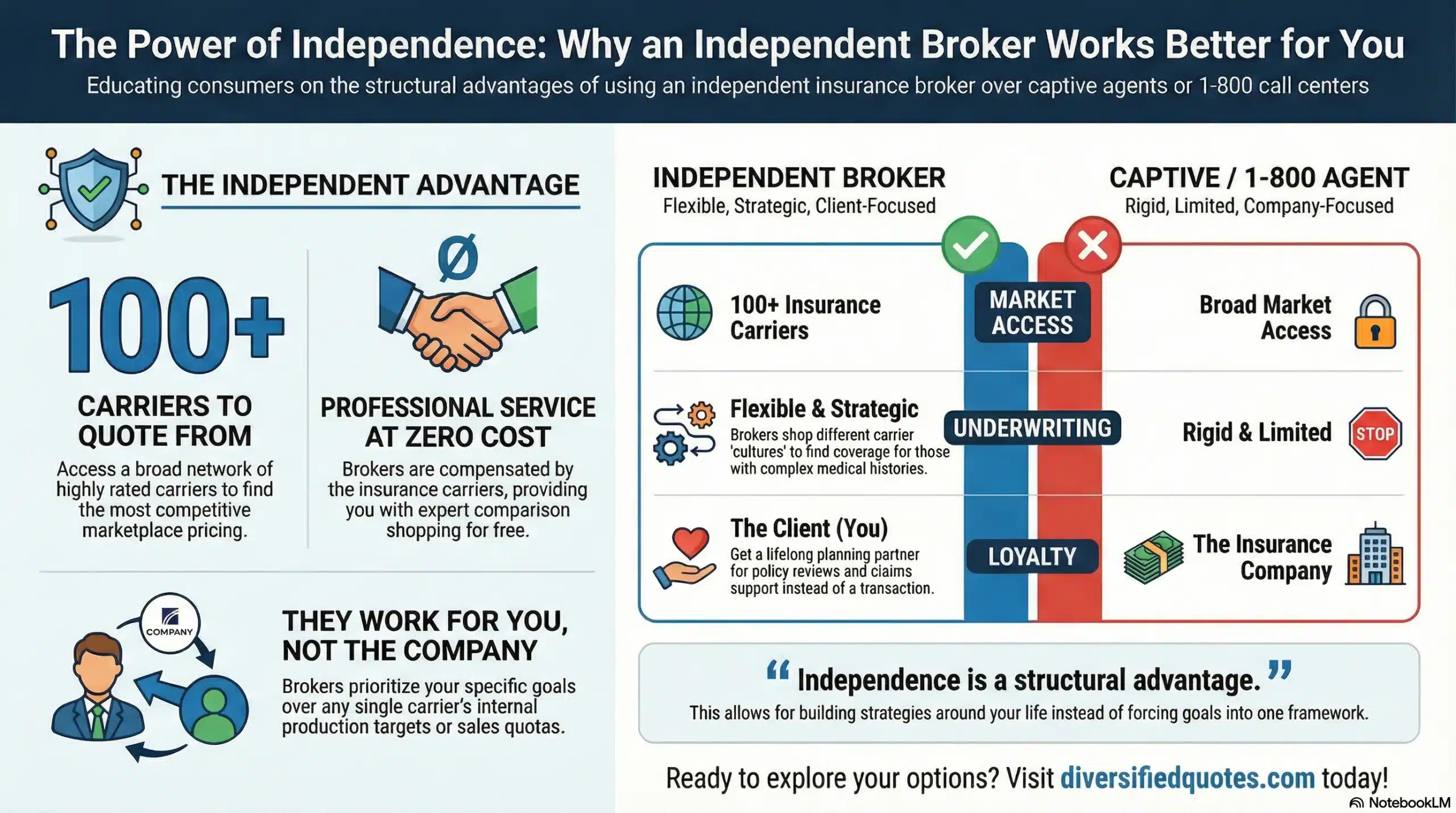
As an Independent Life Insurance Broker, we compare rates across 100+ carriers and prescreen every application before submission.
Buy Sell Life Insurance

Jason Stolz CLTC, CRPC, DIA, CAA
A buy-sell agreement is a legally binding contract among business co-owners that dictates exactly what happens to a departing owner’s interest — whether they die, become disabled, retire, or exit the business in any way. The agreement is the legal framework. Life insurance is the funding mechanism that makes it work. Without funded liquidity, a buy-sell agreement is a legal document that describes an obligation no one can execute. When a co-owner dies and the surviving partners must produce $1.5 million to purchase the deceased owner’s interest within a defined window, the question is not whether the obligation exists — it does — but whether the cash is immediately available to honor it. Life insurance provides that cash precisely when it is needed, without the delays of bank financing, asset liquidation, or investor negotiation at the worst possible moment. Our resource on life insurance to fund buy-sell agreements covers the full funding mechanics, and our resource on the role of buy-sell life insurance in business continuity covers how this planning fits within the broader business protection framework.
The reality of unfunded buy-sell agreements is that they often fail the people they were designed to protect. A deceased owner’s family inherits an illiquid minority interest in a privately held company they did not build and cannot manage. Surviving partners face a forced negotiation with grieving heirs under financial and operational pressure, or an unwanted new partner entering the business. Banks that provided credit based on the ownership structure face covenant questions. Employees face uncertainty about leadership continuity. Clients question whether the company they relied on will remain stable. All of these outcomes are simultaneously possible when a co-owner dies without a funded exit mechanism. Our resource on partnership buy-sell agreement insurance covers the partnership-specific version of these dynamics, and our resource on key person vs. buy-sell insurance clarifies the important distinction between protecting the business against the loss of a key individual’s contribution versus funding the ownership transfer that a buy-sell agreement requires.
Three primary structural designs exist for buy-sell life insurance arrangements — cross-purchase, entity purchase, and wait-and-see hybrid — and the 2024 Supreme Court decision in Connelly v. United States has materially changed the tax planning calculus for entity purchase structures, making structure selection a more consequential decision than it was before that ruling. Understanding what each structure provides, which ownership profiles it fits, and what the post-Connelly tax landscape means for entity purchase arrangements is the foundation of any buy-sell life insurance recommendation. Our resource on buy-sell life insurance for business covers the implementation framework, and our resource on life insurance for business owners covers the broader business owner life insurance landscape in which buy-sell planning sits.
See Real-Term Rates Side by Side
Life Insurance Quoter
Need a Business-Specific Buy-Sell Quote?
The quoter above shows individual life rates. For a complete buy-sell analysis — coverage amounts, structure comparison, and carrier options — submit a consultation request.
Request a Buy-Sell ConsultationThree Buy-Sell Agreement Structures — Side-by-Side Comparison
The choice of structure determines who owns the policies, who pays the premiums, who receives the death benefit, and the tax treatment of the transaction. The table below compares all three structures across the dimensions that matter most.
| Feature | Cross-Purchase | Entity Purchase (Stock Redemption) | Wait-and-See Hybrid |
|---|---|---|---|
| Who owns the policy? | Each surviving owner individually owns a policy on every other owner | The business entity owns a policy on each owner | Business has first right to purchase; if it declines or cannot, surviving owners exercise cross-purchase right |
| Who pays the premiums? | Each individual owner pays premiums with personal after-tax dollars | The business pays premiums from corporate funds | Typically business-paid, with provisions for either structure to activate |
| Who receives the death benefit? | Surviving owners; they use proceeds to buy shares directly from the deceased owner’s estate | The business; it uses proceeds to redeem shares from the deceased owner’s estate | Determined at the triggering event based on which party exercises its option |
| Step-up in cost basis for surviving owners? | Yes — surviving owners receive a step-up in the cost basis of acquired shares; reduces future capital gains tax when shares are eventually sold | No — surviving owners’ existing basis does not increase; their percentage of ownership increases without a corresponding basis increase | Depends on whether the entity or the surviving owners execute the purchase |
| Connelly estate tax risk | Lower — policies are owned by individuals, not the company; corporate-owned insurance proceeds generally not included in business valuation for estate tax purposes | Higher — after Connelly v. United States (2024), corporate-owned life insurance proceeds can be included in the valuation of the deceased owner’s estate, potentially increasing estate tax; requires immediate review with tax counsel | Moderate — if entity purchase option is exercised, Connelly risk applies; if surviving owners purchase, cross-purchase rules apply; requires careful drafting |
| Number of policies required | N × (N-1) policies — for 3 owners, 6 policies; becomes administratively complex with 4+ owners | One policy per owner — simpler to administer regardless of number of owners | Typically structured with company-owned policies for administrative simplicity |
| Best fit | Smaller partnerships (2-3 owners); those prioritizing step-up in basis; post-Connelly estate tax planning; owners willing to manage multiple individual policies | Businesses with 4+ owners where administrative simplicity is a priority; owners in poor health where cross-purchase would create premium inequality; S corporations (with careful tax review post-Connelly) | Businesses wanting maximum flexibility; ownership situations where the best structure at triggering event is uncertain; requires careful legal drafting |
This table reflects general planning frameworks. The 2024 Connelly v. United States Supreme Court ruling materially affects entity purchase structures and requires immediate review with a qualified business attorney and CPA if you have an existing entity-purchase buy-sell arrangement. Life insurance death benefits are generally income-tax free under IRC §101(a), but ownership, beneficiary, and estate tax treatment depend on specific contract design and applicable law. This is not legal or tax advice — consult qualified legal and tax professionals before structuring or modifying any buy-sell agreement.
Cross-Purchase Agreements — How They Work and Who They Fit
In a cross-purchase buy-sell arrangement, each owner individually owns and is the beneficiary of a life insurance policy on each of the other owners. When one owner dies, the surviving owners receive the death benefit directly — not through the business — and use those proceeds to purchase the deceased owner’s interest from their estate. The purchase price was established in the buy-sell agreement using a valuation method agreed to in advance. Because the surviving owners are buying shares directly with personal funds (the death benefit proceeds), they receive a step-up in cost basis for the acquired shares — the purchase price becomes their new basis in those shares. This basis step-up is a significant long-term tax advantage: when the surviving owners eventually sell the business, their capital gains tax is calculated on appreciation above the stepped-up basis rather than their original, potentially much lower, basis.
Cross-purchase is typically the preferred structure for two- or three-owner businesses where the administrative burden of multiple policies is manageable. In a two-person partnership, cross-purchase requires only two policies — each partner owns one policy on the other. For three owners, six policies are required (each owner holds one policy on each of the other two). Beyond three owners, the policy count grows rapidly and the administrative overhead may justify considering an entity structure. Our resource on convert term to permanent life insurance covers the conversion options relevant to cross-purchase policies that were initially structured as term, and our resource on how much life insurance costs provides benchmarks for budgeting the individual premiums each owner will carry.
Entity Purchase Agreements — Simplicity and the Connelly Warning
In an entity purchase (also called stock redemption) arrangement, the business itself owns one life insurance policy on each owner, pays the premiums from corporate funds, and is the beneficiary. When an owner dies, the company receives the death benefit and uses those proceeds to redeem (buy back) the deceased owner’s shares directly from the estate. The structure is administratively simpler than cross-purchase because only one policy per owner is required regardless of how many owners the business has. For a five-person partnership, entity purchase requires five policies; cross-purchase would require twenty. Premiums are paid from business funds, which some owners prefer because the cost does not reduce their personal cash flow. One meaningful drawback is the absence of a step-up in cost basis for surviving owners — when the business redeems shares, the surviving owners’ percentage of ownership increases, but their existing basis in their own shares does not increase. This creates a larger potential capital gains exposure when they eventually sell their interest. Our resources on is life insurance death benefit taxable and our resource on life insurance for high-income earners cover the tax treatment considerations relevant to business owners with significant estate values.
The Connelly Decision — Why Entity Purchase Structures Must Be Reviewed Now
The 2024 Supreme Court decision in Connelly v. United States is one of the most significant developments in buy-sell planning in decades. The case involved a two-brother business, Crown C Supply, structured under an entity purchase agreement. When one brother died, the business used the life insurance proceeds ($3.5 million) to redeem his shares. The IRS included those life insurance proceeds in the valuation of the deceased brother’s estate — increasing the estate’s taxable value and the resulting estate tax liability. The Supreme Court unanimously upheld the IRS position: in an entity purchase structure, corporate-owned life insurance proceeds that will be used to redeem a deceased owner’s shares can be included in the gross value of the business for estate tax purposes, without any offsetting redemption obligation. The practical impact is that entity purchase buy-sell agreements that appeared appropriately funded may now generate estate tax exposure that was not anticipated when the agreement was drafted — in some cases, leaving estates with insufficient liquidity after both the redemption and the estate tax are accounted for. Any business operating under an entity purchase buy-sell agreement should review the structure with a qualified business attorney and CPA in light of this ruling. Cross-purchase structures, or properly designed Insurance LLC arrangements, may provide a path to eliminating the Connelly exposure while maintaining administrative simplicity. Our resource on key person life insurance through Lloyd’s of London covers specialized coverage solutions available for unique business structures and coverage needs outside standard markets.
Term vs. Permanent Life Insurance — Which Structure Fits Buy-Sell Funding
Term life insurance is the most common choice for buy-sell funding because it provides maximum death benefit coverage per premium dollar for a defined period, and most buy-sell planning scenarios have a defined horizon — the anticipated timeline of the business’s current ownership structure. A 20-year term policy issued when a partnership is formed covers the partnership through two decades of the most business-critical years without the accumulating cost of permanent coverage. The limitation of term is equally clear: it expires. A buy-sell arrangement between partners who remain in business together beyond the term’s expiration requires either new policies at then-current (and higher) underwriting rates or a redesigned structure. Our resource on convert term to permanent life insurance covers the conversion options that protect against this scenario when policies are issued with conversion privileges. Permanent life insurance — whole life or universal life — is appropriate when the ownership structure is expected to persist indefinitely, when estate equalization strategies require permanent death benefits, or when the accumulation of cash value is part of a deliberate business balance sheet strategy. Some businesses use layered coverage: term policies for the bulk of the current coverage need and a permanent policy for the baseline coverage that should persist regardless of how the business evolves. Our resource on life insurance laddering guide covers the layered approach in detail.
Disability-Funded Buy-Sell — The Trigger Most Business Owners Overlook
The death of a co-owner is the trigger that drives most buy-sell life insurance conversations — but disability is statistically far more common than premature death among working-age business owners. A partner who becomes permanently disabled may be unable to continue contributing to the business while still holding an ownership interest, creating an ownership structure where active partners carry the operational burden while the disabled owner’s interest remains in place. A disability-funded buy-sell addresses this directly: a disability insurance policy that is specifically designed to fund the buyout of a disabled owner’s interest, triggered when the owner meets the disability definition and the holding period specified in the agreement. Our dedicated resource on buy-sell disability insurance covers the disability-funded buy-sell structure in full. A comprehensive buy-sell arrangement addresses both triggers — death through life insurance and disability through disability insurance — rather than relying on one policy type to cover both scenarios. Our resource on key person disability insurance covers the disability protection layer for key contributors whose disability (separate from ownership) would also affect the business.
Business Valuation — Setting Coverage Amounts That Remain Valid Over Time
The coverage amount for each buy-sell policy must reflect the fair market value of each owner’s proportionate interest at the time the buy-sell is triggered — not at the time the policy was originally issued. A business valued at $3 million when the agreement was drafted and the policies were issued may be worth $8 million five years later. If coverage amounts were not reviewed and updated, the policies may fund only a fraction of the actual purchase price, leaving surviving owners to bridge a multimillion-dollar gap through other means. Most buy-sell agreements specify a valuation method — agreed value (a fixed number written into the agreement and updated periodically), formula valuation (a calculation based on financial metrics like revenue or EBITDA), or professional appraisal at the triggering event. Each method has different precision, cost, and dispute risk characteristics. Regardless of the valuation method chosen, coverage amounts should be reviewed whenever the business experiences significant growth, a major acquisition, or a meaningful change in ownership structure. Our resource on how much life insurance you need covers the coverage sizing framework, and our resource on life insurance rates covers what current rates look like for the coverage amounts typical in business buy-sell arrangements.
Coordination With Broader Business Protection Planning
Buy-sell life insurance is one component of a comprehensive business protection structure, not a standalone solution. It addresses the ownership transfer problem. Key person insurance addresses the income replacement problem — what happens to business revenue, profitability, and debt obligations when a high-value contributor is lost, whether or not that person is an owner. Our resources on key person insurance for business, what is key person insurance and does your business need it, and benefits of key person insurance cover that product category. Our resource on key man policy for business covers the key man insurance framework and how it relates to both key person and buy-sell structures. Business loan life insurance — covered in our resource on business loan life insurance — addresses the debt service problem: when an owner who personally guaranteed business debt dies, and the surviving business must satisfy that obligation without the deceased partner’s contribution. Executive bonus plans — covered in our resource on executive bonus 162 plans — and split-dollar arrangements — covered in our resource on split dollar insurance overview — are business-owner life insurance strategies that serve different planning objectives (key person retention, executive compensation, wealth transfer) but are often designed alongside buy-sell coverage as part of a comprehensive business owner protection strategy. Our resource on key person life insurance for executives covers the executive-tier version of this coverage. Our resource on life insurance services covers the full spectrum of life insurance solutions for business and personal protection, and our resource on get a 2nd opinion on your life insurance quote covers the review process for business owners who want to validate existing coverage against current market options.
Talk With an Advisor Today
Choose how you’d like to connect—call or message us, then book a time that works for you.
Schedule here:
calendly.com/jason-dibcompanies/diversified-quotes
Licensed in all 50 states • Fiduciary, family-owned since 1980
FAQs: Buy-Sell Life Insurance
What is the difference between a cross-purchase and entity purchase buy-sell agreement?
In a cross-purchase agreement, individual owners own policies on each other and use the death benefit proceeds to buy the deceased owner’s shares directly. In an entity purchase (stock redemption) agreement, the business owns one policy on each owner, receives the death benefit, and redeems the shares directly. Cross-purchase produces a step-up in cost basis for surviving owners — a significant long-term tax advantage. Entity purchase is administratively simpler (one policy per owner regardless of how many owners exist) but produces no step-up in basis and, after the 2024 Connelly Supreme Court ruling, may generate unexpected estate tax exposure for the deceased owner’s estate. Both structures require careful review with legal and tax professionals.
How does the 2024 Connelly Supreme Court decision affect buy-sell life insurance?
The Connelly v. United States decision, issued June 2024, held that in an entity purchase (stock redemption) buy-sell arrangement, corporate-owned life insurance proceeds can be included in the valuation of the deceased owner’s business interest for federal estate tax purposes — without any offsetting reduction for the redemption obligation. This can materially increase the taxable estate value and resulting estate tax, in some cases leaving the estate with insufficient liquidity after both the share redemption and the estate tax are paid. Any business currently operating under an entity purchase buy-sell structure should review the arrangement immediately with a business attorney and CPA. Cross-purchase structures generally avoid this issue because the policies are owned by individuals, not the company.
How much life insurance do we need for a buy-sell agreement?
Each owner’s coverage amount should equal the fair market value of their proportionate ownership interest in the business. If three partners own equal shares of a business valued at $6 million, each partner’s policy should provide $2 million — enough to fund the purchase of that one-third interest. The critical planning requirement is periodic review: a business that grows from $6 million to $12 million requires updated coverage or the policies will fund only a fraction of the actual buyout. Most advisors recommend reviewing coverage at least annually and updating policies whenever the business experiences significant valuation changes. The valuation method agreed to in the buy-sell document — agreed value, formula, or appraisal — determines how the purchase price is established when the agreement is triggered.
Should we use term or permanent life insurance for buy-sell funding?
Term life insurance is the most common choice for buy-sell funding because it delivers maximum death benefit coverage per premium dollar for a defined period that matches the anticipated ownership timeline. Permanent life insurance is more appropriate when the ownership structure is expected to persist indefinitely, when estate equalization planning requires permanent death benefits, or when accumulating cash value serves a deliberate business balance sheet purpose. Some businesses use a layered approach — term policies for the bulk of current coverage and a permanent policy for the permanent baseline need. Any term policy used for buy-sell should include a conversion privilege so coverage can be maintained if an owner’s health changes and reapplication at term expiration would be unfavorable.
Is a buy-sell agreement enough, or do we also need key person insurance?
They solve different problems. Buy-sell life insurance funds the ownership transfer — ensuring surviving partners have the liquidity to purchase the deceased owner’s interest at fair market value without disrupting operations. Key person insurance compensates the business for the income loss, cost of replacement, and operational disruption caused by the death or disability of a high-value individual — whether or not that person is an owner. Many businesses need both: buy-sell coverage to handle the ownership transition and key person coverage to stabilize the business’s cash flow and operations during the transition period. For businesses where the owners are also the key contributors driving revenue, the two needs often overlap significantly, and a coordinated design addresses both with appropriate coverage amounts and structures.
Does buy-sell life insurance also cover disability?
Not automatically — life insurance only triggers on death. Disability is a separate and statistically more common trigger that requires dedicated disability insurance coverage to fund a buy-sell buyout. A comprehensive buy-sell plan addresses both: life insurance for the death trigger and disability insurance — specifically structured as buy-sell disability insurance — for the disability trigger. Without disability funding, a permanently disabled owner who can no longer contribute to the business may remain on the ownership structure indefinitely, creating operational friction without a funded mechanism to execute the buyout. The disability policy is structured to pay the purchase price over a defined period when the disabled owner meets the elimination period and disability definition specified in both the insurance contract and the buy-sell agreement.
About the Author:
Jason Stolz, CLTC, CRPC, DIA, CAA and Chief Underwriter at Diversified Insurance Brokers (NPN 20471358), is a senior insurance and retirement professional with more than 25 years of real-world experience helping individuals, families, and business owners protect their income, assets, and long-term financial stability. As a long-time partner of the nationally licensed independent agency Diversified Insurance Brokers, Jason provides trusted guidance across multiple specialties—including fixed and indexed annuities, long-term care planning, personal and business disability insurance, life insurance solutions, Group Health, Travel Medical and Evacuation Insurance, and short-term health coverage. Diversified Insurance Brokers maintains active contracts with over 100 highly rated insurance carriers, ensuring clients have access to a broad and competitive marketplace.
His practical, education-first approach has earned recognition in publications such as VoyageATL, and contributions from his agency featured in Kiplinger and GoBankingRates— highlighting his commitment to financial clarity and client-focused planning. Drawing on deep product knowledge and years of hands-on field experience, Jason helps clients evaluate carriers, compare strategies, and build retirement and protection plans that are both secure and cost-efficient. Visitors who want to explore current annuity rates and compare options across multiple insurers can also use this annuity quote and comparison tool.
Explore More Life Insurance Options: Browse our complete guide to Business Life Insurance — covering buy-sell agreements, key person, contract indemnity & group life from 100+ carriers.
Last Reviewed: October 4, 2026 |
Reviewed by: Jason Stolz, CLTC, CRPC, DIA, CAA
Chief Underwriter, Diversified Insurance Brokers, Inc. | NPN: 20471358 | Diversified Insurance Brokers, Inc. — Licensed in all 50 states
Fact Checked by: Tonia Pettitt, CMIP©
Medicare Specialist, Diversified Insurance Brokers, Inc. | NPN: 14374308 | Diversified Insurance Brokers, Inc. — Licensed in all 50 states
Did you find this content helpful? Leave us a Google review — it helps others find trustworthy guidance too.
Editorial Standards: Diversified Insurance Brokers maintains rigorous editorial standards to ensure accuracy, clarity, and independence in all content. Learn more about our editorial standards and commitment to transparency.
