
The Role of Buy-Sell Life Insurance in Business Continuity
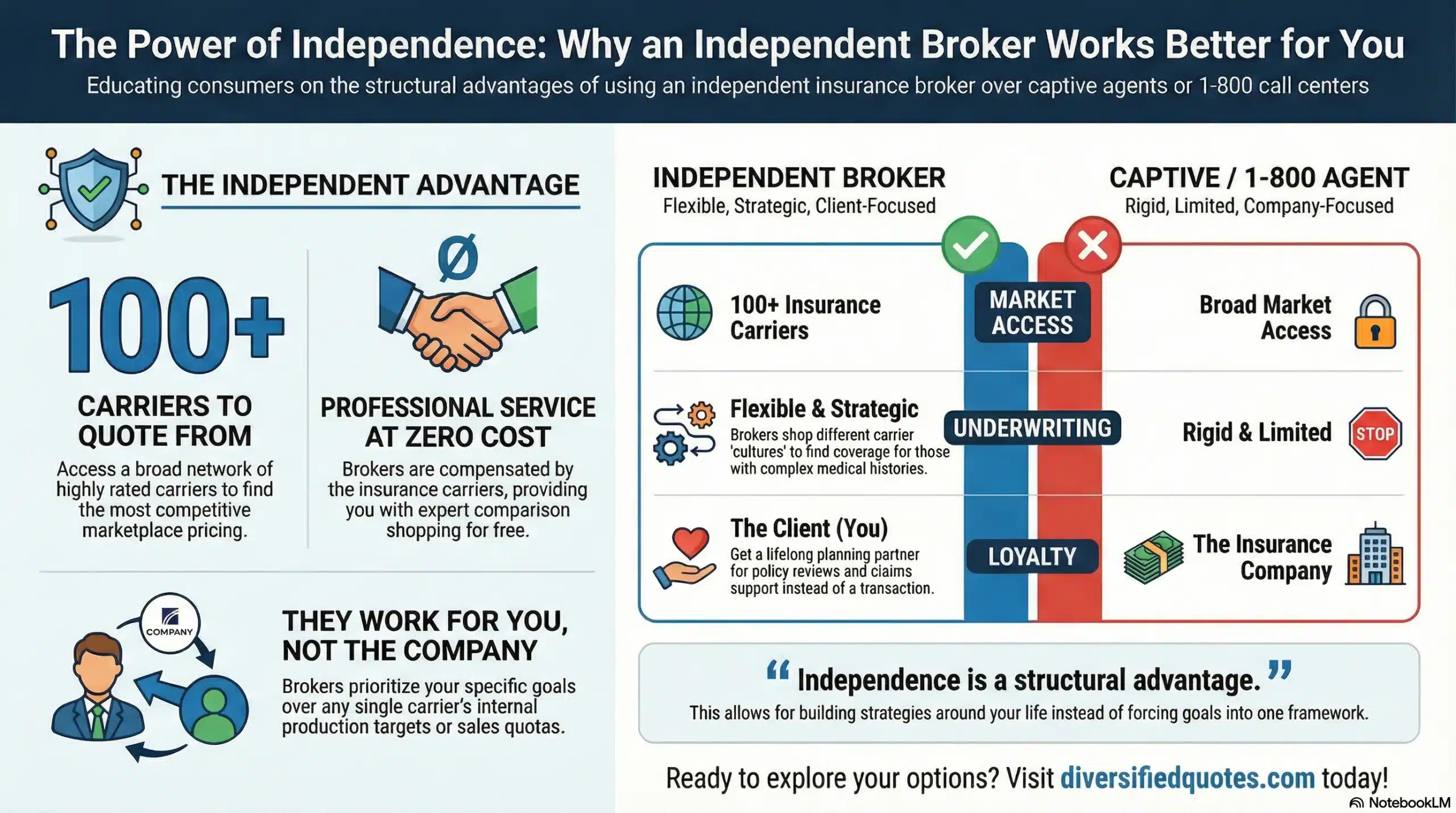
As an Independent Life Insurance Broker, we compare rates across 100+ carriers and prescreen every application before submission.
The Role of Buy-Sell Life Insurance in Business Continuity
In any business with two or more owners, planning for what happens if one dies is critical — but it is also one of the most commonly overlooked pieces of risk management. A buy-sell agreement funded by life insurance is designed to prevent chaos at the worst possible time. It ensures the business can keep operating, the surviving owners retain control, and the deceased owner’s family receives fair compensation without delays, disputes, or forced decisions. For context on how buy-sell planning fits alongside other business protection strategies, our resource on key person insurance for business covers the complementary coverage that protects operations alongside ownership continuity.

Without a properly funded buy-sell plan, partners can find themselves in a legal and financial nightmare. The surviving owners may suddenly be in business with a spouse, adult child, or estate executor who has different priorities. The family may need cash quickly but be forced to wait on valuations, negotiations, or court timelines. Meanwhile, the business may not have the liquidity to buy out the deceased owner’s interest without taking on debt or selling assets. A life-insurance-backed plan is built to make the transition smooth, fast, and fair.
At Diversified Insurance Brokers, we help business owners structure and fund buy-sell agreements using life insurance. We coordinate with your attorney and tax professionals so the coverage amount, ownership structure, and agreement language line up cleanly. The goal is simple: continuity for the business and clarity for the family. You can learn more about our team here: About Diversified Insurance Brokers.
Buy-Sell Coverage Review — No Guesswork
We’ll help you align the agreement, valuation method, and life insurance funding so the plan works when it’s needed most.
Request a Buy-Sell ReviewWhat a Buy-Sell Agreement Is and Why It Matters
A buy-sell agreement is a legally binding contract that outlines what happens to an owner’s shares if that owner exits the business. While many people think of death first, well-built agreements often address multiple trigger events. The agreement defines who can buy the shares, how the price is determined, and the process used to complete the transfer.
The reason buy-sell agreements matter is that ownership is not just a financial issue — it is a control issue. If an owner dies, their shares typically transfer to their estate or beneficiaries unless there is a contractual framework that requires a buyout. That can put the surviving owners in a position where they have to negotiate ownership terms with someone who may not understand the business or who may need liquidity quickly. Even when everyone has good intentions, delays and disagreements can harm operations.
A properly structured buy-sell plan prevents the “accidental partner” problem, protects the company’s continuity, and creates a fair, predetermined outcome for the deceased owner’s family. For a broader overview of how life insurance serves business planning needs, our resource on buy-sell life insurance for business covers the foundational structure in detail.
Why Life Insurance Is Often the Best Way to Fund a Buy-Sell
A buy-sell agreement is only as strong as its funding. Many agreements exist on paper but fail in practice because there is no liquidity when the triggering event happens. If the business does not have cash ready, the surviving owners may be forced to take out loans, liquidate assets, or negotiate installment payments with the estate. That can add financial stress during a period when leadership is already dealing with disruption.
Funding the agreement with life insurance makes the plan instantly actionable. If an owner dies, the death benefit provides cash at exactly the moment cash is needed. That liquidity can be used to purchase the deceased owner’s interest according to the agreement terms, allowing the surviving owners to retain control while the family receives a fair payout quickly.
In many businesses, this is the cleanest, most predictable approach because it does not rely on future profits, bank approvals, or asset sales. It also reduces the chance of conflict because the agreement and funding are built to deliver a specific outcome. Understanding how life insurance applies to business contexts more broadly is covered in our resource on life insurance services for businesses and individuals.
How a Life-Insurance-Funded Buy-Sell Agreement Works
The core idea is straightforward: the buy-sell agreement defines the “who, what, and how,” and the life insurance provides the “with what money.” The agreement spells out what happens to ownership shares upon death. The life insurance provides a death benefit that can be used to execute that buyout. When properly coordinated, the plan avoids forced loans, avoids selling business assets under pressure, and reduces the likelihood of disputes over valuation.
The key is aligning the agreement language with the insurance structure so the policy ownership, beneficiary designations, and purchase mechanics match the business’s legal framework. For closely held corporations, professional practices, family-run businesses, and partnerships, this type of planning is often essential because the value of the business is tied directly to the owners’ roles and relationships. Key person insurance protects operations; buy-sell insurance protects ownership continuity. They can complement each other, but they solve different problems. You can review our resource on key person life insurance to understand how these two coverage types work alongside each other.
Cross-Purchase vs. Entity Purchase: Common Buy-Sell Structures
The best structure depends on how your business is owned and what your attorney recommends. In a cross-purchase arrangement, the remaining owners buy the departing owner’s shares — each owner holds life insurance policies on the others and receives the death benefit to fund the purchase. In an entity purchase (often called a redemption plan), the business itself buys back the shares. Some businesses use a hybrid approach, especially when there are multiple owners or when ownership percentages change over time.
| Feature | Cross-Purchase | Entity Purchase (Redemption) |
|---|---|---|
| Who buys the shares? | The surviving owners individually | The business entity itself |
| Who owns the policies? | Each owner holds policies on the others | The business owns and is beneficiary of all policies |
| Number of policies needed | Increases with owner count (3 owners = 6 policies) | One policy per owner — simpler to administer |
| Tax basis for survivors | Stepped-up cost basis on purchased shares | No step-up — potential AMT issues for C-Corps |
| Best suited for | Smaller partnerships (2–3 owners); tax-sensitive situations | Businesses with many owners or frequently changing ownership |
What matters most is that the plan is administratively workable. If a structure is too complex to maintain, it tends to break over time — especially when new partners join, ownership percentages shift, or valuations change. Another important planning layer is what happens in non-death events. Life insurance typically addresses death; disability, voluntary exit, and retirement may be addressed through separate funding or contractual installment terms. For business owners who want to understand how disability dovetails with this planning, our resource on disability insurance for high earners and business owners covers how income protection coordinates with business continuity planning.
Valuation: The Part Most Businesses Get Wrong
A buy-sell agreement must clearly define how ownership will be valued. If valuation is vague, it becomes a negotiation during a crisis — and that is when conflict tends to appear. Good agreements define a valuation method or formula, specify how often the value is reviewed, and explain what happens if owners disagree.
A practical way to manage valuation is to schedule an annual “risk admin” check-in: confirm ownership percentages, confirm buy-sell terms still match the business, and confirm coverage amounts still align with current valuation. When businesses do that consistently, the plan remains reliable and coverage stays appropriately sized.
What Can Happen Without a Funded Buy-Sell Plan
The most common outcome is uncertainty. The surviving owners may not have cash to buy shares. The family may need money quickly and push for a sale. If the deceased owner was a decision-maker or rainmaker, revenue may soften at the same time financial obligations remain unchanged. That can force the business into a defensive posture — cutting staff, delaying growth, or taking on expensive financing.
Another risk is misaligned incentives. Beneficiaries often want liquidity and simplicity. The remaining owners usually want continuity and control. When there is no contractual framework, those incentives can collide. A funded buy-sell agreement helps everyone by creating a pre-agreed path forward.
Even when the surviving owners and the family have a great relationship, the legal process of estate administration can slow everything down. The business may be operating in limbo, and limbo is expensive. Liquidity solves a surprising number of problems.
How Diversified Insurance Brokers Helps You Set This Up Correctly
Buy-sell planning works best when the insurance strategy and the legal agreement are coordinated. Our role is to help you map the risk, estimate appropriate coverage, and implement policy designs that fit the business’s structure. Your attorney handles the agreement language. Your tax professionals advise on the tax and ownership implications. We work alongside them so the plan functions in the real world.
We also help you keep it updated. Ownership changes, valuations change, and business risk changes. The right time to find out something is broken is not when you are filing a claim. A simple review process keeps the plan aligned with your company’s growth. If you are evaluating multiple continuity needs, it is common for companies to use both buy-sell insurance and key person insurance — one strategy protects ownership transition, the other protects cash flow after a key loss. Our resource on key person life insurance covers how that coverage is structured and sized. For business owners who want to understand the full spectrum of life insurance options, our resource on life insurance for high-income earners covers how personal and business coverage planning coordinates.
Want to See What This Would Look Like for Your Business?
We’ll help you identify the right coverage range, confirm policy ownership structure, and coordinate with your advisors so the agreement and insurance line up.
Start a Buy-Sell Planning ReviewRelated Pages
Explore additional business continuity and protection topics below.
Financial Protection Essentials
Compare the best multi-year guaranteed annuity rates by term length to match your retirement income timeline and interest strategy.
Talk With an Advisor Today
Choose how you’d like to connect—call or message us, then book a time that works for you.
Schedule here:
calendly.com/jason-dibcompanies/diversified-quotes
Licensed in all 50 states • Fiduciary, family-owned since 1980
FAQs: Buy-Sell Life Insurance
Buy-sell life insurance is life insurance specifically used to fund a buy-sell agreement between business co-owners. If an owner dies, the life insurance policy provides the cash needed for the surviving owners or the business entity to purchase the deceased partner’s ownership interest — at a predetermined price, according to a pre-agreed process, and without forcing the business or family into a financial emergency. The life insurance is the funding mechanism; the buy-sell agreement is the legal contract that defines what happens to ownership. Both must be coordinated — an agreement without funded insurance is just a plan on paper, and insurance without a supporting agreement lacks the legal framework to execute the transition properly. For a broader overview of how this structure works in practice, our resource on buy-sell life insurance for business covers the full planning framework.
Each business owner is insured under a life insurance policy. When an owner dies, the policy pays a death benefit. That benefit is used to purchase the deceased owner’s ownership interest according to the buy-sell agreement terms: the predetermined price, payment process, and transfer mechanics. The surviving owners retain control of the business, the deceased owner’s family receives a fair cash payment, and the transition happens quickly rather than through extended negotiation or court process. The agreement must specify who owns the policy, who is the beneficiary, what the valuation method is, and how the ownership transfer is documented — all of which must align with the insurance structure for the plan to work as intended.
These are the two primary structures for life-insurance-funded buy-sell plans, and the distinction matters for tax, administrative, and ownership reasons. In a cross-purchase agreement, the surviving owners personally purchase the deceased owner’s shares — each owner holds life insurance policies on the other owners and receives the death benefit to fund the purchase. The key tax advantage is that surviving owners receive a stepped-up cost basis on the purchased shares. The administrative challenge is that the number of policies required grows rapidly with more owners — three owners require six policies, four owners require twelve. In an entity purchase (also called a stock redemption), the business itself owns the policies and is the beneficiary — when an owner dies, the business receives the death benefit and uses it to buy back the shares, redistributing ownership among the remaining owners. This is administratively simpler — one policy per owner — but may have less favorable tax basis treatment for the surviving owners and in C-Corporations can create alternative minimum tax exposure. The right choice depends on the business structure, owner count, tax situation, and attorney recommendation.
Any business with two or more owners who have not yet established a funded ownership succession plan should evaluate buy-sell life insurance. The need is most acute for closely held businesses — partnerships, LLCs, S-corporations, and family businesses — where the value of the company is tied directly to the owners’ roles and relationships and there is no ready public market for shares. Without a funded buy-sell plan, these businesses are vulnerable to the “accidental partner” problem: an owner dies, and the surviving owners suddenly find themselves in business with a spouse, adult child, or estate executor who has entirely different priorities. Professional practices — law firms, medical practices, accounting firms, dental practices — face particular exposure because client relationships are often personal to the owner. Business owners who also want to understand how disability fits alongside death-focused planning should review our resource on disability insurance for high earners and business owners for the parallel coverage that addresses permanent disability trigger events.
Both term life and permanent life insurance are used in buy-sell planning, and the right choice depends on the business’s timeline and the owners’ ages and health profiles. Term life insurance provides the highest death benefit for the lowest premium — making it appropriate when the business need is time-limited, such as a partnership that expects to transition within a 20-year window, or where budget constraints make permanent insurance cost-prohibitive. Permanent life insurance — whole life, universal life, or indexed universal life — provides lifetime coverage without a term expiration, making it appropriate for long-term partnerships with no defined end point, for business owners who want coverage to remain in force regardless of how long they continue in the business. Many businesses use a combination: term coverage for the near-term years when most growth is occurring, with the option to convert to permanent coverage as the business matures. The critical requirement is that the policy structure matches the agreement terms — if the buy-sell agreement is permanent, the insurance needs to match.
Disability is one of the most commonly overlooked buy-sell trigger events — and one of the most financially damaging when it occurs without planning. A permanently disabled business owner may be unable to contribute to operations but still retain ownership — creating a situation where the remaining owners carry the operational load while the disabled owner continues to receive ownership distributions. Buy-sell agreements can include disability buy-out provisions triggered by permanent total disability, typically funded through separate disability buy-out insurance — a distinct product from standard individual disability income insurance — that provides a lump sum or structured payment to fund the buyout. The elimination period for disability buy-out insurance is typically 12 to 24 months, reflecting the time needed to confirm the disability is permanent. Life insurance addresses the death trigger; disability buy-out insurance addresses the permanent disability trigger. Both should be considered when structuring a comprehensive buy-sell plan.
Generally no — premiums paid on life insurance policies used to fund buy-sell agreements are not deductible as a business expense, whether the policy is owned by the business (entity purchase) or by the individual owners (cross-purchase). The IRS does not allow deductions for life insurance premiums where the business or its owners are directly or indirectly beneficiaries of the policy. However, death benefits received by the business or surviving owners are generally income tax-free under IRC Section 101(a). For C-Corporations, there are additional considerations — particularly the alternative minimum tax implications of life insurance death benefits received by a corporate entity — that require careful coordination with a tax professional. The tax treatment of the buyout itself depends on the structure and can significantly affect both the surviving owners and the estate. Tax planning for buy-sell agreements should be coordinated between the insurance broker, the drafting attorney, and a qualified tax advisor before the plan is implemented.
Coverage should match the insured owner’s ownership stake value — the portion of the business that would need to be purchased upon their death. If the business is worth $4,000,000 and there are two equal partners, each partner needs approximately $2,000,000 in coverage to fund a complete buyout. The challenge is that business values change over time — growth, new contracts, and market conditions all shift what the business is worth. This is why the valuation method specified in the buy-sell agreement must be reviewed regularly and coverage amounts updated accordingly. An agreement that was funded adequately three years ago may be significantly underinsured today if the business has grown. Annual review of both the valuation and the coverage amount is standard best practice. Working with an independent broker who can compare coverage options across multiple carriers ensures the policy structure and premium are optimized for the specific coverage amount needed at any given time.
Yes — and the agreement must exist before the life insurance is implemented, not after. A buy-sell agreement is a legally binding contract that defines the terms of the ownership transfer: the trigger events, the valuation method, the purchase process, the timing, and the funding mechanism. Without a written agreement, the life insurance death benefit may be received but there is no contractual framework specifying how it must be used to transfer ownership, what price is paid, or what the surviving owners’ obligations are to the estate. The agreement is typically drafted by a business attorney familiar with the relevant state law and the business’s ownership structure. The insurance broker’s role is to implement the policy structure — ownership, beneficiary designations, and coverage amount — coordinated with the agreement terms. Both pieces must work together. A business with the insurance but not the agreement, or the agreement but not the funding, has an incomplete plan.
These are two distinct types of business life insurance that solve different problems — and many businesses need both. Buy-sell life insurance funds the ownership transition when an owner dies: it provides the cash to execute the buyout so surviving owners retain control and the deceased owner’s family receives fair compensation. The focus is on ownership continuity. Key person life insurance compensates the business for the financial impact of losing a key employee or owner whose contributions — client relationships, technical expertise, sales production, or leadership — are critical to ongoing operations. The focus is on operational continuity and cash flow stability. A business might insure its lead rainmaker through key person insurance to cover expected revenue disruption during the replacement search, while also insuring all owners through buy-sell insurance to fund ownership transition if one dies. The two policies address different exposures and are typically structured under different ownership and beneficiary arrangements. Our resource on key person life insurance covers how that coverage is structured and sized for different business situations.
About the Author:
Jason Stolz, CLTC, CRPC, DIA, CAA and Chief Underwriter at Diversified Insurance Brokers (NPN 20471358), is a senior insurance and retirement professional with more than 25 years of real-world experience helping individuals, families, and business owners protect their income, assets, and long-term financial stability. As a long-time partner of the nationally licensed independent agency Diversified Insurance Brokers, Jason provides trusted guidance across multiple specialties—including fixed and indexed annuities, long-term care planning, personal and business disability insurance, life insurance solutions, Group Health, Travel Medical and Evacuation Insurance, and short-term health coverage. Diversified Insurance Brokers maintains active contracts with over 100 highly rated insurance carriers, ensuring clients have access to a broad and competitive marketplace.
His practical, education-first approach has earned recognition in publications such as VoyageATL, and contributions from his agency featured in Kiplinger and GoBankingRates— highlighting his commitment to financial clarity and client-focused planning. Drawing on deep product knowledge and years of hands-on field experience, Jason helps clients evaluate carriers, compare strategies, and build retirement and protection plans that are both secure and cost-efficient. Visitors who want to explore current annuity rates and compare options across multiple insurers can also use this annuity quote and comparison tool.
Explore More Life Insurance Options: Browse our complete guide to Business Life Insurance — covering buy-sell agreements, key person, contract indemnity & group life from 100+ carriers.
Last Reviewed: May 10, 2026 |
Reviewed by: Jason Stolz, CLTC, CRPC, DIA, CAA
Chief Underwriter, Diversified Insurance Brokers, Inc. | NPN: 20471358 | Diversified Insurance Brokers, Inc. — Licensed in all 50 states
Fact Checked by: Tonia Pettitt, CMIP©
Medicare Specialist, Diversified Insurance Brokers, Inc. | NPN: 14374308 | Diversified Insurance Brokers, Inc. — Licensed in all 50 states
Did you find this content helpful? Leave us a Google review — it helps others find trustworthy guidance too.
Editorial Standards: Diversified Insurance Brokers maintains rigorous editorial standards to ensure accuracy, clarity, and independence in all content. Learn more about our editorial standards and commitment to transparency.
