
Executive Bonus 162 Plans
Executive Bonus 162 Plans

Jason Stolz CLTC, CRPC, DIA, CAA
An executive bonus 162 plan is one of the most straightforward benefit arrangements available to business owners who want to reward and retain key personnel using life insurance. The name comes from Section 162 of the Internal Revenue Code, which governs the deductibility of ordinary and necessary business expenses — including compensation paid to employees. In a properly structured executive bonus 162 plan, the employer pays a bonus to a selected executive, the executive reports that bonus as taxable compensation, and the executive uses the funds to purchase and own a permanent life insurance policy. The business typically deducts the bonus as a compensation expense, and the executive gains ownership of a personally held insurance asset that can serve multiple planning purposes over time.
The appeal of the executive bonus 162 plan for both employers and executives lies in what it avoids: complex plan administration, long-term balance sheet liabilities, trust structures, and the kind of ongoing governance burden that accompanies many formal nonqualified benefit programs. An executive bonus 162 plan is, at its structural core, a compensation arrangement that uses life insurance as its delivery vehicle. That simplicity is both the plan’s primary strength and the source of its main limitations — which any well-designed implementation must address explicitly. At Diversified Insurance Brokers, our job is to ensure the executive bonus 162 plan is structured in a way that actually delivers on its intent, rather than producing a technically correct arrangement that no one fully understands once implemented.
This resource covers everything relevant to evaluating and designing an executive bonus 162 plan: the Section 162 tax foundation, how the mechanics work for both employer and executive, how policy selection affects long-term performance, how gross-up structures resolve the tax burden issue, what retention mechanics are actually available, how 162 plans compare to alternative executive benefit structures, and what documentation and compliance steps prevent the most common implementation failures. Our broader resources on life insurance for business owners and life insurance services provide additional context for how the executive bonus 162 plan fits within the complete business and personal insurance planning landscape.
Design an executive bonus 162 plan that aligns with your retention goals and budget.
We model the bonus amount, gross-up structure, policy design, and exit mechanics before any commitment is made.
See Real-Term Rates Side by Side
Life Insurance Quoter
The Section 162 Foundation: Why This Structure Works
The legal basis for an executive bonus 162 plan is IRC Section 162, which allows a business to deduct ordinary and necessary business expenses — including reasonable compensation paid to employees. Because the employer bonus in a 162 plan is treated as compensation rather than as a benefit plan contribution or a capital expenditure, it fits naturally into the framework of ordinary business deductions for most properly structured arrangements. The business pays the executive, the executive pays the insurance premium, and the business deducts the payment as compensation. This simplicity is what distinguishes the executive bonus 162 plan from more complex benefit vehicles that require formal plan documents, trust structures, or deferred compensation accounting.
For the deduction to hold, the compensation must satisfy the “reasonable compensation” standard — meaning total compensation to the executive must be reasonable in relation to the services rendered. For most private companies rewarding executives who provide genuine management value, this standard is met without difficulty. The bonus amount should be documented as part of the overall compensation package, and the total compensation picture should make business sense in light of the executive’s role and the market for comparable talent. This is not a high bar for most implementations, but it is a planning consideration that should be addressed in the bonus agreement documentation.
Section 162 also governs how premiums for company-owned policies are treated differently — specifically, when the company is both owner and beneficiary of a life insurance policy, the premium is generally not deductible. This is one of the reasons the executive bonus 162 plan uses executive ownership rather than employer ownership as its structural design. Because the executive owns the policy, the premium flows through as compensation rather than as a non-deductible insurance cost, which changes the tax treatment for both parties. Understanding this structural logic helps business owners evaluate why the executive bonus 162 plan is designed the way it is, and why changing the ownership or beneficiary structure can undermine the deductibility logic that makes the arrangement work.
How an Executive Bonus 162 Plan Works: Step by Step
The mechanics of an executive bonus 162 plan are straightforward, but the implementation details matter significantly for both compliance and effectiveness. Understanding the step-by-step flow helps business owners anticipate what is required from each party and how the plan actually operates once implemented.
The process begins with the bonus agreement. The employer and executive typically enter into a written agreement that defines the amount of the bonus, the intended purpose (funding the insurance policy premium), the payment schedule, and any conditions or retention provisions the parties want to include. The written agreement is not always legally required to establish the 162 deduction, but it creates clear documentation of intent, helps prevent misunderstandings about the arrangement’s purpose, and provides the foundation for any retention mechanics the employer wants to build into the plan structure.
The employer then pays the bonus, which flows through normal payroll processes. The bonus is included in the executive’s W-2 compensation, subject to income tax withholding, and treated as ordinary wage income for payroll tax purposes. The executive receives the net-of-tax proceeds (or, if a gross-up is included, receives enough to cover both the taxes and the premium target). The executive, as the policy owner, pays the premium to the insurance carrier and the policy is maintained in the executive’s name.
On an ongoing basis, the employer makes annual (or more frequent) bonus payments, the executive continues funding the policy, and the policy builds cash value over time consistent with its design. If the executive separates from the company — whether voluntarily or involuntarily — the policy remains with the executive because the executive is the owner. This is the fundamental ownership distinction that separates an executive bonus 162 plan from benefit structures where the employer retains control of the asset.
Executive Bonus 162 Plan vs Other Executive Benefit Structures
One of the most common questions from business owners evaluating an executive bonus 162 plan is how it compares to the other executive benefit structures they may have heard about. The table below maps the most commonly compared structures against the dimensions most relevant to the employer-executive relationship.
| Structure | Policy Ownership | Employer Tax Deduction | Executive Taxable Income | Employer Retention Leverage | Administrative Complexity |
|---|---|---|---|---|---|
| Executive Bonus 162 Plan | Executive | Yes — as compensation | Yes — bonus is ordinary income | Limited — via bonus schedule and agreements | Low |
| Split-Dollar Plan | Shared or employer-controlled | Depends on structure | Depends — term cost or loan interest | Higher — employer controls collateral or ownership | Moderate to High |
| Nonqualified Deferred Compensation | N/A (account-based, unfunded) | Deferred — at distribution | Deferred — taxed at receipt | High — vesting schedules and forfeiture provisions | High — plan documentation, 409A compliance |
| Key Person Life Insurance | Employer | No — premiums generally not deductible | No — executive not the beneficiary | Business protection — not executive benefit | Low |
The table illustrates the fundamental trade-off: the executive bonus 162 plan offers the cleanest deductibility and the lowest administrative burden, but provides the least employer retention leverage because the executive owns the policy outright. Structures with more employer control — split-dollar and deferred compensation — provide stronger retention mechanics but introduce more complexity. Our resources on split-dollar insurance and how deferred compensation works cover those alternative structures in detail for business owners evaluating which tool or combination of tools fits their specific situation.
The Gross-Up: Solving the Tax Burden Problem in an Executive Bonus 162 Plan
One of the most practical design decisions in any executive bonus 162 plan is whether and how to implement a bonus gross-up. The gross-up is the additional bonus amount paid to compensate the executive for the taxes owed on the bonus itself, so that the executive has sufficient net funds to cover the intended policy premium after paying income tax and payroll taxes on the bonus.
Without a gross-up, the mathematics of an executive bonus 162 plan can create a funding shortfall. If the employer intends to fund a $20,000 annual premium and pays a $20,000 bonus to the executive, the executive receives approximately $12,000 to $14,000 after income tax and payroll taxes at typical effective rates — leaving a $6,000 to $8,000 gap between the net proceeds and the intended premium. The policy is underfunded, the executive pays unexpected out-of-pocket costs, or the premium is reduced — any of which undercuts the intent of the plan.
A gross-up resolves this by increasing the bonus amount so that the net-of-tax proceeds equal the intended premium. If the effective tax rate (federal plus state plus payroll) on the bonus is approximately 35%, the gross-up increases a $20,000 target premium to approximately $30,770 total bonus so that $20,000 survives after taxes to fund the policy. The employer deducts the full gross-up amount as compensation, and the plan functions as intended. The gross-up is itself taxable compensation, which creates a small iterative calculation — the gross-up on the gross-up — that is typically handled by a standard tax-on-tax formula rather than manual iteration.
Whether to include a gross-up is a business decision, not a legal requirement. Some employers prefer the “net” approach where the executive simply receives the bonus and handles their own tax liability, particularly for senior executives who are accustomed to managing compensation tax planning with their own advisors. Other employers — particularly those who want the benefit to feel clean and consistent, or who are implementing the plan for executives across a range of tax brackets — prefer to gross up to ensure each executive receives the same policy funding regardless of individual tax situation. The right approach depends on the company’s benefits philosophy and the executive’s specific tax profile.
Policy Selection for an Executive Bonus 162 Plan: Whole Life, Universal Life, and IUL
The executive bonus 162 plan is a funding mechanism — it determines how money flows from the employer to the policy, but it does not determine what the policy looks like. Policy selection is a separate and consequential design decision that must align with the executive’s planning objectives, the timeline of the benefit, and the premium commitment the employer intends to make.
Permanent life insurance is almost universally used for executive bonus 162 plans because the plan’s value proposition rests on the policy accumulating value over time. Term life insurance creates no cash value, has no planning utility once the term ends, and does not provide the long-term asset the executive can integrate into personal financial planning. While term can serve specific short-term protection objectives in isolation, it is rarely appropriate as the insurance chassis for a 162 plan. Our resource on what term life insurance is covers term insurance in its appropriate contexts, which are generally different from the executive bonus 162 plan use case. Our resource on permanent life insurance covers the complete landscape of permanent coverage options.
Whole life insurance within an executive bonus 162 plan provides guaranteed cash value growth, guaranteed death benefit, and a predictable policy performance profile that does not require ongoing active management. For executives who value certainty and simplicity, and for employers who want the benefit to be easy to explain and understand, whole life offers a clean fit. The premiums are fixed, the guaranteed values are defined in the policy, and the executive can understand exactly what they have without monitoring market performance, caps, or participation rates. The trade-off is that whole life’s flexibility is limited — the premium commitment is fixed, and the policy is less adaptable to changing circumstances than some alternative permanent structures.
Universal life and indexed universal life (IUL) within an executive bonus 162 plan offer more flexibility in premium structure and can be designed for stronger cash accumulation in certain scenarios. Universal life allows premium flexibility and can be structured with a death benefit design that maximizes cash value accumulation relative to cost. Indexed universal life introduces interest crediting tied to an external index — typically the S&P 500 or similar — with a floor that prevents negative crediting, which can produce attractive accumulation in favorable environments while protecting against downside. However, IUL involves more complexity in its crediting mechanics, caps, participation rates, and internal cost structure, and a poorly designed IUL policy can underperform expectations if the illustration assumptions are overly aggressive or if the policy is not adequately funded.
The policy selection process for an executive bonus 162 plan should begin with the executive’s actual needs and timeline — how long the benefit is intended to run, what role the policy will play in the executive’s overall financial plan, whether accumulation or death benefit is the primary objective, and what the executive’s personal insurance situation already includes. A comprehensive review of the executive’s existing coverage — our life insurance policy review process — can identify whether the executive already has policies that should be coordinated with the 162 plan rather than building entirely new coverage.
Retention Mechanics in an Executive Bonus 162 Plan: What Is Actually Available
One of the most important things to understand clearly about an executive bonus 162 plan before implementation is what it does and does not do for employer retention leverage. Because the executive owns the policy immediately in a standard 162 plan, the employer cannot “claw back” the policy or prevent the executive from keeping it upon departure. This is a fundamental feature of the structure, not a design flaw — but it must be understood explicitly so companies do not implement a 162 plan with the expectation of retention control they do not actually have.
The retention mechanism in an executive bonus 162 plan is primarily economic rather than structural. The employer funds the bonus on an ongoing annual schedule, and the executive benefits most from the plan by staying long enough to receive multiple years of bonus funding. If the executive leaves after year one, they have a one-year-funded policy. If they stay for five years, they have a five-year-funded policy with meaningful accumulated cash value. The economic incentive to remain is real but it is not contractually coercive — it is the executive’s own interest in continuing to receive the benefit, not an employer-controlled vesting structure.
Several strategies can strengthen the retention dimension of an executive bonus 162 plan without abandoning the basic 162 structure. Structured funding schedules that commit the employer to increasing bonus amounts over defined years create a forward-looking incentive — the executive knows the benefit gets better over time. Written bonus agreements can include provisions that create financial obligations if the executive voluntarily leaves within a defined period, though these provisions must be carefully drafted to avoid running afoul of wage and hour laws or creating unintended compensation issues. The executive bonus 162 plan can also be coordinated with separate retention incentives — cash retention bonuses, equity participation, or other benefit arrangements — that provide additional layers of stay incentive alongside the 162 plan.
Business owners who want stronger structural retention leverage than the 162 plan naturally provides should evaluate the split-dollar alternative alongside the 162 plan, because split-dollar arrangements — particularly collateral assignment split-dollar structures — can give the employer more direct control of the policy’s equity until a defined repayment event occurs. Our resource on split-dollar insurance covers how that structure provides retention mechanics that the 162 plan does not.
The Executive’s Perspective: Personal Planning Value of a 162 Plan
From the executive’s perspective, the executive bonus 162 plan delivers something that many employer-controlled benefit structures do not: a tangible, personally owned financial asset. The executive does not have to wait for vesting, does not hold a promise of future payment from an employer who might not be around, and does not face the uncertainty of a benefit that the employer can modify or terminate. The policy is the executive’s property, with the executive’s beneficiary designation, and can be integrated into the executive’s personal estate and financial planning immediately.
Over time, a well-structured permanent policy within an executive bonus 162 plan can accumulate meaningful cash value that the executive can access through policy loans or withdrawals subject to the policy’s contract terms. This cash value serves multiple potential purposes: supplemental retirement income, education funding, a financial reserve for business or personal opportunities, or simply a growing asset that complements the executive’s broader financial position. The death benefit simultaneously provides ongoing family protection — an income replacement tool for the executive’s dependents — which has value independent of the accumulation dimension. Our resource on whether life insurance is a good investment covers how permanent life insurance creates planning value alongside its protection purpose.
Executives approaching the plan as a long-term planning asset should understand the importance of policy structure from the outset. A policy designed with excessive early-year costs, inadequate funding relative to the death benefit, or assumptions that require aggressive performance to deliver illustrated values will underperform expectations and undermine the plan’s perceived value. This is why the policy design phase — selecting the right product, the right funding approach, and the right carrier — deserves as much attention as the bonus mechanics.
The Employer’s Perspective: Cost Control, Deductibility, and Administrative Simplicity
For the business owner implementing an executive bonus 162 plan, three practical advantages stand out when comparing this structure to the alternatives. Cost predictability is the first. The employer controls the bonus amount and can set it at a level consistent with the company’s compensation philosophy and budget. Unlike pension or certain defined benefit arrangements where the company’s ultimate cost depends on plan performance and actuarial outcomes, the executive bonus 162 plan creates a known annual cost for the employer. Whether or not the policy performs as illustrated, the employer’s financial exposure is limited to the bonus amounts committed in the agreement.
Deductibility is the second. When compensation is reasonable and the arrangement is documented correctly, the executive bonus 162 plan produces a compensation deduction for the employer in the year the bonus is paid. This deductibility makes the after-tax cost of the benefit significantly lower than the gross bonus amount — a $30,000 gross-up bonus for a company in a 25% effective federal and state combined tax bracket costs approximately $22,500 after the deduction value. This is a meaningful difference from split-dollar arrangements where the employer’s investment may not be deductible until recovered, or key person policies where premiums are generally not deductible at all.
Administrative simplicity is the third. An executive bonus 162 plan does not require a formal plan document, a trustee, an annual actuarial valuation, or formal plan termination procedures. The arrangement is documented through a compensation agreement and implemented through standard payroll processes. This simplicity is not trivial for small and mid-sized businesses where administration capacity is limited and compliance overhead is a real cost. Our resource on buy sell life insurance for small business owners covers additional business life insurance planning tools that fit within this same simplicity-focused planning framework.
Tax Treatment in Detail: Executive Bonus 162 Plan for Both Parties
The tax treatment of an executive bonus 162 plan is straightforward at the transaction level but involves considerations that both parties should understand before the plan is implemented. This resource provides general framework information — specific tax consequences depend on individual circumstances and should be reviewed with qualified tax counsel.
For the employer, the bonus paid under an executive bonus 162 plan is generally deductible as ordinary and necessary business compensation under IRC Section 162, provided the total compensation to the executive is reasonable. The gross-up amount is also generally deductible as compensation. The company does not receive an ongoing interest in the policy, does not have COLI tax reporting obligations (which apply when the employer is the policy owner and beneficiary), and does not carry a benefit plan liability on the balance sheet. The annual cost is a current expense that reduces taxable income in the year paid.
For the executive, the bonus is ordinary income in the year received, subject to federal and state income taxes, Social Security and Medicare payroll taxes, and any applicable state-level withholding. Once the bonus is paid and taxes are settled, the executive’s use of the after-tax proceeds to pay insurance premiums has no further immediate tax consequence. Inside a properly structured permanent life policy, cash value grows on a tax-deferred basis. The death benefit is generally received income-tax-free by beneficiaries under current federal income tax rules. Policy loans taken against cash value are generally not treated as taxable income if the policy remains in force and is not a modified endowment contract (MEC). MEC status is a specific technical category that applies when a policy is overfunded relative to the death benefit in the first seven years — an important design consideration that should be evaluated with each specific policy structure.
Documentation and Compliance Requirements
While an executive bonus 162 plan does not require the formal ERISA plan documentation that governs qualified retirement plans, proper documentation is still essential to establish the deductibility of the bonus, clarify the parties’ intent, and create a clear governance framework for the arrangement. Several documentation elements are standard practice for well-implemented 162 plans.
The bonus agreement is the primary planning document. It should identify the parties, the compensation being paid, the intended premium amount, the payment schedule, and any retention provisions or conditions the parties want to include. The agreement does not need to be complex, but it should be specific enough to establish the employment compensation purpose and describe what happens in various circumstances including the executive’s departure, disability, or death.
Board or ownership approval is appropriate for corporate entities and LLCs with multiple owners. A formal resolution authorizing the compensation arrangement demonstrates governance consistency and provides documentation that the arrangement was reviewed and approved at the appropriate authority level within the business. This is particularly important for closely held businesses where compensation decisions affecting owner-employees can face heightened scrutiny.
Payroll processing documentation should reflect the bonus as W-2 compensation, including all appropriate withholding. Documentation showing that the bonus was processed through normal payroll and reported as compensation helps support the deductibility position and ensures the executive’s reporting is consistent with the company’s treatment. When the executive bonus 162 plan is coordinated with other business insurance arrangements — such as key person life insurance policies, business loan protection, or contract indemnity coverage — the documentation should clearly distinguish each arrangement’s purpose, ownership, and beneficiary structure to avoid confusion.
Who Benefits Most From an Executive Bonus 162 Plan
An executive bonus 162 plan is well-suited to a specific set of business situations, and identifying which characteristics most support a favorable implementation helps business owners evaluate whether this structure fits their specific context.
Closely held businesses — S corporations, C corporations, LLCs, and partnerships — are the primary market for executive bonus 162 plans because they have the flexibility to design compensation arrangements for key individuals without the constraints that apply to publicly traded companies. A family-owned business that wants to provide a meaningful benefit to a non-family key executive without involving them in equity or profit-sharing arrangements often finds the 162 plan a natural fit. Our resource on life insurance for small business owners covers the broader business protection and benefit landscape for these companies.
Companies that want to differentiate themselves in executive recruitment — particularly businesses competing for senior talent against larger employers with formal SERP programs and deferred compensation plans — can use the executive bonus 162 plan as a concrete, tangible benefit that communicates long-term commitment. The fact that the executive owns the policy immediately is often perceived positively by experienced executives who prefer direct ownership over employer-controlled benefit promises.
Situations where the business does not want to incur long-term balance sheet liabilities are well-served by the 162 plan structure. When an employer implements a deferred compensation program, the value of the deferred amounts represents a liability that appears on the company’s balance sheet and must be managed through any business sale, ownership transition, or financing event. The executive bonus 162 plan creates no such liability — the employer’s obligation ends when each bonus payment is made. For businesses considering future sale or capitalization events, this balance sheet cleanliness can have real transaction value. This characteristic also intersects with business succession planning, which our resource on life insurance for business owners covers in the context of buy-sell planning and transition structures.
Coordinating the Executive Bonus 162 Plan With Other Business Planning Needs
An executive bonus 162 plan rarely exists in isolation. Most businesses implementing a 162 plan have other insurance and planning needs that interact with the bonus arrangement, and a well-designed implementation considers these intersections rather than treating each element independently.
The most common coordination need is distinguishing the executive bonus 162 plan from company-owned life insurance (COLI) arrangements. When the company owns the policy and is the beneficiary — as in a key person coverage arrangement — the premium is generally not deductible, and different reporting requirements apply under COLI rules. The two structures should be clearly separated in documentation and accounting treatment. Our resource on key person life insurance for executives covers the company-owned side of this equation, which many businesses implement alongside the 162 plan to address both executive benefit objectives (162 plan) and business risk protection objectives (key person coverage).
For businesses with outstanding loans or bonding obligations secured by the principal’s life, business loan life insurance addresses a distinct coverage need — protecting the lender’s interest rather than rewarding the executive. Similarly, contract indemnity life insurance addresses situations where the principal’s death would create performance obligations or financial exposure under existing contracts. These arrangements are not substitutes for the executive bonus 162 plan but frequently complement it within the same business’s overall insurance structure.
For executives approaching retirement planning and considering the cash value in their 162 plan-funded policy as a supplemental retirement asset, coordination with nonqualified deferred compensation planning can provide additional structure. Our resource on how deferred compensation works covers how these two tools serve complementary planning objectives. For executives who may eventually want to convert coverage structures or reposition accumulated cash value, our resource on converting term to permanent coverage covers the mechanics of policy restructuring options.
Related Executive and Business Life Insurance Pages
Explore related business life insurance, benefit design, and executive planning resources.
Financial Protection Essentials
Coordinate executive benefit planning with personal life insurance, disability protection, and group benefit solutions.
Talk With an Advisor Today
Choose how you’d like to connect—call or message us, then book a time that works for you.
Schedule here:
calendly.com/jason-dibcompanies/diversified-quotes
Licensed in all 50 states • Fiduciary, family-owned since 1980
Frequently Asked Questions: Executive Bonus 162 Plans
What is a Section 162 executive bonus plan?
An executive bonus 162 plan is a compensation arrangement where a business pays a bonus to a key employee or executive, and the executive uses those funds to purchase and own a personally owned life insurance policy. The name derives from IRC Section 162, which governs the deductibility of ordinary and necessary business expenses including compensation. The company generally deducts the bonus as compensation expense, the executive reports it as ordinary income, and the executive owns and controls the resulting life insurance policy. The arrangement provides the business with a clean deduction, the executive with a tangible personal asset, and both parties with a benefit structure that is simpler to administer than most alternative executive benefit designs.
Who owns the life insurance policy in a 162 plan?
The executive owns the policy in an executive bonus 162 plan. This is the fundamental structural characteristic that distinguishes the 162 plan from arrangements where the employer retains policy ownership or control. The executive controls the beneficiary designation, can access cash value subject to the policy’s contract terms, and retains the policy if the employment relationship ends. For employers who want greater ownership or retention leverage over the policy, split-dollar arrangements offer an alternative that trades the 162 plan’s simplicity for more employer control. The 162 plan’s employer-ownership limitation should be clearly understood before implementation to avoid assumptions about control that the structure does not actually provide.
Is the bonus taxable to the executive in a 162 plan?
Yes. The bonus in an executive bonus 162 plan is ordinary income to the executive and is subject to federal and state income taxes as well as payroll taxes (Social Security and Medicare). Many employers address this by implementing a “gross-up” — an additional bonus amount calculated to compensate the executive for the taxes owed on the bonus itself, so that the executive has enough net proceeds after taxes to fund the intended insurance premium. The gross-up itself is also taxable compensation, which is handled through a standard tax-on-tax calculation. Whether to include a gross-up is a design decision based on the company’s benefit philosophy and the executive’s tax situation.
What type of life insurance is used in an executive bonus 162 plan?
Permanent life insurance — whole life, universal life, or indexed universal life — is almost universally used for executive bonus 162 plans because the arrangement’s value rests on the policy accumulating value over time. Term insurance is generally not appropriate because it does not build cash value and provides no long-term planning asset for the executive. The specific permanent insurance type should be selected based on the executive’s planning objectives, the employer’s intended funding timeline, and the executive’s risk tolerance and preferences. Whole life emphasizes guarantees and structured growth; universal life provides premium flexibility; indexed universal life introduces index-linked crediting with a zero floor. Each has trade-offs in guarantees, flexibility, and cost that should be evaluated in the specific planning context.
How does an executive bonus 162 plan differ from split-dollar insurance?
The key differences are ownership and control. In an executive bonus 162 plan, the executive owns the policy outright and the employer’s involvement ends when the bonus is paid — the employer has no ongoing interest in or control over the policy. In a split-dollar arrangement, ownership and benefits are typically shared or the employer retains collateral assignment control over the policy’s equity until the arrangement terminates. Split-dollar provides stronger employer retention leverage because the employer can structure the arrangement so the executive does not receive the full policy value until specific conditions are met. The trade-off is that split-dollar involves more administrative complexity, more complex tax treatment, and ongoing accounting requirements that the 162 plan does not. Our resource on split-dollar insurance covers the comparison in detail.
What happens to the policy if the executive leaves the company?
Because the executive owns the policy in an executive bonus 162 plan, the policy typically remains with the executive upon departure. The employer stops funding the bonus when the employment relationship ends, but the policy itself is the executive’s property and continues in force based on the executive’s own premium payments or accumulated cash value. This is a fundamental feature of the 162 structure that must be understood clearly before implementation — employers who expect to retain the policy or claw back value upon departure are operating with an assumption the basic 162 plan does not support. Retention pressure in a 162 plan is created through the forward-looking economic incentive to continue receiving bonuses, not through employer control of the policy asset.
Is an executive bonus 162 plan deductible for the business?
Generally yes, when structured correctly. The bonus paid to the executive in a Section 162 executive bonus plan is typically deductible as ordinary and necessary compensation expense under IRC Section 162, provided the total compensation to the executive is reasonable in relation to the services rendered and the arrangement is properly documented. The gross-up amount is also generally deductible as compensation. This deductibility is one of the primary advantages of the 162 plan over other business-owned life insurance arrangements where premiums are generally not deductible. Specific tax consequences depend on individual circumstances and should be confirmed with qualified tax counsel familiar with the company’s specific situation.
What are the most common mistakes in implementing an executive bonus 162 plan?
The most common implementation failures include: unclear documentation of the plan’s intent, leading to misunderstandings about retention and exit mechanics; poor policy selection that prioritizes starting benefit appearance over long-term performance and sustainability; failure to calculate and implement the gross-up correctly, leaving the executive with insufficient net proceeds to fund the intended premium; inadequate coordination with payroll processes, creating W-2 reporting errors that undermine the deductibility position; and failure to distinguish the 162 plan from adjacent arrangements like key person coverage or split-dollar, creating confusion about ownership and tax treatment. Working with an advisor who has specific executive benefit design experience and models the full economics before implementation prevents most of these failures.
About the Author:
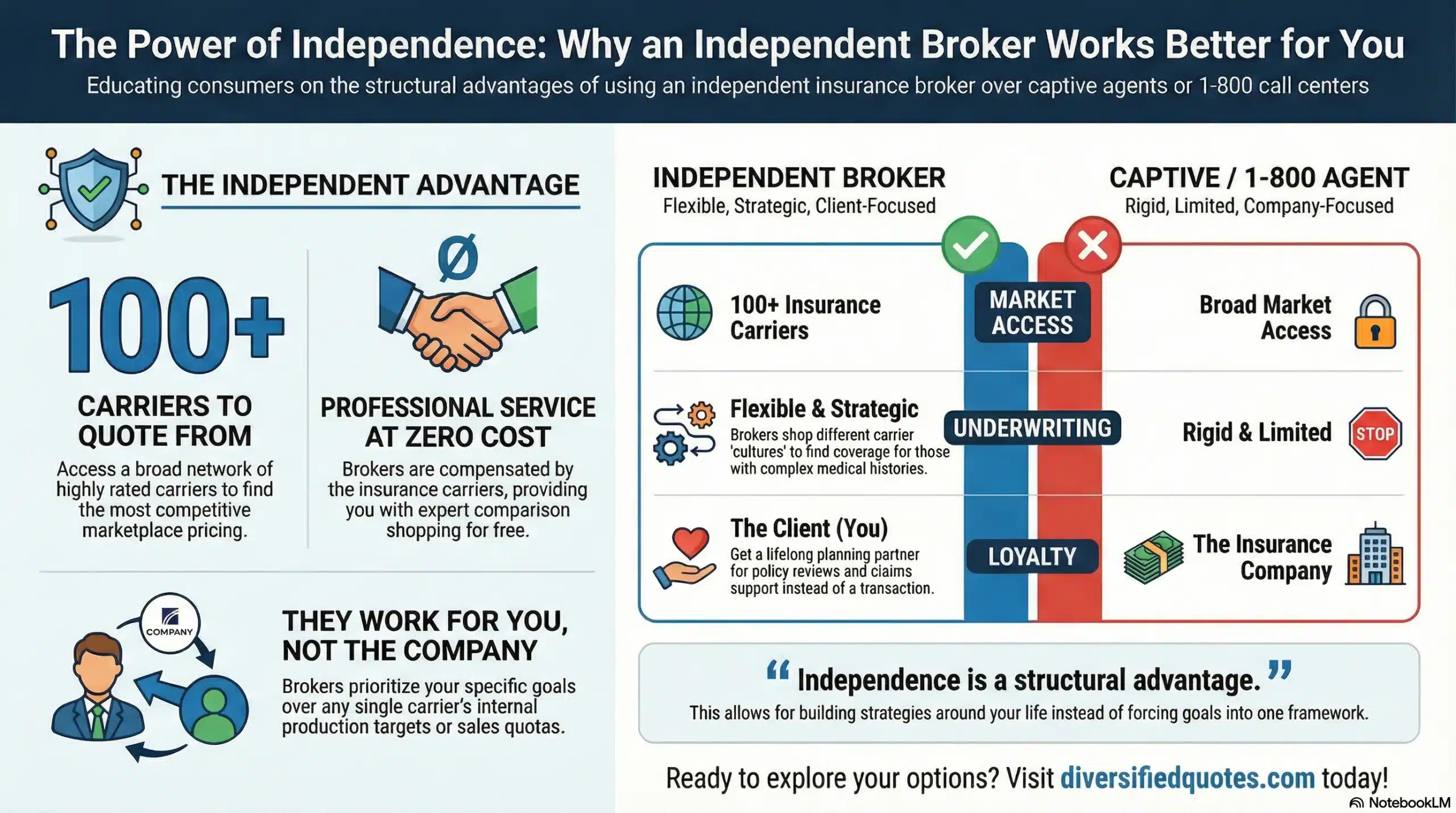
Jason Stolz, CLTC, CRPC, DIA, CAA and Chief Underwriter at Diversified Insurance Brokers (NPN 20471358), is a senior insurance and retirement professional with more than 25 years of real-world experience helping individuals, families, and business owners protect their income, assets, and long-term financial stability. As a long-time partner of the nationally licensed independent agency Diversified Insurance Brokers, Jason provides trusted guidance across multiple specialties—including fixed and indexed annuities, long-term care planning, personal and business disability insurance, life insurance solutions, Group Health, Travel Medical and Evacuation Insurance, and short-term health coverage. Diversified Insurance Brokers maintains active contracts with over 100 highly rated insurance carriers, ensuring clients have access to a broad and competitive marketplace.
His practical, education-first approach has earned recognition in publications such as VoyageATL, and contributions from his agency featured in Kiplinger and GoBankingRates— highlighting his commitment to financial clarity and client-focused planning. Drawing on deep product knowledge and years of hands-on field experience, Jason helps clients evaluate carriers, compare strategies, and build retirement and protection plans that are both secure and cost-efficient. Visitors who want to explore current annuity rates and compare options across multiple insurers can also use this annuity quote and comparison tool.
Explore More Life Insurance Options: Browse our complete guide to Business Life Insurance — covering buy-sell agreements, key person, contract indemnity & group life from 100+ carriers.
Last Reviewed: June 17, 2026 |
Reviewed by: Jason Stolz, CLTC, CRPC, DIA, CAA
Chief Underwriter, Diversified Insurance Brokers, Inc. | NPN: 20471358 | Diversified Insurance Brokers, Inc. — Licensed in all 50 states
Fact Checked by: Tonia Pettitt, CMIP©
Medicare Specialist, Diversified Insurance Brokers, Inc. | NPN: 14374308 | Diversified Insurance Brokers, Inc. — Licensed in all 50 states
Did you find this content helpful? Leave us a Google review — it helps others find trustworthy guidance too.
Editorial Standards: Diversified Insurance Brokers maintains rigorous editorial standards to ensure accuracy, clarity, and independence in all content. Learn more about our editorial standards and commitment to transparency.
