
What Is Key Person Insurance and Does Your Business Need It?
What Is Key Person Insurance and Does Your Business Need It?
Every business has people it cannot afford to lose — whether it is the founder, a rainmaker, a partner, or a key operator who holds critical processes together. If that person were to pass away unexpectedly, the financial and operational impact can be immediate. Revenue can stall. Clients can pause decisions. Lenders can tighten terms. Vendors can demand quicker payment. That is where key person life insurance comes in.
Key person life insurance is a policy a business purchases on a critical employee or executive. The company owns the policy, pays the premiums, and is typically the beneficiary. If the insured dies, the death benefit provides cash to help the company stabilize — covering lost revenue, business interruption costs, recruiting and training a replacement, paying down debt, or buying time to execute a transition plan. This coverage is especially important for small businesses, family-run firms, and growth-stage companies where knowledge and relationships are concentrated in just a few people. Without a plan in place, a tragedy can trigger a chain reaction: key clients leave, projects get delayed, lenders reassess risk, and investors may pull back. Key person life insurance is designed to stop that domino effect by providing liquidity when liquidity matters most. For more on the full range of benefits this coverage provides, our resource on the benefits of key person insurance covers the operational, financial, and relationship dimensions in detail.

See Real-Term Rates Side by Side
Life Insurance Quoter
Term vs. Permanent Key Person Coverage: The Core Decision
| Feature | Term Life Key Person Coverage | Permanent Life Key Person Coverage |
|---|---|---|
| Coverage Duration | Fixed term — typically 10, 15, or 20 years. Best matched to a defined exposure window: loan term, business growth phase, partnership agreement, or key person’s expected tenure. | Lifelong coverage as long as premiums are paid. Appropriate when key person risk is long-term or the business wants permanent planning flexibility. |
| Premium Cost | Lower annual premiums — most cost-efficient for pure death benefit protection during a defined window. Premiums are fixed for the term. | Higher annual premiums — reflects the lifelong coverage guarantee and the cash value accumulation component. Can provide additional planning optionality. |
| Cash Value | None — term is pure protection with no accumulation component. The premium purchases coverage only. | Accumulates over time — accessible via policy loans or surrender for business use if circumstances change. Can serve as a supplemental asset on the business balance sheet. |
| Lender Requirements | Most commonly used for lender-driven key person requirements — the term can be structured to match the loan payoff or covenant period precisely. | Can satisfy lender requirements and provide additional business planning flexibility. Some lenders prefer permanent structures when the key person relationship is long-term. |
| Conversion Options | Many term policies include conversion rights allowing conversion to permanent coverage without re-underwriting — valuable if the key person’s health changes during the term. | Already permanent — no conversion needed. Structure can be modified if business needs change, subject to carrier guidelines. |
| Portability | Some policies can be transferred to the key person if they leave the company — converting business coverage to personal coverage without new underwriting. | Transfer to the insured on departure is also possible — may be structured as an executive benefit where the policy is transferred at or below its cash value as a component of a separation or retirement package. |
| Best Use Case | Pure key person death benefit protection during the period of highest business exposure — loan collateral, business growth phase, revenue concentration risk, or defined partnership terms. | Long-duration key person relationships, executive benefit planning, or situations where the business wants the coverage to serve multiple roles over time (protection, accumulation, and potentially executive compensation). |
What Key Person Life Insurance Is Built to Protect
Key person life insurance is not personal life insurance with the business listed as beneficiary — it is a business risk-management tool. The policy is intended to protect the company’s balance sheet and cash flow if a critical person dies. When the death benefit is paid to the business, it can be used for whatever the company needs most in that moment, including keeping payroll stable, retaining talent, or maintaining marketing and sales momentum.
Most businesses are exposed in predictable ways. The challenge is that the exposure is rarely written down. It is often invisible until something happens. Key person coverage is designed to put a number on that exposure and pre-fund it in a way that is straightforward and flexible. The exposure takes different forms depending on the business: revenue concentration in one person’s client relationships, operational dependency on one person’s technical knowledge, debt covenants tied to leadership stability, or equity structure that makes a partner’s death a triggering event for ownership transitions. Each form of exposure requires a different sizing approach and potentially a different policy structure.
Who Qualifies as a Key Person?
A key person is anyone whose death would create a material financial impact for the company. That can be obvious — like a founder or owner — but it can also include people who are not publicly visible: the operations leader who keeps production on schedule, the engineer who owns the core technical system, the senior salesperson who drives the majority of revenue, or the partner who personally guarantees business debt. In many small and mid-sized businesses, the true key person risk is concentrated in relationships. If a top producer owns the relationships that keep accounts active, losing that individual can cause a sudden client migration. In other businesses, the risk is operational: one person holds specialized knowledge, licensing credentials, or process control that is hard to replace quickly.
A practical test is simple: if this person were gone tomorrow, how long would it take to replace their function — and what would it cost in lost revenue, delayed projects, and reputational impact during that gap? That timeline and cost estimate is one of the biggest drivers of how much coverage to consider. The replacement period is often longer than business owners expect: recruiting a comparable executive or senior producer typically takes six to eighteen months even under favorable conditions, and the business may lose momentum in the interim that is not fully recoverable even after the replacement is in place.
How to Calculate Key Person Coverage — The Four Main Methods
There is no single universally correct formula for calculating key person coverage — the right approach depends on what specific risk the business is trying to protect against. Four methods are commonly used, and many businesses apply a combination of all four to arrive at a coverage amount that reflects multiple dimensions of exposure simultaneously.
The first method is the revenue replacement approach. This calculates the percentage of annual business revenue attributable to the key person — either directly through their sales or indirectly through the operations or processes they control — and multiplies by the expected number of years it would take to replace that contribution. If a key producer generates $800,000 in annual revenue and replacement is estimated at two years, the revenue-based coverage estimate is $1.6 million. The second method is the compensation multiple approach, which insures a multiple of the key person’s total annual compensation including salary, bonus, and benefits. Multiples of five to ten times compensation are common, reflecting the idea that total compensation is a proxy for the economic value the person generates and the cost of replacement. For a key executive earning $300,000 in total compensation, a five-times multiple produces a $1.5 million coverage estimate.
The third method is the cost-to-replace approach, which focuses specifically on the direct costs of recruiting, hiring, onboarding, and training a replacement. This typically includes executive search fees (often 25% to 35% of first-year compensation), signing bonuses, relocation, training costs, and the productivity ramp period during which the replacement is learning the role. For senior positions, total replacement costs can reach $200,000 to $500,000 or more, exclusive of the revenue impact during the transition. The fourth method is the debt and covenant approach, which matches coverage to outstanding business loans, lines of credit, or specific covenant requirements from lenders who require key person coverage as a condition of financing. This method is the most mechanical — the coverage amount is determined by the lender’s requirement, not by internal business analysis — but it can serve as a useful floor or baseline alongside one of the revenue-based methods above. Our resource on the benefits of key person insurance covers how these calculations interact with business continuity planning in more detail.
Tax Treatment — What Business Owners Need to Understand
The tax treatment of key person life insurance is one of the most commonly misunderstood dimensions of this product, and getting it wrong can create unexpected outcomes for both the business and the insured. For most key person life insurance policies where the company owns the policy, pays the premiums, and is the beneficiary, the premiums are generally not tax-deductible as a business expense. The IRS does not allow a business to deduct premiums paid on a life insurance policy when the business is directly or indirectly a beneficiary of the policy. This is a common source of confusion — many business owners assume that because the policy is a business expense, it must be deductible. It is not, in the typical key person structure.
On the benefit side, the death benefit received by the business when the insured dies is generally received income-tax-free by the corporation or partnership, assuming the policy meets the requirements under Internal Revenue Code Section 101(j). For policies issued after 2006 on employer-owned life insurance, the business must comply with specific notice and consent requirements — the employee must be notified in writing that the employer intends to insure their life, the amount of coverage, and that the employer will be the beneficiary. The employee must consent to this coverage in writing. Failure to comply with these requirements can cause the death benefit to be taxable as ordinary income to the business, which dramatically changes the economic value of the coverage. Working with a qualified business insurance advisor who understands the Section 101(j) compliance framework is essential before structuring any key person policy.
Key Person Coverage and Lender Requirements
One of the most common drivers of key person life insurance for small and mid-sized businesses is a lender requirement attached to a business loan, SBA financing, commercial real estate loan, or line of credit. Lenders who extend significant credit to businesses that are operationally dependent on one or a few individuals often require key person coverage as a condition of loan approval or as an ongoing covenant of the lending relationship. The lender wants assurance that if the key person dies, the business will have the liquidity to continue servicing debt and operating without defaulting on the loan terms.
Lender-driven key person requirements typically specify a minimum death benefit amount — often equal to the loan balance or a defined percentage of it — and may require the lender to be named as a collateral assignee on the policy, which gives the lender a priority claim on the death benefit up to the loan balance. After the lender’s claim is satisfied, any remaining death benefit proceeds are paid to the business as owner and beneficiary. Understanding collateral assignment structures, how they interact with the business’s ownership and beneficiary designations, and how to satisfy lender requirements while preserving maximum flexibility for the business is an important part of structuring key person coverage for loan-driven situations. If additional specialized coverage is needed — for example, to satisfy contractual indemnification obligations or confidential agreement protections — our resource on confidential contract indemnity life insurance covers how those structures are designed separately from standard key person policies.
Key Person Insurance vs. Buy-Sell Insurance — Two Different Jobs
Key person insurance and buy-sell insurance are both business life insurance products, and they are frequently confused — but they serve fundamentally different purposes and should generally be structured as separate policies with separate funding. Key person insurance is designed to protect the business itself: the company owns the policy, receives the death benefit, and uses the proceeds to stabilize operations, replace revenue, or service debt during the transition period. The insurance is protecting the company’s ability to continue operating at a financially stable level after losing a critical person.
Buy-sell insurance is designed to fund an ownership transition: if a partner or co-owner dies, the surviving owners need money to buy out the deceased owner’s equity stake from the estate, family members, or heirs. Without buy-sell funding, surviving partners may find themselves in co-ownership with the deceased’s family members who have no operational expertise or interest in the business — or may be forced to liquidate assets to fund the buyout. Buy-sell coverage ensures the money is available to execute the ownership transition cleanly and at a pre-agreed valuation, without disrupting business operations. Because the two policies serve entirely different purposes, combining them into one policy can create coverage shortfalls in both directions: too little to stabilize operations and too little to fund the full ownership transition. The cleanest approach is to size and structure each policy independently based on its specific job, then review them together to ensure there is no unnecessary overlap or critical gap.
How Key Person Policies Are Structured
Key person coverage is typically arranged with the business as owner and beneficiary. The insured is the key employee or executive. Premiums are paid by the business. If the insured dies, the death benefit is paid to the business. This is the simplest and most common structure because it aligns with the purpose of the coverage: protecting business cash flow and continuity. The business must have an insurable interest in the key person’s life — meaning there must be a documented economic relationship between the business and the insured that creates a genuine financial exposure if the insured dies. Insurable interest is generally presumed for founders, partners, executives, and senior employees who are demonstrably critical to the business’s financial performance.
Businesses may choose term life insurance for key person coverage when the goal is straightforward protection during growth years, during a loan term, or until the company builds enough cash reserves to self-insure the risk. Permanent coverage can be considered in situations where the business wants a longer duration strategy, where the key person risk remains long-term, or where the company wants additional planning flexibility. The structure can also be coordinated with other business planning tools. Key person coverage can coexist alongside buy-sell planning, executive benefits, or loan collateral protection. The cleanest plans assign each tool to a specific purpose rather than trying to force one policy to do everything. Our broader life insurance services page covers the full range of personal and business life insurance structures available through Diversified Insurance Brokers.
Underwriting Key Executives — What the Process Looks Like
Key person life insurance is underwritten individually on the insured — meaning the key person’s health history, age, and lifestyle are evaluated to determine eligibility and rate class, just as they would be for a personal life insurance application. The business’s financial health may also be evaluated for larger face amounts, as carriers want to confirm that the coverage amount is proportionate to the company’s actual key person exposure and that the business has the financial capacity to sustain premium payments. For high face amounts — typically above $1 million — some carriers require additional financial justification, including business revenue and profit documentation, to confirm the insurable interest is proportionate to the coverage requested.
For key executives in excellent health, full underwriting typically produces the best available rates and highest face amounts. For executives whose health presents underwriting complexity, no-exam life insurance options may be available at moderate face amounts, though at higher premiums per dollar of coverage than fully underwritten policies. The key person’s cooperation with the underwriting process is also a practical consideration — some executives are reluctant to undergo medical exams, and carriers vary in how much latitude they provide for simplified underwriting at different face amounts. Working with an independent life insurance broker who can match the underwriting profile of the insured to the most favorable carrier is the most efficient path for any key person application involving health complexity.
Common Mistakes to Avoid
The most common mistake is assuming key person insurance is optional until the business is larger. Key person risk is often highest in early and mid-stage businesses because the company is less diversified — more revenue and operational control is concentrated in fewer people. Another common mistake is buying a policy without connecting it to a business plan: no defined purpose, no estimate of exposure, and no clear strategy for how proceeds will be used. A policy purchased without purpose analysis often insures the wrong amount and the wrong person.
Businesses also frequently underinsure the replacement timeline. Hiring a comparable executive or senior producer takes months, and the business can lose momentum during that time that is not fully recoverable even after a strong replacement is in place. Assuming a three-month replacement window when reality is twelve to eighteen months can mean the death benefit covers only a fraction of the actual financial disruption. Finally, ownership and beneficiary designations must be reviewed when the company structure changes. If the business brings on new partners, signs major debt, restructures equity, changes the legal entity, or changes the leadership team, the key person coverage structure should be reviewed to confirm it still serves its intended purpose and that the right parties are designated as owners and beneficiaries.
Want to identify your business’s key person exposure and model coverage options?
Request a Key Person Coverage Review
Related Pages
Continue your research with these related business and life insurance resources.
Financial Protection Essentials
Explore life insurance options, business coverage strategies, and individual protection resources for business owners and executives.
Talk With an Advisor Today
Choose how you’d like to connect—call or message us, then book a time that works for you.
Schedule here:
calendly.com/jason-dibcompanies/diversified-quotes
Licensed in all 50 states • Fiduciary, family-owned since 1980
Can a business deduct key person life insurance premiums as a business expense?
Generally no. The IRS does not allow a business to deduct premiums paid on a life insurance policy when the business is directly or indirectly a beneficiary of the policy. This applies in the standard key person structure where the company owns the policy, pays the premiums, and is named as the beneficiary. Many business owners assume key person insurance premiums are deductible because the policy is purchased for a business purpose — but the tax treatment follows the beneficiary structure, not the business purpose. The flip side of the non-deductibility is that the death benefit is generally received income-tax-free by the business, assuming the policy meets the notice and consent requirements of Internal Revenue Code Section 101(j). For employer-owned life insurance policies issued after 2006, the business must provide written notice to the insured employee, and the employee must provide written consent, before the policy is placed. Failure to satisfy these requirements can cause the death benefit to be taxable as ordinary income to the business. Consulting with a qualified tax advisor and working with a broker who understands 101(j) compliance is essential before structuring any key person policy.
What happens to the key person policy if the key person leaves the company?
If the insured key person leaves the company, the business has several options depending on the policy type and structure. The most common options are: (1) the business surrenders the policy and receives any accumulated cash value (for permanent policies) or simply terminates coverage (for term policies); (2) the business transfers ownership of the policy to the departing key person — sometimes used as a component of an executive compensation or separation package, particularly for permanent policies with meaningful cash value; (3) the business keeps the policy in force if there is still an insurable interest, such as an ongoing non-compete agreement or deferred compensation obligation. For term policies, the ability to transfer coverage to the departing insured often depends on whether the policy includes a portability or conversion provision. For permanent policies, the transfer may involve a taxable event if the cash value exceeds the premiums paid, and the structuring of the transfer should be reviewed with a tax advisor. Planning for departure scenarios at the time the key person policy is designed — not after the departure occurs — produces the most flexibility and best outcomes.
Does the key person have to consent to the coverage, and can they refuse?
Yes — written notice and consent from the insured key person is legally required for employer-owned life insurance under IRC Section 101(j), and the insured can decline to consent. The notice must inform the employee that the employer intends to purchase life insurance on their life, disclose the maximum face amount of coverage, and inform the employee that the employer will be the beneficiary. Without the employee’s written consent, the policy either cannot be placed or the death benefit will be taxable to the business. In practice, most key employees in leadership positions — founders, partners, senior executives — understand the business rationale for key person coverage and consent readily. The more sensitive situations arise with non-owner employees who may be uncomfortable with the concept of their employer holding a life insurance policy on them. Handling these conversations thoughtfully — explaining the business continuity rationale, confirming the employee has no financial obligation, and clarifying that the coverage provides no personal benefit to the employee — typically produces cooperation. For businesses insuring multiple employees as key persons, having a consistent process for notice and consent documentation reduces legal and compliance risk.
Should key person insurance and buy-sell insurance be separate policies?
Yes — in most cases, these should be separate policies because they serve different purposes and the death benefit amounts required for each purpose are independently calculated. Key person insurance is sized to protect the business’s operations during the transition period — covering revenue loss, replacement costs, debt service, and liquidity needs. Buy-sell insurance is sized to fund the ownership buyout at the agreed valuation — giving the surviving partners the capital to purchase the deceased owner’s equity stake from the estate. Combining both needs into one policy typically results in underinsuring one or both purposes. If the combined face amount is sized to fund the ownership buyout, it may be insufficient to also cover the operational disruption costs during the transition. If it is sized only for operations, it will not fully fund the ownership transfer. In addition, the ownership and beneficiary structure may differ: key person insurance is typically owned by and payable to the business entity, while buy-sell insurance under a cross-purchase structure is owned by each co-owner individually on the lives of the other co-owners. Keeping these policies separate simplifies administration, clarifies purpose, and ensures each policy is correctly sized for its specific job.
How often should key person coverage be reviewed and potentially updated?
Key person coverage should be reviewed at a minimum annually and additionally whenever a material business or personal change occurs. Events that trigger an immediate review include: taking on significant new business debt or modifying existing debt covenants; adding or losing a partner or co-owner; restructuring the legal entity (LLC to S-corp, partnership to corporation, etc.); a significant change in business revenue — either growth that increases exposure or contraction that may reduce it; a change in the insured’s health that could affect the policy’s underwriting if new coverage is needed; a key person’s departure and replacement with a new individual whose exposure may be different; or a change in the insured’s compensation or role that changes the economic exposure calculation. Coverage that was correctly sized three years ago may be significantly under or over the current exposure today. The cost of the annual review is minimal; the cost of discovering at the wrong moment that coverage is outdated can be severe. Most businesses that have worked with a knowledgeable independent broker find that a brief annual check-in is sufficient to identify any needed adjustments before they become problems.
About the Author:
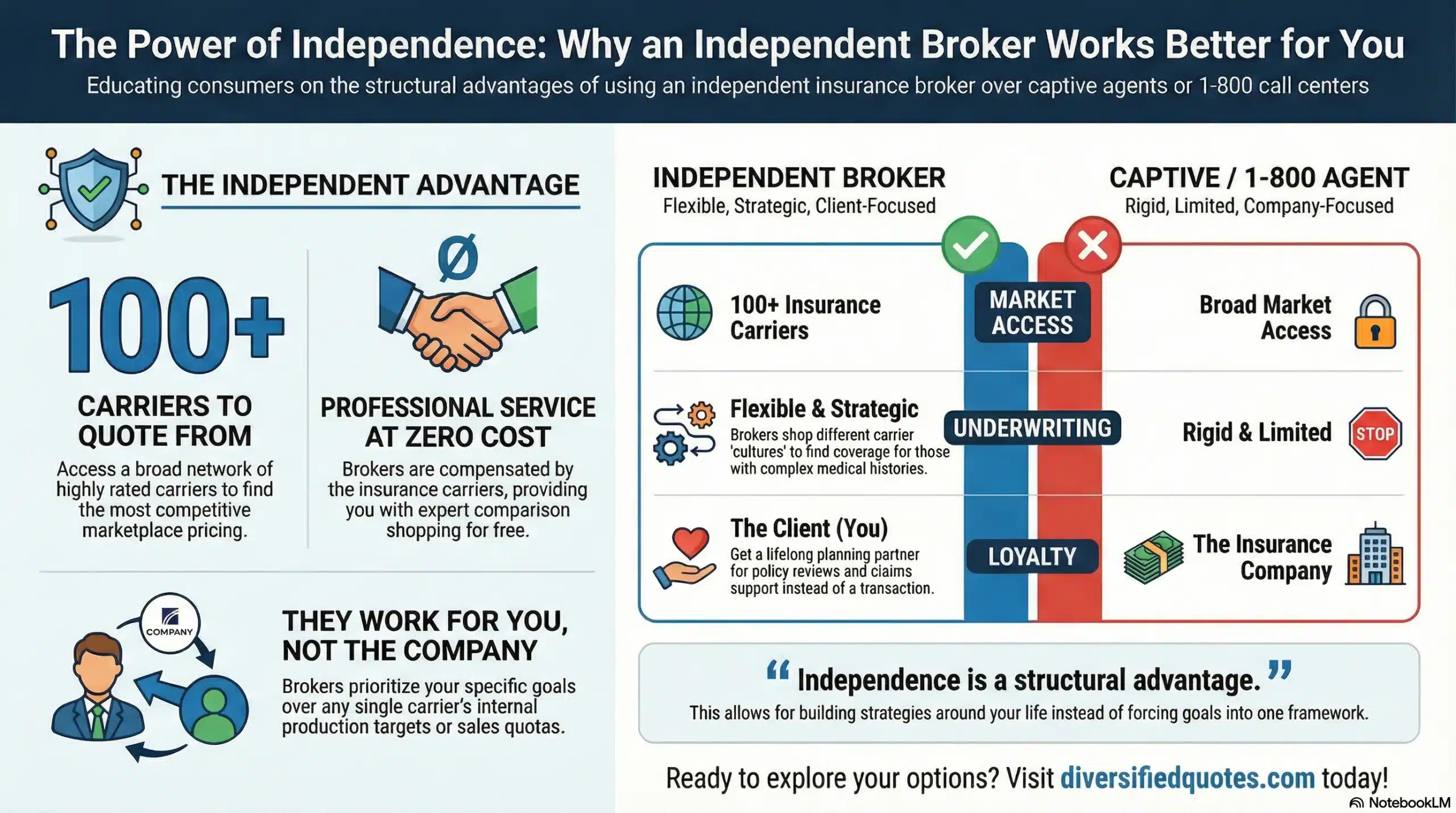
Jason Stolz, CLTC, CRPC, DIA, CAA and Chief Underwriter at Diversified Insurance Brokers (NPN 20471358), is a senior insurance and retirement professional with more than 25 years of real-world experience helping individuals, families, and business owners protect their income, assets, and long-term financial stability. As a long-time partner of the nationally licensed independent agency Diversified Insurance Brokers, Jason provides trusted guidance across multiple specialties—including fixed and indexed annuities, long-term care planning, personal and business disability insurance, life insurance solutions, Group Health, Travel Medical and Evacuation Insurance, and short-term health coverage. Diversified Insurance Brokers maintains active contracts with over 100 highly rated insurance carriers, ensuring clients have access to a broad and competitive marketplace.
His practical, education-first approach has earned recognition in publications such as VoyageATL, and contributions from his agency featured in Kiplinger and GoBankingRates— highlighting his commitment to financial clarity and client-focused planning. Drawing on deep product knowledge and years of hands-on field experience, Jason helps clients evaluate carriers, compare strategies, and build retirement and protection plans that are both secure and cost-efficient. Visitors who want to explore current annuity rates and compare options across multiple insurers can also use this annuity quote and comparison tool.
Browse More Resources: Return to our complete Life Insurance Special Topics guide — covering permanent life, estate planning, key person, IUL, infinite banking & special needs.
Last Reviewed: June 25, 2026 |
Reviewed by: Jason Stolz, CLTC, CRPC, DIA, CAA
Chief Underwriter, Diversified Insurance Brokers, Inc. | NPN: 20471358 | Diversified Insurance Brokers, Inc. — Licensed in all 50 states
Fact Checked by: Tonia Pettitt, CMIP©
Medicare Specialist, Diversified Insurance Brokers, Inc. | NPN: 14374308 | Diversified Insurance Brokers, Inc. — Licensed in all 50 states
Did you find this content helpful? Leave us a Google review — it helps others find trustworthy guidance too.
Editorial Standards: Diversified Insurance Brokers maintains rigorous editorial standards to ensure accuracy, clarity, and independence in all content. Learn more about our editorial standards and commitment to transparency.
