
Skilled Nursing Facility Rider Explained

Jason Stolz CLTC, CRPC
Cash Benefits for Skilled Nursing Care
Add a Skilled Nursing Facility (SNF) rider to help offset daily copays for rehabilitation stays after a hospital event.
A Skilled Nursing Facility rider is designed to provide daily cash benefits when you receive skilled care inside a licensed Skilled Nursing Facility following a hospital event. The key concept that makes a Skilled Nursing Facility rider valuable is that the payment is made directly to you rather than to the medical provider. That structure gives you flexibility during recovery, which is critical because post-hospital rehabilitation expenses rarely show up as one clean, predictable bill. Many families quickly discover that recovery costs include transportation, home transition costs, temporary caregiver support, medical equipment, travel expenses for family members, medication changes, and lost productivity or income during recovery windows.
Healthcare delivery has changed significantly over the past decade. Hospitals are now focused on stabilizing patients quickly and transferring them to lower-cost recovery environments as soon as medically appropriate. While this is efficient from a system standpoint, it shifts more financial responsibility into the Skilled Nursing Facility phase of recovery. The Skilled Nursing Facility rider exists specifically to address that shift. Without a Skilled Nursing Facility rider, many patients discover that their hospital coverage was strong, but their rehab phase exposure is where real financial stress occurs.
For Medicare Advantage members and individuals with cost-sharing heavy health plans, Skilled Nursing Facility copays often escalate over time. The first several days may have minimal copays, followed by significantly higher daily copays after the early covered period ends. This is where a Skilled Nursing Facility rider becomes strategically important. The goal is not always to fully eliminate cost exposure. Instead, it is designed to flatten the financial spike that can occur during longer rehabilitation stays.
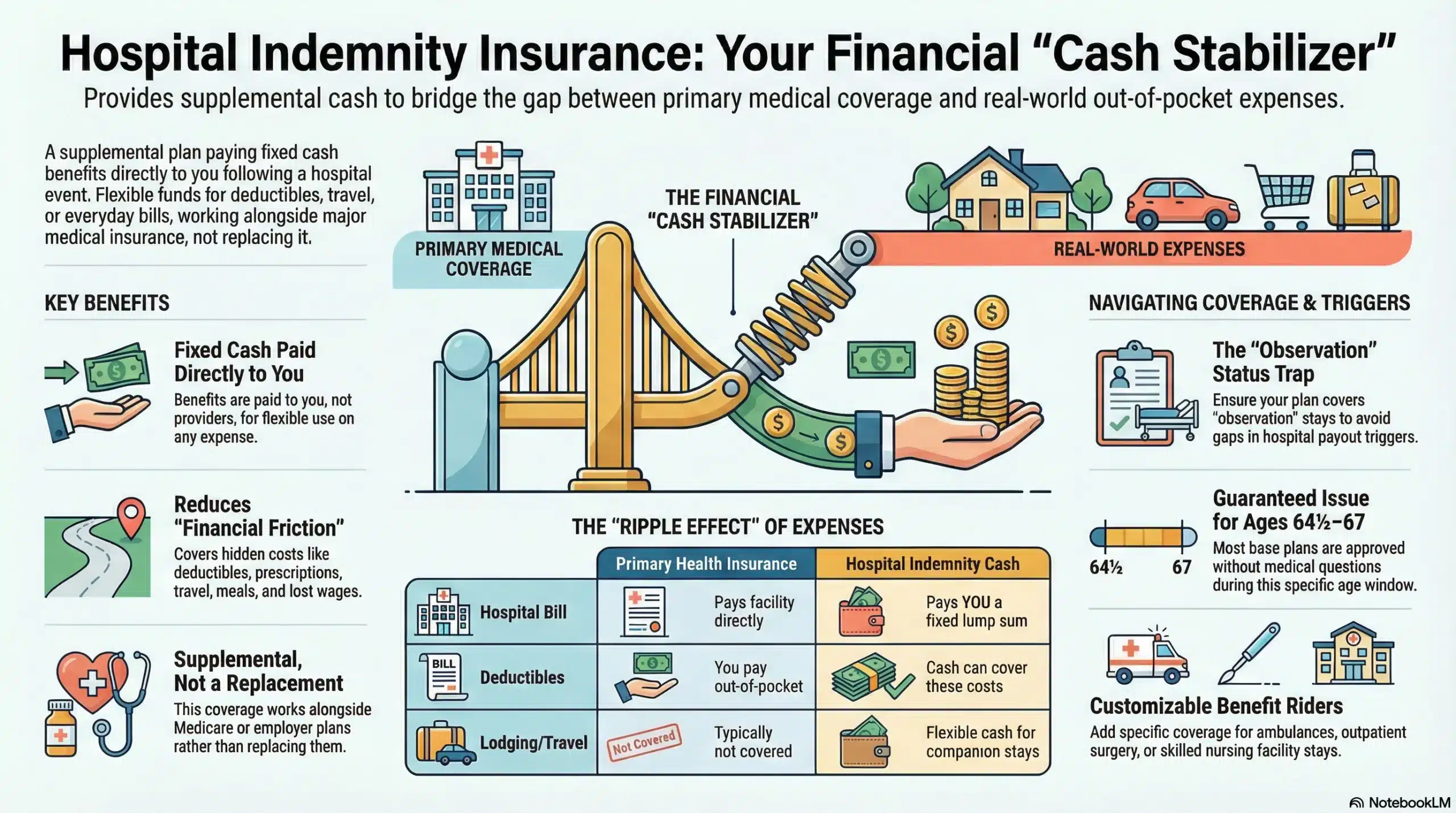
Another major reason Skilled Nursing Facility riders are growing in popularity is predictability. Retirement planning depends on stable monthly expense structures. Unexpected medical recovery costs can disrupt withdrawal strategies, tax planning, and income sequencing. A Skilled Nursing Facility rider functions as a stabilizer, creating a secondary layer of financial protection that activates during one of the most financially vulnerable phases of medical recovery.
Many people assume Skilled Nursing Facility stays are rare or only associated with extreme medical situations. In reality, they are commonly used for orthopedic recovery, cardiac rehabilitation, neurological stabilization, wound recovery, and post-surgical therapy support. The Skilled Nursing Facility rider is designed to protect against the financial side of those very common recovery pathways rather than rare catastrophic events.
Understanding how Skilled Nursing Facility copays are structured is critical. Many plans use tiered copay structures that increase as length of stay increases. The logic from an insurance perspective is to encourage shorter rehab stays. However, from a patient perspective, recovery timelines do not always align with financial incentives. A Skilled Nursing Facility rider provides financial breathing room so recovery decisions can be based on medical outcomes rather than financial pressure.
One of the biggest planning mistakes people make is assuming that Medicare or major medical insurance will automatically cover the entire Skilled Nursing Facility stay. While coverage is often strong in early days, longer recovery periods can produce meaningful daily copays. Even moderate copays can compound quickly across multi-week rehabilitation windows. The Skilled Nursing Facility rider helps offset that cumulative exposure.
The Skilled Nursing Facility rider also supports families emotionally and logistically. Recovery periods often create ripple effects across households. Spouses may reduce work hours. Adult children may travel or provide support. Additional services may be needed at home once discharge occurs. Cash benefits from a Skilled Nursing Facility rider provide flexibility to manage those ripple effects without forcing asset liquidation or high-interest borrowing.
From a financial planning perspective, Skilled Nursing Facility riders are often evaluated alongside hospital indemnity coverage, observation benefits, ambulance riders, and outpatient recovery riders. The most effective hospital indemnity strategies follow the real-world flow of medical care, starting with emergency services and continuing through rehabilitation and transition back to home living. The Skilled Nursing Facility rider represents the final and often longest phase of that recovery chain.
In retirement planning conversations, Skilled Nursing Facility riders are often framed as “episode-of-care stabilizers.” A single medical event rarely produces only one bill. Instead, it produces a cascade of expenses across multiple care environments. The Skilled Nursing Facility rider is designed to make that cascade more predictable and manageable.
Many clients are surprised to learn that Skilled Nursing Facility recovery can sometimes last longer than hospital stays. Hospital stays are becoming shorter across most procedure categories, while rehabilitation timelines remain dependent on patient response, therapy progression, and complication management. The Skilled Nursing Facility rider provides protection where recovery time variability is highest.
Another overlooked factor is geographic variation in recovery logistics. Rural clients may face longer travel distances for rehabilitation visits, family coordination challenges, and transportation complexities. Skilled Nursing Facility rider cash benefits can help offset those non-medical but very real recovery expenses.
Elective surgery planning is another common scenario where Skilled Nursing Facility riders are evaluated. Procedures such as joint replacements, spinal surgeries, and certain cardiac interventions often include predictable recovery phases. When recovery is predictable, it allows for precise Skilled Nursing Facility rider design aligned to expected rehab windows.
Skilled Nursing Facility riders also serve as psychological protection. Medical recovery is stressful enough without financial uncertainty layered on top. Many policyholders report that knowing a daily cash benefit is available reduces recovery anxiety and allows patients to focus fully on therapy and medical outcomes.
When evaluating Skilled Nursing Facility rider designs, one of the most important considerations is aligning benefit triggers with actual treatment pathways. Some policies require inpatient hospital admission before Skilled Nursing Facility benefits activate. Others recognize extended observation stays. Matching rider triggers to real medical pathways prevents coverage surprises.
Another important design factor is benefit duration selection. Shorter benefit durations may be appropriate for elective surgery recovery planning. Longer benefit durations may be more appropriate for clients with elevated risk factors for longer rehabilitation timelines. The Skilled Nursing Facility rider can be tailored based on individual health profiles, surgical planning, and plan cost structures.
From an asset protection perspective, Skilled Nursing Facility riders act as buffers that protect investment and retirement accounts from being tapped during temporary recovery expense spikes. This can preserve long-term compounding and income planning structures.
Another important consideration is coordination with outpatient recovery transitions. Many recovery journeys move from Skilled Nursing Facility care to home-based therapy and follow-up care. Skilled Nursing Facility rider cash benefits can help bridge transition periods when multiple smaller expenses accumulate simultaneously.
Clients often ask whether Skilled Nursing Facility riders duplicate long-term care insurance. In reality, they serve different purposes. Long-term care insurance typically focuses on extended custodial care scenarios. Skilled Nursing Facility riders focus on short-term post-hospital rehabilitation recovery windows. Many clients carry both forms of protection because they address different risk categories.
Policyholders also appreciate the simplicity of Skilled Nursing Facility rider claims. Most claims rely on facility documentation, physician orders, and admission verification. Compared to more complex long-term care claims processes, Skilled Nursing Facility rider claims are typically more straightforward and faster to process.
One of the most valuable aspects of Skilled Nursing Facility riders is adaptability. Riders can often be adjusted during plan design phases to match evolving health plan structures. Because Medicare Advantage plans and individual health plans update cost-sharing structures annually, Skilled Nursing Facility rider planning is often reviewed during annual coverage reviews.
As healthcare cost structures continue evolving, Skilled Nursing Facility riders are expected to remain a core component of hospital indemnity planning. Recovery phase financial exposure is one of the fastest growing areas of patient responsibility, and Skilled Nursing Facility riders directly target that risk.
Match SNF Cash Benefits to Your Plan Copays
We design Skilled Nursing Facility riders around your actual Medicare Advantage or health plan cost structure.
Build My SNF Rider QuoteWhen evaluating Skilled Nursing Facility rider planning inside broader retirement strategy, many advisors focus on sequence-of-returns risk. Medical expense spikes during market downturns can force withdrawals at unfavorable times. Skilled Nursing Facility riders help isolate medical recovery costs from market timing risk.
Another important factor is liquidity preservation. Skilled Nursing Facility recovery expenses often occur quickly and require immediate payment. Cash benefits from Skilled Nursing Facility riders help maintain liquidity without disrupting broader portfolio strategy.
Skilled Nursing Facility riders are also commonly used by individuals who want protection but are not ready to commit to full long-term care insurance strategies. In this sense, Skilled Nursing Facility riders serve as middle-layer protection between standard health insurance and extended care insurance strategies.
Policy design conversations also evaluate inflation exposure. While Skilled Nursing Facility riders typically provide fixed daily benefits, many clients design riders high enough to absorb expected cost growth over policy lifetime. This is part of broader episode-of-care modeling.
Another major consideration is family financial coordination. Recovery periods often involve shared financial responsibility between spouses or family members. Skilled Nursing Facility rider benefits provide flexible support that can be allocated wherever recovery support is needed most.
From a claims standpoint, Skilled Nursing Facility riders are generally triggered by objective medical documentation rather than subjective functional assessments. This can simplify claims processes and reduce uncertainty during already stressful recovery periods.
Healthcare delivery models will likely continue shifting toward shorter inpatient stays and longer outpatient or rehabilitation recovery phases. Skilled Nursing Facility riders are positioned directly at the intersection of that shift.
Many financial professionals now view Skilled Nursing Facility riders as standard components of hospital indemnity design rather than optional add-ons. As recovery responsibility shifts toward patients, protection must shift as well.
Ultimately, Skilled Nursing Facility riders provide something many other insurance tools cannot: flexible, patient-controlled recovery phase financial support that activates exactly when medical recovery transitions from hospital stabilization to rehabilitation rebuilding.
Design Skilled Nursing Facility Coverage That Fits Your Health Plan
We align daily cash benefits, day limits, and trigger rules to your exact plan so you avoid overpaying or underinsuring.
Request My Custom SNF Rider QuoteRelated Hospital Indemnity Planning Topics
Explore how different riders and benefits work together to protect you across the full hospital and recovery cycle.
Talk With an Advisor Today
Choose how you’d like to connect—call or message us, then book a time that works for you.
Schedule here:
calendly.com/jason-dibcompanies/diversified-quotes
Licensed in all 50 states • Fiduciary, family-owned since 1980
Frequently Asked Questions
What is a Skilled Nursing Facility (SNF) rider?
A Skilled Nursing Facility rider is an optional add-on that pays a fixed cash benefit when you receive covered skilled care in a Skilled Nursing Facility after a qualifying hospital-related event. The money is paid to you, so you can apply it toward copays, travel, household bills, caregiver support, or other recovery costs.
Is an SNF rider the same as long-term care insurance?
No. An SNF rider is generally designed for short-term, post-hospital rehabilitation stays in a Skilled Nursing Facility. Long-term care insurance is typically intended for longer-duration custodial care needs (help with daily activities) that may last months or years.
When does an SNF rider usually pay benefits?
Most SNF riders pay after a qualifying trigger is met, such as an inpatient hospital admission (and in some designs, a qualifying observation stay) followed by a physician-ordered transfer to a Skilled Nursing Facility. Each plan defines the exact trigger rules, so benefit timing depends on the policy.
Does the SNF rider pay the facility directly or pay me?
In most hospital indemnity designs, the SNF rider pays you a fixed daily amount (up to your plan’s limits). You decide how to use the funds—whether that’s offsetting skilled nursing copays, transportation, home transition expenses, or everyday bills during recovery.
How much does an SNF rider typically pay per day?
Daily benefit amounts vary by carrier and plan design. Many policies allow you to select the daily benefit level and the maximum number of covered days, so the rider can be matched to your health plan’s copay schedule and your budget.
How many days will an SNF rider cover?
Coverage limits vary. Some plans apply a maximum number of days per confinement (per event), others use annual maximums, and some include both. Your plan documents will specify the day limits and how benefits reset.
Does an SNF rider cover assisted living or home health care?
Usually no. A Skilled Nursing Facility rider typically applies to skilled care delivered in a qualified Skilled Nursing Facility setting. Assisted living and home health may be addressed by different riders or separate coverage types, depending on the plan.
What documentation is typically needed to file an SNF rider claim?
Most claims require proof of the qualifying hospital event (as defined by the policy), confirmation of Skilled Nursing Facility admission, and the dates of skilled care. Carriers may also require a physician order indicating that skilled care was medically necessary.
Can an SNF rider help with Medicare Advantage SNF copays?
Yes—this is one of the most common reasons people add an SNF rider. Many Medicare Advantage plans use daily SNF copays that can add up during rehab. An SNF rider can be sized to help offset those daily copays during a rehabilitation stay.
What other riders pair well with an SNF rider?
Many people pair an SNF rider with ER, observation, hospital confinement (daily hospital), ambulance, outpatient surgery, and rehab/therapy benefits. The goal is to follow the real care timeline—ER to hospital to rehab—so cash benefits support the full recovery arc.
About the Author:
Jason Stolz, CLTC, CRPC and Chief Underwriter at Diversified Insurance Brokers (NPN 20471358), is a senior insurance and retirement professional with more than two decades of real-world experience helping individuals, families, and business owners protect their income, assets, and long-term financial stability. As a long-time partner of the nationally licensed independent agency Diversified Insurance Brokers, Jason provides trusted guidance across multiple specialties—including fixed and indexed annuities, long-term care planning, personal and business disability insurance, life insurance solutions, Group Health, and short-term health coverage. Diversified Insurance Brokers maintains active contracts with over 100 highly rated insurance carriers, ensuring clients have access to a broad and competitive marketplace.
His practical, education-first approach has earned recognition in publications such as VoyageATL, highlighting his commitment to financial clarity and client-focused planning. Drawing on deep product knowledge and years of hands-on field experience, Jason helps clients evaluate carriers, compare strategies, and build retirement and protection plans that are both secure and cost-efficient. Visitors who want to explore current annuity rates and compare options across multiple insurers can also use this annuity quote and comparison tool.
