
Whole Life Insurance for People on Fixed Income

Jason Stolz CLTC, CRPC
Fixed budgets shouldn’t mean giving up essential protection. Whole life insurance for people on fixed income is built around what matters most when your income is predictable: lifetime coverage, guaranteed premiums, and a guaranteed death benefit—with pricing that can be structured to fit a monthly plan.
Whether you’re living on Social Security, pension income, disability benefits, retirement distributions, or a combination of smaller income streams, the challenge is usually the same: you want coverage that’s stable, simple, and dependable without creating financial stress. A well-designed whole life policy can help protect loved ones from funeral costs, outstanding medical bills, and other final expenses—while also creating a small financial cushion in the form of guaranteed cash value over time.
At Diversified Insurance Brokers, we help families compare permanent life insurance options from many carriers so you can find the best fit for your budget, your age, and your health profile. The goal is not to “overbuy” coverage. The goal is to find a policy you can realistically keep for the long haul—because the best life insurance policy is the one that stays in force.
Compare Affordable Whole Life Options
We’ll show lifetime coverage choices—final expense, traditional whole life, and guaranteed issue—across 100+ carriers.
Why Whole Life Insurance Fits a Fixed Income
When your income is steady—but limited—insurance has to behave the same way. That’s one of the biggest reasons whole life insurance for people on fixed income can be a great solution. It’s designed to stay predictable as you age, instead of becoming a financial moving target.
Many people on a fixed budget are not looking for huge policies. They’re looking for a policy that provides reliable protection for final expenses and allows them to keep their savings intact for living expenses. Whole life is often preferred because it’s permanent, it doesn’t expire like term insurance, and it is built around contractual guarantees.
Guaranteed premiums for life matter because they reduce the fear of “pricing out” later. A policy that is affordable today—but unstable tomorrow—can be stressful. Whole life keeps the pricing level as long as you pay premiums according to the contract.
Guaranteed death benefit matters because it provides a clear purpose: funeral costs, medical bills, credit balances, and other end-of-life expenses that often hit families quickly. Even modest coverage can relieve immediate pressure on your loved ones.
Guaranteed cash value is a bonus feature many people don’t fully understand. The cash value usually grows slowly in the early years, but it can become a useful “back-up” option later in life. It’s not meant to replace a savings account, but it can create flexibility when unexpected expenses arise.
Simplified underwriting options are also a major advantage. Many senior-focused whole life policies use health questions and prescription history checks rather than requiring a full exam. That makes coverage more accessible for people who prefer a simpler process.
Whole Life Insurance for People on Fixed Income: Budget-Smart Policy Designs
There isn’t just one “whole life insurance” product. There are different types of permanent coverage that fall under the whole life umbrella, and choosing the right design can be the difference between a policy that fits comfortably and a policy that strains your monthly cash flow.
For most people on a fixed income, the best approach is to start with the simplest question: What problem are you trying to solve? If the answer is final expenses, then final expense whole life often makes the most sense. If the goal is legacy, a larger policy may be appropriate. If health makes approval difficult, a guaranteed issue policy may be the best path.
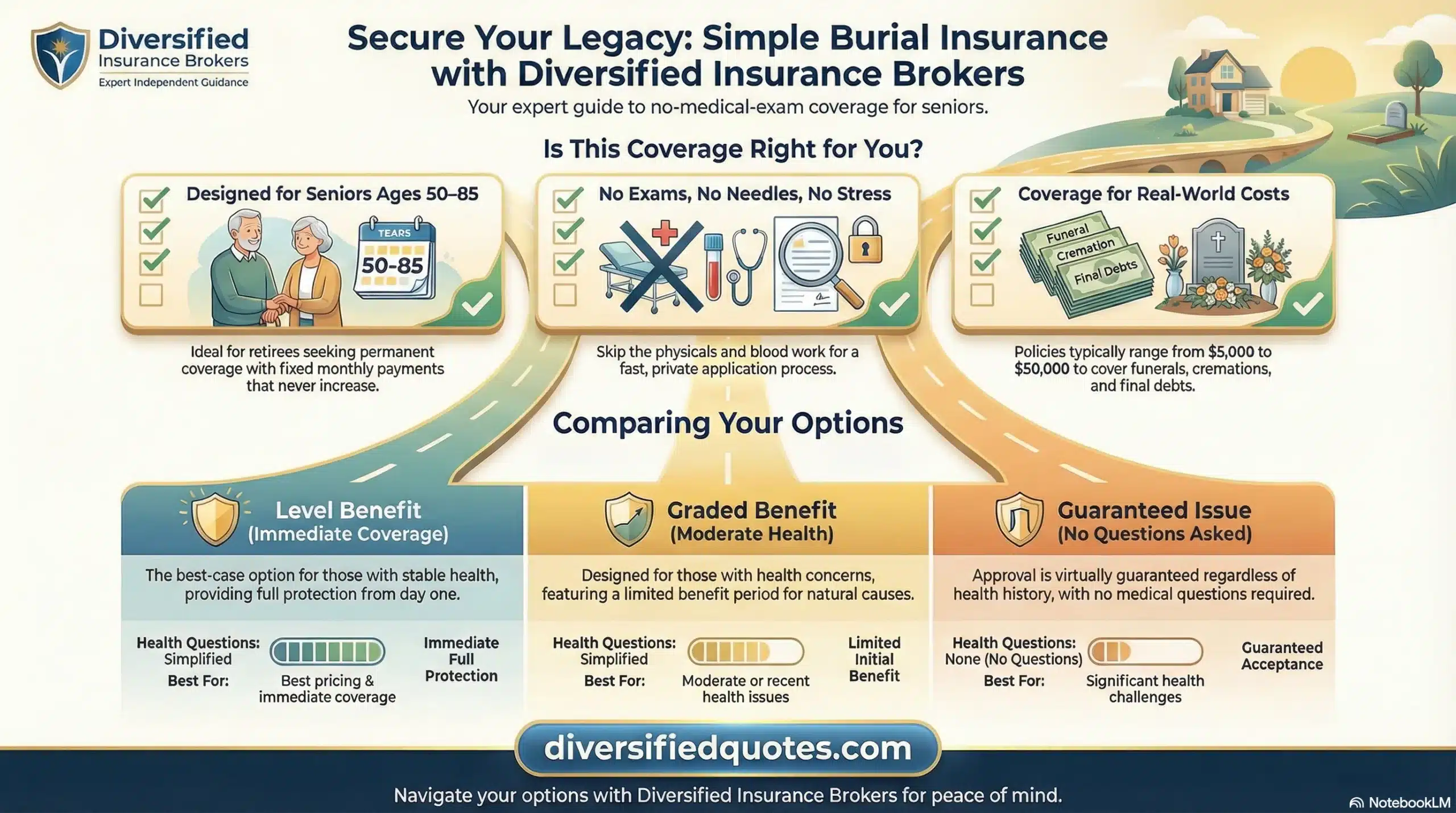
Final Expense (Burial) Whole Life is one of the most common solutions for fixed-income households because it typically offers smaller benefit amounts and simplified underwriting. Many families use it to cover funeral costs, medical bills, and small debts. You can explore the broader category here: burial insurance.
Guaranteed Issue Whole Life is designed for people who either don’t want health questions or have health issues that make simplified underwriting difficult. Approval is usually guaranteed within age ranges, but premiums are higher for the same coverage amount and the policy often includes a graded benefit period. If you’re comparing that option, here’s a reference point: Gerber Guaranteed Issue Whole Life.
Traditional Whole Life usually provides level premiums and level benefits with stronger long-term cash value mechanics. Some policies may have dividend potential (not guaranteed). These are often used when someone wants coverage beyond funeral-only protection, or wants a stronger cash value profile over time.
Riders (use selectively) can improve flexibility, but they can also increase cost. Some households benefit from living benefits riders that allow access to a portion of the death benefit for qualifying chronic or terminal illness situations. If you’re exploring that concept, this guide provides more detail: life insurance with living benefits for seniors.
The most important rule for fixed-income planning is simple: don’t pay for features you won’t use. A basic policy that stays active is usually better than an “enhanced” policy that becomes difficult to maintain.
Burial Insurance Calculator
If your goal is predictable whole life protection for final expenses, this calculator helps you estimate pricing by age, state, and coverage amount—so you can right-size coverage for a fixed monthly budget.
Tip: Start with $10,000–$25,000 to match typical final expense goals, then adjust up or down to fit your monthly comfort zone.
How Whole Life Pricing Works When You’re on a Fixed Income
People often assume that whole life insurance is automatically expensive. The reality is more nuanced. Whole life pricing depends on a few key factors, and many of those factors can be structured in a budget-friendly way when you’re focused on modest coverage.
For example, a whole life policy designed for a $10,000 to $25,000 death benefit can be dramatically different from a policy designed for $250,000 or more. Fixed-income households often benefit from smaller coverage amounts because the goal is specific: final expenses and family protection during a difficult time.
Age is a major pricing driver. The older you are, the higher the premium generally becomes, because the insurer expects fewer years of premium payments. That doesn’t mean it’s “too late,” but it does mean that small differences in benefit amount can have a noticeable impact on monthly cost.
Health matters, but different policy types treat health differently. Some products focus heavily on detailed medical underwriting, while final expense products may use simplified underwriting. If health issues exist, the solution isn’t always “no.” It may simply mean choosing the right kind of whole life policy.
Build and lifestyle factors can also influence premiums. Things like height/weight ranges, tobacco use, and certain medications may shift pricing. That’s why comparing multiple carriers can be especially valuable instead of assuming the first quote is the “only” outcome.
Payment mode can matter. Monthly draft options are common, but some carriers offer small pricing advantages depending on how you pay. Even when the difference is minor, consistency matters on a fixed budget because the goal is long-term stability.
How to Keep Premiums Affordable Without Losing the Protection You Need
Right-size the coverage. The most common budget mistake is buying more death benefit than the situation truly requires. When the goal is final expenses, choosing a realistic coverage amount can keep premiums manageable while still protecting loved ones from immediate costs.
Choose monthly EFT/ACH when possible. Automatic bank draft helps many families stay on track and reduces missed payments that could risk policy lapse. When premiums are designed to be predictable, the payment method should be predictable too.
Avoid unnecessary riders. Riders can add flexibility, but they can also add cost. If budget is tight, start with basic whole life protection and only add riders when they clearly solve a problem you expect to face.
Consider graded benefit coverage when needed. For some applicants, health history can push simplified options out of reach. A graded benefit plan can still provide meaningful protection when immediate coverage isn’t available. It’s not “inferior,” it’s just designed for different underwriting situations.
Shop independently. Pricing differences between carriers can be meaningful, especially at older ages. The same person can see very different premiums depending on how each carrier evaluates health history and prescription records.
If you want to go deeper into budget-based coverage strategy, many fixed-income households also compare options like affordable life insurance for seniors with health issues when health is part of the affordability puzzle.
Whole Life vs. Other Fixed-Income Coverage Options
Not every fixed-income household needs the same type of life insurance. The best solution depends on your timeline, your budget stability, and whether your goal is final expenses or broader family protection. The comparison below is a simple starting point to help you choose the right direction.
| Option | Premiums | Covers For Life? | Health Screening | Best For |
|---|---|---|---|---|
| Whole Life (Traditional) | Level for life | Yes | Health questions; sometimes exam | Lifelong protection + cash value |
| Final Expense Whole Life | Level, smaller benefit | Yes | Simplified issue | Funeral + medical bills on a budget |
| Guaranteed Issue Whole Life | Higher, graded early years | Yes | No health questions | Coverage despite health challenges |
| Term Life (10–30 yrs) | Lowest initially | No (expires) | Health questions; often no-exam options | Temporary needs with strict budgets |
For many people on a fixed income, the practical takeaway is simple: if your biggest concern is final expenses and you want a policy that won’t expire, then final expense whole life is usually the cleanest match.
Who Benefits Most From Whole Life Insurance for People on Fixed Income?
This type of coverage is best for people who want financial protection that doesn’t require ongoing decision-making. Once the policy is in force, the job becomes simple: keep it active, and the protection remains in place for life.
Retirees often choose whole life because it can handle funeral expenses and create a small legacy without requiring their children to handle those costs out of pocket.
Seniors with health conditions may benefit because many final expense and simplified whole life options are designed for accessibility. If you’re comparing how health affects affordability, this guide is relevant: life insurance for seniors with health issues.
Caregivers sometimes look for living benefits riders to create flexibility if health declines. Those features can be valuable, but they should be added carefully when budget is limited.
Finally, whole life is a strong fit for anyone who wants to avoid leaving financial burdens behind, even when savings are modest. Funeral costs and final medical expenses can create immediate stress, and whole life insurance can help prevent that burden from landing on family members.
How Cash Value Works (And How to Use It Safely)
Cash value is one of the features that makes whole life insurance different from term life insurance. Over time, whole life policies build guaranteed cash value, and that cash value can be accessed in certain ways. For fixed-income households, the key is understanding what cash value is meant to do—and what it should not be used for.
Cash value is not meant to replace savings, but it can provide a backup option for emergencies. Many policies allow loans against the cash value, and some allow withdrawals depending on the policy structure. However, loans and withdrawals can reduce the death benefit and may create interest costs or policy risk if mismanaged.
If you’re on a fixed income, the safest way to think about cash value is as a secondary layer of flexibility. Your primary goal is usually the death benefit and the guaranteed premium structure. Cash value is a long-term feature that can be helpful, but it should be used carefully and strategically.
Example: Balancing Budget and Protection the Right Way
Evelyn, 69, is on a fixed retirement income and wants to avoid burdening her children with funeral costs. She chooses a $15,000 final expense whole life policy with level premiums and a simplified approval process that does not require a medical exam. The coverage fits her monthly budget, and it creates a clear plan for final expenses without forcing her to pull money out of emergency savings.
The biggest reason this approach works is that it’s realistic. The policy isn’t oversized. It’s designed for a specific job. And because the premium is manageable, it’s easier to keep the policy active for the long run.
Common Mistakes to Avoid When Buying Whole Life on a Fixed Income
Buying too much coverage too fast is one of the most common mistakes. It’s natural to want a policy that “covers everything,” but whole life premiums increase as coverage increases. Many households do better by choosing a modest benefit that covers final expenses first.
Assuming you only qualify for guaranteed issue is another common problem. Some people hear “whole life” and assume they need the most expensive option. In reality, many applicants qualify for simplified whole life designs that offer better pricing and day-one benefits.
Waiting too long can also create unnecessary cost. Even if you’re healthy, premiums generally increase with age. If you know you want permanent coverage, earlier planning often improves affordability and policy options.
Not comparing multiple carriers is a quiet but costly mistake. Different carriers look at medications and health history differently, so even small differences in underwriting rules can change the final premium.
Helpful Resources
If you’re comparing policy types, underwriting paths, and affordability strategies, these pages can help.
Get Quotes That Fit Your Monthly Budget
Compare whole life, final expense, and guaranteed issue options to find a design that stays affordable long-term.
Talk With an Advisor Today
Choose how you’d like to connect—call or message us, then book a time that works for you.
Schedule here:
calendly.com/jason-dibcompanies/diversified-quotes
Licensed in all 50 states • Fiduciary, family-owned since 1980
FAQs: Whole Life Insurance for People on Fixed Income
Can my premiums go up later?
What if I can’t qualify due to health?
Do I need living benefits?
Will cash value help my budget?
Is final expense whole life the same as whole life insurance?
How much coverage do people on a fixed income usually buy?
About the Author:
Jason Stolz, CLTC, CRPC and Chief Underwriter at Diversified Insurance Brokers, is a senior insurance and retirement professional with more than two decades of real-world experience helping individuals, families, and business owners protect their income, assets, and long-term financial stability. As a long-time partner of the nationally licensed independent agency Diversified Insurance Brokers, Jason provides trusted guidance across multiple specialties—including fixed and indexed annuities, long-term care planning, personal and business disability insurance, life insurance solutions, and short-term health coverage. Diversified Insurance Brokers maintains active contracts with over 100 highly rated insurance carriers, ensuring clients have access to a broad and competitive marketplace.
His practical, education-first approach has earned recognition in publications such as VoyageATL, highlighting his commitment to financial clarity and client-focused planning. Drawing on deep product knowledge and years of hands-on field experience, Jason helps clients evaluate carriers, compare strategies, and build retirement and protection plans that are both secure and cost-efficient.
