
Affordable Long Term Care Insurance for Retirees

Jason Stolz CLTC, CRPC
For many retirees, the cost of long term care is one of the biggest concerns in retirement planning—because it can arrive slowly, last longer than expected, and show up at the exact moment you’re trying to protect monthly income. The good news is that affordable long term care insurance for retirees does exist. At Diversified Insurance Brokers, we help retirees compare designs that keep premiums manageable while still providing meaningful protection against the rising cost of care.
“Affordable” does not mean “small” or “bare minimum.” It means the policy is sized and structured so you can realistically keep it long term—because the best long term care insurance is the coverage you can sustain through retirement. In practice, that usually means focusing on the parts of the risk that do the most damage to a retirement plan: high monthly costs, long durations, and the uncertainty of when care begins.
Get an Affordable LTC Quote
Compare LTC policies designed for retirees with competitive premiums and strong benefits.
Why Affordable LTC Coverage Matters
Long term care costs can be startling because they’re not “one-time” expenses. Home care can stack up month after month, assisted living fees typically rise over time, and nursing facility costs can easily reach into the tens of thousands of dollars annually. Without coverage, retirees may be forced to draw down retirement accounts quickly, reduce lifestyle spending, or lean heavily on family caregivers.
Affordable long term care insurance helps create a dedicated pool of money for care. The goal isn’t to buy the biggest policy possible—it’s to choose a design that meaningfully reduces risk, preserves flexibility, and fits into retirement cash flow without causing stress. That “fit” is what keeps the coverage in place, which is why we spend so much time on benefit design and carrier matching rather than pushing one default plan.
Another reason affordability matters is that care needs can impact two lives at once. When one spouse needs care, the other spouse often becomes the “default coordinator,” and household expenses can rise at the same time income is being protected. A well-structured policy can reduce pressure on the family and help preserve the lifestyle of the healthy spouse—especially when benefits are coordinated thoughtfully for couples.
What Long Term Care Insurance Actually Pays For
Long term care policies are designed to pay for custodial and supportive services—help that’s often needed for daily living, not necessarily skilled medical treatment. Coverage commonly includes in-home care (personal care aides and homemaker services), adult day programs, assisted living facilities, and skilled nursing facilities.
Many modern contracts also include practical benefits that can improve real-world outcomes. Care coordination can help you identify qualified providers and build a plan quickly. Respite benefits can give family caregivers a break. Some policies include caregiver training, home modification benefits, or support services that make the home environment safer. These features don’t just “sound nice” on paper—they can reduce stress during an already difficult transition.
If you want to explore the full scope of coverage options and how carriers define covered services, our long-term care insurance services page provides a broader overview and can help you understand how different plan types are structured.
How Benefits Are Triggered
Most long term care contracts pay benefits when a licensed professional certifies that you’re unable to perform at least two of the six Activities of Daily Living (ADLs)—bathing, dressing, eating, toileting, transferring, and continence—or when you have a qualifying severe cognitive impairment requiring substantial supervision.
Once the benefit trigger is met, the policy typically applies an elimination period (a waiting period measured in days) before benefits begin. After that, the policy reimburses or pays eligible expenses up to the daily or monthly maximum you selected. In plain terms: the design choices you make at application determine how much the policy can pay and how long it can pay, which is why “affordable” is really about smart benefit selection—not just chasing the lowest premium.
Some policies pay as reimbursement, meaning the carrier pays after eligible expenses are incurred and documented. Other designs use an indemnity or cash-style approach, which can provide more flexibility if care costs vary or if informal care arrangements are part of the plan. The “right” approach depends on how you expect care to be delivered and how you want claims handled when the time comes.
What Impacts the Cost of LTC Insurance?
LTC pricing is primarily driven by age at application, health, benefit size, benefit duration, and inflation protection. Because retirees often want coverage that stays affordable long-term, it helps to understand what you can “turn up” or “turn down” to hit a comfortable monthly number.
Age at application matters because carriers price to the risk window. Many applicants see lower costs when applying earlier—often in the 50s or early 60s—rather than waiting until health changes reduce options. Health history also plays a large role; stable, well-managed conditions may still qualify, while certain conditions can lead to modified offers or different product types.
Benefit amount and duration are major levers. A moderate daily benefit paired with a 2–3 year benefit period often produces a “sweet spot” for retirees who want real protection without paying for lifetime coverage. If you’re comparing durations and the impact of starting later, our overview on long-term care insurance for seniors can help you frame the tradeoffs for later-age planning.
Inflation protection is the other big cost driver. Adding a 3% or 5% inflation rider increases premiums, but it can also keep future benefits meaningful. The right choice depends on your age, whether you’re already retired, and how much other “inflation-adjusting” income you have. Spousal discounts are also common when couples apply together, and in many cases the combined design can improve value per premium dollar.
One more factor that affects affordability is plan structure. Two policies with the same “headline” benefit may price differently based on how monthly maximums are calculated, whether benefits are pooled, how home care is covered, and whether the policy includes built-in coordination or support services. That is why comparing multiple carriers matters so much—especially for retirees who want the most protection per premium dollar.
How Retirees Define “Affordable” in Real Life
Affordable LTC insurance is usually tied to one of three goals. Some retirees want a plan that protects their spouse from a severe drawdown if care is needed. Others want to protect a specific asset—like a portion of an IRA balance—so it does not become a default funding source for assisted living or home care. Others simply want to avoid placing the burden on adult children.
From a design standpoint, a common affordability strategy is to focus on the “middle of the risk.” Many care episodes are not a single month, but also not a decade. A well-designed 2–4 year plan can provide meaningful protection at a manageable premium. For retirees who are concerned about a longer duration risk, shared designs for couples and thoughtful inflation choices can extend protection without forcing the premium into an uncomfortable range.
Another practical way to keep premiums comfortable is aligning the elimination period to your retirement plan. If you have a cash reserve or a short “self-pay window” planned, selecting a 90–180 day elimination period can lower premiums while still protecting against the more expensive, longer-lasting phases of care.
Popular Policy Types for Retirees
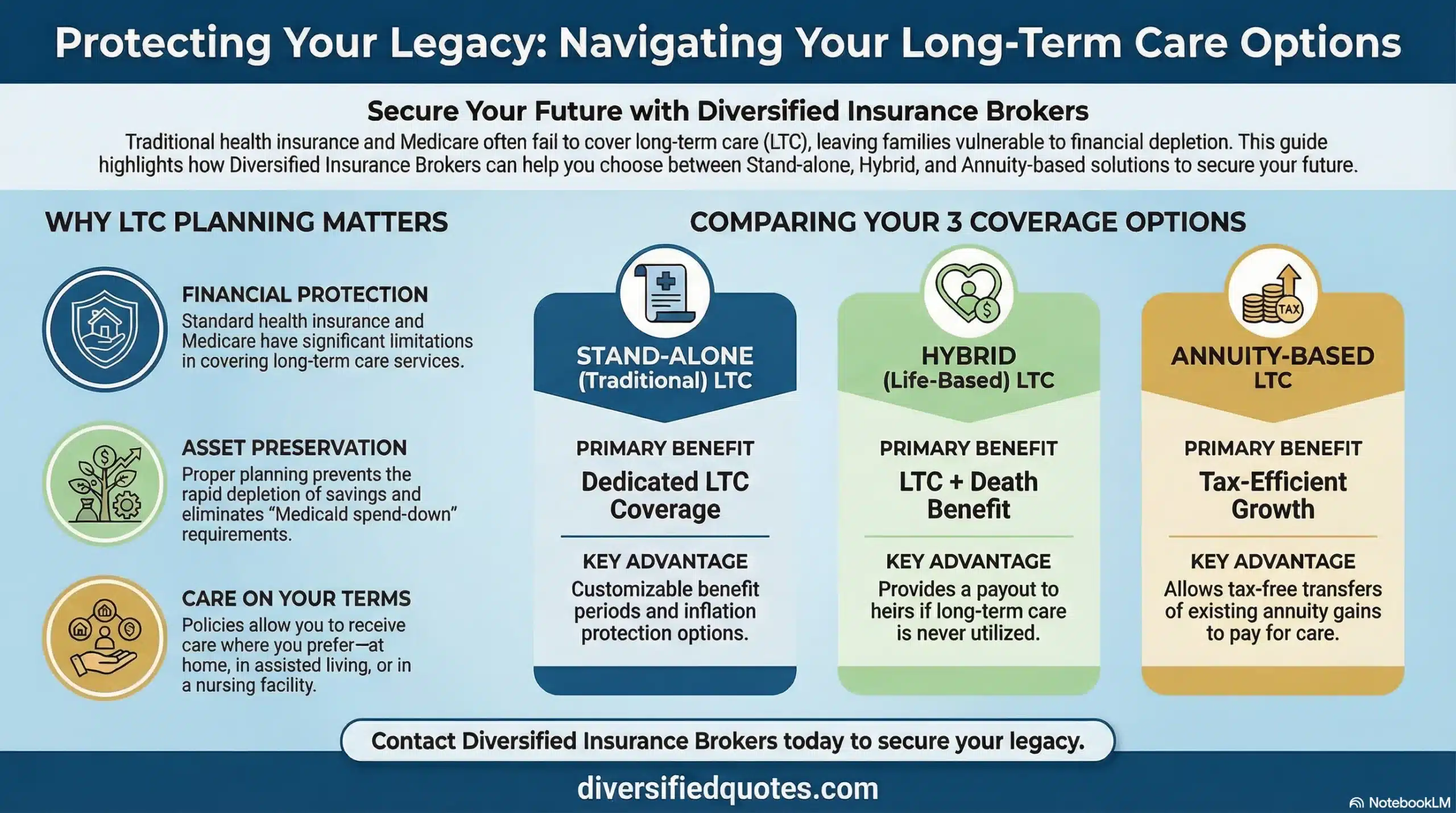
Retirees usually compare three broad approaches: traditional LTC insurance, hybrid life/LTC solutions, and annuity-based LTC designs. Each can be positioned for affordability—just in different ways.
Traditional LTC insurance is stand-alone coverage with customizable benefits. It can be optimized for affordability by choosing a moderate benefit, a reasonable elimination period, and a benefit duration that matches the risk you want to transfer. Traditional premiums are not guaranteed and may change, but the flexibility of design is a major advantage. For many retirees, “affordable” means building a design that can be adjusted later if necessary by changing inflation protection or benefit levels rather than starting too large.
Hybrid life/LTC policies combine permanent life insurance with an LTC rider. This structure appeals to retirees who want the comfort of knowing that if LTC is never needed, a death benefit still goes to heirs. Hybrids can also provide budget clarity when designed with predictable premium structures. Some retirees like the idea of “leveraging” premium dollars in a way that creates a benefit regardless of whether care is used, which can feel more efficient psychologically and financially.
Annuity-based LTC solutions can be useful when a retiree has assets earmarked for safety and wants to reposition them to provide enhanced LTC leverage. These designs are often about using existing assets more efficiently while maintaining principal protection features. If you already own annuities or are evaluating how income and protection fit together, our annuities planning hub provides additional context on long-term income strategies that can complement a care plan.
Finally, some retirees add short-term care coverage (often 12–24 months) as a budget-friendly layer. It’s not a full substitute for long-duration risk, but it can meaningfully reduce “early event” exposure and help protect savings from an initial care shock. For some households, short-term coverage plus a defined self-pay plan can be an affordable way to reduce the highest-probability costs.
Ways Retirees Can Keep Premiums Affordable
The most affordable plans usually have one thing in common: they are intentionally designed. Instead of starting with “maximum benefits,” we often start with your retirement income picture and build a design that transfers the most painful risks first.
Applying earlier (before retirement or early in retirement) can improve both price and eligibility. Choosing a moderate benefit amount and a shorter duration is frequently the simplest way to keep premiums comfortable. Inflation protection can be selected strategically based on age and retirement timeline, and couples can often reduce combined costs through spousal discounts or shared design strategies.
Most importantly, working with an independent broker matters because underwriting and pricing vary widely by carrier. We pre-screen and shop the market so you’re not forced into a one-size-fits-all solution. That shopping process is also where we can identify which carriers treat your specific medication profile, build, and health history most favorably—because the “best” policy on paper is not helpful if it comes back as a modified offer at a higher-than-expected premium.
To keep the plan affordable, many retirees also make sure the policy design fits the way they prefer to receive care. If your goal is to stay at home as long as possible, you may emphasize home care coverage and build flexibility into the monthly maximum. That approach can help you maximize real-world value without overbuying facility benefits you may never use.
Key Contract Choices That Affect Cost
Elimination period: Many retirees choose 90–180 days to reduce premium. This pairs well with a planned reserve (cash bucket) or a defined “self-pay window” in your retirement plan. If affordability is a primary goal, aligning the elimination period to a realistic reserve is one of the simplest ways to reduce premiums without removing meaningful protection.
Monthly vs daily benefit: Monthly maximums can provide flexibility if care needs vary through the month. Some designs make it easier to manage invoices across home care and facility care. A monthly structure can also reduce “waste” if care is not needed every day, which can be helpful when coordinating part-time home care.
Shared care riders (couples): If you’re planning as a couple, shared care can improve efficiency by allowing one spouse to access the other’s unused benefits. For couples evaluating this option, see shared care riders in LTC. Shared care can be one of the best value features for retirees because it improves protection without requiring both spouses to maximize separate benefit pools.
Inflation style: 3% simple, 3% compound, or 5% compound riders all protect purchasing power differently. The “best” choice is the one you can sustain while keeping future benefits meaningful. Retirees who are already in their late 60s or 70s may choose a more moderate inflation design because the time window is shorter, while younger applicants may consider stronger inflation features so benefits do not lag behind rising care costs.
Benefit pool design: Some policies are designed around a total pool of money rather than a strict daily cap. A pooled approach can increase flexibility and can be a meaningful affordability strategy because you may be able to select a benefit structure that better matches how you expect to use care across settings.
Example of Affordable Policy Designs
Below are sample designs retirees often compare when looking for affordability. These examples are meant to illustrate how design choices can move cost—not to represent a quote for any specific person. The best design is the one that matches your goals, health profile, and retirement cash flow.
| Applicant | Policy Design | Estimated Premium |
|---|---|---|
| 60-Year-Old Male | $150/day benefit, 3-year coverage, no inflation rider | Approx. $90–$120/month |
| 60-Year-Old Female | $150/day benefit, 3-year coverage, 3% compound inflation | Approx. $140–$180/month |
| Married Couple (Age 55) | Shared pool of $300,000 with 3% inflation rider | Approx. $200–$250/month (combined) |
These are sample ranges only. Actual premiums vary by carrier, state, health, and policy design.
Underwriting and Eligibility
LTC underwriting evaluates overall health, medications, build (height/weight), mobility, and often includes cognitive screening. Some conditions are acceptable with stable control; others may require modified benefits or alternate designs such as short-term care, hybrid solutions, or asset-based options.
Our approach is to pre-screen first, then match your profile with carriers most likely to approve at favorable terms. That process often saves time, reduces “surprise” outcomes, and improves the odds of landing in the most affordable tier for your situation. It also helps you avoid unnecessary applications that can create delays or confusion.
If you have multiple medical conditions, the objective is not to “hide” anything—it is to present your history correctly and match you to the carriers that treat your profile most favorably. Underwriting often rewards stability, compliance, and functional independence. That is why current medications, follow-up patterns, and daily functioning matter so much in real-world approvals.
Coordination with Medicare, Medicaid, and Family Plans
Medicare is limited for long-term custodial care and generally focuses on skilled/rehabilitative care for shorter durations. Medicaid can help after meeting strict financial eligibility rules, which may significantly limit choice and control. Many retirees prefer to keep flexibility by using LTC insurance to fund care at home or in facilities of choice—reducing reliance on family caregiving alone and preserving financial autonomy.
When families plan together, LTC coverage can also reduce the “care ripple effect,” where one spouse’s care needs unintentionally disrupt the other spouse’s retirement plan. Even a moderate policy can create breathing room and protect the household budget.
Some benefits that are especially helpful for family planning can include coordination support and practical extras that reduce friction. For example, some policies and benefit designs include features that help with logistics and support services that families often forget to plan for until care begins. If you want a deeper explanation of these practical benefit types, see travel, lodging, and pet care benefits explained for examples of how planning can extend beyond the medical definition of care.
Partnership Policies and Tax Considerations
In many states, Partnership-qualified LTC policies can provide dollar-for-dollar asset protection if Medicaid is ever needed. Premiums for qualified policies may also receive tax advantages depending on your situation. Because rules vary by state and filing status, consult your tax advisor to assess potential deductions and how a policy fits into your broader planning.
Partnership planning is often misunderstood. For many retirees, it is not about “planning to go on Medicaid.” It is about adding a layer of protection so that if the care event becomes extremely long, there is a clearer path to preserve some portion of assets. Whether that feature is valuable depends on your state, asset picture, and preferences for care options.
Common Retiree Mistakes That Make LTC Feel “Unaffordable”
Long term care insurance often becomes “unaffordable” when the design starts at maximum benefits without aligning to the retiree’s actual plan. A common mistake is choosing a daily benefit and inflation rider that produces a premium that feels fine today, but becomes uncomfortable later when budgets tighten or fixed income becomes the primary source of cash flow.
Another mistake is avoiding the underwriting conversation and defaulting immediately to an asset-based design (or avoiding coverage entirely). While asset-based solutions can be a good fit, many retirees are surprised to learn they can qualify for traditional coverage or a well-priced hybrid design with a moderate benefit and sensible elimination period. Affordability often comes from shopping and design—not from assuming the first idea is the only option.
Finally, some retirees underinsure by selecting a very small benefit that does not meaningfully reduce the household risk. If the policy is too small, it may not create the relief you wanted when care begins. The best approach is usually a balanced design that offsets a meaningful portion of costs rather than trying to pay for everything or almost nothing.
Why Work With Diversified Insurance Brokers?
Since 1980, our family-owned firm has helped retirees secure affordable long term care coverage that fits within their budget. With access to more than 75 A-rated carriers, we shop the market on your behalf and present only the most competitive options. Learn more about our long term care insurance solutions and how they can work alongside your annuity strategy to protect retirement savings.
Our advisors focus on clarity and fit. We help you compare designs in plain language, identify where carriers differ, and build a plan that feels sustainable. For retirees, the confidence that premiums are manageable is often as important as the benefit itself—because it means you can keep the plan in place through the years it is most likely to be needed.
Protect Your Retirement With Affordable LTC
Request a personalized quote and see how affordable long term care coverage can safeguard your retirement.
Related Long-Term Care Insurance Pages
More LTC planning guides, underwriting help, and benefit design options.
Related Retirement Protection Pages
Other ways retirees plan for long-term stability, income, and asset protection.
Financial Protection Essentials
High-risk life insurance planning, disability income protection with COLA, and financial institution reviews.
Talk With an Advisor Today
Choose how you’d like to connect—call or message us, then book a time that works for you.
Schedule here:
calendly.com/jason-dibcompanies/diversified-quotes
Licensed in all 50 states • Fiduciary, family-owned since 1980
FAQ
When is the best time to buy LTC insurance?
Many retirees purchase in their late 50s to early 60s to balance eligibility and price. Applying earlier can lock in lower premiums and reduce the chance of health-related declines. You can review planning timelines in our long-term care playbook.
What if premiums rise in the future?
Traditional LTC premiums are not guaranteed. We design policies with adjustable levers (inflation, duration, benefit levels) so you have options if costs change later. For cost planning, see how much long-term care insurance costs. Hybrid alternatives may offer more premium stability depending on design.
Does LTC insurance cover care at home?
Most modern contracts cover a wide range of settings, including home care, with clear benefit triggers and care coordination. We’ll review the home-care provisions of any policy you consider so expectations are clear. For care-setting definitions, see what is a skilled nursing facility.
Can couples share benefits?
Yes. Many policies allow shared-care features so spouses or partners can access unused benefits if one exhausts their own pool. You can also review coordination concepts in LTC partnership reciprocity.
About the Author:
Jason Stolz, CLTC, CRPC and Chief Underwriter at Diversified Insurance Brokers (NPN 20471358), is a senior insurance and retirement professional with more than two decades of real-world experience helping individuals, families, and business owners protect their income, assets, and long-term financial stability. As a long-time partner of the nationally licensed independent agency Diversified Insurance Brokers, Jason provides trusted guidance across multiple specialties—including fixed and indexed annuities, long-term care planning, personal and business disability insurance, life insurance solutions, Group Health, and short-term health coverage. Diversified Insurance Brokers maintains active contracts with over 100 highly rated insurance carriers, ensuring clients have access to a broad and competitive marketplace.
His practical, education-first approach has earned recognition in publications such as VoyageATL, highlighting his commitment to financial clarity and client-focused planning. Drawing on deep product knowledge and years of hands-on field experience, Jason helps clients evaluate carriers, compare strategies, and build retirement and protection plans that are both secure and cost-efficient. Visitors who want to explore current annuity rates and compare options across multiple insurers can also use this annuity quote and comparison tool.
