
Is Ceres Life a Good Insurance Company

Jason Stolz CLTC, CRPC
If you’re searching “Is Ceres Life a good insurance company?” you’re usually trying to answer something more practical than brand recognition. You want to know whether the company is built to support long-term annuity guarantees, whether its financial structure is credible, and whether its products are designed for real retirement outcomes rather than marketing hype. Ceres Life is a newer-generation annuity carrier that emphasizes technology-forward operations, institutional investment infrastructure, and a capital model designed around the long-duration nature of annuity liabilities.
At Diversified Insurance Brokers, we review annuity carriers through a “durability + fit” lens. That means we look at how a company is capitalized, how it manages assets, how its products are positioned (accumulation vs. income), and how policy mechanics work in the real world (liquidity, renewal behavior, rider design, and benefit definitions). If you’re in the early comparison stage, it also helps to anchor your carrier research to today’s market realities by comparing fixed annuity rates and the highest bonus indexed annuity rates before narrowing down to a specific carrier.
This page walks through Ceres Life’s positioning, what “good” should mean in a carrier review, the tradeoffs of newer insurance platforms versus legacy brands, and the questions you should ask before choosing any annuity company. If you also want to understand how annuities generate interest in general, start with how annuities earn interest, then come back here to evaluate the carrier-specific perspective.
Compare Fixed, Bonus Indexed, and Income Designs
If you’re evaluating a carrier, start by comparing structures. Rates and income features change by market cycle, so we recommend looking at options side by side before selecting a company.
What “Good Insurance Company” Should Mean for Annuities
When people ask whether a carrier is “good,” the most helpful answer isn’t a yes/no label. It’s a framework. Annuities are long-term contracts, so a “good” annuity company is one that has the financial structure to support guarantees over long horizons, an investment process aligned to insurance liabilities, product terms that are understandable and consistently administered, and a servicing model that doesn’t break when life gets messy (address changes, beneficiary updates, withdrawal timing, and claims processing).
“Good” also depends on your objective. A carrier can be an excellent fit for conservative accumulation (think fixed annuities or MYGAs), and a different carrier can be a stronger fit for income-rider designs where payout factors, step-up logic, and rider costs matter more than raw credited interest. If your decision is income-driven, your evaluation should be paired with outcome modeling using a tool like a lifetime income calculator so your carrier selection is tied to a practical retirement paycheck plan.
Finally, “good” should include clarity. If a contract requires you to guess how renewals will behave, or if the crediting method is so complex you can’t explain it in plain English, it becomes harder to make a confident long-term decision. A clear foundation is understanding the “levers” carriers use—caps, participation rates, and spreads—which we break down in what an annuity spread rate is and how a fixed indexed annuity works.
Ceres Life Overview: A Modern Annuity Platform
Ceres Life is positioned as a modern annuity carrier built for today’s retirement marketplace—one where technology, servicing efficiency, and institutional investment access matter. Unlike legacy insurers that operate across dozens of product lines and rely on older policy administration infrastructure, newer annuity platforms tend to focus on a narrower set of retirement products and support them with streamlined operations.
That narrower focus can be a strength for annuity buyers because it typically means the carrier is designing around retirement income outcomes, rider economics, and long-duration liability management rather than treating annuities as one small piece of a much larger conglomerate. It can also mean faster product iteration. In real life, that’s most noticeable in how quickly a carrier can adjust product features as markets change—particularly when crediting terms and hedge costs move.
Ceres Life’s story is closely tied to institutional capital and asset management relationships. That matters because annuities are supported by the carrier’s general account portfolio. When you buy an annuity, you’re ultimately relying on the insurer’s ability to invest conservatively, manage credit risk, and match long-term assets to long-term obligations.
Financial Strength, Capital Support, and Investment Infrastructure
Every annuity carrier review should start with the same reality: an annuity is a promise that may last decades. That promise is only as strong as the insurer’s claims-paying ability, capitalization, and long-term investment discipline. Ceres Life highlights institutional capital support and a structure designed to scale annuity business responsibly as production grows.
Based on current company materials, Ceres Life has received a significant capital contribution intended to support growth and expansion, including a reported contribution of approximately $320 million from Westaim. Capital contributions like this matter because annuity growth requires capital. When an insurer grows its book of business, it must also maintain appropriate reserves and risk-based capital levels so the company remains resilient across market cycles.
Ceres Life also emphasizes an institutional investment management relationship with Arena Investors, a global asset manager that reports approximately $3.4 billion in assets under management and programmatic capital. The practical relevance of an institutional asset management relationship is that it can support consistent access to diversified credit sources and structured income opportunities—while still operating within insurance risk guidelines. In a spread-driven world, consistent, risk-managed yield sourcing is a meaningful advantage for annuity pricing and long-term competitiveness.
In terms of independent rating perspective, company materials reference an A.M. Best Financial Strength Rating of B++. Many consumers naturally prefer A-range ratings, but the correct way to use ratings is contextual. Rating levels are one input—not the entire story—and newer platforms can sit in mid-to-upper tiers while they build operating history, expand surplus, and grow scale. The more important question is whether the company’s capitalization, asset discipline, and business model are aligned to the guarantees being sold.
If your goal is retirement income, financial strength is only the first step. The next step is understanding how the product behaves over time—especially rider economics, renewal terms, liquidity provisions, and benefit calculations. That’s why carrier evaluation should always be paired with product education and, when relevant, outcome modeling using a tool like a lifetime income calculator.
Why Newer Annuity Carriers Exist (And Why That Isn’t Automatically a Red Flag)
Some people treat “newer carrier” as a risk on its own. In practice, the annuity market has evolved. Today’s annuity ecosystem includes many insurers backed by institutional capital and supported by third-party or affiliated asset managers. This structure has expanded because retirement income demand is growing and because investment infrastructure has matured—allowing specialized platforms to operate efficiently while maintaining insurance discipline.
Newer carriers often bring a few real-world advantages: modern policy administration, faster servicing tools, reduced legacy overhead, and a product development cycle that can respond to changing interest rates and hedge costs. At the same time, newer carriers can have a shorter public track record, which means you should rely more on structure (capital, rating oversight, reinsurance and risk governance, asset strategy) rather than brand familiarity.
For many retirees, the best approach is not “legacy only” or “new only.” The best approach is selecting the contract that matches your objective and then making sure the carrier behind it is supported by a credible financial model. If you want to zoom out and sanity-check whether annuities belong in your plan at all, see are annuities worth it? and are annuities a good investment in retirement?.
What to Evaluate Beyond Ratings: Product Terms and Servicing Reality
Ratings matter, but most annuity regret is caused by product mismatch rather than carrier failure. That’s why “good insurance company” should also include the day-to-day experience of owning the contract. This is where details like surrender schedules, free withdrawal rules, beneficiary and death benefit provisions, and rider cost transparency show up.
Liquidity is the most common friction point. Many annuities allow annual penalty-free withdrawals, but the rules vary by product and by carrier. If liquidity is important in your plan, read annuity free withdrawal rules so you understand what is typical, what is generous, and what could be restrictive. A “good” annuity carrier is one that clearly defines liquidity provisions in writing and administers them consistently.
Another area people underestimate is beneficiary clarity. If you care about legacy outcomes, death benefit rules matter. Some annuities have straightforward beneficiary payout provisions, while others include timing requirements or optional riders that change what beneficiaries receive. If that’s part of your priority, see annuity beneficiary death benefits so you know what questions to ask before buying.
Finally, if you’re considering indexed annuity designs (or comparing income rider FIAs versus income annuities), it helps to understand how indexed crediting mechanics work and how expectations should be framed. A useful complement is fixed indexed annuity myths debunked, because many consumer misunderstandings come from confusing “index-linked crediting” with direct stock market investing.
Request Side-by-Side Carrier Comparisons
If you’re comparing Ceres Life to other annuity carriers, the fastest way to make a confident decision is to compare outcomes: guarantees, liquidity terms, income features, and how each contract behaves over time.
Who Ceres Life May Be a Good Fit For
Ceres Life may be a solid fit for annuity buyers who value modern servicing, institutionally supported investment management, and retirement-focused product design—especially when the product you’re considering aligns clearly with your objective. If your goal is guaranteed growth, you should still benchmark any carrier against competitive fixed-rate offers and MYGA terms using best MYGA annuity rates so you can evaluate the carrier on outcomes instead of brand familiarity.
If your goal is income, your carrier evaluation should be paired with a clear income strategy. Some retirees prefer an income annuity structure; others prefer an income rider on a fixed indexed annuity; and many households use a combination so essential expenses are covered by predictable income while the rest of the portfolio retains flexibility. Modeling is what turns “carrier research” into a plan, which is why we recommend using a tool like the lifetime income calculator before committing to a specific company.
If you’re still deciding whether annuities belong in your retirement plan at all, it’s helpful to work through the foundational questions: what problem is the annuity solving (income reliability, principal protection, longevity risk), and what tradeoffs are you accepting (liquidity constraints, capped upside, rider fees). Those tradeoffs are explored in a consumer-friendly way in are annuities worth it?.
Smart Questions to Ask Before Choosing Any Annuity Carrier
The best carrier evaluation questions are the ones that reveal how the contract behaves when life changes. Ask how withdrawals work during the surrender period and what “free withdrawal” actually means on that product. Confirm whether required minimum distributions are handled without surrender charges when the annuity is IRA-owned. Ask what happens to beneficiaries and what options exist for payout timing. These are the practical details that determine whether the annuity becomes a helpful retirement tool or a frustration.
If you’re comparing indexed designs, ask how the carrier sets renewal terms and what levers can change at renewal—caps, spreads, participation rates, or strategy availability. It’s common for consumers to focus only on the initial illustrated rate, but long-term outcomes often depend on renewal behavior. If you want a clearer understanding of what spreads mean and how they impact index crediting, see what an annuity spread rate is.
Finally, don’t ignore fees. Even “no fee” annuities can have embedded economics, and income riders often have explicit charges. A clear baseline is do annuities have fees, because understanding fee types helps you compare contracts honestly.
Ready to Compare Ceres Life Against the Market?
If you’re considering Ceres Life, the smartest next step is comparing it against other competitive carriers with the same goal: fixed growth, bonus indexed accumulation, or retirement income outcomes.
Talk With an Advisor Today
Choose how you’d like to connect—call or message us, then book a time that works for you.
Schedule here:
calendly.com/jason-dibcompanies/diversified-quotes
Licensed in all 50 states • Fiduciary, family-owned since 1980
FAQs: Ceres Life Insurance Company
Is Ceres Life a legitimate insurance company?
Yes. Ceres Life is an annuity-focused insurance carrier backed by institutional insurance capital and industry leadership.
What types of products does Ceres Life offer?
Ceres Life primarily focuses on fixed annuities, fixed indexed annuities, and retirement income-focused annuity products.
Is Ceres Life a newer insurance company?
Yes. Ceres Life is part of a newer generation of annuity carriers built using modern technology platforms and institutional capital backing.
Are newer insurance companies safe?
Safety depends on capitalization, reserves, reinsurance structure, and regulatory oversight — not just company age.
Does Ceres Life specialize in life insurance?
The company is primarily focused on annuity and retirement income insurance products rather than traditional life insurance product lines.
Should I only compare one annuity company?
No. Most retirement planning strategies compare multiple carriers to identify the strongest product for each client scenario.
About the Author:
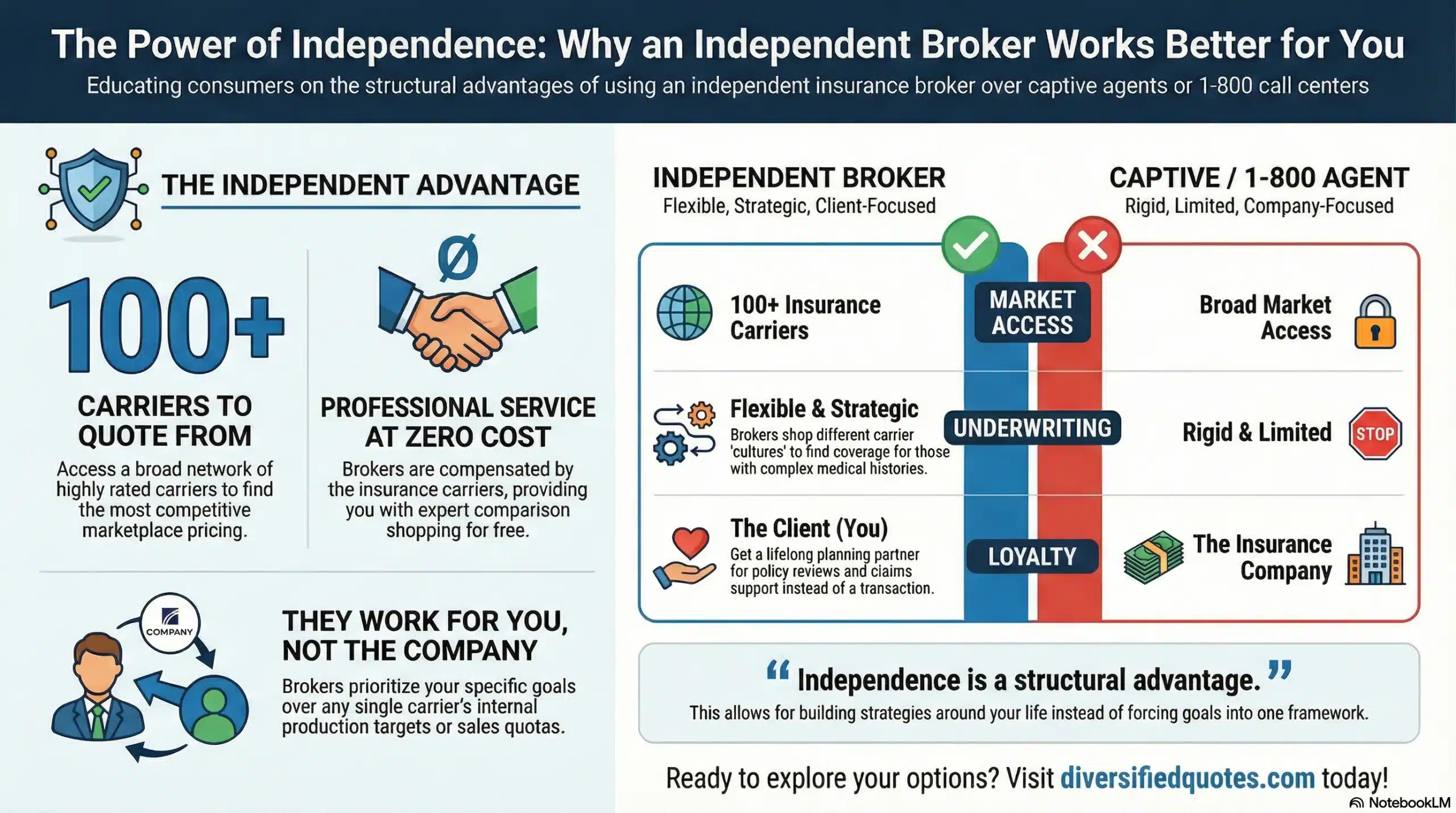
Jason Stolz, CLTC, CRPC and Chief Underwriter at Diversified Insurance Brokers (NPN 20471358), is a senior insurance and retirement professional with more than two decades of real-world experience helping individuals, families, and business owners protect their income, assets, and long-term financial stability. As a long-time partner of the nationally licensed independent agency Diversified Insurance Brokers, Jason provides trusted guidance across multiple specialties—including fixed and indexed annuities, long-term care planning, personal and business disability insurance, life insurance solutions, Group Health, and short-term health coverage. Diversified Insurance Brokers maintains active contracts with over 100 highly rated insurance carriers, ensuring clients have access to a broad and competitive marketplace.
His practical, education-first approach has earned recognition in publications such as VoyageATL, highlighting his commitment to financial clarity and client-focused planning. Drawing on deep product knowledge and years of hands-on field experience, Jason helps clients evaluate carriers, compare strategies, and build retirement and protection plans that are both secure and cost-efficient. Visitors who want to explore current annuity rates and compare options across multiple insurers can also use this annuity quote and comparison tool.
