
Is Nassau Life a Good Insurance Company?

Jason Stolz CLTC, CRPC

Is Nassau Life a good insurance company? At Diversified Insurance Brokers, we work with more than 100 top-rated carriers to help retirees and pre-retirees compare guarantees, contract flexibility, and long-term reliability side by side. Nassau Life Insurance Company (part of Nassau Financial Group) is best known for retirement-focused products, especially fixed and fixed indexed annuities designed to help clients protect principal, earn interest without direct market loss exposure, and create predictable retirement income when needed.
But “good” is not just a brand statement. With annuities, the better question is whether Nassau is a good insurance company for your specific goal. A fixed annuity used as a conservative alternative to a CD is evaluated differently than a fixed indexed annuity used for protected accumulation, and both are evaluated differently than an annuity that is intended to produce lifetime income. The details that matter most are contract-level: the surrender schedule, penalty-free withdrawal rules, how interest is credited, what rider costs apply, how income is calculated, and what options exist if your plan changes later.
Nassau can be a strong fit for the right buyer. The company has built a reputation around streamlined annuity designs and competitive positioning in certain product categories. At the same time, Nassau is not typically viewed the same way as the highest-rated “household name” carriers, and that reality matters for some clients. Our role is to help you understand what you are buying, how it compares to alternatives in your state, and how the contract fits into your overall retirement strategy so your decision is based on facts and not marketing.
If you are evaluating Nassau, it helps to separate the decision into three buckets. First is company strength, which includes financial ratings, capital position, and operating structure. Second is product suitability, which includes whether the annuity type matches your timeline and risk tolerance. Third is contract mechanics, which includes liquidity, surrender charges, income options, and how the annuity behaves in real life after purchase. This page walks through each bucket and then shows you how to compare Nassau against other carriers with clean, apples-to-apples illustrations.
Ensure you are receiving the absolute top rates
Current Fixed Annuity Rates
Compare today’s best fixed annuity rates from top carriers.
Current Bonus Annuity Rates
See which annuities offer the highest upfront bonus today.
Request an Annuity Quote
Submit our annuity request form to get personalized rate options.
Lifetime Income Calculator
If your primary goal is guaranteed retirement income, use the calculator below to model income start dates and payout levels. Then, request an illustration so we can compare Nassau against other carriers that may offer different income factors, surrender schedules, and rider structures in your state.
💡 Note: The calculator accepts premiums up to $2,000,000. If you’re investing more, results increase in direct proportion — for example, doubling your premium roughly doubles the guaranteed income at the same age and options.
Company Overview: Nassau Life and Nassau Financial Group
Nassau Life Insurance Company operates within Nassau Financial Group, a retirement-focused organization that has grown through acquisitions and product expansion aimed at serving retirees and pre-retirees. In practical terms, Nassau is most often evaluated through its annuity footprint: products built for protected accumulation (fixed and fixed indexed annuities) and, in certain designs, optional income features that can help convert savings into structured lifetime income.
If you have only seen Nassau on “best rate” lists, it is important to understand what that really means. Competitive rate positioning can be attractive, but annuities are not commodities. Two annuities can have the same headline rate and still behave very differently because of surrender charges, renewal rate policy, penalty-free withdrawal provisions, income rider costs, and how interest is credited. A carrier can be competitive in one product category and less compelling in another, which is why the right move is to compare the exact contract available in your state rather than assuming the national brand story applies to your situation.
Nassau is also a company where the “fit” question matters. Some clients care deeply about the highest possible financial strength ratings and prefer the biggest mutual-style brands. Others care more about contract design and income outcomes and are comfortable using a carrier with mid-tier ratings if the product is structured well and the plan is diversified across multiple companies. Neither approach is inherently right or wrong. The key is clarity: you should know what you are optimizing for, and your annuity choice should match that priority.
Financial Strength and What Ratings Really Mean for Annuity Buyers
Financial strength is one of the first filters we apply when evaluating any carrier, including Nassau. Ratings matter because annuity guarantees are long-term promises backed by an insurer’s general account. The best way to think about ratings is not “good versus bad,” but “how conservative do you want to be with the guarantee provider you choose.” Some clients set a minimum rating threshold and only consider carriers above that line. Others use ratings as one factor among many and diversify across insurers to reduce concentration risk.
For Nassau, the common conversation is that it may not sit at the very top of the ratings spectrum compared to the highest-rated household-name carriers, but it may still be appropriate depending on product design, your deposit size, your time horizon, and whether this annuity is one slice of a broader plan. If you are committing a meaningful portion of retirement savings to a single contract, we typically recommend comparing Nassau to multiple alternatives with different rating profiles so you can see the trade-offs in yield, features, and income mechanics rather than guessing.
It is also helpful to remember that state insurance regulation and reserve requirements exist for a reason. Insurers must maintain statutory reserves, and each state has a guaranty association framework that may provide limited protection in insolvency scenarios (coverage limits vary by state and are not a planning strategy). The practical takeaway is that you want a carrier that is built to perform under stress, and you want a contract that does not force you into a corner if your life changes and you need access to funds earlier than expected.
What Nassau Is Known For in the Annuity Market
Nassau is most commonly associated with three product themes: fixed indexed annuities that aim to provide protected growth potential, multi-year guaranteed annuities that deliver a stated rate for a defined period, and retirement-income positioning that focuses on turning savings into predictable cash flow when the time is right. The exact names and versions of products vary by state, and features can change, which is why the illustration matters more than the brochure.
If you want to ground the conversation in fundamentals, it helps to understand the underlying annuity categories. A fixed annuity is typically the simplest: you receive a declared rate for a period of time, and your principal is not directly exposed to market loss. If you want a clear overview of that category, start with what is a fixed annuity. A fixed indexed annuity introduces index-linked crediting methods while maintaining principal protection against direct index declines, which creates a different set of trade-offs around caps, spreads, and participation rates. If you want the simplest comparison of those trade-offs, read fixed annuities vs fixed indexed annuities.
Nassau may be particularly relevant to you if you care about principal protection, you want a structured path to future income, and you prefer contract designs that are not overloaded with complicated moving parts. That said, “simple” is not always “best.” Sometimes the best product for a retiree is the one that has the most flexible liquidity provisions, or the one that provides the strongest income factors at a certain age, or the one that offers a better beneficiary structure. Those features vary widely, and they matter more than the logo on the top of the policy.
MYGAs: When Nassau Is Evaluated as a CD Alternative
Many retirees evaluate multi-year guaranteed annuities as an alternative to bank CDs when they want a defined rate for a defined period, often inside a tax-deferred retirement strategy. In that role, the most important questions are straightforward: what is the guaranteed rate for the chosen term, what is the surrender schedule, what penalty-free withdrawals are allowed, what happens at renewal, and are there any special waivers for nursing home confinement, terminal illness, or other qualifying events.
When Nassau is competitive in MYGA-style products, it is usually because the rate is attractive relative to similar term lengths. But in a retirement plan, the correct decision is not always “highest rate wins.” A slightly lower rate with better liquidity, a shorter surrender schedule, or more favorable renewal policy may be the better choice depending on your timeline and how likely you are to need access to principal.
Liquidity is often misunderstood. Most annuities include penalty-free withdrawal provisions, but the exact rules vary. The penalty-free amount may be a percentage of account value, it may start after year one, and it may have special rules for required minimum distributions in qualified accounts. Before you choose any annuity, we strongly recommend understanding liquidity rules in plain language. A helpful starting point is annuity free withdrawal rules, because it outlines the common structures and what to look for in the fine print.
Fixed Indexed Annuities: Protected Growth with a Different Set of Rules
Fixed indexed annuities are often considered when a retiree wants principal protection but also wants interest crediting tied to an external index. The key point is that the index is not an investment account. The annuity credits interest based on a formula, and the carrier controls the crediting terms such as caps, spreads, or participation rates. The upside is that you can often participate in index-linked interest without direct market loss to principal. The trade-off is that you usually give up unlimited upside in exchange for that protection, and the crediting rules can change at renewal.
Nassau’s indexed annuity designs may appeal to clients who want a “middle path” between pure fixed interest and direct market exposure. But the right evaluation must be contract-specific. You need to understand what index strategies are offered, whether the product emphasizes accumulation or income, whether a rider is optional, what the rider costs, and how the rider affects withdrawals and beneficiary outcomes.
If you are comparing FIAs and you want to avoid vague marketing language, focus on three practical items. First is how interest is credited and what the renewal policy is. Second is what liquidity you have during the surrender period. Third is how the contract behaves when you turn on income. That last point matters because some annuities are designed to accumulate efficiently, while others are designed to pay income efficiently, and those goals can conflict inside the same contract.
Income Riders: What “Guaranteed Lifetime Income” Really Means
When clients say they want guaranteed income, they often mean one of two things. They may mean they want an annuity that pays a defined stream of income for life, or they may mean they want an account that grows and can be accessed flexibly. Those are different goals, and they lead to different product choices. Some annuities provide income through annuitization (turning the account into a stream of payments). Others provide income through a rider that creates a separate income calculation base used to determine withdrawals. The underlying mechanics matter, especially when you compare carriers.
If you are shopping Nassau specifically for income, the right question is not simply “does it have an income rider.” The right questions are: what are the payout factors at your age, what happens if you delay income, how is joint income structured, what are the rider costs, and what restrictions exist once income begins. You also want to understand what happens to beneficiaries under different scenarios. A simple, practical primer on beneficiary outcomes is annuity beneficiary and death benefits, because many people assume annuities behave like investment accounts, and that assumption can be costly.
Another reason we emphasize side-by-side comparison is that “income-first” carriers can sometimes deliver higher payout factors for the same premium, while other carriers may deliver better liquidity or better accumulation. Nassau may be the best fit in some scenarios, but you should only know that after you compare the contract you would actually receive in your state.
Who Nassau Life May Be a Good Fit For
Nassau often fits best for retirees and pre-retirees who prioritize principal protection, want a clearer path to predictable outcomes, and prefer annuity designs that are not overloaded with excessive complexity. Nassau may also be appealing if you are diversifying across multiple carriers and you want exposure to a competitive product in a specific category such as a MYGA term or a particular indexed design.
Nassau may also be appropriate if you are planning retirement income in layers. Many households build a plan where essential expenses are covered by predictable income sources, and discretionary spending is covered by more flexible assets. In that type of plan, an annuity can function as the “foundation” layer, especially when paired thoughtfully with Social Security timing. If you are coordinating retirement income with Social Security decisions, you may also find it helpful to review when you should start taking Social Security benefits so your income strategy is built around timing and not guesswork.
On the other hand, Nassau may not be the ideal fit if your primary priority is to use only the very highest-rated carriers, or if you want an annuity structure with highly specialized features that Nassau does not offer in your state. It also may not be the best fit if you need extremely high liquidity in the early years, since surrender schedules are a core part of how annuities work across the industry.
How We Compare Nassau to Other Carriers
At Diversified Insurance Brokers, we do not try to force one carrier into every plan. We compare carriers based on what the annuity is supposed to do for you. If the goal is safe accumulation with a defined term, we compare Nassau against other strong MYGA carriers in your state and evaluate the rate, surrender duration, penalty-free withdrawals, and renewal policy. If the goal is protected accumulation through an index-linked method, we compare the available crediting strategies and evaluate how realistic the illustrated outcomes are under conservative conditions. If the goal is lifetime income, we compare income mechanics, payout factors, rider costs, and the practical rules you will live with once you begin withdrawals.
We also look at the “real life” items that are easy to ignore in a quick online quote. For example, does the contract allow withdrawals that align with required minimum distributions? Are there nursing home or terminal illness waivers, and what are the triggering definitions? How is beneficiary treatment handled, and how does it change if income is turned on? Those details can matter more than the difference between two attractive rates.
For clients who want to understand how contract terms drive outcomes, we often walk through surrender charges in plain language, including how they apply to withdrawals above free-withdrawal amounts. If you want a clear, plain-English explanation of surrender mechanics, start with annuity surrender charges explained. Once you understand surrender schedules, the rest of the annuity comparison becomes much easier because you are no longer guessing how “liquid” the annuity actually is.
Example Scenarios: When Nassau Can Make Sense and When It Might Not
Scenario 1: A conservative rollover with a defined timeline. A 62-year-old is rolling over a portion of a former employer plan and wants a predictable rate for a five-year window before turning on Social Security at a later age. In this case, a MYGA-style product may be a clean solution, and Nassau could be a contender if the term and rate are competitive and the free-withdrawal structure aligns with the plan. The decision usually comes down to whether the surrender schedule fits the timeline and whether there are better options from other carriers with similar guarantees.
Scenario 2: Protected accumulation with a future income decision. A couple wants principal protection but does not want to lock into income immediately. They want the option to turn on income later if markets are volatile or if spending needs rise. In this case, a fixed indexed annuity may be considered, but the key is to evaluate whether the product is designed for accumulation or income. Nassau may fit if the available contract in the state provides a strong balance of crediting options, liquidity provisions, and a rider that makes sense for the timeline. If the rider is expensive or the income factors are not competitive, another carrier may be better for the income objective.
Scenario 3: Income-first planning with maximum payout focus. A retiree wants to maximize guaranteed income from a set premium amount and cares more about payout factors than accumulation potential. In this scenario, Nassau may or may not be the best fit depending on the specific income design available. Some carriers that focus heavily on income-first annuity design may offer higher payout factors, while other carriers may offer better liquidity or better beneficiary outcomes. The only way to know is to run the numbers with the exact product versions available in the client’s state.
Due Diligence Checklist Before You Buy Any Nassau Annuity
Before you commit to any annuity, we recommend you get clarity on a handful of contract-level facts. You should know your surrender period and the surrender charge schedule year by year. You should know how much you can access penalty-free and when that penalty-free access begins. You should know how interest is credited and what can change at renewal. You should know what happens if you need long-term care or you enter a nursing facility, and whether there are waivers that apply. You should understand any rider costs and what the rider actually does and does not guarantee.
You also want to understand how the annuity fits into your overall retirement plan. A strong annuity strategy is rarely “all in one product.” Most households do better when they diversify across income sources and maintain flexibility alongside guarantees. If you want a practical view of how retirees often structure protective strategies, you may find it useful to review how to protect your funds in retirement, because it frames annuities as tools within a system rather than stand-alone purchases.
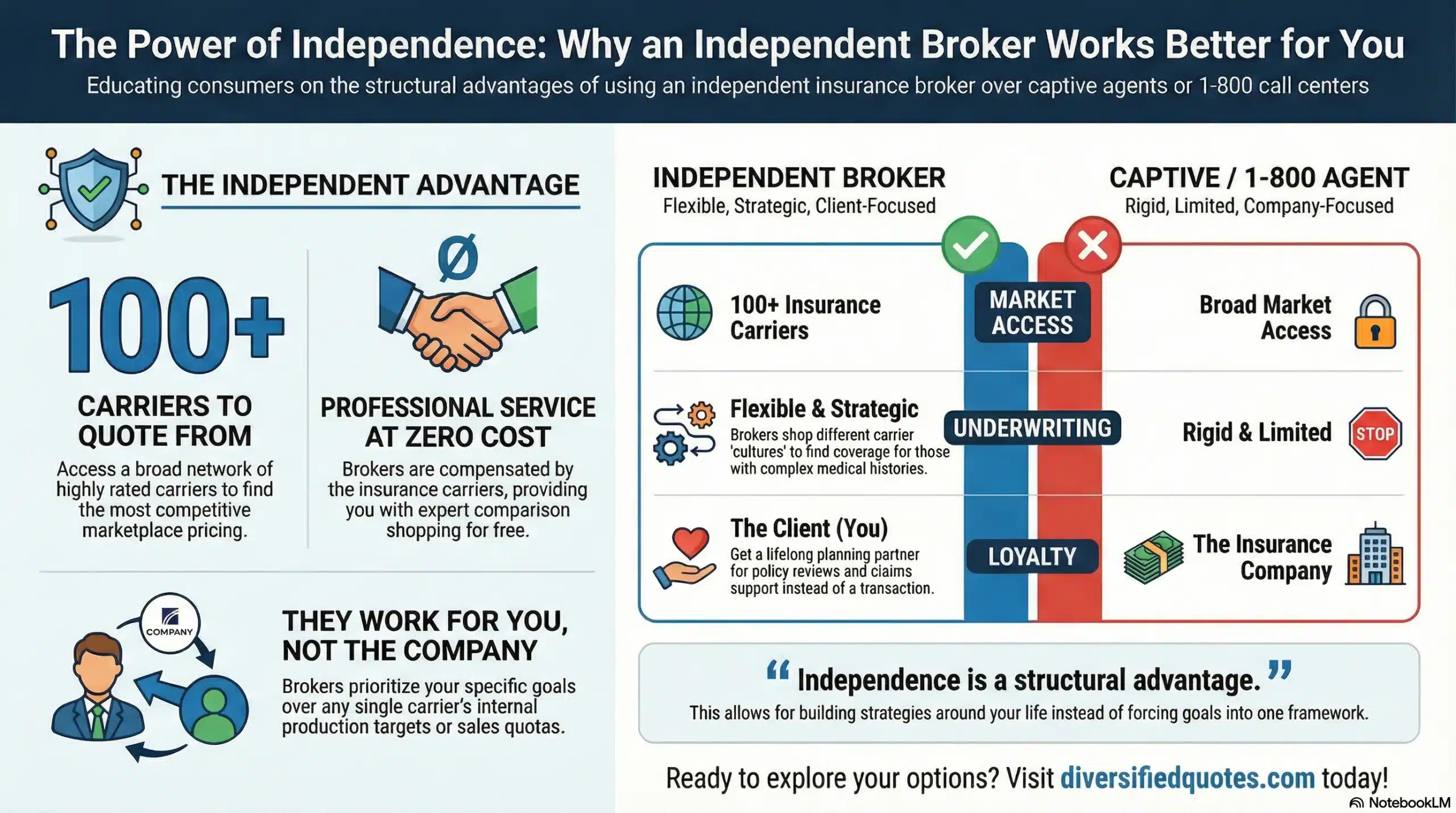
Finally, if you want to understand why working with an independent agency changes your outcome, it comes down to access and comparison. An independent advisor can show you multiple carriers, multiple contract designs, and multiple surrender schedules so you are not locked into one path. If you want to understand the value of independence in plain terms, see best independent insurance agent.
Bottom Line: Is Nassau Life a Good Insurance Company?
Nassau Life can be a good insurance company for the right retiree or pre-retiree, particularly when the goal is principal protection, structured accumulation, and the option to create predictable income in retirement. The company’s annuity lineup can be competitive, and many clients appreciate the clarity of fixed and fixed indexed annuity design when they want fewer moving parts in their retirement plan.
The key is that “good” depends on fit and contract details. Nassau may be the right choice for your timeline and your goals, or another carrier may offer better liquidity, higher income factors, a more favorable surrender schedule, or a different product design that aligns better with your plan. If you are serious about evaluating Nassau, the best next step is to request a side-by-side illustration so you can compare Nassau against other top options in your state using the same assumptions and the same income objectives.
Related Retirement & Annuity Education
Use these guides to compare contract mechanics, income riders, and liquidity rules before choosing any annuity carrier.
Related “Is X a Good Company?” Comparisons
If you are comparing Nassau to other carriers, these pages help you evaluate ratings, contract design, and long-term reliability.
Talk With an Advisor Today
Choose how you’d like to connect—call or message us, then book a time that works for you.
Schedule here:
calendly.com/jason-dibcompanies/diversified-quotes
Licensed in all 50 states • Fiduciary, family-owned since 1980
FAQs: Is Nassau Life a Good Insurance / Annuity Company?
Is Nassau Life a good insurance company for annuities?
Nassau can be a strong fit for retirees and pre-retirees who want principal protection, clear contract structure, and competitive positioning in certain fixed and fixed indexed annuity designs. The best way to confirm fit is to compare the exact product available in your state against other carriers using the same assumptions.
What types of annuities does Nassau typically offer?
Nassau is commonly evaluated for fixed annuities (including MYGA-style terms) and fixed indexed annuities designed for protected accumulation and, in some cases, optional income features. Product availability and versions vary by state.
What should I look at first when comparing a Nassau annuity?
Start with the surrender schedule, penalty-free withdrawal rules, and how interest is credited. If you are considering an income rider, also compare payout factors at your age, rider costs, and what restrictions apply once income begins.
Are Nassau annuities good for guaranteed lifetime income?
They can be, depending on the specific contract and income design offered in your state. If your goal is maximum guaranteed income, you should compare Nassau directly against income-focused carriers because payout factors and rider structures vary widely.
Do Nassau annuities allow access to money during the surrender period?
Most annuities include penalty-free withdrawal provisions, but the amount, timing, and rules vary by contract. Always confirm the free-withdrawal percentage, when it starts, how it interacts with required minimum distributions, and whether special waivers apply.
What is the best next step if I am considering Nassau?
Request a side-by-side illustration so you can compare Nassau against other top options in your state using the same premium amount, timeline, and income objective. That comparison typically reveals whether Nassau is the best fit or whether another carrier offers better liquidity, income, or contract terms.
About the Author:
Jason Stolz, CLTC, CRPC and Chief Underwriter at Diversified Insurance Brokers, is a senior insurance and retirement professional with more than two decades of real-world experience helping individuals, families, and business owners protect their income, assets, and long-term financial stability. As a long-time partner of the nationally licensed independent agency Diversified Insurance Brokers, Jason provides trusted guidance across multiple specialties—including fixed and indexed annuities, long-term care planning, personal and business disability insurance, life insurance solutions, and short-term health coverage. Diversified Insurance Brokers maintains active contracts with over 100 highly rated insurance carriers, ensuring clients have access to a broad and competitive marketplace.
His practical, education-first approach has earned recognition in publications such as VoyageATL, highlighting his commitment to financial clarity and client-focused planning. Drawing on deep product knowledge and years of hands-on field experience, Jason helps clients evaluate carriers, compare strategies, and build retirement and protection plans that are both secure and cost-efficient.
