
Is MetLife a Good Insurance Company?
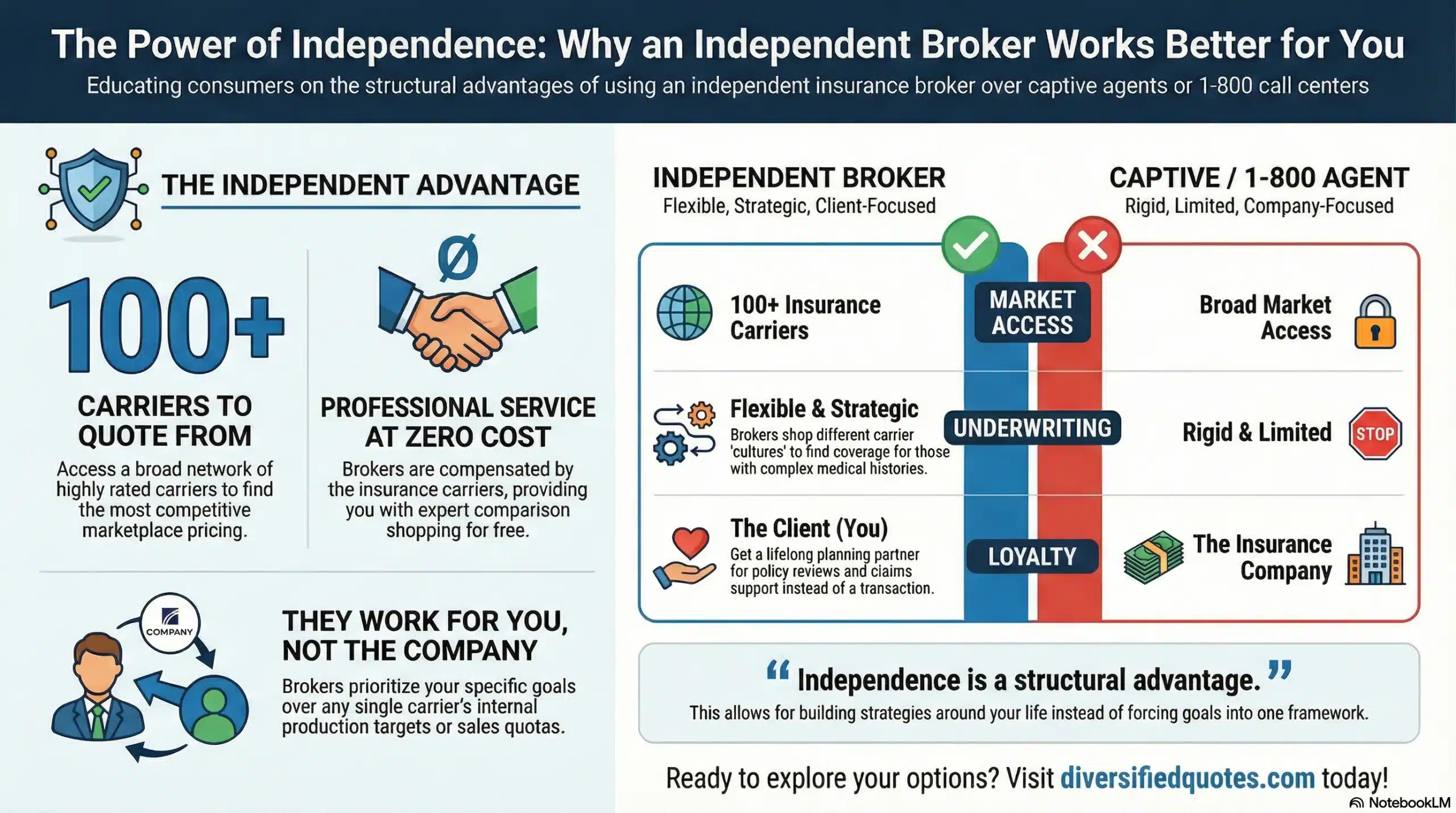
View the table near the end of the page to see why working with an independent insurance broker provides you the best possible rates.
Is MetLife a Good Insurance Company?

Jason Stolz CLTC, CRPC, DIA, CAA
Is MetLife a good insurance company? The honest answer requires understanding what MetLife actually is today — because the MetLife many consumers have in mind does not precisely match the MetLife that currently operates in the market. MetLife is one of the oldest, largest, and most recognizable names in American insurance, with roots going back to 1868 and a global operating scale that spans employee benefits, institutional retirement, and international insurance markets. Its financial strength ratings from major rating agencies are among the highest in the insurance industry, and for the specific segments where MetLife remains active — particularly group employee benefits — it delivers substantial breadth and infrastructure. But MetLife’s role in the U.S. individual consumer market changed significantly in 2017 when the company separated its U.S. retail life insurance and annuity business into a separate publicly traded company called Brighthouse Financial. Understanding that distinction is the most important first step in evaluating whether MetLife belongs in your specific plan.
Most consumers who ask this question are really asking one of three different questions. The first is: “I have group benefits through an employer — is MetLife solid for those coverages?” The answer is yes — MetLife is one of the dominant providers in the employer group benefits space, covering life, dental, disability, vision, and related workplace benefits at scale for millions of American workers. The second question is: “I’m looking at individual life insurance or annuities — how does MetLife compare?” Here the picture is more nuanced, because the individual retail product line that many consumers associate with MetLife is now largely operated by Brighthouse Financial rather than MetLife itself. The third question is: “I have an older MetLife policy — what does that mean going forward?” Legacy policies may still be serviced under MetLife or may have been transferred to Brighthouse Financial depending on the product and timing. Knowing which version of this question you are actually asking determines what research and comparison you need to do.
This page gives you a practical, planning-focused framework for evaluating MetLife — what it does well, what changed in the 2017 restructuring, how to evaluate the financial strength signals that matter for long-term commitments, and how to compare annuities and life insurance across the full market regardless of carrier name. For the foundational context on how annuities work as retirement planning tools, our resource on annuities 101 covers the full landscape, and our overview on what is a fixed annuity covers the most commonly evaluated annuity structure in plain language. For specific income-planning frameworks that help identify where a guaranteed income product belongs in a retirement plan, our resource on the best annuity for guaranteed income in retirement covers how to structure and evaluate that decision.
Ensure you are receiving the absolute top rates
Current Fixed Annuity Rates
Compare today’s best fixed annuity rates from top carriers.
Current Bonus Annuity Rates
See which annuities offer the highest upfront bonus today.
Request an Annuity Quote
Submit our annuity request form to get personalized rate options.
Lifetime Income Calculator
Use our calculator to see how much guaranteed income your annuity can provide.
See Real-Term Rates Side by Side
Life Insurance Quoter
Understanding What “MetLife” Means Today — The Critical Distinction
The MetLife name now covers two distinct corporate realities that operate under different structures and serve different market segments. The first is MetLife, Inc. — the publicly traded parent company — which today focuses primarily on group employee benefits in the United States, institutional retirement products, international insurance markets across Asia, Latin America, and Europe/Middle East/Africa, and asset management operations. MetLife’s domestic consumer presence in 2026 is primarily as a group benefits provider: the carrier that employers contract with to provide dental, disability, vision, life, and accident and health coverages to their workforce through workplace payroll deduction arrangements.
The second reality is Brighthouse Financial — a separate publicly traded company that was created in August 2017 when MetLife completed the spin-off of its U.S. retail life insurance and annuity business. The entity now known as Brighthouse Life Insurance Company was previously named MetLife Insurance Company USA before March 6, 2017. Brighthouse Financial operates independently of MetLife and focuses specifically on individual annuities and individual life insurance products in the retail U.S. market. Consumers who encounter MetLife-branded individual annuity products or who remember MetLife as a provider of individual life insurance may actually be evaluating Brighthouse Financial products or legacy policies. The distinction matters for comparing financial strength ratings, product availability, and claims-servicing relationships. For a parallel carrier context, our review of is USAA a good insurance company covers how another major insurer’s strengths and limitations compare by product category and consumer situation, and our review of is SILAC a good insurance company covers carrier evaluation for annuity-focused carriers specifically.
Carrier Category Comparison — Where Each Organization Fits
| Category | MetLife (Current) | Brighthouse Financial (Spun Off 2017) | Independent Comparison Shopping |
|---|---|---|---|
| Primary market focus | Group employee benefits; institutional retirement; international markets | Individual U.S. retail annuities and life insurance | Full market access across 100+ carriers for best product and rate match |
| Individual retail products | No longer sells new individual retail life or annuity policies in U.S. | Fixed, fixed indexed, and variable annuities; individual life insurance | MYGAs, FIAs, income annuities, term life, permanent life — all carriers compared |
| AM Best financial strength | A+ (Superior) — 2nd highest of 16 ratings; reaffirmed 2025 | A (Excellent) — 3rd highest of 16 ratings; as of March 2026 | Varies by carrier; independent brokers filter to A-rated carriers or better |
| Group/employer benefits | One of the largest U.S. group benefits providers — strong in dental, disability, life, vision through employers | Not the primary focus | Group benefits comparison available through independent brokers |
| Best for | Employees with MetLife workplace benefits; institutional plan sponsors; international coverage needs | Individual annuity buyers comfortable with the retail product set; legacy MetLife individual policyholders | Anyone maximizing guaranteed income, seeking the best available rate, or comparing across product types |
Financial strength ratings reflect agency opinions at the time of most recent publication and can change. Always verify current ratings directly with the carrier or rating agency. Rating agency opinions are not recommendations to purchase or hold any product. Individual situations vary; consult a financial professional before making any annuity or insurance commitment.
MetLife’s Current Strengths — The Group Benefits Powerhouse
In the employer group benefits segment, MetLife operates at a scale that few competitors match. Group life insurance — the most common employer-provided benefit — is a core MetLife strength. Group dental and vision coverage, disability insurance through workplace plans, accident and health coverages, and legal and identity protection services are all available through MetLife’s employer contracts. For millions of American workers, MetLife is the name on their dental card, the carrier that processes their disability claim, and the group life insurance provider whose coverage they may take for granted until a claim event makes it suddenly relevant.
The planning implications of MetLife’s group benefits strength are primarily relevant at the interface between employment and retirement transition. When an employee retires or changes employers and loses group coverage, they face a decision: secure individual coverage that they own and control, or go without. Understanding what coverage converts and at what terms, what coverage gap exists that needs to be filled individually, and how to right-size individual coverage to the household’s actual post-employment needs is where the planning conversation begins. For group life insurance specifically, our resource on group life insurance covers how employer group life coverage works and its limitations relative to individually owned policies. Our guides on best dental insurance rates, best vision insurance rates, and choosing the right disability insurance policy cover the individual comparison landscape for each of these benefit categories when the employer-provided option ends.
Financial Strength Ratings — What They Mean and Why They Matter
Financial strength ratings from agencies like AM Best, S&P, Moody’s, and Fitch represent independent assessments of an insurance carrier’s ability to meet its obligations to policyholders over the long term. For a consumer making a 20- or 30-year annuity commitment or a permanent life insurance purchase, the financial strength of the issuing carrier is not merely a marketing credential — it is a meaningful variable in the actual reliability of the guarantee. A carrier with stronger financial strength ratings has demonstrated to independent analysts that its reserves, investment portfolio, business model, and enterprise risk management support its ability to pay claims and honor policy guarantees across economic cycles.
MetLife’s retained operations carry AM Best’s second-highest financial strength rating (A+ Superior), confirmed as recently as March 2025, reflecting the agency’s assessment of strong balance sheet strength, a well-diversified business profile across multiple geographies and product lines, and consistent operating performance. Brighthouse Financial, which carries the retail individual annuity and life products that were previously MetLife-branded, maintains AM Best’s third-highest rating (A Excellent) as of early 2026 — still considered strong, but at a different tier. For context, AM Best’s rating scale is designed so that carriers in the A (Excellent) tier have demonstrated the ability to meet policyholders’ obligations in all but extraordinary circumstances. For consumers evaluating any carrier for a long-term annuity commitment, the financial strength rating is the appropriate entry gate: start with carriers rated A or better by AM Best, then evaluate product features, rates, and contract mechanics within that qualified set. Our resource on what do insurance companies do with your money covers how insurance carriers manage and invest policyholder premiums to maintain their ability to pay future claims.
What Happened to MetLife’s Individual Annuities and Life Insurance
Before the 2017 spin-off, MetLife was one of the largest providers of individual annuities and individual life insurance in the United States. That portfolio of products and policyholders was transferred to Brighthouse Financial as part of the separation. Consumers who bought a MetLife individual annuity before August 2017 now have a Brighthouse Financial contract — the issuing entity was renamed, but the contract terms did not change and the obligations remained fully in force. New individual annuity and individual retail life insurance products are now offered through Brighthouse Financial rather than MetLife directly.
For consumers evaluating what they think of as “MetLife annuities”, the practical implication is that the individual products they will encounter are Brighthouse Financial products. Brighthouse offers fixed annuities, fixed indexed annuities (including the Shield series of registered index-linked annuities), and variable annuities alongside individual life insurance products. The Brighthouse product line is distributed through financial professionals and is not available for direct-to-consumer purchase online. Anyone evaluating Brighthouse Financial products should request current contract documents, confirm the issuing entity on the contract form, and compare the product’s income mechanics, surrender schedule, and free withdrawal provisions against competing products at other carriers. Our resource on annuity free withdrawal rules covers how to evaluate these provisions across carriers, and our guide on fixed annuities vs. fixed indexed annuities covers the structural differences between the two most common non-variable annuity types.
Evaluating Annuities — Carrier Name Is the Entry Gate, Not the Destination
The most practical insight in carrier evaluation for annuities is that financial strength from a recognized carrier is a necessary condition for serious consideration — but it is not sufficient for making the best decision. Once a carrier clears the financial strength threshold, the decision moves to product and planning fit: which carrier’s specific contract, at the current market pricing, produces the best outcome for the specific planning role being filled. Two carriers can both carry strong financial strength ratings and still produce meaningfully different annuity income results for the same premium, age, and state because they price differently, structure their income riders differently, and calibrate their index crediting parameters differently. The only way to identify the carrier that produces the best outcome for a specific scenario is to run the comparison with consistent inputs across multiple qualified carriers — not to select a carrier by brand reputation alone.
For lifetime income specifically — the most common planning objective for annuity purchases — the guaranteed withdrawal benefit rider mechanics matter as much as the headline illustration rate. How the income base grows, when income can begin, what the payout factor is, whether income is payable jointly, and how the rider interacts with the contract value over time all produce real differences in monthly income that compound over a multi-decade payout period. Our resource on what is a GLWB covers how guaranteed lifetime withdrawal benefit riders work and what to compare across carriers. Our guide on what is the best retirement income annuity covers the full evaluation framework for identifying the right income annuity structure for a specific planning situation.
Key Factors to Compare When Evaluating Any Annuity
Whether you are evaluating a Brighthouse Financial product that originated from the MetLife lineage, a product from any other carrier, or a multi-carrier comparison across the full market, the evaluation framework is the same. The first factor is liquidity — specifically, how much can be withdrawn without surrender charges each year, what the surrender schedule looks like over the contract term, and whether the contract includes any market value adjustment mechanism that could affect early exit values. Retirees who want any flexibility in access to capital during the contract period must understand these provisions precisely rather than assuming they are identical across products. Our resource on annuity free withdrawal rules covers these provisions in full technical detail.
The second factor is the income structure — whether the income approach is a guaranteed withdrawal benefit (GLWB) rider, an immediate annuity structure, a deferred income annuity, or a period-certain income structure — and how the specific mechanics of that structure produce income over the relevant time horizon. For deferred accumulation products with FIA crediting, the evaluation must include the cap rates, participation rates, and spread structures — not as generic descriptions but as the specific parameters the carrier is offering on the current product in the applicant’s state. Our resources on what is an annuity cap rate, what is an annuity spread rate, and what is an annuity participation rate cover each of these FIA crediting mechanics specifically. The third factor is the death benefit and beneficiary structure — specifically how the contract treats beneficiaries if the owner dies during the accumulation phase or the payout phase. Our resource on annuity beneficiary and death benefits covers these provisions and how they vary across product types.
The Retirement Income Planning Framework — Matching Products to Their Planning Role
The most common planning mistake in annuity evaluation is selecting a product without first defining clearly what role it needs to play in the retirement plan. Annuities serve different purposes depending on the planning context, and an annuity that is ideal for one role may be poorly suited for another. The most common retirement income planning framework assigns different planning roles to different pools of assets: a guaranteed income floor — covering essential expenses — that is immune to market volatility; a growth and flexibility pool — invested for long-term needs and discretionary spending — that can sustain some volatility; and a legacy or reserve pool — intended for estate planning, charitable giving, or family support. Each role has different product requirements, and the evaluation criteria for a product intended to create the guaranteed income floor are completely different from the criteria for a product intended to preserve and grow capital for legacy purposes.
Annuities most commonly serve the guaranteed income floor role, and for that role the evaluation criteria are: what monthly income does the product produce, how reliably can that income be expected to continue throughout the retirement period regardless of market performance, and how does the income level compare across carriers for the same premium amount. Our resource on sequence of returns risk covers why guaranteed income specifically addresses the most dangerous retirement financial risk — the risk of forced portfolio liquidation during market downturns — and how having a guaranteed income floor preserves the growth portfolio’s ability to recover. Our guide on how to protect your funds in retirement covers the broader asset protection framework, and our resource on how to use an annuity in retirement covers how to integrate annuity income within the full retirement plan structure.
When Rollover and Transfer Decisions Drive the Conversation
Many annuity purchase decisions occur not because a consumer proactively decided to buy an annuity but because they are managing a rollover — moving money from an employer-sponsored retirement plan at retirement, consolidating multiple IRA accounts, or repositioning a maturing CD or savings account into a guaranteed income vehicle. In these rollover scenarios, the starting point is typically identifying how much of the rolled-over amount should be directed toward guaranteed income versus flexible investments, then identifying the best annuity structure and carrier for the guaranteed income portion. Our resource on how to transfer a 401(k) to an annuity covers the rollover mechanics specifically, and our guide on how to transfer a retirement account to an annuity covers the broader qualified account rollover framework including IRA-to-annuity transfers. For annuity deferred structures specifically, our resource on what is a deferred annuity covers how accumulation-phase annuities work before income begins, and our guide on do annuities have fees covers how fee structures differ across product types and how to evaluate them transparently.
How to Evaluate MetLife — or Any Carrier — Before Committing
Carrier evaluation for a long-term annuity or life insurance commitment should follow a consistent framework regardless of which carrier is being considered. The first step is confirming the exact issuing entity — the specific insurance company subsidiary whose name appears on the contract, not just the parent company brand. For MetLife-branded products, this means identifying whether the issuing entity is a MetLife subsidiary or a Brighthouse Financial subsidiary, as the financial strength ratings, state availability, and specific product terms may differ. The second step is verifying the current financial strength rating directly from the rating agency’s website rather than from carrier marketing materials, which may reflect outdated ratings. The third step is reviewing the full product illustration under your specific assumptions — age, premium, state, payout start date, and anticipated market scenario — rather than accepting generic illustrations that may not reflect the best or worst case for your situation.
The fourth and most operationally important step is running the comparison. A carrier evaluation that concludes with “MetLife is strong, so I’ll use MetLife” has missed the most important analytical step — whether MetLife or Brighthouse Financial produces the best outcome for the specific goal relative to what other qualified carriers offer. Annuity rates, income payout factors, surrender schedules, and contract terms vary meaningfully across the competitive market, and the gap between the most favorable available terms and an arbitrarily selected carrier’s terms can represent real dollars in monthly retirement income. Our best independent annuity broker resource covers how independent brokers approach this comparison process and why independence from any single carrier is the structural prerequisite for a genuinely objective evaluation. For assessing whether annuities broadly make sense for a specific situation before carrier selection, our resources on are annuities worth it, are annuities a good investment, and are annuities a good investment in retirement cover these foundational evaluation questions across different planning contexts.
Talk With an Advisor Today
Choose how you’d like to connect—call or message us, then book a time that works for you.
Schedule here:
calendly.com/jason-dibcompanies/diversified-quotes
Licensed in all 50 states • Fiduciary, family-owned since 1980
FAQs: Is MetLife a Good Insurance Company?
Is MetLife a good insurance company overall?
Yes — MetLife is a large, long-standing, financially strong insurance organization with superior financial strength ratings from major independent rating agencies. For the specific segments where MetLife operates today — primarily group employee benefits including dental, disability, vision, and life insurance through employers — it is one of the dominant and well-regarded providers in the United States. The important nuance is that MetLife spun off its U.S. retail individual life insurance and annuity business into a separate company called Brighthouse Financial in August 2017. Consumers looking to purchase individual annuities or individual life insurance in the retail market will primarily be evaluating Brighthouse Financial products rather than MetLife products for new purchases. Individual situations vary; always verify the specific issuing entity and current financial strength ratings before making any long-term commitment.
What is the relationship between MetLife and Brighthouse Financial?
Brighthouse Financial is a separate, publicly traded company that was created in August 2017 when MetLife completed the spin-off of its U.S. retail life insurance and annuity business. The entity now known as Brighthouse Life Insurance Company was previously named MetLife Insurance Company USA before March 6, 2017. Since the separation, Brighthouse Financial operates entirely independently of MetLife — they have different leadership, different financial profiles, different products, and separate financial strength ratings. MetLife retained its group employee benefits business, institutional retirement operations, and international markets. Consumers with older MetLife individual annuity or life insurance policies may now be Brighthouse Financial policyholders for those specific contracts.
Does MetLife still sell individual annuities or life insurance?
MetLife no longer sells new individual retail life insurance or individual retail annuity policies in the United States in the traditional consumer market. Following the 2017 spin-off of that business to Brighthouse Financial, MetLife’s U.S. focus shifted to group employee benefits (dental, disability, life, vision, legal) provided through employers, institutional retirement solutions for plan sponsors, and international insurance markets. MetLife does continue to service legacy individual policies that were issued before the spin-off and have not been transferred. Consumers looking for new individual annuities or retail life insurance products in the MetLife/Brighthouse lineage should contact Brighthouse Financial directly or work through a financial professional who has access to the full retail carrier marketplace.
What are MetLife’s financial strength ratings?
MetLife’s core U.S. insurance subsidiaries carry some of the highest financial strength ratings in the industry. AM Best affirmed an A+ (Superior) rating — AM Best’s second-highest category — for the MetLife group in March 2025. S&P and Fitch carry AA- ratings and Moody’s carries Aa3, all with stable outlooks. These ratings reflect independent agency assessments of MetLife’s balance sheet strength, operating performance, business profile, and enterprise risk management. Financial ratings are point-in-time opinions and can change; always verify current ratings directly from the relevant rating agency. Brighthouse Financial — the entity that now carries MetLife’s former U.S. retail life and annuity business — carries AM Best’s A (Excellent) rating as of early 2026, which is the third-highest category. Both ratings are considered strong for long-term insurance obligations.
Are MetLife’s annuity income payouts competitive?
Individual retail annuities in the MetLife lineage are now Brighthouse Financial products. Payout competitiveness for any annuity depends on product type, the specific contract’s income mechanics, the applicant’s age and state, and the current market rate environment at time of purchase. Like all annuity carriers, Brighthouse Financial’s product payouts should be compared against the full market of qualified carriers — not evaluated in isolation — because annuity income rates vary meaningfully across carriers for the same planning scenario. When maximizing guaranteed income is the primary objective, running a multi-carrier comparison through an independent broker who works across the full market is the most reliable way to identify whether any specific carrier’s product represents the best available outcome for the specific situation.
What is MetLife best known for today?
MetLife is best known today for group employee benefits — dental insurance, vision insurance, disability insurance, and group life insurance provided through employer contracts to millions of American workers. It is one of the largest providers in the U.S. group benefits market and has a long-established infrastructure for administering these coverages at scale. MetLife also maintains significant institutional retirement and global insurance operations. For consumers who encounter MetLife primarily through their employer’s benefits package — the carrier on their dental card, the administrator of their disability claim, or the provider of their workplace life insurance — MetLife’s scale and service infrastructure are meaningful. For consumers evaluating individual retirement products like annuities, the relevant entity for new purchases is now Brighthouse Financial.
What should I compare before purchasing an annuity from any carrier?
Before committing to any annuity, evaluate these core factors regardless of carrier: (1) The issuing entity’s current financial strength rating from AM Best and other major agencies — verify directly from the agency, not from marketing materials. (2) Liquidity provisions — how much can be withdrawn without surrender charges annually, what the surrender schedule looks like, and whether a market value adjustment applies. (3) Income mechanics — how the income structure is designed, what the specific payout factors are for your age and premium, and how income grows or adjusts over time. (4) For FIA products — the current cap rates, participation rates, and spread structures applied to the indices available in the contract. (5) Beneficiary and death benefit provisions — how the contract treats your beneficiaries if you die during accumulation or payout. (6) Multi-carrier comparison — whether this carrier produces the best combination of these factors for your specific scenario compared to what other qualified carriers offer at the same moment.
About the Author:
Jason Stolz, CLTC, CRPC, DIA, CAA and Chief Underwriter at Diversified Insurance Brokers (NPN 20471358), is a senior insurance and retirement professional with more than 25 years of real-world experience helping individuals, families, and business owners protect their income, assets, and long-term financial stability. As a long-time partner of the nationally licensed independent agency Diversified Insurance Brokers, Jason provides trusted guidance across multiple specialties—including fixed and indexed annuities, long-term care planning, personal and business disability insurance, life insurance solutions, Group Health, Travel Medical and Evacuation Insurance, and short-term health coverage. Diversified Insurance Brokers maintains active contracts with over 100 highly rated insurance carriers, ensuring clients have access to a broad and competitive marketplace.
His practical, education-first approach has earned recognition in publications such as VoyageATL, and contributions from his agency featured in Kiplinger and GoBankingRates— highlighting his commitment to financial clarity and client-focused planning. Drawing on deep product knowledge and years of hands-on field experience, Jason helps clients evaluate carriers, compare strategies, and build retirement and protection plans that are both secure and cost-efficient. Visitors who want to explore current annuity rates and compare options across multiple insurers can also use this annuity quote and comparison tool.
Review More Carrier Reviews: Browse our complete Life Insurance Company Reviews — covering Banner Life, Lincoln Financial, Protective, Transamerica, and more life insurance carriers.
Review More Carrier Reviews: Browse our complete Disability Insurance Company Reviews — covering Mass Mutual, Guardian Life, Assurity, Principal, Ameritas, and more disability carriers.
Last Reviewed: June 12, 2026 |
Reviewed by: Jason Stolz, CLTC, CRPC, DIA, CAA
Chief Underwriter, Diversified Insurance Brokers, Inc. | NPN: 20471358 | Diversified Insurance Brokers, Inc. — Licensed in all 50 states
Fact Checked by: Tonia Pettitt, CMIP©
Medicare Specialist, Diversified Insurance Brokers, Inc. | NPN: 14374308 | Diversified Insurance Brokers, Inc. — Licensed in all 50 states
Did you find this content helpful? Leave us a Google review — it helps others find trustworthy guidance too.
Editorial Standards: Diversified Insurance Brokers maintains rigorous editorial standards to ensure accuracy, clarity, and independence in all content. Learn more about our editorial standards and commitment to transparency.
