
Dental and Vision Insurance
Dental and Vision Insurance

Jason Stolz CLTC, CRPC, DIA, CAA
Dental and vision insurance are two of the most consistently useful types of coverage available — not because they protect against rare catastrophes, but because most people need them every single year. Cleanings happen twice a year. Eye exams happen annually. Prescriptions change. Fillings happen. A crown, a new pair of glasses, or a sudden dental issue can arrive at any time. Dental and vision insurance turns those predictable and semi-predictable costs into manageable, budgeted line items rather than surprises — and when the coverage is structured well, it also makes it easier to stay on schedule with preventive care that prevents those smaller costs from compounding into much larger ones.
At Diversified Insurance Brokers, we offer two strong dental and vision insurance options that represent different approaches to coverage. The Ameritas plan operates as a traditional benefit-structured insurance plan — defined coverage percentages for preventive, basic, and major dental services, a vision allowance for exams and eyewear, and a broad provider network with negotiated pricing. The NCD plan is a discount-focused alternative that emphasizes simplicity, flexible enrollment, and reduced pricing at the point of service. Understanding which approach fits your needs, your usage patterns, and your budget is the essential first step — and this page walks through everything you need to compare them clearly.
Ameritas Dental & Vision
Traditional benefit structure — defined coverage for preventive, basic, and major services with a broad provider network.
View Ameritas OptionsNCD Dental & Vision
Discount-focused access — simple enrollment, consumer-friendly pricing, and negotiated rates at the point of service.
View NCD OptionsWhat Dental and Vision Insurance Typically Covers
Dental and vision insurance are organized around predictable, recurring care — the kind of services most households already expect to use every year. The table below shows how dental coverage is typically structured by service category, alongside the vision benefit that most plans include. Exact coverage levels, waiting periods, and annual maximums vary by plan and tier — always confirm the specific benefits available in your state before enrolling.
Dental and Vision Insurance Coverage by Service Category
| Service Category | What It Includes | Typical Benefit Level | Common Waiting Period |
|---|---|---|---|
| Preventive Dental | Exams, cleanings (2x/year), X-rays, fluoride | 80–100% in-network | None or minimal |
| Basic Dental | Fillings, simple extractions, periodontal treatment | 70–80% after deductible | 0–6 months (plan-specific) |
| Major Dental | Crowns, bridges, dentures, complex extractions, root canals | 50–60% after deductible | 6–12 months |
| Orthodontia | Braces, aligners (where plan includes) | 50% up to lifetime max | 12–24 months (varies) |
| Vision Exam | Routine annual eye exam, prescription evaluation | Covered once per year | None typically |
| Eyewear / Contacts | Frames, lenses, or contact lens allowance | Annual allowance applied | None typically |
Coverage levels and waiting periods vary by carrier, plan tier, and state. Verify exact benefits before enrolling.
Ameritas vs. NCD: Choosing the Right Approach to Dental and Vision Insurance
The two dental and vision insurance options available through Diversified Insurance Brokers represent two meaningfully different philosophies. Ameritas is a traditional benefit-structured insurance plan with defined coverage percentages at each service level, an annual maximum, and a large provider network where in-network negotiated pricing reduces your starting cost before the plan applies benefits. NCD is a discount-focused access program that emphasizes simplicity and point-of-service savings without a traditional benefit payment structure. Neither is universally superior — the right choice depends on how you use dental and vision care and which type of plan structure you prefer.
Ameritas vs. NCD: Plan Structure Comparison
| Feature | Ameritas Plan | NCD Plan |
|---|---|---|
| Plan Type | Traditional insurance (PPO-style) | Discount network / access program |
| How It Pays | Defined % of covered services after deductible | Discounted rate at participating providers |
| Annual Maximum | Yes — plan pays up to a set limit per year | No annual maximum — discounts always available |
| Waiting Periods | May apply for basic and major services | Generally none — discounts available immediately |
| Provider Network | Large national PPO network; out-of-network allowed | Participating provider network |
| Claims Process | Claims filed with insurer; benefits paid to provider | Pay discounted rate at time of service; no claims |
| Enrollment Timing | Year-round enrollment available | Year-round; often immediate access |
| Best For | Those who want defined benefit levels and employer-plan feel | Those who want simplicity and immediate savings at service |
For a detailed review of the Ameritas plan structure, coverage tiers, and enrollment process, our dedicated resource on Ameritas dental and vision insurance covers everything in full. For an equally detailed look at the NCD option, our resource on National Care dental and vision covers the discount-network model in detail. For broader context on how dental and vision insurance rates compare across carriers, our resource on best dental insurance rates and our guide to best vision insurance rates provide the competitive landscape.
How Dental Insurance Works: The Three-Tier Structure
Dental and vision insurance decisions become easier when you understand how dental coverage is organized. Most plans — including the Ameritas option — structure dental benefits around three service categories: preventive, basic, and major. Each tier carries a different coverage percentage, a different likelihood of waiting periods, and a different relationship to the annual maximum. Understanding these tiers before you enroll prevents the most common source of frustration in dental insurance: expecting the plan to do something it was not designed to do on the timeline you expected.
Preventive services are the foundation of any good dental insurance relationship. Cleanings, exams, X-rays, and fluoride treatments are the services that keep small problems from becoming large ones — and they’re the services dental insurance almost always covers at the highest level, often 80 to 100 percent in-network, with no waiting period. Carriers want members to keep up with preventive care because consistent preventive visits reduce the probability of high-cost claims later. This alignment of interests between the insurer and the insured is one reason preventive dental coverage is almost always the most generous category.
Basic services — fillings, simple extractions, and basic periodontal treatment — are covered at a lower percentage (typically 70 to 80 percent after the deductible) and may carry a short waiting period depending on the plan tier. The deductible typically applies to basic and major services but not to preventive care. This means your first filling in a new plan year may involve paying the deductible before the coinsurance kicks in — a detail that matters when projecting out-of-pocket costs for the year.
Major services — crowns, bridges, dentures, complex extractions, and root canals — are where dental insurance creates the most financial protection and where plan details matter most. Coverage at 50 to 60 percent is common for major services, and waiting periods of 6 to 12 months are standard on most plan tiers. For someone who has been covered continuously under a prior dental plan, prior creditable coverage may reduce or eliminate waiting periods. For someone enrolling in dental insurance for the first time, the waiting period timeline should be factored into any planned major procedure. The annual maximum — the most the plan pays in a calendar year — is the other critical variable for major service planning. Even after the maximum is reached, in-network negotiated pricing continues, so costs are still lower than cash-pay rates.
How Vision Insurance Works: Exams, Eyewear, and Allowances
The vision component of dental and vision insurance covers routine eye exams on an annual basis and provides a defined allowance toward corrective eyewear — frames, prescription lenses, or contact lenses. Vision insurance is often more straightforward than dental because the benefit structure is simpler: one exam per year, one eyewear allowance per year, applied at participating providers or within defined plan limits. The primary variation between vision plans is the size of the allowance, the copay for the exam, and how well the plan’s discount structure handles the lens upgrades and frame brands most people actually want.
For many households, vision insurance’s greatest value is not the exam benefit but the predictability it creates around eyewear spending. A household where two adults and a child all wear glasses or contacts can easily spend $600 to $900 per year on eyewear without any coverage. A vision plan that reduces that spending to $300 to $400 through allowances and network pricing has more than paid for its premium for most families. The calculation is especially favorable in years when multiple household members need prescription updates — which for families with children happens regularly as prescriptions change with age and development.
Routine eye exams also carry value beyond corrective prescriptions. Annual eye exams can detect early signs of glaucoma, macular degeneration, diabetic retinopathy, and other conditions whose early identification can preserve vision and long-term health. This preventive dimension makes the vision exam benefit meaningful beyond glasses and contacts — it’s a health screening that happens to produce prescription updates along the way.
Who Dental and Vision Insurance Is Best For
Dental and vision insurance serve a broad range of individuals and households, but the audiences who consistently get the most value are those whose patterns make the coverage easy to use and easy to justify. The clearest beneficiaries are those who go to the dentist and eye doctor regularly — because that regularity means the benefits are activated, network pricing is accessed, and the preventive care that prevents larger costs is consistently maintained.
Individuals without employer benefits represent one of the largest audiences for standalone dental and vision insurance. Job changes, self-employment, early retirement, contract work, and benefits gaps all create the same situation: the household has health insurance but no dental or vision, and both are being paid out of pocket at full retail rates. Standalone dental and vision insurance fills that gap directly, creating the structured benefits that would otherwise require employer enrollment. For self-employed professionals especially, standalone dental and vision insurance is often one of the most cost-effective coverage decisions available — because the cost is modest and the usage is consistent.
Retirees are another major audience, particularly those who have transitioned to Medicare and discovered that Medicare does not cover routine dental care or routine vision care. A Medicare beneficiary who expects cleanings, fillings, exams, and glasses to be covered under Medicare will be disappointed — standard Medicare explicitly excludes these services. Standalone dental and vision insurance is the most direct solution to this gap, and the predictable annual cost makes it easy to factor into a retirement budget. For retirees comparing their full healthcare coverage picture, our guide to best Medicare supplement plans for seniors covers the medical coverage side of retirement healthcare that dental and vision plans complement.
Families with children benefit because pediatric and adolescent dental and vision needs are consistent and predictable. Children have twice-yearly cleanings, regular exams, potential orthodontic needs, and vision prescription changes that can happen frequently as children grow. Having structured coverage creates a budget framework for those predictable costs and reduces the friction that causes parents to delay care. For households experiencing coverage transitions — between employers, into retirement, or during periods of part-time or contract work — our resource on how short-term health insurance bridges coverage gaps covers how to maintain consistent coverage during transitions, and dental and vision plans are often the most practical benefits to keep continuous even when major medical is changing. For households with family members outside the U.S. or those navigating special coverage circumstances, our resource on major medical for foreign nationals provides context for broader coverage decisions alongside which dental and vision plans remain applicable.
Dental and Vision Insurance for Small Businesses
For employers, dental and vision insurance are among the most visible and appreciated benefits a company can offer — because employees actually use them. Unlike long-term disability insurance or life insurance, which employees may appreciate in the abstract but never expect to personally need, dental and vision benefits are used immediately and regularly. That visibility creates a direct connection between the benefit and the sense that the employer values the employee’s wellbeing. For small businesses building a benefits strategy, starting with dental and vision is often more strategically effective than starting with a complex medical plan, because the return on perceived value is immediate.
Dental and vision can be offered as employer-paid benefits, as partially employer-paid benefits, or as voluntary enrollment benefits where employees elect and pay for the coverage themselves. Even in a voluntary structure — where the employer simply provides access rather than funding — offering dental and vision insurance through a workplace program makes enrollment more accessible and the coverage more likely to be selected than if employees were navigating the market on their own. For small businesses exploring their full benefits picture alongside dental and vision, our resources on small business group health insurance and small employer group health insurance cover how medical benefits are structured at small employer scale. Our resource on group medical insurance covers the broader group benefits landscape, and our resources on what self-funded group health insurance is and the pros and cons of self-funded group health cover how larger employer benefit strategies are structured when businesses reach the scale where those decisions become relevant. For very small employers — including two-person businesses — our resource on group health insurance for a 2-person business covers how even the smallest employer can structure benefits. And for those exploring all available short-term medical and supplemental coverage options, dental and vision are natural additions to a layered benefits strategy.
Ready to compare and enroll in dental and vision coverage?
Related Pages: Dental and Vision Coverage
Compare plan options, rates, and coverage for individuals, families, retirees, and small businesses.
Financial Protection Essentials
Carrier reviews, long-term care planning, coverage gaps, and protection solutions.
Talk With an Advisor Today
Choose how you’d like to connect—call or message us, then book a time that works for you.
Schedule here:
calendly.com/jason-dibcompanies/diversified-quotes
Licensed in all 50 states • Fiduciary, family-owned since 1980
FAQ: Dental and Vision Insurance
Is dental and vision insurance separate from health insurance?
Yes. Dental and vision insurance are standalone plans that operate independently from major medical or health insurance coverage. Standard health insurance plans — including ACA marketplace plans, employer-sponsored medical insurance, and Medicare — typically exclude routine dental care and routine vision care. A separate dental and vision insurance plan fills that gap by covering preventive exams, cleanings, fillings, eyeglasses, and other routine services that health insurance does not address. Some Medicare Advantage plans include limited dental and vision riders, but for most individuals and retirees, standalone dental and vision insurance provides more consistent and predictable coverage than those bundled riders.
Dental and vision insurance can be purchased individually, for a family, or as an employer-sponsored voluntary benefit. They are available year-round without open enrollment windows, making them accessible at any point when coverage is needed. Our detailed comparison of the Ameritas dental and vision plan and the National Care dental and vision plan covers how each option is structured and which audience each serves best.
What is the difference between an insurance-style dental plan and a discount dental plan?
An insurance-style dental plan — like the Ameritas option — pays a defined percentage of covered dental services after the deductible, up to an annual maximum. The plan files claims with the insurer, and in-network providers reduce the fee schedule that the percentage is applied to, lowering costs further. This structure gives the policyholder predictable benefit levels for preventive, basic, and major services, and provides documented coverage protection for larger procedures like crowns and bridges.
A discount dental plan — like the NCD option — is not insurance. It is a membership program that provides access to a network of participating dental providers who have agreed to accept reduced fees from plan members. There is no annual maximum, no claims process, and no waiting periods in most cases. The member pays the discounted rate directly at the time of service. Discount plans can be immediately effective and easy to understand, but they do not guarantee a defined payment from the plan — they guarantee a lower price at the point of service. For someone who primarily wants help with preventive care and discounted pricing on occasional procedures, a discount plan can be effective. For someone who wants the plan to pay a defined portion of a crown or bridge, an insurance-style plan is typically more appropriate.
Does dental insurance cover cleanings right away?
Yes. Preventive dental services — including exams, cleanings, and X-rays — are typically available with no waiting period or a very short one under most dental insurance plans. Dental insurers actively want members to keep up with preventive care because consistent preventive visits reduce the probability of large claims for restorative work later. Preventive services are covered at the highest level, commonly 80 to 100 percent in-network, and are almost always available from the first day or very early in the policy term. Basic and major services may carry waiting periods of several months depending on the plan, but preventive care is the category that nearly all dental plans make immediately accessible.
Does vision insurance cover glasses and contacts?
Yes. Most vision plans provide an annual allowance that can be applied toward prescription glasses (frames and lenses) or contact lenses, in addition to covering the annual routine eye exam. The size of the allowance varies by plan and state, and choosing frames or lenses that exceed the allowance results in the member paying the overage. Staying within the plan allowance or shopping at in-network providers who honor the plan’s allowance produces the most predictable out-of-pocket cost. Many vision plans also provide discounts on lens upgrades like anti-reflective coatings, progressive lenses, and premium frame brands, which can reduce total eyewear costs even when choosing options beyond the standard allowance.
Are dental and vision plans available year-round?
Yes. Standalone dental and vision insurance plans are available for enrollment year-round and are not subject to the open enrollment windows that apply to ACA marketplace health plans. This makes dental and vision insurance accessible whenever coverage is needed — whether due to a job change, transition into self-employment, retirement, or simply the decision to add coverage that was previously lacking. Enrollment can typically be completed online within minutes, and coverage effective dates vary by plan. For households in active coverage transitions, our resource on how short-term health insurance bridges coverage gaps covers how dental and vision fit within a broader transitional coverage strategy.
Is dental and vision insurance a good value for families?
Dental and vision insurance is often one of the highest-value coverage purchases available for families, because utilization is predictable and consistent. Most families with children can reliably forecast multiple cleanings per year per person, regular eye exams, ongoing eyewear needs as prescriptions change, and occasional basic dental work. A plan that reduces those known costs through coverage percentages and network pricing typically pays for itself within the first year, often within the first few appointments. Families with children in the adolescent years — when prescription changes and potential orthodontic needs coincide — often find the value even more pronounced. The ability to keep preventive care on schedule for every family member, without the sticker shock of full retail dental and optometry costs, is the core of the value dental and vision insurance provides at the family level.
About the Author:
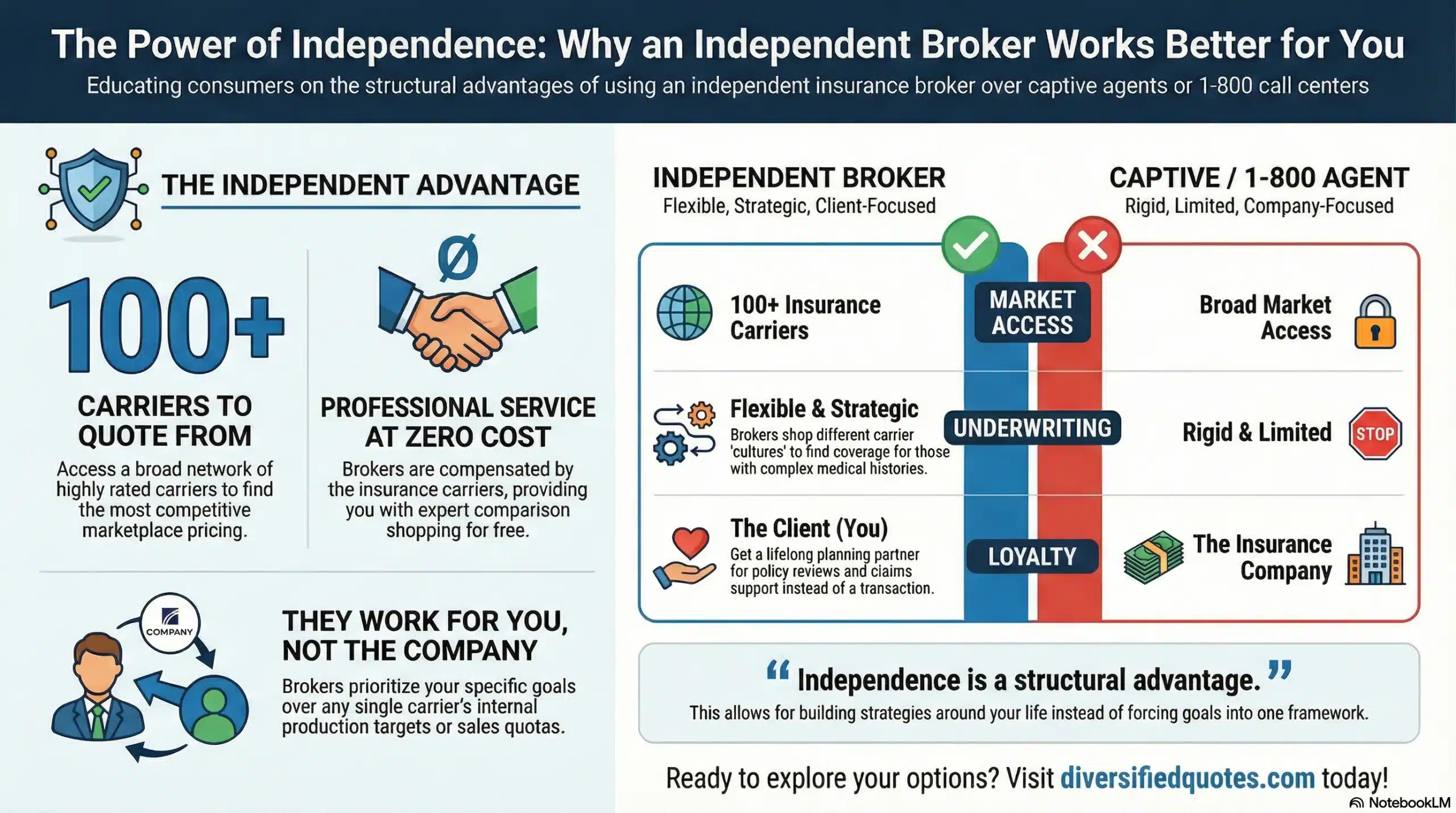
Jason Stolz, CLTC, CRPC, DIA, CAA and Chief Underwriter at Diversified Insurance Brokers (NPN 20471358), is a senior insurance and retirement professional with more than 25 years of real-world experience helping individuals, families, and business owners protect their income, assets, and long-term financial stability. As a long-time partner of the nationally licensed independent agency Diversified Insurance Brokers, Jason provides trusted guidance across multiple specialties—including fixed and indexed annuities, long-term care planning, personal and business disability insurance, life insurance solutions, Group Health, Travel Medical and Evacuation Insurance, and short-term health coverage. Diversified Insurance Brokers maintains active contracts with over 100 highly rated insurance carriers, ensuring clients have access to a broad and competitive marketplace.
His practical, education-first approach has earned recognition in publications such as VoyageATL, and contributions from his agency featured in Kiplinger and GoBankingRates— highlighting his commitment to financial clarity and client-focused planning. Drawing on deep product knowledge and years of hands-on field experience, Jason helps clients evaluate carriers, compare strategies, and build retirement and protection plans that are both secure and cost-efficient. Visitors who want to explore current annuity rates and compare options across multiple insurers can also use this annuity quote and comparison tool.
Browse More Resources: Return to our complete Health Insurance, Dental, Vision & Disability guide — covering short term health, dental, vision, group health & disability.
Last Reviewed: May 20, 2026 |
Reviewed by: Jason Stolz, CLTC, CRPC, DIA, CAA
Chief Underwriter, Diversified Insurance Brokers, Inc. | NPN: 20471358 | Diversified Insurance Brokers, Inc. — Licensed in all 50 states
Fact Checked by: Tonia Pettitt, CMIP©
Medicare Specialist, Diversified Insurance Brokers, Inc. | NPN: 14374308 | Diversified Insurance Brokers, Inc. — Licensed in all 50 states
Did you find this content helpful? Leave us a Google review — it helps others find trustworthy guidance too.
Editorial Standards: Diversified Insurance Brokers maintains rigorous editorial standards to ensure accuracy, clarity, and independence in all content. Learn more about our editorial standards and commitment to transparency.
