
What Is Premium Financing Life Insurance
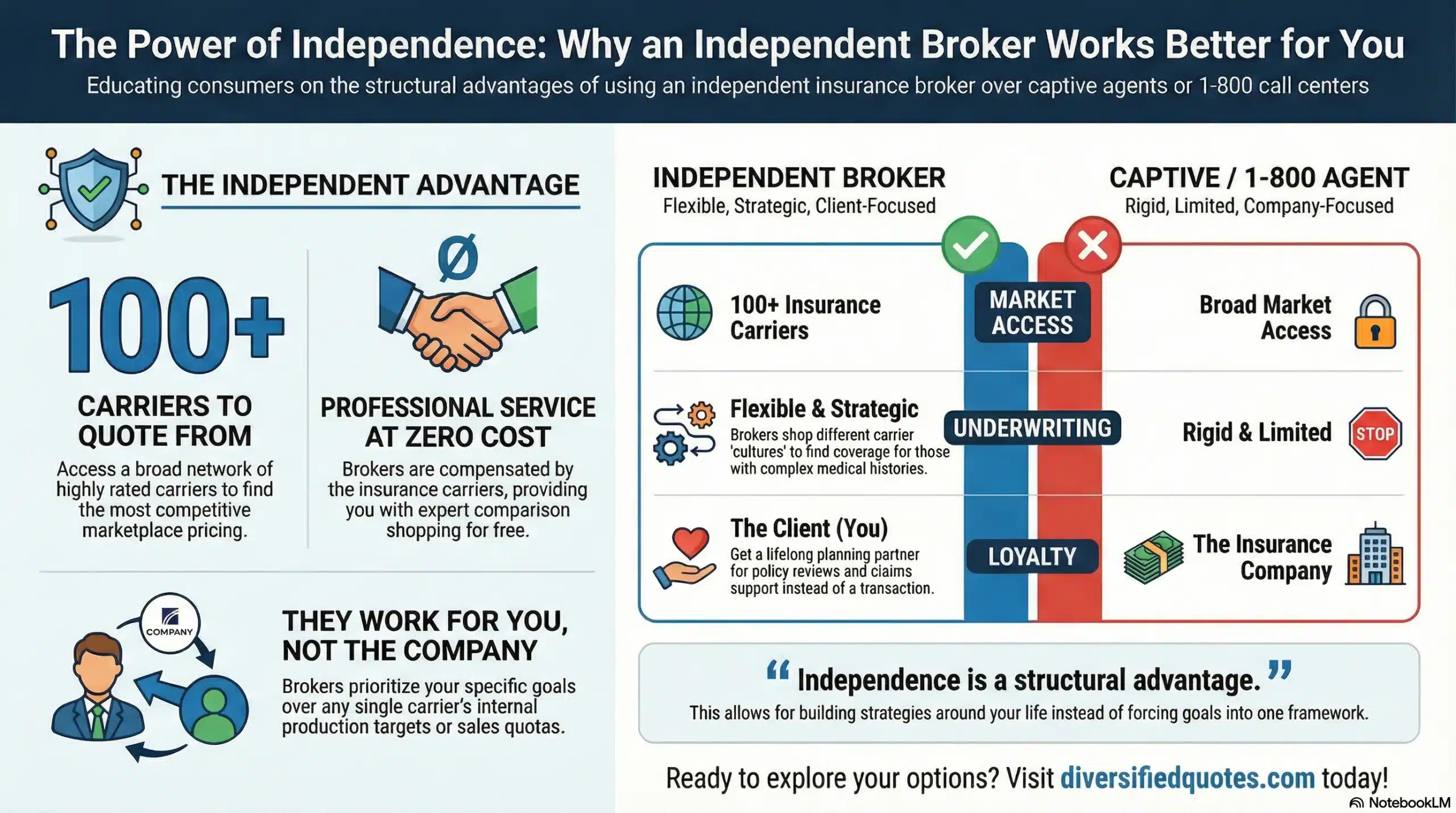
As an Independent Life Insurance Broker, we compare rates across 100+ carriers and prescreen every application before submission.
What Is Premium Financing Life Insurance

Jason Stolz CLTC, CRPC, DIA, CAA
Premium financing life insurance is a sophisticated capital structuring strategy that funds large permanent life insurance policies through third-party lending instead of out-of-pocket premium payments — most often used by high-net-worth individuals, multigenerational families, and closely held business owners whose estate planning and wealth transfer objectives require substantial death benefit coverage without disrupting active investment positioning. The strategy is not designed to make life insurance inexpensive. It is designed to change how premiums are funded, replacing immediate capital deployment with structured borrowing so that core assets — operating businesses, private equity, real estate, marketable securities — can remain positioned for growth while the insurance protection is built in parallel.
At Diversified Insurance Brokers, we evaluate premium financing life insurance as one tool among several available for solving estate liquidity and wealth transfer challenges. Our role is analytical rather than promotional: we conduct conservative interest rate stress testing, model collateral sufficiency across multiple performance scenarios, and recommend the strategy only when leverage genuinely improves the client’s long-term position. When direct funding or alternative structures produce a better risk-adjusted outcome, we say so. This page covers how premium financing works structurally, what determines whether it is appropriate, the central planning variables to evaluate before implementation, and the ongoing oversight requirements that determine whether the strategy succeeds over time.
Confidential Premium Financing Strategy Review
Before implementing leverage, the structure, rate exposure, collateral requirements, and exit timing should be evaluated against your specific estate, liquidity, and investment context. We conduct that review confidentially.
Request Private ConsultationThe Strategic Purpose Behind Premium Financing Life Insurance
The primary use case for premium financing life insurance is solving estate liquidity problems without eroding investment positioning. High-net-worth estates frequently contain illiquid assets — operating business equity, real estate partnerships, private equity interests, art and collectibles, family LLC holdings — that cannot be readily converted to cash to meet estate tax obligations after death. Federal and state estate tax may be due within nine months of death, and without sufficient liquid assets, heirs may be forced to sell estate holdings under time pressure or at unfavorable valuations. Permanent life insurance solves this problem by providing income-tax-free liquidity precisely when it is needed. Premium financing life insurance solves the funding problem — providing a method to acquire that coverage without redirecting millions of dollars per year out of productive investment positioning. Our resource on wealth transfer strategies the affluent use covers the broader estate liquidity framework within which premium financing life insurance fits as one of several structural tools.
The second major use case is funding large death benefits within irrevocable life insurance trust (ILIT) structures while avoiding correspondingly large annual gift outlays. A grantor who wants $10 million or $25 million of death benefit held outside the taxable estate would otherwise need to make annual gifts to the trust sufficient to fund the policy premiums — gifts that consume annual exclusion amounts and lifetime gift exemption. Premium financing life insurance inside an ILIT can dramatically reduce or eliminate the gift exposure during the funding phase, preserving exemption capacity for other wealth transfer activities. The mechanics of the ILIT structure are covered in our resource on what an irrevocable life insurance trust is, and the broader role of life insurance within estate planning architecture is covered in our resource on the role of life insurance in modern estate planning.
The third use case is business-context coverage where the scale of required protection exceeds what is comfortable to fund directly. Premium financing life insurance can support buy-sell arrangements, key-person protection, and business succession funding when coverage requirements are substantial and operating cash flow needs to remain focused on growth rather than insurance premium outlays. Our resources on buy-sell life insurance and key person insurance for business cover the underlying business protection objectives that premium financing can fund efficiently.
How Premium Financing Life Insurance Operates Structurally
In a typical premium financing life insurance arrangement, a permanent life insurance policy is established — usually structured for strong early cash value efficiency through either a well-designed whole life insurance with cash value structure or an indexed universal life policy. The choice between these is significant and depends on the client’s risk tolerance, liquidity profile, and exit strategy. Our resources on indexed universal life vs. variable universal life and what guaranteed universal life insurance is cover the policy structure considerations relevant to the premium financing decision.
Once the policy is established, a third-party specialty lender advances the funds to pay annual premiums directly to the insurance carrier. The borrower — typically the policy owner or the ILIT trustee — is responsible for interest payments on the outstanding loan balance. Interest may be paid annually from outside funds, or capitalized into the loan balance depending on the structure. In capitalized-interest designs, the loan balance grows over time as both new premium advances and accrued interest accumulate. In serviced-interest designs, the loan balance grows only through new premium advances while interest is paid currently from outside sources. The choice between these approaches materially affects collateral requirements, total carrying cost, and exit dynamics — and should be modeled explicitly before implementation.
Because policy cash value typically builds gradually in early policy years, lenders almost always require collateral beyond the policy itself during the initial period. This collateral may consist of cash, marketable securities held in an acceptable custodial arrangement, letters of credit, or other lender-approved assets. As the policy matures and cash value accumulates, collateral requirements may decline — though the timing and magnitude of that decline depend heavily on policy performance, loan structure, and lender-specific collateral schedules. Borrower ownership rights vary based on the legal structure: in trust-owned designs (most common for estate planning premium financing), the ILIT is the policy owner and borrower, with grantor and guarantor obligations defined contractually.
Premium Financing Life Insurance vs. Direct Premium Payment
The most important strategic question for any candidate evaluating premium financing life insurance is whether the structure produces better long-term outcomes than direct premium payment from existing capital. The answer depends on projected after-tax investment returns on retained capital, current and expected borrowing costs, estate tax exposure, asset concentration, personal risk tolerance for leverage, and the planned exit pathway. There is no universal answer to this question. There is only honest analysis applied to the specific client situation.
Premium Financing vs. Direct Premium Payment Comparison
| Planning Variable | Direct Premium Payment | Premium Financing |
|---|---|---|
| Capital Required From Owner | Full annual premium each year | Interest payments and collateral only |
| Impact on Active Investment Capital | Capital redirected away from portfolio | Portfolio remains positioned for growth |
| Interest Rate Exposure | None | Primary risk variable — floating rate exposure typical |
| Collateral Requirements | None | Outside collateral typically required in early years |
| ILIT Gift Tax Exposure | Annual gifts equal to premium | Reduced gifts (often interest-only or zero) |
| Ongoing Monitoring Required | Standard policy review | Annual rate, collateral, and structure review mandatory |
| Exit Strategy Complexity | Simple — premiums paid, death benefit released | Loan repayment timing and source must be planned |
| Best Suited For | Clients who prefer simplicity or have ample liquid premium funding | HNW estates with concentrated assets and strong investment alternatives |
The fundamental economic premise behind premium financing life insurance rests on comparative cost of capital. If retained investment capital is expected to generate after-tax returns that meaningfully exceed long-term borrowing costs, preserving that capital may produce a stronger net estate outcome than redirecting it to premium payments. If borrowing costs approach or exceed expected investment returns, the leverage adds risk without producing meaningful benefit. This calculation must be performed conservatively, using realistic return assumptions on retained assets and stress-tested borrowing cost projections rather than optimistic best-case scenarios. Our resource on premium financing pros and cons covers the analytical framework for this decision in depth, and our resource on how premium financing works for estate planning covers the trust and tax coordination dimensions specifically.
Interest Rate Exposure and Structural Risk in Premium Financing Life Insurance
Interest rate volatility is the central risk variable in premium financing life insurance. Most premium finance loans carry floating interest rates tied to benchmarks that move with broader market conditions. In rising rate environments, carrying costs increase materially — sometimes faster than the policy’s accumulating cash value can offset. Higher borrowing expense may require additional collateral contributions from the borrower, accelerate loan repayment timing, or trigger collateral calls that force unanticipated capital deployment at inconvenient times. The 2022 through 2024 rate environment demonstrated this dynamic clearly: clients who had implemented financing in low-rate periods using static assumptions found themselves managing significantly higher carrying costs than their original modeling anticipated.
Sound premium financing life insurance design must stress-test multiple rate environments before implementation, not just the current rate environment. The modeling should evaluate what happens if benchmark rates rise 200 to 400 basis points above current levels, what collateral exposure looks like in those scenarios, and at what point the structure becomes uneconomic if rate trends move against the borrower. Clients without the liquidity reserves to sustain the structure through adverse rate scenarios should not implement premium financing — the strategy is designed for situations where leverage can be carried comfortably through full rate cycles, not for situations where current rates make the structure look attractive and any meaningful rate increase would create distress.
The second structural risk is policy performance. Premium financing structures often assume cash value accumulation at projected crediting rates that may not be achieved in actual performance. If a policy underperforms its illustrations — whether through lower indexed crediting, higher policy charges, or other performance variability — the collateral cushion may not develop on the timeline the original modeling anticipated. This is why financing should be supported by policies designed for performance certainty rather than for maximum upside projection, and why ongoing review is essential rather than optional.
Exit Strategy: The Defining Planning Requirement
Every premium financing life insurance structure must include a clearly defined exit strategy before implementation. The exit strategy answers a single critical question: how, when, and from what source will the outstanding loan balance ultimately be retired? There are three primary exit approaches, and the chosen path drives policy funding design, collateral planning, and loan structure from the outset.
The first exit approach is repayment from a discrete future liquidity event — typically the sale of a business, the realization of a major investment, the maturity of a defined-term asset, or another expected liquidity moment. In this structure, the financing carries through to the liquidity event, the loan is repaid in full, and the policy continues as fully owned with no further leverage. This approach works well when the liquidity event timing is reasonably predictable and the magnitude is sufficient to retire the loan plus any associated costs.
The second exit approach is death benefit repayment — the loan remains in place through the insured’s lifetime, and at death the policy proceeds extinguish the outstanding loan balance with the remaining death benefit flowing to beneficiaries. This approach is structurally efficient because it never requires lifetime loan repayment, but it requires the borrower to sustain the structure (interest payments, collateral, oversight) for the duration of the insured’s remaining lifetime — a period that may be 20 to 40 years for younger insured individuals.
The third exit approach is phased policy-based repayment, using accumulated cash value combined with outside capital to retire the loan over a defined period after the policy has built sufficient values. This requires careful policy design to ensure cash value accumulation is sufficient for the repayment plan, and careful coordination with the overall financial picture to confirm outside capital is available on schedule.
Premium financing life insurance without a defined exit strategy introduces avoidable uncertainty into the structure. Premium financing life insurance with a clearly articulated and stress-tested exit plan transforms leverage into a managed planning instrument with predictable outcomes.
Tax and Trust Coordination in Premium Financing Life Insurance
Premium financing life insurance is most often coordinated with an irrevocable life insurance trust to remove death benefits from the taxable estate while allowing the financing structure to operate without creating ongoing gift tax exposure for the grantor. The trust becomes the policy owner and the borrower, with the grantor providing guarantor support to satisfy lender underwriting requirements. The tax treatment of interest payments, the application of grantor trust rules, the gift tax implications of guarantor support, and the income tax treatment of any policy distributions during the financing period all require coordination with experienced estate tax counsel.
The strategy should never be implemented without coordinated review by qualified insurance professionals, estate planning attorneys, and tax advisors. Each participant in this team has visibility into a different dimension of the structure: the insurance professional ensures policy design supports the financing objectives, the attorney ensures the trust and loan documentation align with estate planning intent, and the tax advisor ensures the tax positions taken are defensible and aligned with current law. Premium financing life insurance implemented by an insurance professional alone — without legal and tax review — frequently creates structural problems that only surface years later when adjustments are difficult or expensive. Our resource on how the wealthy minimize taxes covers the broader tax planning environment within which premium financing operates as one tool among many.
When Premium Financing Life Insurance Is Not Appropriate
Premium financing life insurance is not appropriate for most life insurance buyers. The strategy is designed for a narrow audience with specific characteristics: substantial net worth, significant illiquid asset concentration that would benefit from estate liquidity solutions, comfort with structured leverage, capacity to manage ongoing monitoring obligations, and a reliable exit pathway. Clients who lack any of these characteristics are typically better served by direct funding of an appropriately sized policy, by alternative structures, or by acknowledging that the insurance need itself can be met more simply.
The strategy is specifically not appropriate for clients without substantial liquidity reserves to sustain the structure through adverse interest rate environments. It is not appropriate for clients whose insurance needs can be satisfied through standard funding of a smaller policy — using premium financing to fund a $2 million policy that could be paid directly out of normal cash flow adds complexity without producing meaningful benefit. It is not appropriate for clients who require certainty in their financial structure and would be uncomfortable with the ongoing collateral and rate monitoring obligations that financing creates. And it is not appropriate where simpler structures — direct funding, modified endowment-aware whole life, indexed universal life, or alternative wealth transfer vehicles — produce comparable outcomes with less structural complexity.
For clients whose situation suggests alternative approaches, our resources cover the broader landscape: split dollar life insurance as an alternative for business and family wealth transfer applications, split dollar insurance overview for the foundational mechanics, life insurance strategies the wealthy use for the full toolkit, and how ultra-high-net-worth investors build wealth for the broader investment and structuring context. For simpler insurance needs, our resources on no exam life insurance, instant decision term life insurance pricing, and protecting your mortgage with life insurance cover more straightforward funding paths for non-premium-financing situations.
Ongoing Oversight: What Premium Financing Life Insurance Requires Year After Year
Premium financing life insurance is not a static structure that can be implemented and then ignored. It is a dynamic arrangement where interest rates shift, collateral values fluctuate, policy performance evolves, and the original assumptions underlying the structure require periodic recalibration. Annual review is not optional — it is the difference between premium financing that functions as a disciplined estate planning tool and premium financing that drifts outside its intended parameters and becomes a source of unanticipated cost or restructuring pressure.
The annual review should evaluate the current interest rate environment against the original underwriting assumptions, the policy’s actual performance against its illustrated values, the collateral cushion relative to outstanding loan balance, the projected trajectory for both loan balance and policy values over the next several years, and any changes in the client’s estate, business, or liquidity position that affect the appropriateness of the structure. Adjustments arising from the annual review may include partial loan repayment to reduce exposure, refinancing to capture better terms, collateral repositioning, or in some cases strategic unwind if the structure is no longer producing its intended benefit.
For clients who anticipate maintaining premium financing life insurance for multiple decades, this monitoring obligation is part of the structural commitment. For clients unwilling or unable to support that ongoing engagement, premium financing should not be implemented in the first place. Our resource on how the wealthy stay wealthy covers the disciplined ongoing management that characterizes successful long-term wealth strategies generally — and that applies fully to premium financing life insurance specifically.
Evaluate Whether Premium Financing Strengthens Your Estate Plan
We conduct structured modeling, conservative interest rate stress testing, and policy efficiency analysis before recommending financing. If leverage improves your position, we will show you how. If it does not, we will recommend alternatives.
Start Your Private ReviewRelated Pages: Premium Financing and Estate Planning
Premium financing analysis, estate planning architecture, and policy structures used at the high-net-worth level.
Financial Protection Essentials
Wealth transfer, business protection, and the broader strategy environment for high-net-worth families.
Talk With an Advisor Today
Choose how you’d like to connect—call or message us, then book a time that works for you.
Schedule here:
calendly.com/jason-dibcompanies/diversified-quotes
Licensed in all 50 states • Fiduciary, family-owned since 1980
FAQs: Premium Financing Life Insurance
Who is premium financing life insurance designed for?
Premium financing life insurance is designed for high-net-worth individuals, multigenerational families, and closely held business owners who need substantial permanent life insurance — typically for estate liquidity, wealth transfer, or business succession objectives — and who prefer to keep their investment capital deployed in productive assets rather than redirecting it into annual insurance premiums. The audience is narrow by design. Candidates typically have net worth in the range where federal or state estate tax exposure is a meaningful planning concern, significant illiquid asset concentration that creates estate liquidity needs, sufficient liquid reserves to sustain the structure through adverse interest rate environments, and comfort with structured leverage as a planning tool.
Premium financing life insurance is specifically not designed for buyers whose insurance needs can be satisfied through direct funding of a more modest policy, who require certainty in their financial structure, or who would be uncomfortable with the ongoing collateral and rate monitoring obligations that financing creates. For these situations, simpler structures usually produce better risk-adjusted outcomes.
What type of life insurance is used for premium financing?
Premium financing structures use permanent life insurance — most commonly properly designed whole life, indexed universal life, or guaranteed universal life policies, with the specific choice driven by the client’s risk tolerance, performance objectives, and exit strategy. Whole life provides the most contractual certainty but typically lower projected cash value efficiency. Indexed universal life provides stronger projected cash value efficiency at the cost of performance variability tied to indexed crediting. Guaranteed universal life provides death benefit certainty with limited cash value accumulation, suitable for structures where the financing exit is primarily death-benefit-based rather than policy-value-based.
The policy design choices within each product type are as important as the product choice itself. Death benefit structure (level vs. increasing), funding level relative to MEC limits, premium duration, and rider selection all materially affect how the policy performs within a financing structure. These design decisions should be made with the financing structure explicitly in mind, not as standalone insurance decisions.
Do I have to provide collateral for premium financing life insurance?
Yes. Early-year collateral beyond the policy itself is standard in premium financing life insurance because policies build cash value gradually and the policy alone does not provide sufficient security for the lender during the initial funding period. Acceptable collateral typically includes cash, marketable securities held in an acceptable custodial arrangement, letters of credit, or other lender-approved assets. The required collateral amount declines over time as policy cash value accumulates — though the timing and magnitude of that decline depend on policy performance, loan structure, and lender-specific collateral schedules.
Collateral planning is one of the most important dimensions of premium financing structure. Clients who lack the liquid asset base to provide collateral comfortably should not implement premium financing — using assets you need for other purposes as collateral creates the risk of forced liquidation or restructuring during periods of market stress. The collateral arrangement should be designed so that even adverse market scenarios do not threaten the collateral position.
What are the main risks of premium financing life insurance?
The three primary risks in premium financing life insurance are interest rate changes, collateral calls, and policy underperformance. Interest rate increases raise carrying costs and may require additional collateral contributions or accelerate repayment timing. Collateral calls can force unanticipated capital deployment if collateral values decline or the lender’s risk assessment changes. Policy underperformance relative to illustrated values may mean that cash value accumulation does not develop the cushion the original modeling anticipated, leaving the structure more dependent on outside collateral and resources than originally planned.
These risks are not theoretical. The 2022-2024 rate environment demonstrated how quickly carrying costs can change for structures with floating-rate exposure. The risks can be managed through conservative initial design, ongoing monitoring, and active adjustment — but they cannot be eliminated. Premium financing should be supported by strong financials and a conservative exit plan that accounts for adverse scenarios, not just base-case projections. Our resource on premium financing pros and cons covers the risk evaluation framework in detail.
Can the premium financing loan be repaid using the policy?
In some designs, yes — accumulated policy cash value can contribute to loan repayment depending on policy performance and structure. There are three common repayment pathways: repayment from a discrete future liquidity event (business sale, investment maturity), death benefit repayment where the loan is extinguished at death from the policy proceeds with remaining death benefit flowing to beneficiaries, and phased policy-based repayment using accumulated cash value combined with outside capital over a defined period after policy values have developed.
The chosen exit approach drives policy funding design from the start. A structure intended to use policy values for repayment requires different cash value efficiency than a structure designed for death benefit repayment. Premium financing without a defined exit strategy — implemented as if the structure can be sustained indefinitely without a clear plan for ultimate loan retirement — introduces avoidable uncertainty and should be avoided.
Is premium financing life insurance right for everyone with a large life insurance need?
No. Premium financing life insurance is appropriate only for a narrow subset of buyers whose situation specifically benefits from structured leverage in their life insurance funding. Many high-net-worth buyers with substantial life insurance needs are better served by direct funding from existing capital, by alternative structures such as split dollar life insurance, by ILIT structures funded through annual exclusion gifting, or by combinations of approaches that fit their specific situation better than financing.
The suitability evaluation should include whether the client’s investment alternatives genuinely produce after-tax returns exceeding expected borrowing costs over a multi-decade horizon, whether the client has sufficient liquid reserves to sustain the structure through adverse rate environments, whether the client is comfortable with the ongoing monitoring and adjustment obligations financing creates, and whether the exit strategy is genuinely reliable rather than aspirational. A full suitability review — modeling multiple scenarios honestly — is essential before any premium financing implementation.
About the Author:
Jason Stolz, CLTC, CRPC, DIA, CAA and Chief Underwriter at Diversified Insurance Brokers (NPN 20471358), is a senior insurance and retirement professional with more than 25 years of real-world experience helping individuals, families, and business owners protect their income, assets, and long-term financial stability. As a long-time partner of the nationally licensed independent agency Diversified Insurance Brokers, Jason provides trusted guidance across multiple specialties—including fixed and indexed annuities, long-term care planning, personal and business disability insurance, life insurance solutions, Group Health, Travel Medical and Evacuation Insurance, and short-term health coverage. Diversified Insurance Brokers maintains active contracts with over 100 highly rated insurance carriers, ensuring clients have access to a broad and competitive marketplace.
His practical, education-first approach has earned recognition in publications such as VoyageATL, and contributions from his agency featured in Kiplinger and GoBankingRates— highlighting his commitment to financial clarity and client-focused planning. Drawing on deep product knowledge and years of hands-on field experience, Jason helps clients evaluate carriers, compare strategies, and build retirement and protection plans that are both secure and cost-efficient. Visitors who want to explore current annuity rates and compare options across multiple insurers can also use this annuity quote and comparison tool.
Browse More Resources: Return to our complete Life Insurance Special Topics guide — covering permanent life, estate planning, key person, IUL, infinite banking & special needs.
Last Reviewed: June 19, 2026 |
Reviewed by: Jason Stolz, CLTC, CRPC, DIA, CAA
Chief Underwriter, Diversified Insurance Brokers, Inc. | NPN: 20471358 | Diversified Insurance Brokers, Inc. — Licensed in all 50 states
Fact Checked by: Tonia Pettitt, CMIP©
Medicare Specialist, Diversified Insurance Brokers, Inc. | NPN: 14374308 | Diversified Insurance Brokers, Inc. — Licensed in all 50 states
Did you find this content helpful? Leave us a Google review — it helps others find trustworthy guidance too.
Editorial Standards: Diversified Insurance Brokers maintains rigorous editorial standards to ensure accuracy, clarity, and independence in all content. Learn more about our editorial standards and commitment to transparency.
