
John Hancock Life Care Hybrid Life and LTC

Jason Stolz CLTC, CRPC

John Hancock LifeCare Hybrid Life and LTC is designed to address two of the biggest planning risks retirees face in a single strategy: the potential need for long-term care and the desire to leave a meaningful legacy. Instead of choosing between stand-alone long-term care insurance or traditional life insurance, LifeCare combines both concepts into one policy design—so the same dollars can support care needs during your lifetime or transfer as a death benefit if long-term care is never required.
At Diversified Insurance Brokers, we work with clients nationwide who want long-term care protection but prefer a plan that can still deliver value even if care is never needed. LifeCare is often evaluated for that reason. It can reposition dollars you would otherwise earmark for life insurance into a structure that can create a long-term care benefit pool—while keeping a death benefit framework in place for spouse and family goals.
Explore Hybrid Life + LTC Options
Compare LifeCare with other hybrid long-term care strategies to see which structure fits your goals.
What Is John Hancock LifeCare Hybrid Life and LTC?
John Hancock LifeCare is commonly positioned as an indexed universal life insurance policy with a built-in long-term care rider. From a planning standpoint, it is meant to function like life insurance first—while also creating a dedicated long-term care benefit that can be accessed if a qualifying care event occurs. If long-term care is never needed, the policy is intended to pay a life insurance death benefit to beneficiaries, subject to policy terms.
LifeCare fits inside the broader category of hybrid long-term care insurance, which has become popular with pre-retirees and retirees who want long-term care protection and also want the policy to still “do something” if care is never required.
How LifeCare Fits Into a Long-Term Care Strategy
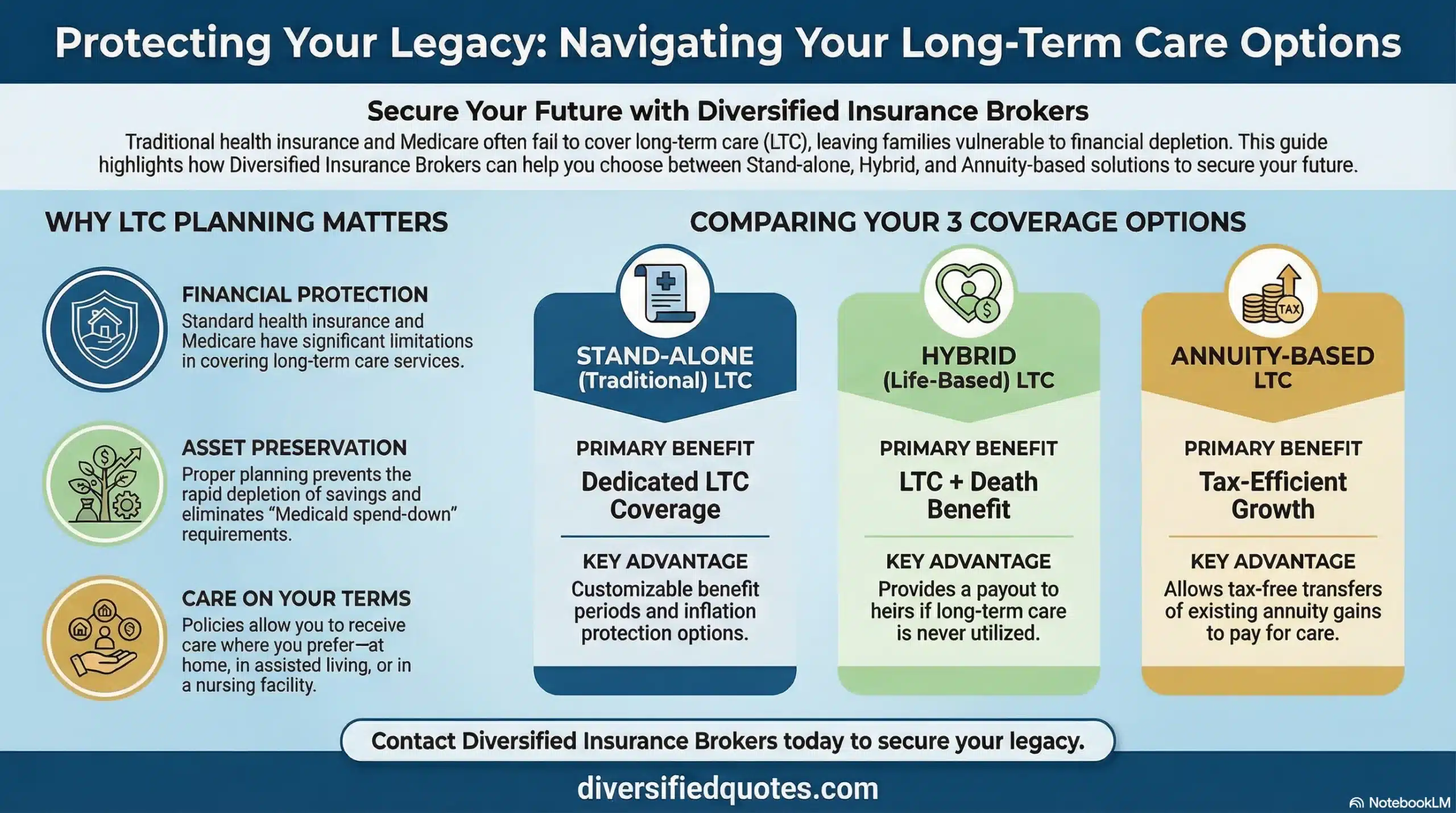
Traditional long-term care insurance is built to pay for care expenses when you qualify, and it can be a strong tool for many households. But some people hesitate because the plan is purely long-term care focused, and there may be no residual value if care is never needed. LifeCare approaches the problem with a different structure.
With LifeCare, long-term care benefits are typically accessed by accelerating the life insurance death benefit. Depending on how the policy is designed, the structure may also include extended long-term care benefits after the death benefit acceleration has been used. This creates a defined pool of money that can pivot from legacy protection to living benefits based on what happens in real life.
Clients often compare LifeCare to other hybrid solutions such as single-premium hybrid LTC policies or linked-benefit life insurance. The best fit usually depends on how you want to fund the plan, how much flexibility you want, and whether you prioritize cash flow control, benefit pool size, or long-term inflation growth.
Life Insurance First, Long-Term Care Built In
At its core, LifeCare is still life insurance. That matters for families who want to ensure a death benefit is available for a surviving spouse, children, or other beneficiaries. The policy is designed so your family can be protected whether or not long-term care is ever needed.
If long-term care becomes necessary, the policy is designed to pivot from legacy protection to living benefits. Funds that would have otherwise been paid as a death benefit can be used to help offset eligible care expenses such as home health care, assisted living support, or facility-based care, depending on the claim structure and policy provisions.
This dual-purpose design is often appealing to households who already expect to own life insurance for family protection or estate planning and want a single policy strategy that also addresses long-term care exposure without purchasing a separate stand-alone LTC contract.
Indexed Growth Potential with Principal Protection
LifeCare includes indexed account options that link interest crediting to market indexes while protecting against market losses. The policy does not invest directly in the market, but positive index performance can potentially increase the policy’s account value. In turn, that can help support policy performance and the overall benefit structure depending on the design and policy mechanics.
For conservative investors, the concept is straightforward: pursue a measure of growth potential while keeping downside market exposure limited inside the policy crediting method. Many designs also include fixed account options for those who want stable, predictable interest crediting.
Because hybrid solutions vary widely, it’s important to compare how each carrier structures crediting, charges, and how benefits are calculated—rather than assuming all “indexed” hybrid policies behave the same way.
Long-Term Care Benefit Periods and Inflation Protection
When designing a LifeCare policy, benefit structure decisions help determine how long long-term care benefits can be paid and how benefits may increase over time. This allows customization based on family history, age, and overall retirement goals.
Inflation options can be especially important if your primary concern is meaningful purchasing power decades into the future. When we compare options, we often frame the decision around long-term outcomes: what does the benefit look like in 10 years, 20 years, and beyond, and how does that compare to expected cost trends for home care, assisted living, and facility care?
If you’re weighing long duration protection specifically, it can also be useful to compare benefit period design concepts more broadly: limited-term benefits vs lifetime benefit strategies.
Cash Indemnity vs. Reimbursement Flexibility
Long-term care benefits can be structured in different ways depending on policy design and rider options. Some approaches function more like reimbursement—benefits are tied to eligible expenses—while others can offer more flexibility through cash-style benefit formats. The practical difference is how much documentation is required and how freely the family can allocate dollars once eligibility is established.
This matters because real-world care is rarely “clean.” Early care is often a mix of paid and informal support. Some families pay for a professional caregiver part of the week and rely on family coverage the rest. Others start with home care and later shift into assisted living or memory care as needs increase. Flexibility can be a meaningful planning advantage when the care path evolves over time.
Who Is a Good Fit for John Hancock LifeCare?
LifeCare is generally evaluated by people who want long-term care protection but also value life insurance, legacy planning, and asset efficiency. While every situation is different, we commonly see interest from:
- Pre-retirees planning for long-term care without committing to a stand-alone LTC premium model
- Couples seeking protection for both care needs and survivor legacy planning
- Clients who already plan to own life insurance and want those dollars to serve multiple purposes
- Individuals comparing hybrid solutions like life insurance with LTC riders
If you want to zoom out and compare multiple designs (not just one carrier), our overview hub is a strong starting point: Long-Term Care Insurance.
Comparing LifeCare to Other Hybrid LTC Policies
There is no single “best” hybrid long-term care policy for everyone. LifeCare is usually evaluated alongside other hybrid LTC designs, including asset-based policies and other linked-benefit life insurance structures. The best fit comes down to what you value most: premium structure, benefit pool design, inflation options, liquidity access, and how benefits are accessed during a claim.
At Diversified Insurance Brokers, we benchmark LifeCare against other major hybrid LTC options so clients can see the trade-offs clearly and make an informed decision. A side-by-side view is often the fastest way to figure out whether LifeCare is the right chassis for your goals—or whether another structure is a better match.
Integrating LifeCare Into a Broader Retirement Plan
LifeCare tends to work best when coordinated with the rest of your retirement income and protection strategy. That can mean pairing the policy with income tools, keeping adequate liquidity for near-term needs, and ensuring the rest of the portfolio is positioned appropriately once the long-term care risk is partially addressed.
By addressing long-term care exposure through a hybrid policy design, many households feel more confident about the rest of their plan—because one of the largest “unknown” retirement expenses is accounted for in a structured way.
Is John Hancock LifeCare Right for You?
See how LifeCare compares to other hybrid LTC strategies based on your age, assets, and goals.
Talk With an Advisor Today
Choose how you’d like to connect—call or message us, then book a time that works for you.
Schedule here:
calendly.com/jason-dibcompanies/diversified-quotes
Licensed in all 50 states • Fiduciary, family-owned since 1980
FAQs: John Hancock LifeCare Hybrid Life and LTC
What is John Hancock LifeCare?
John Hancock LifeCare is a hybrid policy that combines life insurance with long-term care benefits. If you need qualifying long-term care, the policy can pay benefits while you’re living; if you never need care, it pays a death benefit to your beneficiaries.
Is LifeCare “life insurance first” or “LTC first”?
It’s primarily life insurance with long-term care built in. The long-term care benefit is typically paid by accelerating part of the life insurance benefit, and some designs can extend benefits beyond the base life insurance amount depending on how the policy is structured.
What types of care can LifeCare benefits help pay for?
Benefits are designed to help with qualifying long-term care services such as home care, assisted living, and skilled nursing care, based on the policy’s definitions, benefit triggers, and the coverage design you select.
How do you qualify to receive long-term care benefits?
Eligibility generally depends on meeting the policy’s benefit trigger requirements (commonly tied to Activities of Daily Living or cognitive impairment), along with any waiting or elimination period requirements stated in the contract.
Are premiums flexible, and can LifeCare be paid up over time?
LifeCare is often designed with multiple funding options, which may include single premium or limited-pay approaches depending on the design available. We’ll illustrate options that match your timeline and cash flow.
Does LifeCare offer inflation protection for long-term care benefits?
Many hybrid LTC strategies can be designed with inflation protection features. If available in your design, inflation options can help long-term care benefits keep pace with rising costs over time.
What happens if I never need long-term care?
If long-term care benefits aren’t used, the policy is designed to pay the life insurance death benefit to your beneficiaries (subject to policy terms, premiums being paid as required, and any outstanding loans).
What happens if I use some LTC benefits and then pass away?
If long-term care benefits are paid, the remaining death benefit is typically reduced accordingly. Any remaining death benefit (if applicable based on usage) would pay to your beneficiaries under the policy terms.
How is LifeCare different from traditional long-term care insurance?
Traditional LTC insurance is designed only for care reimbursement/benefits. LifeCare is a hybrid approach that pairs LTC benefits with a life insurance death benefit, so there is still a benefit payable if care is never needed.
Can LifeCare be compared to other hybrid LTC policies?
Yes. We can compare LifeCare to other hybrid LTC and asset-based designs by looking at premium structure, total benefit pool, inflation options, benefit triggers, and how benefits are paid.
How do I get an illustration for my age and goals?
Use the Hybrid LTC request form and we’ll build side-by-side illustrations based on your age, state, and the level of LTC and life insurance benefit you want.
About the Author:
Jason Stolz, CLTC, CRPC and Chief Underwriter at Diversified Insurance Brokers, is a senior insurance and retirement professional with more than two decades of real-world experience helping individuals, families, and business owners protect their income, assets, and long-term financial stability. As a long-time partner of the nationally licensed independent agency Diversified Insurance Brokers, Jason provides trusted guidance across multiple specialties—including fixed and indexed annuities, long-term care planning, personal and business disability insurance, life insurance solutions, and short-term health coverage. Diversified Insurance Brokers maintains active contracts with over 100 highly rated insurance carriers, ensuring clients have access to a broad and competitive marketplace.
His practical, education-first approach has earned recognition in publications such as VoyageATL, highlighting his commitment to financial clarity and client-focused planning. Drawing on deep product knowledge and years of hands-on field experience, Jason helps clients evaluate carriers, compare strategies, and build retirement and protection plans that are both secure and cost-efficient.
