
Life Insurance for Mountain Climbing

Jason Stolz CLTC, CRPC
Life insurance for mountain climbing is attainable when your climbing is described precisely and paired with a carrier that underwrites mountaineering based on real-world risk tiers—rather than a vague “extreme sports” bucket. At Diversified Insurance Brokers, we help alpine climbers, glacier travelers, and expedition mountaineers secure full-benefit life insurance by translating your actual habits, training, and route choices into the kind of underwriting detail carriers expect to see. When your file is documented correctly, many climbers can qualify for meaningful coverage without exclusions and without being priced like a worst-case scenario.
Carrier selection matters because mountaineering is not underwritten as one single activity. A summer ascent on established routes at moderate altitude is evaluated differently than technical ice, mixed terrain, winter objectives, or high-altitude international expeditions. Because we’re an independent, fiduciary agency with access to 75+ A-rated carriers, we can pre-screen your profile, target the most receptive underwriting lanes, and keep the process efficient—so an occasional summit or a well-planned expedition doesn’t get treated like uncontrolled risk.
Request a Quote for Mountain Climbing Life Insurance
We pre-screen with climber-friendly carriers to pursue full-benefit coverage at the best available price.
Get My Climber Quote Call 800-533-5969
Tip: “What you climb” matters less than “how you climb.” Specific routes, altitude bands, season, and safety protocols improve outcomes.
Most climbers assume underwriting will automatically punish them for any mention of “alpine” or “mountaineering.” That usually happens only when an application is vague. “I climb mountains” can sound like frequent high-altitude, technical exposure with winter objectives, solo travel, and unknown safety practices. In contrast, a clearly described profile—such as guided or team-based ascents, limited frequency, consistent training, conservative go/no-go rules, and avoidance of the highest-hazard windows—often underwrites more favorably than climbers expect.
This is why we focus on precision. We help you present your actual activity level so your premiums reflect your real risk profile rather than assumptions. If you have other underwriting factors that could influence the result (medical history, build, or prior ratings), it can help to read our broader guide: Life Insurance with Pre-Existing Conditions. And if you want a quick overview of how we approach unusual risks, this page lays out our process: High-Risk Life Insurance Services.
Estimate Your Term Life Prices for Life Insurance for Mountain Climbing
Run Sample Quotes for Mountaineers
Compare coverage amounts and term lengths side by side. Final approval depends on underwriting review and avocation details.
How Underwriters Actually Assess Mountain Climbing
Insurers do not view all climbing as equal. Most carriers stratify mountaineering risk into tiers based on altitude, terrain, technical difficulty, frequency, and the degree of objective hazard. Underwriters want to understand not just where you go, but how you manage risk on the way there. That’s why a clean, specific avocation description can shift an outcome dramatically.
Altitude bands matter because higher elevations typically increase exposure to rapid weather shifts, hypoxia, frostbite risk, and rescue complexity. Many carriers treat “under 10,000 feet” differently than “10,000–14,000 feet,” and 14ers or higher are often evaluated with added detail. International high-altitude objectives may trigger additional underwriting questions even when they are guided, simply because the logistical and medical risk profile changes.
Terrain and climbing style matter because insurers separate non-technical summits and established routes from technical alpine, ice, mixed routes, or glacier travel. When you say “alpine,” underwriters may assume exposure to rockfall, seracs, crevasse hazards, and complex decision-making in terrain where rescue is difficult. If your climbs are mostly on established summer routes, hut-to-hut itineraries, or guided ascents with conservative objectives, it’s worth stating that explicitly.
Guided vs. unguided is often a major divider. Some carriers treat professional guiding and structured team ascents as risk mitigators, especially when combined with limited annual frequency. Team size, communication plan, and whether you climb with experienced partners also helps underwriters understand your real-world decision environment.
Frequency and recency matter because underwriters distinguish between “one trip last year” and “monthly technical objectives.” They also care about what you have planned in the next 12 months. A single upcoming expedition can be treated differently than ongoing high-frequency climbing. This is where pre-screening is valuable: we can help you understand how carriers treat “planned” vs. “historical” activity and how to present the timeline cleanly.
Preparation and safety habits can be the difference between a modest flat extra and a clean standard decision. Underwriters respond well to documented training and conservative protocols because it signals disciplined risk management. When a carrier sees consistent patterns—training, route selection, conservative decision thresholds—they become more comfortable underwriting the activity.
What to Share for the Best Offer
Most carriers will ask for an avocation questionnaire. The goal is to give underwriting a precise, simple snapshot without overstating or underselling what you do. We help clients prepare answers that match how insurers think about risk, which can reduce follow-up requests and keep underwriting moving.
Underwriters typically want to know recent routes and peaks (names, elevations, dates), whether climbs were guided or unguided, and whether objectives were non-technical, technical alpine, glacier travel, ice, or mixed terrain. They also want a sense of your typical season and region because weather volatility and rescue access can vary widely. If you intentionally avoid winter ascents, shoulder-season hazards, or certain objective-risk zones, that’s worth explaining.
Training and certifications also matter. Wilderness first aid or responder training, avalanche education, crevasse rescue proficiency, rope systems competency, and other structured education can strengthen a file by showing you approach the activity with discipline. Underwriters also respond well to documented safety practices such as helmet use, travel with partners, use of appropriate rope systems where needed, and communication tools that reduce rescue delay risk.
Finally, it helps to describe your decision-making process. Underwriters are trying to understand whether you have objective “turnaround” rules. A conservative approach—turning back for weather, avalanche conditions, wind, or visibility—signals maturity and lowers perceived risk. The strongest files communicate that mountaineering is a disciplined pursuit, not impulsive risk-taking.
Expected Outcomes and Practical Scenarios
Every case is different, but outcomes tend to follow a few patterns when the file is presented clearly. Recreational climbers who do a handful of non-technical or guided climbs per year—especially below the highest altitude tiers—often see outcomes that look similar to other active lifestyles. In many cases, a strong health profile and clear avocation details can keep premiums in a standard range.
Climbers who do technical alpine, mixed, or ice routes may see a modest occupational adjustment, often in the form of a flat extra (an additional cost per $1,000 of coverage) or a rating depending on the carrier’s internal guidelines. This is where carrier selection is the whole game: some insurers are far more reasonable on well-documented technical profiles than others. A file that reads “frequent technical ice climbs in winter” will underwrite differently than “limited number of technical objectives with conservative seasonality and strong safety protocols.”
International high-altitude expeditions are usually evaluated based on how often they occur, whether they are guided, and whether the trip is imminent. Some carriers handle a single annual expedition as a time-limited exposure and may treat underwriting differently before vs. after the trip. The key is to disclose plans accurately and early so the carrier doesn’t feel surprised later in the process. If you are traveling internationally, you may also want to review travel medical options separately because domestic health insurance often has limitations across borders: Emergency Travel Medical Insurance for U.S. Citizens.
If you already have coverage and your climbing plans are increasing in altitude or frequency, a review can help you avoid surprises. In some cases, you may be able to adjust structure—coverage amount, term length, and the way you layer policies—so you’re protected without overpaying. This checklist is helpful for a fast policy tune-up: Review My Life Insurance Policy.
Policy Types and Structure for Mountaineers
Most climbers choose term life insurance as the foundation because it provides the most death benefit for the lowest premium. Term is a straightforward solution for income replacement, mortgage protection, and family expenses during the years when financial responsibilities are highest. Many climbers choose a 20-year term because it aligns with the prime income and dependent years, but the right term depends on your timeline.
Some mountaineers use a layered strategy—often called laddering—where multiple policies with different term lengths match changing family needs over time. This can be especially useful if you expect your need for large coverage to decline as the mortgage drops, kids become financially independent, or assets grow. If you want to explore that approach, this guide lays out the concept in plain English: Life Insurance Laddering Guide.
Permanent life insurance can also make sense for certain climbers, especially those who want lifetime coverage that extends beyond the years they’re actively climbing, or those with estate and legacy needs that don’t fit neatly into a term window. Permanent coverage is often evaluated more carefully on the underwriting side because the duration is longer, but a stable profile and clear documentation can still produce strong outcomes.
Many climbers also appreciate flexible riders that provide access to benefits if serious health events occur. If you’re evaluating optional benefits, this page explains how accelerated death benefit riders are typically structured: Accelerated Death Benefit Riders.
For business owners, guides, or sponsored professionals, life insurance can sometimes be integrated into compensation strategies or retention planning. If that applies to your situation, this overview provides a starting point: Executive Bonus 162 Plans. The right structure depends on the business objective, but it can be a smart way to align protection with professional planning.
How to Lower Your Cost Without Cutting Coverage
Premiums are always influenced by age and health, but climbers often have more control over the “climbing” side of the underwriting equation than they realize. The best results usually come from clarity and consistency. When your climbs are described precisely—route type, altitude, season, frequency, guided vs. unguided—and your safety practices are clearly documented, it reduces the chance an underwriter assumes the highest hazard tier.
Underwriters also respond well when the profile demonstrates conservative decision-making. If you avoid winter ascents, limit technical objectives to a small number per year, climb with experienced partners, and maintain training that supports safer outcomes, those details matter. The goal is not to “sell” underwriting; the goal is to document your actual risk mitigation so it’s visible in the file.
Another cost-control lever is policy structure. Coverage amount, term length, and whether you layer policies can all change the premium dramatically while still meeting the household objective. A quick annual review helps keep beneficiaries, coverage amounts, and ownership aligned with life changes, especially after marriage, kids, business changes, or major asset growth. This checklist is a helpful planning tool: Annual Beneficiary Review Checklist.
When International Expeditions Are on Your Calendar
If you’re planning an international objective—whether it’s a classic summit like Kilimanjaro, a high-altitude trek that transitions into technical terrain, or a major cold-weather route—it’s best to tell us early. Some carriers evaluate mountaineering primarily on historical activity, while others focus heavily on upcoming plans. In certain cases, it can be advantageous to pre-screen first, then apply with a carrier that treats an upcoming trip as a manageable, disclosed exposure rather than a reason for blanket restrictions.
We also help keep the pricing fair by making sure your everyday premium reflects your everyday activity. If your climbing is seasonal or limited to one major trip per year, the file should read that way. If plans change, we can adjust the submission approach so underwriting sees the clearest timeline and doesn’t assume you’re escalating frequency or risk.
Why Diversified Insurance Brokers for Mountaineers
Since 1980, our specialty has been translating “real-world risk management” into “underwriting confidence.” We know how different insurers define altitude bands, how they classify glacier travel versus technical ice, and which details tend to move a mountaineering file from uncertain to approvable. We also know when it’s smarter to pre-screen rather than apply blindly, because unnecessary declines can shrink future options.
Our advisors take a practical approach. We help you gather exactly what underwriting needs, present your activity level clearly, and target carriers that have a track record of fair outcomes for mountaineers. Whether you’re doing non-technical summer summits, guided glacier travel, or a once-a-year expedition, the goal is the same: secure coverage that keeps pace with your goals and protects your family’s financial security.
Request a Quote for Mountain Climbing Life Insurance
We’ll pre-screen your climbing profile and match you to carriers that underwrite mountaineering realistically.
Compare Term Life Insurance Lengths
Explore different term periods to find coverage that best matches your timeline and budget.
Talk With an Advisor Today
Choose how you’d like to connect—call or message us, then book a time that works for you.
Schedule here:
calendly.com/jason-dibcompanies/diversified-quotes
Licensed in all 50 states • Fiduciary, family-owned since 1980
FAQs: Life Insurance for Mountain Climbing
Can mountain climbers get affordable life insurance?
Yes. Recreational and guided climbers often qualify for standard or preferred rates depending on experience, frequency, and safety history.
Do I need to disclose climbing on my application?
Yes. Carriers require accurate disclosure, but with Diversified Insurance Brokers, your answers are framed professionally to avoid unnecessary penalties.
Are high-altitude or expedition climbs covered?
Yes, though premiums may include a small flat extra. Our network includes carriers that specialize in high-altitude or international climbs.
What types of policies are best for climbers?
Term life is most popular for affordability, while indexed or universal life provides long-term coverage and cash value growth options.
Can I get coverage after an injury or climbing accident?
Yes. Once fully recovered, many climbers can reapply and obtain favorable coverage, especially with strong medical documentation.
Do professional guides qualify for life insurance?
Yes, with select carriers. We help guides and instructors present their training and certifications to minimize underwriting load.
Is life insurance available for international climbs?
Yes. We work with carriers that consider climbs in Europe, South America, and Asia with minimal restrictions when risk is clearly defined.
Can non-smokers who climb get preferred rates?
Yes. Non-smokers can qualify for preferred or even preferred plus rates when other health factors are favorable.
Does life insurance cover death during a climb?
Yes, as long as your policy does not have a specific exclusion. We help ensure your coverage remains comprehensive.
Why should climbers work with an independent agency?
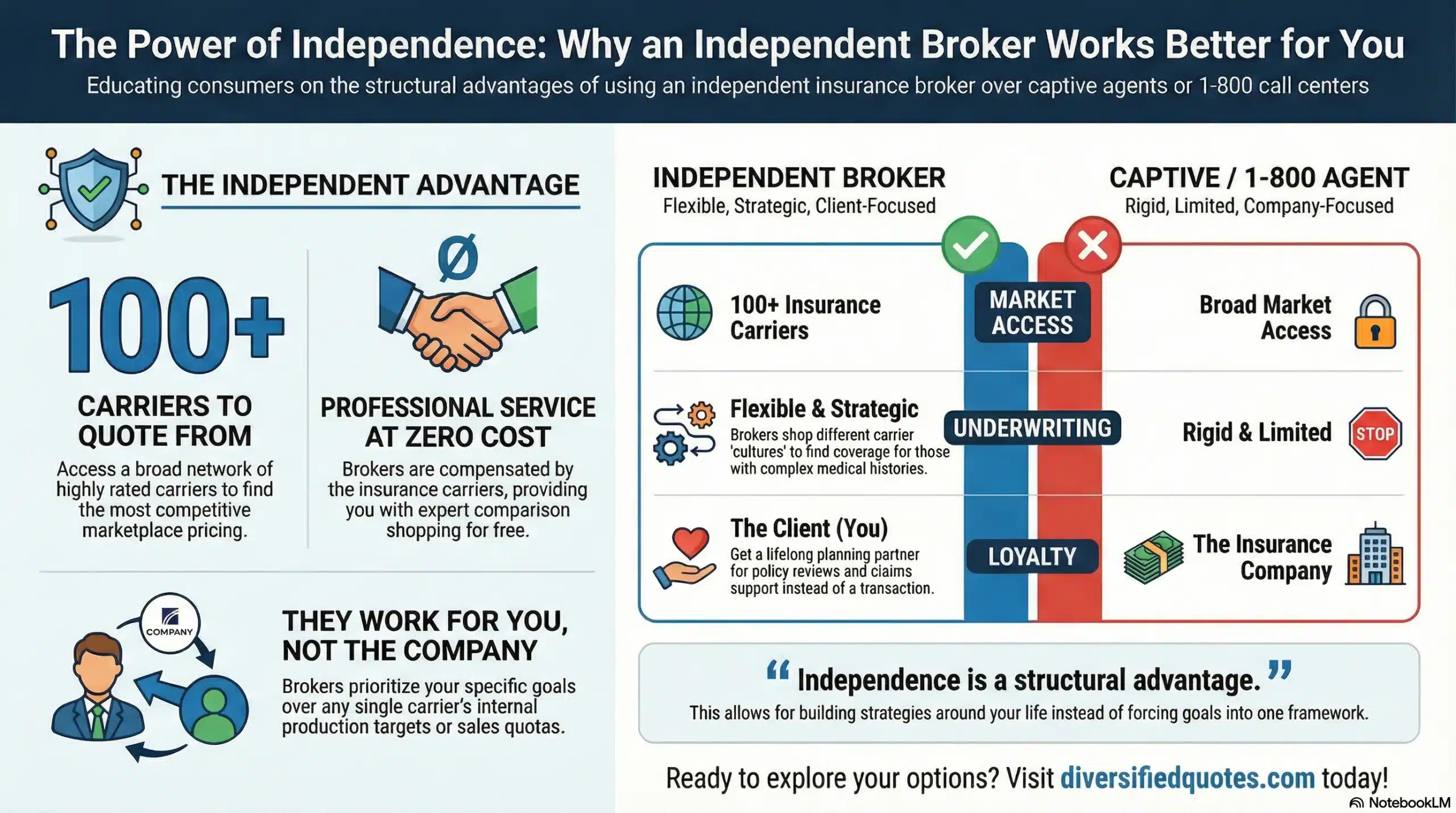
Independent agencies like Diversified Insurance Brokers can compare multiple carriers to find the best fit and avoid overpriced specialty policies.
About the Author:
Jason Stolz, CLTC, CRPC and Chief Underwriter at Diversified Insurance Brokers (NPN 20471358), is a senior insurance and retirement professional with more than two decades of real-world experience helping individuals, families, and business owners protect their income, assets, and long-term financial stability. As a long-time partner of the nationally licensed independent agency Diversified Insurance Brokers, Jason provides trusted guidance across multiple specialties—including fixed and indexed annuities, long-term care planning, personal and business disability insurance, life insurance solutions, Group Health, and short-term health coverage. Diversified Insurance Brokers maintains active contracts with over 100 highly rated insurance carriers, ensuring clients have access to a broad and competitive marketplace.
His practical, education-first approach has earned recognition in publications such as VoyageATL, highlighting his commitment to financial clarity and client-focused planning. Drawing on deep product knowledge and years of hands-on field experience, Jason helps clients evaluate carriers, compare strategies, and build retirement and protection plans that are both secure and cost-efficient. Visitors who want to explore current annuity rates and compare options across multiple insurers can also use this annuity quote and comparison tool.
