
Trust as Life Insurance Beneficiary
Trust as Life Insurance Beneficiary

Jason Stolz CLTC, CRPC
Trust as life insurance beneficiary planning allows you to control how and when life insurance proceeds are distributed, protect vulnerable heirs from lump-sum mismanagement, and potentially reduce estate taxes when structured correctly. Naming a trust instead of an individual beneficiary can transform a simple death benefit into a coordinated estate planning tool that aligns with your attorney’s broader strategy for asset protection, multi-generational wealth transfer, and tax efficiency. At Diversified Insurance Brokers, we help families and business owners structure coverage, ownership, and beneficiary design so the policy works seamlessly with revocable trusts, irrevocable trusts, buy-sell agreements, and multi-generational wealth plans — ensuring that the life insurance itself functions as intended within the larger legal and financial structure rather than creating problems the estate planning was designed to avoid.
Life insurance is one of the few assets that transfers outside probate when properly designated — providing immediate liquidity to beneficiaries without the delays, costs, and public exposure of the probate process. However, simply naming an individual beneficiary does not provide control over how funds are spent, when distributions occur, or how proceeds interact with estate taxes, creditor exposure, divorce risk, or special needs planning. A properly drafted trust can address each of those concerns while still preserving the speed and liquidity that life insurance is specifically designed to provide. The key is making sure ownership, beneficiary designations, premium funding, and administrative responsibilities are aligned from the outset — and that any changes after the original structure is established are handled in coordination with legal and tax counsel to avoid inadvertently creating new problems. Applying for life insurance coverage covers the key steps in the application process when a trust will be involved as owner or beneficiary — including how trustee signatures and ownership documentation differ from standard individual applications. How much life insurance costs provides helpful context on pricing variables, underwriting classes, and policy structure differences before formal illustrations are requested for trust-owned coverage.
Coordinate Your Policy With Your Estate Plan
We work alongside your attorney and CPA to align ownership, trustee structure, and beneficiary design.
Request GuidanceWhy Name a Trust as Your Life Insurance Beneficiary
There are several strategic reasons to name a trust as beneficiary rather than naming individuals directly, and the right reason varies significantly by family structure, asset level, and planning objective. Parents of minor children often want to avoid a court-appointed guardian controlling substantial funds until the child reaches the age of majority — an outcome that naming a trust with defined trustee authority can prevent by specifying exactly how and when funds can be used for the child’s benefit. Blended families may wish to provide income to a surviving spouse during their lifetime while preserving the principal for children from a prior marriage — a structure that individual beneficiary designations cannot achieve but that a properly drafted trust can implement precisely. Families with special needs dependents frequently rely on trust structures to avoid inadvertently disqualifying the dependent from government benefit programs that have means-testing requirements, a consequence that a direct lump-sum inheritance would trigger while a properly structured special needs trust would not.
Business owners may use trust language to coordinate liquidity for ownership transitions, equalize inheritances among heirs who receive different business and non-business assets, or provide estate tax funding in a way that does not require forced business liquidation or borrowing. A trust can also stagger distributions over time instead of delivering a lump sum that may be mismanaged, which is particularly valuable in larger estates or when heirs are young, financially inexperienced, or exposed to creditor or divorce risk that would put an unprotected inheritance at stake. In certain cases, irrevocable trust structures are used to help keep life insurance proceeds outside the insured’s taxable estate — a strategy commonly implemented through an irrevocable life insurance trust, or ILIT — which can significantly affect the net after-tax value of the insurance benefit that ultimately reaches heirs in estates subject to federal or state estate tax. Life insurance for business owners covers the specific ownership, beneficiary, and coordination considerations that arise when business interests and family estate planning intersect around a life insurance policy. Buy-sell agreement life insurance covers how beneficiary design and ownership structure interact in business succession funding — a critical coordination point when trust structures and buy-sell agreements both involve the same policy or the same pool of liquidity. Partnership buy-sell agreement insurance covers the specific coordination mechanics for partnership-entity structures where trust involvement may affect both personal estate planning and business continuity simultaneously.
Revocable Trust vs. ILIT: Key Structural Differences
| Feature | Revocable Living Trust (RLT) | Irrevocable Life Insurance Trust (ILIT) | Key Planning Implication |
|---|---|---|---|
| Control by grantor | Retained — grantor can amend, revoke, or change terms at any time during lifetime | Surrendered — grantor cannot retain control rights or incidents of ownership without causing estate inclusion | ILIT requires permanent relinquishment of control — not appropriate if grantor needs flexibility to change terms |
| Estate tax treatment of proceeds | Included in taxable estate — proceeds are owned and controlled by the grantor, so estate inclusion applies | Potentially excluded — when properly structured, death benefit may fall outside the insured’s taxable estate | ILIT is the primary tool for removing life insurance proceeds from estate — RLT provides no estate tax benefit on its own |
| Policy ownership | Grantor or grantor’s RLT — insured typically owns the policy, trust named as beneficiary | ILIT owns the policy — trust is both owner and beneficiary; insured has no ownership rights | Ownership structure determines estate tax treatment — must be coordinated carefully with counsel before policy is issued |
| Premium funding | Paid directly by grantor — no special gifting mechanics required | Typically funded through annual gifts to the trust using Crummey notices to preserve gift tax annual exclusion | ILIT premium funding requires disciplined annual process — errors in Crummey notice procedure can jeopardize gift tax exclusion |
| Probate avoidance | Yes — trust assets pass outside probate; life insurance payable to trust also bypasses probate | Yes — proceeds paid to ILIT pass outside probate and outside taxable estate when properly structured | Both structures provide probate avoidance — the estate tax benefit is the primary differentiator for ILIT vs. RLT |
| Three-year look-back risk | Applies if existing policy is transferred to RLT — insured’s death within three years can trigger estate inclusion | Applies if existing policy is transferred to ILIT — trust-purchased new policy avoids three-year exposure | When possible, having the trust purchase a new policy rather than transferring an existing one eliminates three-year look-back risk |
How an ILIT Works in Estate Tax Planning
An irrevocable life insurance trust is designed so that the trust — not the insured — owns the policy and is named as both owner and beneficiary. When structured and administered properly, this arrangement removes incidents of ownership from the insured, which under Internal Revenue Code Section 2042 may exclude the death benefit from the insured’s taxable estate. Incidents of ownership include the right to change beneficiaries, borrow against the policy cash value, assign the policy, or otherwise exercise control over any aspect of the policy — and retaining any of these rights, even indirectly, can trigger estate inclusion of the full death benefit regardless of the trust structure. This distinction matters significantly in larger estates where the federal estate tax applies, and increasingly in states that have lower estate tax exemption thresholds than the federal limit.
If an existing policy is being moved into an ILIT rather than having the trust purchase a new policy directly, timing and structure require particular attention. Policy transfers can trigger a three-year look-back period under IRC Section 2035 during which the death benefit remains estate-includable — meaning if the insured dies within three years of the transfer, the full proceeds are pulled back into the taxable estate regardless of the trust structure. In many planning situations, it makes more sense for the trust to apply for and own a new policy from inception rather than transferring an existing one, eliminating look-back exposure entirely. When restructuring coverage, families sometimes evaluate policy type, face amount, and underwriting alternatives alongside the trust structure — including permanent life insurance products like whole life or universal life that provide the guaranteed lifetime death benefit an ILIT typically requires to function as intended. When complex medical history is a consideration in underwriting the coverage, exploring the full range of carrier options across the market becomes important. High-risk life insurance companies covers the specialized underwriting markets and impaired-risk carrier options for cases where standard market underwriting produces substandard offers or declinations. No-exam life insurance covers the accelerated underwriting and simplified-issue options that may be appropriate for trust-owned coverage in specific situations where simplified underwriting produces favorable results.
Trustee Responsibilities and Administrative Control
When a trust is named as beneficiary — and particularly when the trust owns the policy as in an ILIT structure — the trustee assumes responsibility for a set of ongoing administrative and fiduciary obligations that extend throughout the life of the policy and into the distribution process after the insured’s death. During the insured’s lifetime, the trustee of an ILIT must receive and hold gifted funds, send required Crummey notices to beneficiaries to preserve the annual gift tax exclusion for premium contributions, pay premiums on schedule, maintain required records, and avoid any administrative action that would cause the insured to be treated as having incidents of ownership over the policy. Administrative errors in any of these steps can have significant tax consequences that undermine the estate tax planning the ILIT was specifically established to achieve.
At the insured’s death, the trustee becomes responsible for filing the life insurance claim, receiving the proceeds, investing them prudently during the distribution period, and distributing funds to beneficiaries in accordance with the trust document’s terms and standards. This requires understanding fiduciary obligations, distribution standards, record-keeping requirements, and communication responsibilities — a combination of legal, financial, and administrative competencies that makes trustee selection one of the most consequential decisions in trust planning. Choosing the right trustee is as important as drafting the right language, especially in special needs trusts, long-term discretionary trusts, or any structure where beneficiaries have complex and evolving needs that the trustee must evaluate and respond to over decades. Overly restrictive trust language can delay distributions or create confusion during claims. Clear drafting paired with regular legal reviews helps prevent delays and misunderstandings at the time when families need liquidity most. Annual beneficiary review checklist covers the periodic review process that should accompany any trust-based life insurance structure — ensuring that policy ownership, beneficiary designations, and trust documents remain current and aligned as family circumstances, tax law, and estate planning objectives evolve. Executive bonus 162 plans covers an alternative business-context life insurance funding structure that is sometimes compared to ILIT approaches when evaluating the most tax-efficient way to fund key executive coverage — useful context when business owners are simultaneously evaluating personal and corporate life insurance structures.
Business Owners, Buy-Sell Planning, and Trust Coordination
Trust beneficiary design frequently intersects with business succession planning in ways that require simultaneous coordination of personal estate objectives and business continuity requirements. In closely held businesses, life insurance is routinely used to fund buy-sell agreements that obligate surviving owners or the entity to purchase a deceased owner’s interest from their estate. Depending on the structure of the buy-sell agreement — entity purchase versus cross-purchase versus hybrid arrangements — a trust may be involved in receiving proceeds, managing how funds flow between heirs and business partners, or coordinating the timing of distributions with the execution of the purchase agreement. If a trust structure and a buy-sell agreement both involve the same owner’s life insurance, the policies, ownership arrangements, and beneficiary designations must be explicitly coordinated to ensure that proceeds reach the intended recipients and fund the intended transactions without conflict.
Key executive coverage, deferred compensation arrangements, and executive benefit plans may also intersect with personal trust structures when proceeds need to be allocated between family wealth objectives and business liquidity needs. This coordination is most effective when addressed during the planning and policy design phase rather than after policies are already in force with designations that conflict with the trust’s intent. Key person life insurance for executives covers the corporate ownership and beneficiary considerations for key executive coverage and how those interact with personal estate planning for the same individual. Benefits of key person insurance covers the foundational planning applications of key person coverage and why it is often evaluated alongside personal trust-based coverage as part of a complete business owner protection package. Life insurance with living benefits and life insurance with living benefits for chronic or critical illness cover the living benefit provisions available on permanent life insurance that can affect how trust-owned policies function when the insured experiences a qualifying health event during their lifetime — an important consideration for trustees managing policies with accelerated benefit riders.
Common Planning Mistakes to Avoid
One of the most frequent and consequential mistakes in trust-based life insurance planning is mismatching ownership and beneficiary intent in ways that undermine the estate tax or distribution objectives the structure was designed to achieve. If the goal is estate tax mitigation through an ILIT, the insured must not retain any control rights that constitute incidents of ownership — including the ability to change beneficiaries, borrow against the policy, or receive any economic benefit from the policy during their lifetime. An insured who participates in changing a beneficiary designation or exercises any policy right, even informally, may be treated as having retained incidents of ownership regardless of what the trust documents say. Another common oversight is failing to update trust language, trustee appointments, and beneficiary designations after major life events — marriage, divorce, birth or adoption of a child, business sale, relocation to a different state with different trust laws, or a material change in estate tax law. Outdated language can create unintended distribution outcomes or cause the trust to operate in a manner the insured never intended but can no longer change if the trust is irrevocable.
Administrative missteps in ILIT premium funding create a particularly common source of problems. Annual gifts to the ILIT used to fund premiums must be accompanied by properly executed Crummey notices sent to beneficiaries within required timeframes to qualify for the annual gift tax exclusion — if the notices are not sent correctly or beneficiaries are not given an adequate withdrawal window, the gifts may be treated as taxable above the annual exclusion amount. Beneficiary designations should exactly match the trust’s legal name as stated in the trust document — even small clerical discrepancies between the policy designation and the trust’s formal legal name can delay claims processing or require legal intervention to resolve. Regular coordination between your insurance advisor and estate attorney reduces these administrative risks and ensures the structure operates as designed throughout the life of the policy. What if you’re denied life insurance covers the alternative pathways and impaired-risk market options for situations where standard underwriting produces a declination — relevant when trust-owned coverage is being planned for an insured with health history that complicates the underwriting process. Sell my life insurance policy covers the life settlement option that may be relevant when an existing trust-owned policy no longer serves its original purpose and the trust is evaluating whether continued premium payments are in the beneficiaries’ best interest versus realizing the policy’s secondary market value.
Integrating New Coverage and Ongoing Reviews
When applying for new coverage to be owned by a trust, underwriting, ownership setup, and premium funding should all be structured correctly from the inception of the policy. The application process differs when a trust is the owner — trustees must sign as applicant and policy owner, the trust’s tax identification number is used rather than the insured’s Social Security number, and the trust document may need to be reviewed by the carrier’s counsel before the policy can be issued. These procedural requirements are straightforward when anticipated but can create delays or complications when they are encountered unexpectedly after the application has been submitted. Premium commitments must align with the trust’s long-term funding capacity — particularly in ILITs where premiums are funded through annual gifts that are subject to gift tax annual exclusion limits and where changes in the grantor’s income or gifting capacity can affect the trust’s ability to maintain the policy.
Trust-based life insurance planning is not a one-time event. Beneficiary designations, trustee appointments, policy performance, and the continued appropriateness of the trust structure should be reviewed periodically to ensure alignment with evolving tax laws, family circumstances, and estate planning objectives. Premium funding strategies may need adjustment if income, gifting plans, or estate tax law changes affect the original planning assumptions. Coordination between your insurance advisor, estate attorney, and tax professional on a regular schedule — rather than only when something changes — ensures that the structure continues to perform as intended throughout the full duration of the policy. Key retirement considerations covers the broader retirement income and estate planning framework within which trust-based life insurance structures operate as one component of a comprehensive financial plan.
Estimate Your Life Insurance Cost
Contact Diversified Insurance Brokers
Call 800-533-5969 or submit a request for coordinated trust planning support.
Request InformationRelated Life Insurance Planning Resources
Explore additional guidance on underwriting, business planning, and advanced beneficiary strategy.
Talk With an Advisor Today
Choose how you’d like to connect—call or message us, then book a time that works for you.
Schedule here:
calendly.com/jason-dibcompanies/diversified-quotes
Licensed in all 50 states • Fiduciary, family-owned since 1980
Frequently Asked Questions: Trust as Life Insurance Beneficiary
What is the main benefit of naming a trust as a life insurance beneficiary instead of an individual?
Naming a trust as beneficiary rather than an individual provides control over how and when proceeds are distributed, protects proceeds from creditors and divorce claims, allows staged distributions instead of a lump sum, and enables the trustee to adapt distributions to beneficiaries’ actual needs over time. Individual beneficiary designations provide no control over how the money is used after it is received. A trust can specify distribution standards — for education, health, maintenance, and support — that a trustee applies based on the beneficiary’s evolving circumstances. For minor children, a trust prevents a court-appointed guardian from controlling the funds. For special needs beneficiaries, a properly structured trust preserves government benefit eligibility that a direct inheritance would eliminate.
What is an ILIT and how does it remove life insurance from the taxable estate?
An irrevocable life insurance trust is a trust that owns a life insurance policy and is named as its beneficiary. When properly structured, the ILIT removes the policy and its death benefit from the insured’s taxable estate by eliminating the insured’s incidents of ownership — the rights that would otherwise cause the policy to be estate-includable under IRC Section 2042. Incidents of ownership include the right to change beneficiaries, borrow against the policy, assign it, or exercise any economic control over the policy. If the insured retains any of these rights, the full death benefit is included in the taxable estate regardless of the trust structure. The ILIT must be irrevocable, and premium funding typically flows through annual gifts to the trust using Crummey notices to preserve the gift tax annual exclusion on those contributions.
What is the three-year look-back rule for ILIT planning?
Under IRC Section 2035, if an insured transfers an existing life insurance policy to an ILIT and dies within three years of that transfer, the full death benefit is pulled back into the insured’s taxable estate as if the transfer had never occurred. This look-back period applies to the transfer of an existing policy — it does not apply when the ILIT purchases a new policy directly from inception. For this reason, many estate planning attorneys recommend structuring new trust-owned coverage by having the ILIT apply for and own the policy from day one rather than transferring an existing policy that triggers the three-year exposure. When this approach is taken, the death benefit is excluded from the taxable estate from the moment the policy is issued, with no waiting period.
What are Crummey notices and why do they matter for ILIT premium funding?
Crummey notices are written notifications sent to ILIT beneficiaries informing them of their right to withdraw a contribution to the trust within a defined window — typically 30 to 60 days. This withdrawal right is what qualifies annual gifts to the trust for the federal gift tax annual exclusion, which allows the grantor to make gifts up to the annual exclusion amount per beneficiary without using the lifetime gift tax exemption. Without properly executed Crummey notices, gifts to the ILIT to fund premiums are treated as taxable gifts above the annual exclusion, which accelerates use of the grantor’s lifetime exemption. Crummey notices must be properly documented each year, beneficiaries must actually receive them and have a real opportunity to exercise the withdrawal right, and the process must be administered consistently to maintain the intended tax treatment of premium contributions throughout the life of the trust.
How often should trust-based life insurance structures be reviewed?
Trust-based life insurance structures should be reviewed at least annually and immediately following any major life event — marriage, divorce, birth or adoption of a child, death of a beneficiary or trustee, significant change in estate value, business sale, relocation to a new state, or material change in federal or state estate tax law. Annual reviews should confirm that premium funding is on track, Crummey notices are being properly administered, trustee designations remain appropriate, and the policy’s performance aligns with the original planning projections. Policy performance reviews are particularly important for universal and variable life policies where internal charges and credited rates affect the policy’s long-term sustainability. Coordination between the insurance advisor, estate attorney, and tax professional on an ongoing basis — rather than only reactively — ensures the structure continues to serve its intended purpose throughout the full duration of the planning horizon.
About the Author:
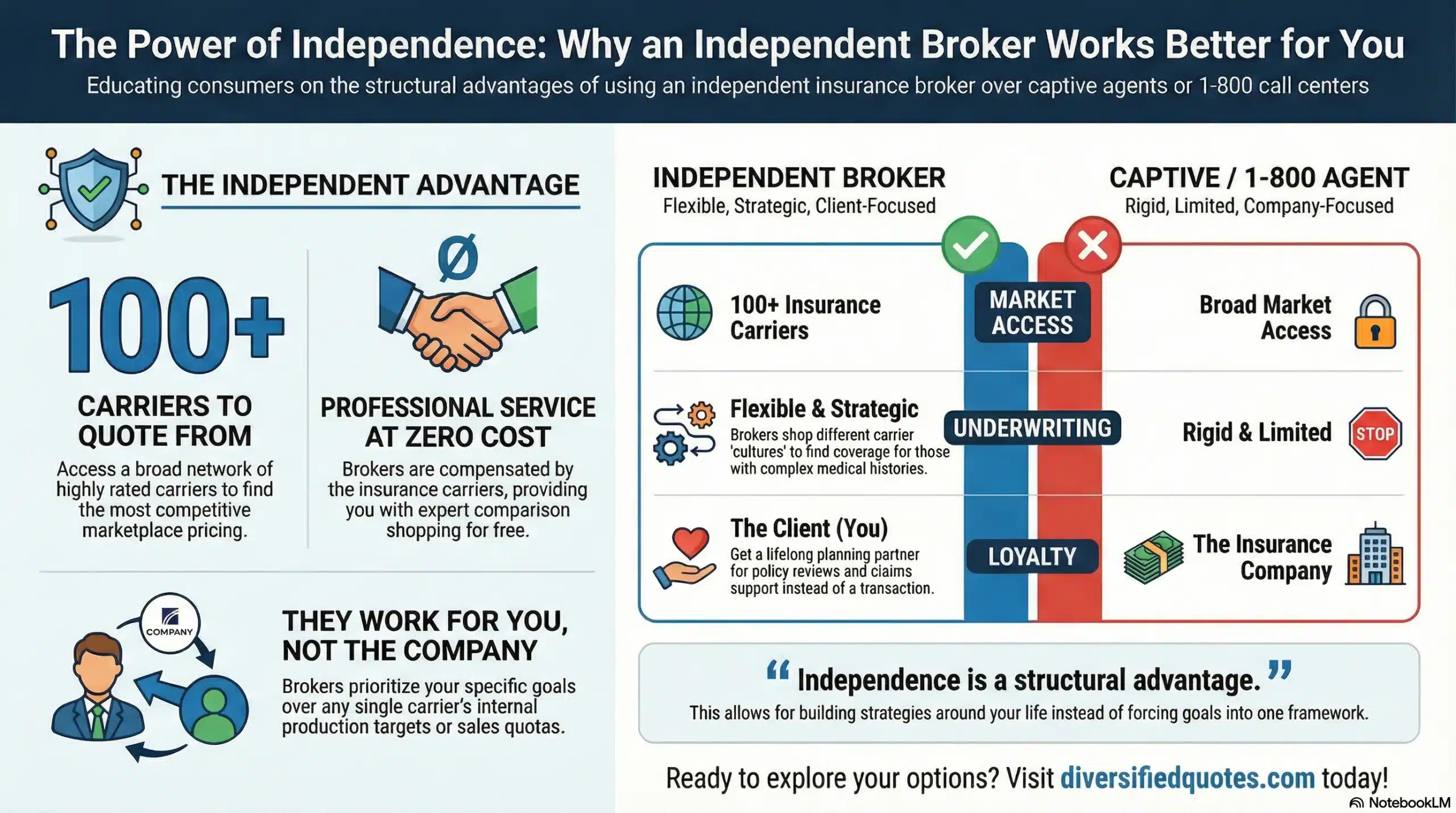
Jason Stolz, CLTC, CRPC, DIA, CAA and Chief Underwriter at Diversified Insurance Brokers (NPN 20471358), is a senior insurance and retirement professional with more than 25 years of real-world experience helping individuals, families, and business owners protect their income, assets, and long-term financial stability. As a long-time partner of the nationally licensed independent agency Diversified Insurance Brokers, Jason provides trusted guidance across multiple specialties—including fixed and indexed annuities, long-term care planning, personal and business disability insurance, life insurance solutions, Group Health, Travel Medical and Evacuation Insurance, and short-term health coverage. Diversified Insurance Brokers maintains active contracts with over 100 highly rated insurance carriers, ensuring clients have access to a broad and competitive marketplace.
His practical, education-first approach has earned recognition in publications such as VoyageATL, and contributions from his agency featured in Kiplinger and GoBankingRates— highlighting his commitment to financial clarity and client-focused planning. Drawing on deep product knowledge and years of hands-on field experience, Jason helps clients evaluate carriers, compare strategies, and build retirement and protection plans that are both secure and cost-efficient. Visitors who want to explore current annuity rates and compare options across multiple insurers can also use this annuity quote and comparison tool.
Browse More Resources: Return to our complete Life Insurance Special Topics guide — covering permanent life, estate planning, key person, IUL, infinite banking & special needs.
Last Reviewed: June 17, 2026 |
Reviewed by: Jason Stolz, CLTC, CRPC, DIA, CAA
Chief Underwriter, Diversified Insurance Brokers, Inc. | NPN: 20471358 | Diversified Insurance Brokers, Inc. — Licensed in all 50 states
Fact Checked by: Tonia Pettitt, CMIP©
Medicare Specialist, Diversified Insurance Brokers, Inc. | NPN: 14374308 | Diversified Insurance Brokers, Inc. — Licensed in all 50 states
Did you find this content helpful? Leave us a Google review — it helps others find trustworthy guidance too.
Editorial Standards: Diversified Insurance Brokers maintains rigorous editorial standards to ensure accuracy, clarity, and independence in all content. Learn more about our editorial standards and commitment to transparency.
