
Sell My Life Insurance Policy
Sell My Life Insurance Policy

Jason Stolz CLTC, CRPC, DIA, CAA
Thinking about how to sell your life insurance policy? You are not alone. Every year, thousands of policyowners discover that a policy they no longer need — or can no longer afford — may have real market value through the secondary market for life insurance. A life settlement allows you to sell an in-force life insurance policy to a licensed institutional buyer for a lump-sum payment that is typically higher than the cash surrender value but less than the full death benefit. For many seniors, retirees, or individuals facing health changes, this can unlock meaningful capital that would otherwise remain tied up in an unused policy generating ongoing premium obligations with no corresponding benefit to the current financial situation. At Diversified Insurance Brokers, we guide you through the entire process, compare multiple licensed buyers, explain alternatives, and help you decide whether selling is the right move for your financial goals. Life settlements explained covers the mechanics, regulatory framework, and participant roles in the secondary market for life insurance in detail. Life settlement calculator provides a quick preliminary estimate based on basic policy and insured characteristics before a formal review is initiated.
A life settlement works by transferring ownership of your policy to a licensed buyer. After the sale, the buyer becomes responsible for paying future premiums and will ultimately receive the death benefit when the insured passes away. In exchange, you receive immediate cash that can be used for retirement income, long-term care expenses, debt elimination, medical bills, charitable giving, or simply improving quality of life during the years when it matters most. Many policyowners originally purchased coverage decades ago when children were young, mortgage obligations were high, or business continuity required protection that is no longer needed at the same scale. Today, those same policies may no longer serve the original purpose — yet premiums continue. Instead of surrendering the policy back to the insurance carrier for minimal value, a life settlement may provide significantly more than the cash surrender value. At what age should you stop buying term life insurance covers the age and circumstance considerations that frequently prompt policy reviews — the same inflection points that make life settlements worth evaluating alongside other exit strategies.
Free Policy Review – See What Your Policy May Be Worth
We’ll evaluate your policy, premiums, and eligibility — and provide a no-obligation life settlement estimate.
Prefer to speak directly? 📞 800-533-5969
Who Qualifies to Sell a Life Insurance Policy?
Most sellers are age 65 or older, though younger individuals with serious health changes may also qualify based on life expectancy rather than age alone. Policies that commonly qualify include universal life, whole life, variable universal life, and convertible term policies. Face amounts are most commonly $100,000 or higher, with larger policies typically attracting stronger market interest and more competitive bidding. Buyers evaluate the insured’s age and current health history, the premium requirements of the policy, the policy design and face amount, the carrier’s financial strength ratings, and any riders that may affect claim timing or benefit amounts. Every case has a unique combination of these variables, which is why a professional policy review is the only reliable way to determine whether a specific policy has meaningful secondary market value.
Life Settlement vs. Alternative Policy Exit Strategies
| Option | How It Works | Benefit | Key Trade-Off |
|---|---|---|---|
| Life settlement | Sell policy to licensed institutional buyer for lump sum; buyer assumes premiums and receives death benefit | Typically highest payout — significantly more than cash surrender value in qualifying cases | Heirs lose death benefit; medical underwriting required; tax consequences depend on cost basis and gain |
| Cash surrender | Return policy to carrier in exchange for accumulated cash surrender value | Simple, immediate, no medical records required; eliminates future premium obligations | Typically lowest payout — often far less than life settlement value for the same policy |
| Policy loan or withdrawal | Borrow against or withdraw from cash value while keeping policy in force | Preserves death benefit; loan not taxable if policy remains in force; provides liquidity without surrendering | Unpaid loans reduce death benefit; excessive withdrawals can lapse the policy; premiums continue |
| Reduced paid-up | Convert to smaller paid-up policy with no future premiums using existing cash value | Eliminates future premium obligations while preserving some death benefit | Reduces death benefit substantially; no cash payment received; available on some whole life designs only |
| 1035 exchange | Transfer policy tax-deferred to new policy or qualifying annuity without triggering gain recognition | Preserves tax deferral; repositions to better-structured coverage or income product | Does not provide immediate cash; appropriate when repositioning makes more sense than selling |
| Accelerated death benefit | Access portion of death benefit early under qualifying health conditions through rider provision | Early access to death benefit for qualifying conditions; typically tax-free under qualifying conditions | Requires qualifying health condition; reduces death benefit to heirs; not available on all policies |
| Lapse the policy | Stop paying premiums; policy terminates | Eliminates premium obligations immediately | Forfeits all potential value — the worst financial outcome for any policy with remaining secondary market value |
The Life Settlement Process: From Review to Payment
The life settlement process follows a consistent sequence from initial policy evaluation through competitive marketing to final payment. The process begins with a policy review — gathering the in-force illustration, confirming the face amount and premium structure, reviewing any riders that may affect policy value, and analyzing the carrier’s financial strength rating. Next comes a health assessment. Buyers generally request medical records with the insured’s written authorization to estimate life expectancy, which is the single most important driver of settlement value. We work with HIPAA-compliant processes to gather and transmit medical records securely, and we explain exactly what information will be reviewed before any authorization is signed.
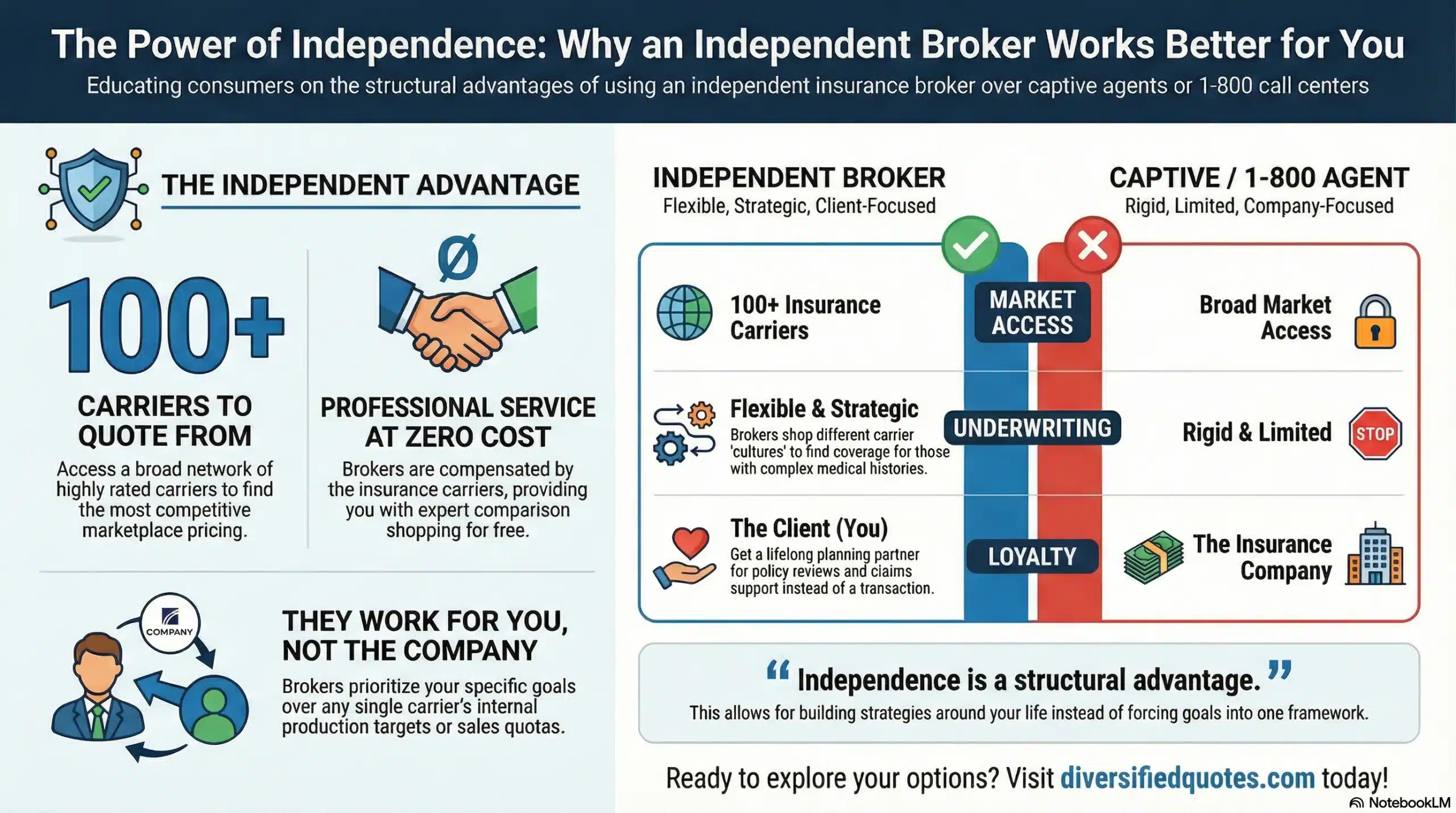
Once the policy and health information are assembled, we market the policy to multiple licensed institutional buyers simultaneously. As an independent brokerage, we are not affiliated with any single funding source — which means we can solicit competitive bids from the full range of qualified buyers rather than steering cases to a predetermined relationship. Offers are presented clearly, showing the gross offer amount, any fees or deductions, and escrow terms. If you accept an offer, documents are executed and funds are placed into escrow. Once ownership transfer is confirmed by the insurance carrier, escrow releases payment directly to you. Getting a second opinion on your life insurance quote covers the broader principle of working independently across the full market that applies equally to life settlement marketing — confirming that competitive access consistently produces better outcomes than a single-provider relationship.
What Determines Settlement Value?
Age and health are primary drivers of settlement value — generally, shorter life expectancy increases buyer interest because it reduces the number of premium payments they must make before receiving the death benefit, improving the investment economics of the purchase. Policy structure matters alongside health. Permanent policies with stable, predictable premium structures are typically more attractive to institutional buyers than policies with projected premium increases that create funding uncertainty over a long holding period. Carrier financial strength ratings influence bids because buyers must have confidence that the carrier will pay the death benefit when it eventually becomes due. Premium load relative to death benefit is another major factor: lower required premiums relative to the death benefit improve the buyer’s economics and can increase settlement value, while a high premium relative to the death benefit reduces the margin and typically produces a lower offer. Because all of these variables interact simultaneously, competitive bidding across multiple buyers is the only reliable method for discovering what the policy is actually worth in the current market.
Alternatives Worth Evaluating Before Selling
Before proceeding with a life settlement, evaluating all available alternatives ensures the decision is made with complete information. In some situations, reducing the face amount may lower premiums while preserving partial coverage. If the policy has accumulated meaningful cash value, loans or withdrawals may provide liquidity without forfeiting the death benefit or triggering the medical underwriting required for a life settlement. Certain policies include accelerated death benefit riders that allow early access to a portion of the death benefit under qualifying health conditions. Accelerated death benefit riders covers how these provisions work and what qualifying conditions are required across different policy designs. A 1035 exchange may allow repositioning the policy into a more suitable structure without triggering immediate income tax on accumulated gain. How 1035 exchanges work in annuity planning covers the mechanics and tax implications. The annuity rescue plan covers situations where repositioning existing financial assets — including policy cash values — into better-structured annuity vehicles makes more sense than maintaining the current arrangement.
Tax and Regulatory Considerations
Life settlement proceeds involve tax considerations that vary based on the relationship between the proceeds received, the policy’s cost basis, and any gain accumulated above that basis. Generally: the portion up to cost basis — total premiums paid minus dividends received or previous withdrawals — is returned tax-free. The portion above cost basis but below cash surrender value may be taxed as ordinary income. The portion above the cash surrender value may potentially be treated as capital gain depending on the facts and applicable IRS guidance. Because the tax treatment of life settlement proceeds is complex and case-specific, consultation with a qualified tax professional before proceeding is recommended for every client.
Life settlements are regulated at the state level with licensing requirements for brokers and providers, disclosure obligations, and cooling-off periods that vary by state. We follow all applicable licensing and compliance requirements, use secure HIPAA-compliant processes to protect medical information, and ensure clients receive complete disclosure of all financial implications before any decision is finalized. Our role is to advocate for the policyowner — not the institutional buyer — and our independent status means we have no financial incentive to steer clients toward any particular buyer or outcome.
Broader Planning Considerations
The decision to sell a life insurance policy does not exist in isolation — it occurs within the context of the policyowner’s retirement income planning, estate planning, tax situation, and legacy goals. Seniors who sell a policy and redirect proceeds into income-generating vehicles sometimes compare fixed indexed annuities as a way to generate protected retirement income from capital previously tied up in premium obligations. Fixed indexed annuities covers how indexed annuity structures provide principal protection with market-linked growth potential. Whole life insurance with cash value growth covers the alternative of maintaining permanent coverage when cash value accumulation and death benefit still align with current objectives. How much life insurance do I need covers the framework for reassessing whether any coverage should be retained, replaced, or eliminated entirely in the current financial situation. Life insurance quotes provides the starting point for clients evaluating whether replacement coverage at a lower face amount might serve current needs better than either the existing policy or a life settlement.
See What Your Life Insurance Policy Is Worth
If you no longer need your life insurance policy, you may be able to sell it for a lump sum through a life settlement. Use our quick calculator to estimate your policy’s potential market value.
Fast, free estimate. No obligation.
Related Life Insurance & Retirement Planning Guides
Talk With an Advisor Today
Choose how you’d like to connect—call or message us, then book a time that works for you.
Schedule here:
calendly.com/jason-dibcompanies/diversified-quotes
Licensed in all 50 states • Fiduciary, family-owned since 1980
Frequently Asked Questions: Sell My Life Insurance Policy
What is a life settlement and how is it different from surrendering a policy?
A life settlement involves selling an in-force life insurance policy to a licensed institutional buyer on the secondary market in exchange for a lump-sum payment that is typically significantly higher than the policy’s cash surrender value. Surrendering the policy returns it to the issuing insurance carrier in exchange for the accumulated cash surrender value — which is determined by the carrier’s policy design and has no relationship to what competitive institutional buyers would pay for the same policy based on the insured’s age, health, and the policy’s premium structure relative to its death benefit. For many qualifying policies, the difference between surrender value and life settlement value is substantial — sometimes several multiples of the surrender value — which is why exploring the secondary market before surrendering is consistently the financially prudent approach for policyowners who no longer need the coverage.
What types of policies qualify for a life settlement?
Universal life, whole life, variable universal life, and convertible term policies commonly qualify for life settlements. Face amounts are typically $100,000 or higher, with larger policies generally attracting more competitive bidding from institutional buyers who have minimum case size requirements. The insured is most commonly age 65 or older, though younger insureds with significant health changes that reduce life expectancy may also qualify based on the relationship between life expectancy and the policy’s premium economics rather than age alone. Policies with stable premium structures relative to death benefit are generally more attractive to buyers than policies with projected premium increases that create funding uncertainty over the expected holding period.
What happens to my death benefit after a life settlement?
After a life settlement, the buyer who purchases the policy becomes the new owner and beneficiary. The buyer assumes responsibility for paying all future premiums, and when the insured eventually passes away, the buyer receives the death benefit rather than the original policyowner’s heirs. This is the primary trade-off in a life settlement: the policyowner receives immediate cash for a policy they no longer need, but the death benefit that would have passed to family members or other beneficiaries is no longer available. For policyowners whose coverage needs have genuinely changed — whose children are financially independent, whose debts are paid, whose business obligations no longer require the coverage — this trade-off is often acceptable given the meaningful capital that a life settlement can unlock from a policy that would otherwise continue generating premium obligations with no current benefit to the policyowner.
Are life settlement proceeds taxable?
Life settlement proceeds have a multi-layered tax treatment that depends on the relationship between the proceeds received, the policy’s cost basis, and accumulated gain. Generally: the portion of proceeds up to the policy’s cost basis — total premiums paid minus dividends received and previous withdrawals — is typically returned tax-free. The portion above cost basis but up to the cash surrender value may be taxed as ordinary income. The portion above the cash surrender value may potentially receive capital gain treatment depending on case-specific facts and applicable IRS guidance. Because this tax treatment is complex and case-specific, consultation with a qualified tax professional before proceeding with any life settlement is strongly recommended to ensure the transaction is structured optimally and the tax implications are fully understood before proceeds are received.
Why does working with an independent broker produce better life settlement outcomes?
Working with an independent broker who markets the policy to multiple licensed institutional buyers simultaneously consistently produces better outcomes than dealing with a single provider directly or through a broker with exclusive relationships. Competitive bidding creates market pressure that drives offer amounts higher than any individual buyer’s opening position, particularly for policies with characteristics that multiple buyers find attractive. Independent brokers are not financially incentivized to steer cases toward any specific buyer — their obligation is to the policyowner, and maximizing the settlement offer is how they fulfill that obligation. A single-provider approach eliminates competition and typically produces offers at or near that provider’s minimum acceptable terms, while a competitive multi-buyer process reveals the full market value of the policy rather than what a single counterparty chooses to offer without competition.
About the Author:
Jason Stolz, CLTC, CRPC, DIA, CAA and Chief Underwriter at Diversified Insurance Brokers (NPN 20471358), is a senior insurance and retirement professional with more than 25 years of real-world experience helping individuals, families, and business owners protect their income, assets, and long-term financial stability. As a long-time partner of the nationally licensed independent agency Diversified Insurance Brokers, Jason provides trusted guidance across multiple specialties—including fixed and indexed annuities, long-term care planning, personal and business disability insurance, life insurance solutions, Group Health, Travel Medical and Evacuation Insurance, and short-term health coverage. Diversified Insurance Brokers maintains active contracts with over 100 highly rated insurance carriers, ensuring clients have access to a broad and competitive marketplace.
His practical, education-first approach has earned recognition in publications such as VoyageATL, and contributions from his agency featured in Kiplinger and GoBankingRates— highlighting his commitment to financial clarity and client-focused planning. Drawing on deep product knowledge and years of hands-on field experience, Jason helps clients evaluate carriers, compare strategies, and build retirement and protection plans that are both secure and cost-efficient. Visitors who want to explore current annuity rates and compare options across multiple insurers can also use this annuity quote and comparison tool.
Explore More Life Insurance Options: Browse our complete guide to Life Insurance Ownership & Policy Management — covering reviewing, selling & understanding your existing policy, riders, taxes & claims from 100+ carriers.
Last Reviewed: June 16, 2026 |
Reviewed by: Jason Stolz, CLTC, CRPC, DIA, CAA
Chief Underwriter, Diversified Insurance Brokers, Inc. | NPN: 20471358 | Diversified Insurance Brokers, Inc. — Licensed in all 50 states
Fact Checked by: Tonia Pettitt, CMIP©
Medicare Specialist, Diversified Insurance Brokers, Inc. | NPN: 14374308 | Diversified Insurance Brokers, Inc. — Licensed in all 50 states
Did you find this content helpful? Leave us a Google review — it helps others find trustworthy guidance too.
Editorial Standards: Diversified Insurance Brokers maintains rigorous editorial standards to ensure accuracy, clarity, and independence in all content. Learn more about our editorial standards and commitment to transparency.
