
Split Dollar Insurance Overview

Jason Stolz CLTC, CRPC
Split Dollar Insurance Overview — Split-dollar life insurance is a planning strategy where two parties share the costs and benefits of a permanent life insurance policy. Most often, that’s an employer and an executive. In family and estate planning, it can also be an individual and an irrevocable trust. The key point is that split-dollar is not a product you buy off the shelf. It is a contractual funding arrangement built around a permanent policy to accomplish a very specific objective: key-talent retention, cost recovery for the business, supplemental executive benefits, or legacy planning that efficiently moves value to heirs.
At Diversified Insurance Brokers, we help clients structure split-dollar so it is understandable, documented properly, and aligned with the outcome you actually want. In real life, most split-dollar issues are not caused by the concept itself. They happen when an agreement is vague, exit terms are not planned, the policy is not stress-tested, or the parties do not understand how the arrangement “unwinds” later. A good split-dollar design starts with clarity: who owns the policy, who pays, how repayment works, and what the end game looks like.
Request a Split-Dollar Review
We’ll clarify goals, compare common structures, and outline a clean rollout strategy based on your situation.
Split-dollar is powerful because it can accomplish multiple goals at once. A business can provide a meaningful executive benefit while controlling cash outlay and maintaining a path to recover costs. An executive can obtain long-term protection and potentially build supplemental values in a personally owned policy. A family can help a trust own permanent insurance while using loans and documentation rather than large annual gifts. But the arrangement only works when the agreement clearly defines who benefits from which pieces of the policy: premium funding, cash value access, and death benefit proceeds.
If you are exploring split-dollar as part of a broader business or protection plan, it can help to understand how it fits around other core strategies. Many clients compare split-dollar alongside key-person protection, buy-sell planning, and policy reviews to avoid design conflicts. Related context pages that may help include group vs. individual life insurance, our guide to reviewing an existing life insurance policy, and underwriting fundamentals like life insurance table ratings explained.
How split-dollar works in plain English
At its core, there are two layers. First, there is a permanent life insurance policy (often universal life or whole life). Second, there is a separate written agreement that explains how two parties share costs and benefits. The policy is the engine. The agreement is the rulebook that defines who pays, who owns, who receives which benefits, and what happens when the arrangement ends.
Split-dollar arrangements are commonly grouped into two “regimes.” The differences matter because they affect how costs are tracked, what gets reported each year, and how the plan becomes more or less efficient as time passes. In the real world, the best regime depends on your goals, your timeline, and how you want ownership and control handled.
The two common split-dollar structures
Loan regime split-dollar is often used when you want the policy owned by the executive (or by a trust), while another party advances premium. The premium payments are treated as loans to the policy owner. Interest is tracked annually, often at or tied to the Applicable Federal Rate (AFR) or a stated rate that meets the rules. Repayment is addressed in the agreement and can happen later through cash value, bonuses, a policy re-structure, or at death through the death benefit. This structure is popular for executive benefit planning and trust-owned life insurance because the ownership and long-term control can remain with the executive or trust while the lender’s interest is secured through collateral assignment.
Economic benefit regime split-dollar</strong is often used when one party provides access to death benefit protection and the other party “reports” the annual economic benefit cost (typically based on term costs) each year. It can be simple early on, but it can become less efficient over time because the annual term cost generally increases as the insured ages. Many designs that start as economic benefit are later re-evaluated as the insured’s age and plan horizon change.
In both regimes, the operational reality is the same: the agreement must clearly state what each party receives and how their interests are secured. The biggest practical split-dollar errors are not “tax mistakes” first. They are design mistakes: unclear ownership, unclear exit terms, and selecting a policy that is not durable when assumptions change.
Who uses split-dollar and why
Employers and executives use split-dollar because it creates a high-value benefit that can be selective (not necessarily offered to every employee), flexible, and tied to retention. Companies often evaluate split-dollar alongside executive key-person strategies, and while you should use only links you know are live, your existing internal buy-sell and business planning content can be relevant. For example, clients often compare split-dollar with life insurance to fund buy-sell agreements when the real objective is business continuity and ownership transition planning.
Business partners sometimes use split-dollar to solve an uneven funding problem. One partner may have more liquidity today, or the business may want to support a key partner during growth years, while still keeping a recoverable structure in place. Split-dollar can also show up when partners have different ages or different insurability and want a plan that is contractually fair even when contributions are not identical.
Families and trusts use split-dollar most often under the loan regime because it can allow a trust to own a policy without requiring the same magnitude of annual gifts to fund premiums. Instead, another party advances premiums as a documented loan. The loan can be repaid from policy values or from the death benefit, depending on the structure. This approach is especially common when the planning objective is to keep the death benefit outside the taxable estate while still making the policy affordable to fund.
Design choices that matter more than people expect
Ownership and control determine who has legal authority over policy changes, beneficiary designations, and access to cash value. In many corporate designs, the executive owns the policy, while the employer secures its interest through collateral assignment. In family designs, trust ownership is common to support estate goals. Ownership is not a small detail—it is the backbone of how the agreement stays enforceable.
Funding pattern matters because permanent policies are sensitive to how they are funded. Some designs work best with consistent annual funding. Others are intentionally front-loaded or use limited-pay funding schedules. Funding pattern affects cash value growth, cost of insurance dynamics, and the feasibility of a future rollout. A split-dollar plan with a great agreement but poor funding assumptions can still underperform or become expensive to maintain.
Exit strategy is the single most important part of a split-dollar plan that people skip. Your agreement should clearly state what happens at retirement, termination, a set year, or another milestone. If the employer expects recovery, the mechanism should be defined. If the executive expects to keep the policy, the path to that outcome should be written clearly. Many “split-dollar horror stories” are really “no-exit-plan stories.”
Policy selection is where performance risk hides. Split-dollar works best when the policy is durable under stress: interest rates shift, crediting changes, costs of insurance change, and real-life funding may not match the original illustration. Selecting a policy that holds up under conservative assumptions is the difference between a plan that stays clean and a plan that becomes a problem later. This is also why policy review work matters. If you are layering split-dollar onto an existing contract, start by reviewing the policy itself using our life insurance policy review approach before finalizing a structure.
Tax and compliance, high level
Split-dollar requires careful documentation. Loan regime designs track interest and repayment terms. Economic benefit designs track annual term costs (the “economic benefit”) and how that value is handled. Both require written agreements, collateral assignment (in most corporate cases), and coordination with counsel and tax professionals so reporting and documentation stay consistent year after year.
Because split-dollar interacts with compensation, benefits, and ownership rights, it often needs to be coordinated with existing benefit arrangements and business planning documents. That includes how it fits alongside coverage types employees may already have, which is why group vs. individual life insurance can be a useful companion page when your goal is to understand what split-dollar replaces versus what it complements.
Benefits and considerations
Split-dollar can be an elegant solution when it is designed for a specific purpose and managed responsibly. It can also be messy when it is treated like a generic “executive benefit idea” without a true plan for ownership, control, and unwind.
Common benefits include flexible cost sharing, an employer’s potential ability to recover advances, the ability to keep policy ownership with an executive or trust, and a meaningful retention tool for key employees. Split-dollar can also align with estate goals when trust ownership is part of the design.
Common considerations include ongoing administration, annual tracking (interest or economic benefit cost), the need for durable policy funding, and the importance of aligning the agreement’s unwind terms with real cash flow and real policy performance. If underwriting class becomes part of your decision-making—especially in executive cases—your guide on life insurance table ratings explained helps set expectations for how health and risk factors can affect premium economics.
Examples and scenarios (simplified illustrations)
Executive retention (loan regime) may look like this: an employer advances premium for a set number of years, and those payments are documented as loans to the executive’s personally owned policy. Interest is tracked according to the agreement. The plan defines a retirement milestone where the employer’s loan is repaid, potentially using policy values and/or executive bonus planning, and the executive retains the policy after rollout. The employer’s objective is cost recovery and retention; the executive’s objective is long-term protection and supplemental value.
Family trust (loan regime) may look like this: a trust owns a permanent policy for legacy planning. Another party advances premiums as a loan to the trust. The agreement defines how interest is handled and when repayment occurs. In many designs, repayment occurs at death from policy proceeds, allowing the trust to keep meaningful net death benefit while also satisfying the lender’s claim. The key is that the agreement is clean, the policy is durable, and the parties understand the cash flow mechanics.
Business planning coordination sometimes involves layering split-dollar alongside other planning tools. For example, a firm may also need business continuity coverage, which is why business owners often reference pages like buy-sell agreement funding and business loan life insurance when assessing how multiple policies and agreements should interact without duplication or conflict.
Get a Side-by-Side Split-Dollar Design
We’ll compare loan vs. economic-benefit structures, funding schedules, and exit strategies based on your goals.
Why work with Diversified Insurance Brokers
Split-dollar is not a “one form fits all” strategy. It requires aligning the agreement, the policy, and the unwind plan with the real outcome you want. Our team focuses on clear structure, conservative design assumptions, and documentation discipline. We also evaluate how split-dollar interacts with other coverage you may already have, because the most expensive mistakes in advanced planning often come from overlap, poorly coordinated ownership, or missing exit mechanics.
If your planning includes both business protection and personal legacy goals, we can also help connect the dots between executive benefit strategy, buy-sell planning, and broader protection planning so each component supports the others rather than competing with them.
Related Pages
Advanced Planning & Income Strategy Topics
Talk With an Advisor Today
Choose how you’d like to connect—call or message us, then book a time that works for you.
Schedule here:
calendly.com/jason-dibcompanies/diversified-quotes
Licensed in all 50 states • Fiduciary, family-owned since 1980
FAQs: Split Dollar Insurance
Is split-dollar life insurance a product?
No. Split-dollar is an agreement that sits on top of a permanent life insurance policy to share costs and benefits between two parties.
What are the two main types of split-dollar arrangements?
The two common regimes are loan regime (premiums treated as loans with interest tracking) and economic benefit (annual term-cost “economic benefit” is tracked and reported).
Who typically owns the policy in a split-dollar plan?
Ownership depends on the goal. Executives often own the policy in corporate designs, while trusts often own the policy in estate planning designs. The other party’s interest is usually secured with a collateral assignment.
Why do employers use split-dollar for executives?
Employers use split-dollar to create a selective, high-value retention benefit with a clear cost-control and recovery path, while helping an executive obtain meaningful long-term coverage.
How does a loan regime split-dollar plan “unwind”?
The agreement defines repayment, often at retirement or a set milestone. Repayment may come from policy values, bonus planning, or death benefit proceeds depending on the design.
Why can economic benefit split-dollar get less efficient over time?
Because the annual term cost used to measure the economic benefit typically increases with age, which can raise the reportable value year after year.
What kind of life insurance policy is usually used?
Most split-dollar plans use permanent life insurance such as universal life or whole life, chosen for durability and efficiency under conservative assumptions.
Is split-dollar only for large corporations?
No. Split-dollar can be used by small businesses, closely held partnerships, and families using trusts—any scenario where sharing premium and benefits makes sense.
What are the biggest risks in split-dollar planning?
Unclear exit terms, weak policy funding, poor assumptions in illustrations, and sloppy documentation. A strong plan stress-tests the policy and defines unwind mechanics clearly.
What should I do before setting up a split-dollar plan?
Clarify the goal, determine ownership and control, pick a regime (loan vs. economic benefit), model conservative policy performance, and coordinate documentation with counsel and your CPA.
About the Author:
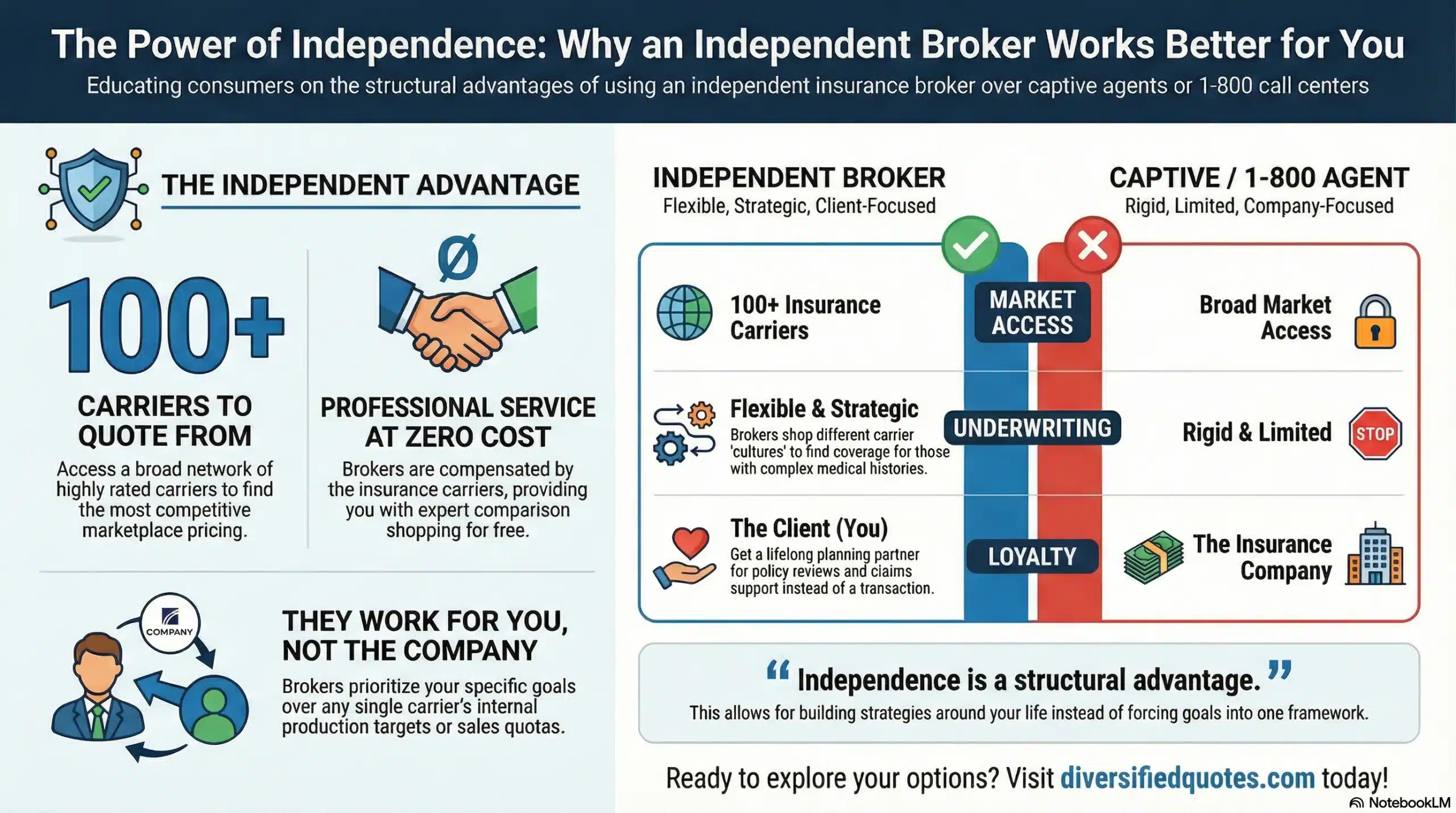
Jason Stolz, CLTC, CRPC and Chief Underwriter at Diversified Insurance Brokers (NPN 20471358), is a senior insurance and retirement professional with more than two decades of real-world experience helping individuals, families, and business owners protect their income, assets, and long-term financial stability. As a long-time partner of the nationally licensed independent agency Diversified Insurance Brokers, Jason provides trusted guidance across multiple specialties—including fixed and indexed annuities, long-term care planning, personal and business disability insurance, life insurance solutions, and short-term health coverage. Diversified Insurance Brokers maintains active contracts with over 100 highly rated insurance carriers, ensuring clients have access to a broad and competitive marketplace.
His practical, education-first approach has earned recognition in publications such as VoyageATL, highlighting his commitment to financial clarity and client-focused planning. Drawing on deep product knowledge and years of hands-on field experience, Jason helps clients evaluate carriers, compare strategies, and build retirement and protection plans that are both secure and cost-efficient. Visitors who want to explore current annuity rates and compare options across multiple insurers can also use this annuity quote and comparison tool.
