
Wrongful Termination Lawsuit Loan – Fast Cash While You Wait

Jason Stolz CLTC, CRPC
Losing your job unfairly can turn your life upside down—especially when the termination involves discrimination, retaliation, harassment reporting, protected leave, or a contract violation. Even when you have a strong wrongful termination claim, employment cases often take time. Employers frequently contest liability, drag out discovery, or delay settlement discussions. While the legal process moves forward, your bills don’t pause. Rent or mortgage payments, utilities, groceries, childcare, transportation, and health costs can quickly create financial pressure. A wrongful termination lawsuit loan (often referred to as pre-settlement funding) can provide access to cash now so you can stay stable while your attorney pursues fair compensation.
This type of funding is designed to help plaintiffs avoid being forced into a low settlement just because they need money immediately. When you’re under financial strain, it’s easier for the opposing side to push an “early offer” that feels like relief—but may be far below what your case is actually worth. A lawsuit advance can give you breathing room so your attorney has time to negotiate from a stronger position. If you’re comparing options across different case types, you can also review our broader hub for lawsuit settlement loans to understand how funding works and what to expect.
Apply for a Wrongful Termination Lawsuit Loan
Quick approval, high funding amounts, and no repayment unless you win.
What Is a Wrongful Termination Lawsuit Loan?
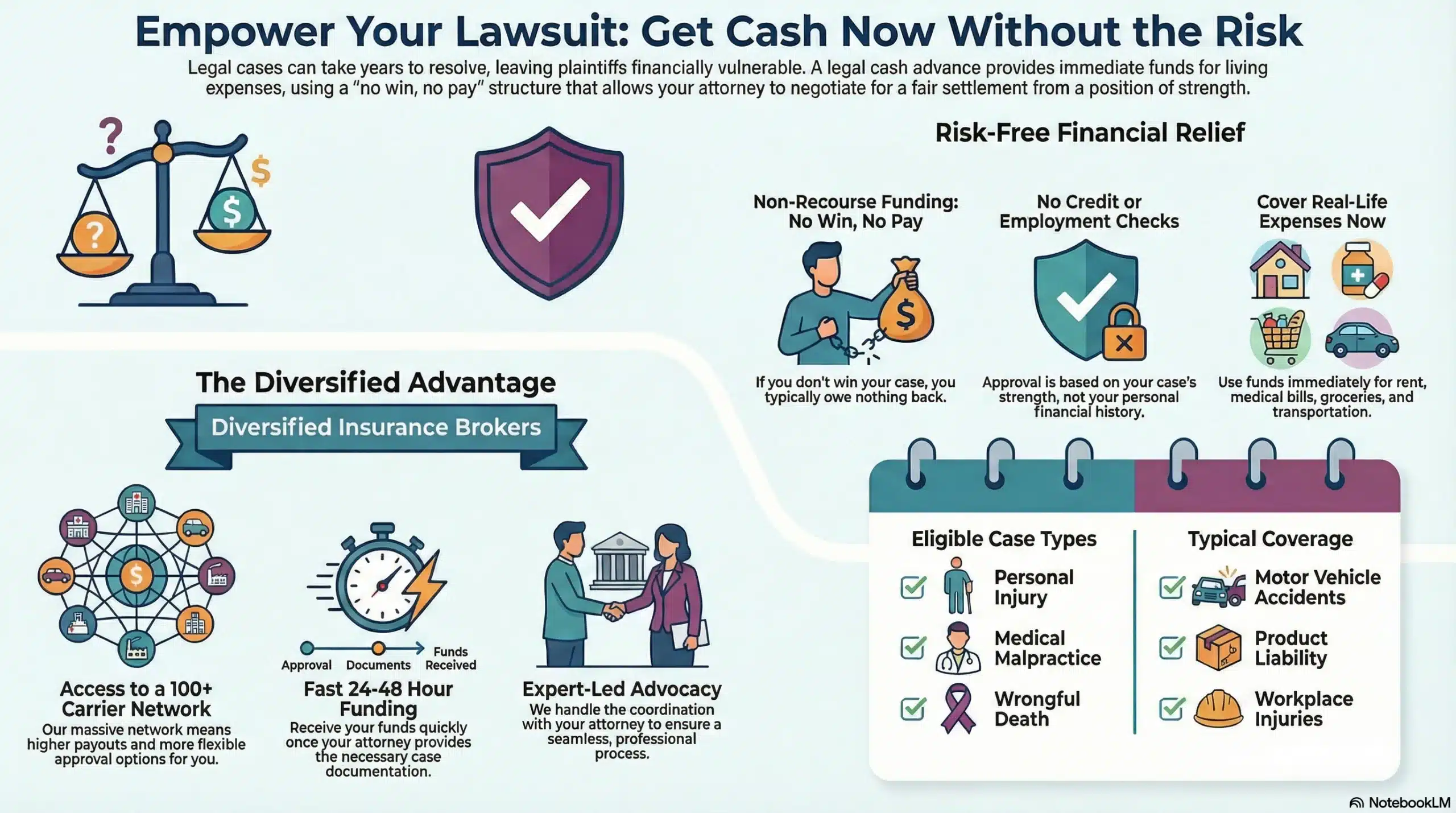
A wrongful termination lawsuit loan is typically structured as a non-recourse cash advance based on the expected value of your wrongful termination claim. It’s not a traditional bank loan. Instead of relying on your credit score or income, underwriting usually focuses on the strength of your legal claim, documentation, the employer’s defenses, and the likely settlement range. There are generally no monthly payments while your case is pending, and repayment typically comes from the case proceeds if your claim resolves successfully.
Because this is case-based funding, your attorney is central to the process. In most situations, the funding provider will work directly with your law firm to verify the claim, confirm representation, and review case materials. If a company claims it can approve meaningful employment-case funding without attorney involvement or documentation, that is often a red flag.
Why Wrongful Termination Cases Create Financial Pressure
Unlike many injury cases, wrongful termination claims can involve longer timelines and complicated proof issues. Employers may argue “performance” or “policy violations,” dispute discrimination or retaliation evidence, or challenge damages calculations. Your attorney may need time to obtain internal records, emails, HR files, witness statements, and payroll or benefits documentation. Even when your claim is legitimate, the employer’s strategy may be to delay until you feel pressure to settle.
At the same time, many people experience an immediate financial gap after termination. Unemployment benefits may not cover full expenses, may take time to process, or may be disputed. Health insurance coverage can also change unexpectedly. A lawsuit loan doesn’t replace income long-term, but it can help you keep your household stable while your claim moves forward.
Situations That May Qualify for Wrongful Termination Funding
Funding decisions are always case-specific, but wrongful termination advances are often considered for claims involving clear legal theories and documented evidence. That can include discrimination-based termination, retaliation for reporting misconduct, wrongful firing after reporting harassment, violations of an employment contract, and termination tied to protected leave. These case types may also overlap with wage and hour disputes or hostile work environment allegations depending on the facts.
The key is documentation and attorney representation. A strong claim usually includes a clear timeline, supporting records, and a credible damages profile (lost wages, lost benefits, emotional distress components where applicable, and other measurable losses). Your attorney’s ability to provide case status and documentation often determines how quickly underwriting can make a decision.
How Funding Helps During an Employment Lawsuit
When you’re in the middle of an employment dispute, the hardest part is often the time delay. Even if you’re confident the termination was unlawful, the legal process can move slowly—especially if the employer is aggressively contesting liability. Funding can help you cover essential costs so you’re not forced into a settlement decision based on urgency rather than fairness.
In practical terms, many people use funding to keep housing stable, maintain transportation, cover basic household costs, and avoid falling behind on obligations that can create long-term damage. Just as important, funding can reduce the emotional pressure that comes from living in financial uncertainty while trying to rebuild your career and protect your legal rights.
How the Process Works (What to Expect)
Getting a wrongful termination lawsuit loan typically follows a simple sequence. You start by submitting a request with basic case information and your attorney’s contact details. The funding team then coordinates with your law firm to verify representation, confirm claim status, and request documents needed for review. Underwriting evaluates liability strength, damages, and timeline, then issues an offer if approved. Once agreements are completed, funds can often be delivered quickly—sometimes within 24 to 48 hours depending on documentation and attorney responsiveness.
Because employment cases can vary widely, underwriting often pays close attention to case milestones. For example, a claim that is early-stage may be evaluated differently than a claim that is approaching mediation or active settlement negotiations. Either way, the process should be attorney-friendly, clearly disclosed, and structured to avoid unnecessary disruption to your legal strategy.
Common Questions About Costs, Repayment, and “Non-Recourse” Terms
Funding costs and repayment structure matter. A responsible provider will disclose how costs accrue and what repayment may look like under different settlement timelines. The goal is clarity—so you and your attorney can decide whether the advance amount and expected payoff make sense relative to your likely net recovery.
Non-recourse means repayment typically depends on a successful outcome. If the case does not result in a recovery, true non-recourse funding generally is not repaid. Because agreements vary, you should always confirm the non-recourse language is explicit, understand the fee structure, and ensure your attorney reviews the contract before you accept funding.
Protecting Yourself While You Wait
After job loss, financial stability can become fragile. While your lawsuit is pending, it may be a good time to review practical protection strategies that help keep you covered during transitions. Some people explore short-term healthcare options such as short-term health insurance to help bridge coverage gaps. Others look at income protection or contingency planning depending on their situation, including programs like high-risk disability insurance if medical issues are in play.
Some families also use this period to evaluate broader protection such as life insurance quotes for long-term planning, or supplemental protection like accidental death coverage. While these are separate from lawsuit funding, stabilizing coverage and risk management can reduce household stress while your attorney works to secure the best possible outcome.
If you’re also reviewing other lawsuit-related funding scenarios, our guide for injured workers provides a helpful reference point on timing and settlement dynamics: workers comp settlement loan.
Get Started With Wrongful Termination Settlement Funding
If you have an active wrongful termination claim and attorney representation, a lawsuit loan may help you stabilize finances while your case progresses. The right advance can reduce pressure, protect your household, and give your attorney time to negotiate fairly rather than quickly. The most important steps are verifying the claim, ensuring your attorney is involved, and reviewing clear disclosures before accepting any offer.
Get Started Today
Apply for a wrongful termination lawsuit loan and receive funds in as little as 24 hours.
Talk With an Advisor Today
Choose how you’d like to connect—call or message us, then book a time that works for you.
Schedule here:
calendly.com/jason-dibcompanies/diversified-quotes
Licensed in all 50 states • Fiduciary, family-owned since 1980
FAQs: Wrongful Termination Lawsuit Loan — Fast Cash While You Wait
What is a wrongful termination lawsuit loan (pre-settlement funding)?
How do I qualify for a lawsuit loan for wrongful termination?
Is there credit or employment history required?
How fast can I get the funds?
What happens if I lose my case?
How much money can I receive?
What are the costs or fees involved?
Does using a lawsuit loan affect my case or settlement negotiation?
What should I watch for in the funding agreement?
Can I get more than one advance while my case is ongoing?
About the Author:
Jason Stolz, CLTC, CRPC and Chief Underwriter at Diversified Insurance Brokers, is a senior insurance and retirement professional with more than two decades of real-world experience helping individuals, families, and business owners protect their income, assets, and long-term financial stability. As a long-time partner of the nationally licensed independent agency Diversified Insurance Brokers, Jason provides trusted guidance across multiple specialties—including fixed and indexed annuities, long-term care planning, personal and business disability insurance, life insurance solutions, and short-term health coverage. Diversified Insurance Brokers maintains active contracts with over 100 highly rated insurance carriers, ensuring clients have access to a broad and competitive marketplace.
His practical, education-first approach has earned recognition in publications such as VoyageATL, highlighting his commitment to financial clarity and client-focused planning. Drawing on deep product knowledge and years of hands-on field experience, Jason helps clients evaluate carriers, compare strategies, and build retirement and protection plans that are both secure and cost-efficient.
