
Group Health Insurance for Volunteer Organizations

Jason Stolz CLTC, CRPC
Review Group Health Options for Your Organization
We’ll help you confirm eligibility, compare compliant plans, and choose a structure that fits your mission and budget.
Volunteer organizations play a vital role in communities, providing services through the time and effort of dedicated individuals. While volunteers are often motivated by mission rather than compensation, organizations still face real responsibility when it comes to health-related risk, operational continuity, and duty of care—especially when the organization includes paid staff, long-term volunteer leaders, or hybrid teams.
Group health insurance for volunteer organizations can help provide access to medical coverage for eligible employees such as directors, administrators, coordinators, and other paid staff. At Diversified Insurance Brokers, we help nonprofit and volunteer-based organizations evaluate compliant group health structures that fit their size, budget, and real-world staffing model—without unnecessary complexity.
This page explains how group health insurance can work in volunteer-driven organizations, who may be eligible, what plan structures are commonly used, and how to approach coverage responsibly and compliantly.
Do Volunteer Organizations Qualify for Group Health Insurance?
Eligibility for group health insurance depends on how an organization is structured. In most cases, traditional group health insurance requires at least one common-law employee. Organizations that are purely volunteer-run with no paid staff typically do not qualify for standard group medical plans because there is no employee group for the carrier to insure.
That said, many volunteer organizations do have paid roles—executive directors, administrators, program managers, outreach coordinators, development staff, or part-time office roles. In those situations, group health insurance may be available if minimum eligibility and participation requirements are met.
To frame what may be realistic for your setup, reviewing minimum employees for group health insurance is often a helpful first step. It explains why carrier rules focus on employee count, participation, and contribution structure.
If your organization is in transition—moving from fully volunteer-run to adding paid staff—benefits planning early can prevent disruptions later. The goal is to build a structure that the organization can maintain year to year, not a plan that becomes unaffordable at the first renewal.
Who Can Be Covered Under a Group Health Plan?
Group health insurance is typically limited to eligible employees, not volunteers. Volunteers are usually not considered employees for group insurance purposes, even if they receive modest stipends, reimbursements, or non-wage benefits. From a compliance standpoint, the plan must be built around lawful employee eligibility definitions, and those definitions must be administered consistently.
For volunteer organizations, the most common coverage model looks like this: paid staff are covered under the group plan, while volunteers are protected using separate risk-management tools that address the realities of volunteer activities. This approach keeps the group health plan compliant while still supporting the organization’s broader duty-of-care goals.
Classification matters. If an organization misclassifies volunteers as employees or attempts to extend group medical eligibility beyond what the plan allows, it can create coverage disputes, retroactive eligibility issues, or compliance problems at exactly the wrong time—when someone needs care.
If your organization is unsure whether a role is “employee” vs “volunteer” for benefits purposes, the safest move is to clarify the role’s legal classification and then design eligibility rules that match that reality.
Why Group Health Insurance Still Matters for Volunteer Organizations
Volunteer organizations often compete for strong leadership and operational talent. Even when mission is the main motivator, health benefits can be a deciding factor for executive directors, program leaders, and administrative staff—especially when those individuals are choosing between nonprofit roles and private-sector options.
Offering group health insurance to eligible employees also supports organizational continuity. When key staff have access to healthcare, they are less likely to delay treatment, miss extended time due to unmanaged conditions, or leave due to benefit gaps. That stability matters in mission-driven work where consistent programming and community trust are essential.
As organizations grow beyond purely volunteer operations, benefits decisions become part of long-term planning. Understanding group health insurance basics helps leadership build a benefits strategy that can scale without forcing disruptive plan changes every year.
Many nonprofits also value the “signal” benefits send. A well-designed plan communicates that the organization takes care of its people, which can support hiring, retention, and community credibility.
Common Group Health Structures for Volunteer-Based Organizations
Most volunteer organizations that offer group health insurance use a traditional fully insured small-group plan because it is straightforward to administer and typically has predictable monthly premiums. This can be a strong fit when administrative capacity is limited and leadership wants the simplest structure that still provides meaningful coverage to eligible staff.
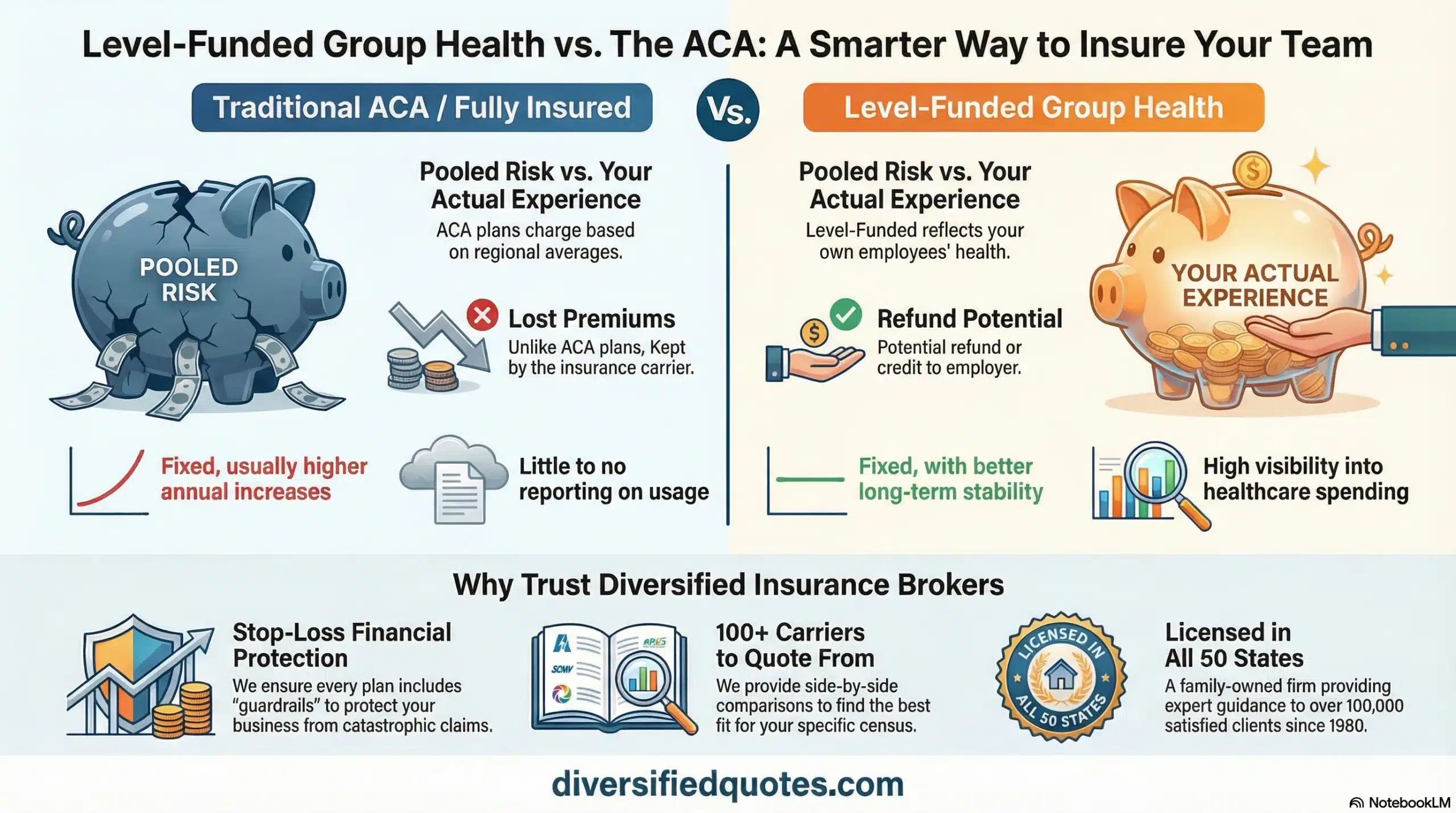
As an organization grows, other structures may become viable depending on employee count, demographics, and claims stability. Some organizations evaluate level-funded designs when they want a predictable monthly payment but would benefit from more transparency and a pricing structure that can reward favorable plan performance.
Even if you stay fully insured, it helps to compare the plan architecture periodically so you know whether you’re paying for inefficiencies that don’t match your organization’s real claims experience. A structured comparison using group medical insurance options helps organizations balance coverage value with budget predictability.
For volunteer organizations, the “best” plan is rarely the richest plan on paper. It’s usually the plan the organization can sustain and communicate clearly, with minimal surprises at renewal and networks that employees can actually use.
Not Sure If Your Organization Even Qualifies?
We’ll confirm employee eligibility rules, participation requirements, and what plan structures are realistically available based on how your organization is staffed.
Cost Considerations and Budget Constraints
Budget sensitivity is a reality for volunteer organizations. Group health insurance costs are typically driven by a combination of employee demographics, plan design, geographic factors, and participation levels. Even when the team is small, the wrong plan design can create costs that crowd out program spending and make benefits hard to sustain.
Many nonprofits manage costs by choosing moderate deductibles, using network designs that reduce out-of-network exposure, and setting an employer contribution that is meaningful but repeatable. The goal is to create a predictable benefits expense that can fit into annual planning and board oversight.
Clear communication matters more than many organizations expect. When a plan is modest, employees still need to understand why the plan was selected, what the organization is contributing, and how to use the plan efficiently. Transparent messaging helps staff see benefits as a real investment, not a confusing set of limitations.
Over time, the best cost control approach is usually structural: selecting the right plan type for the organization’s scale, keeping eligibility consistent, and reviewing renewals early enough to avoid rushed decisions.
Compliance and Administrative Responsibilities
Volunteer organizations offering group health insurance must follow the same core compliance expectations as other employers. That includes eligibility tracking, enrollment procedures, consistent administration of waiting periods, and providing required plan information to employees.
Even small organizations benefit from setting up benefits correctly from the start. Retroactive corrections can be costly and disruptive, and mistakes tend to appear at the worst possible moment—when an employee needs coverage or when the organization is trying to renew the plan.
Because many nonprofits operate with lean administrative teams, the plan should be designed with repeatability in mind. The best setup is one that the organization can administer consistently without requiring constant exception handling.
Implementation Checklist for Volunteer Organizations
A smooth rollout does not require a large HR department, but it does require a clear process. Start by confirming who is an employee vs a volunteer, then define eligibility in a way that matches payroll and job classifications. Next, set a contribution model that leadership can repeat annually and that supports participation requirements.
Once the plan is selected, communicate it in plain language. Employees should know their premium share, what the plan covers, how the network works, and how to use basic services like primary care, urgent care, telehealth, and prescription benefits. Simple guidance can reduce confusion and prevent avoidable frustration.
After enrollment, do a short early review. Confirm ID cards arrived, payroll deductions match elections, and employees can access in-network care. Small administrative issues can become big trust issues if they’re not addressed quickly.
How Diversified Insurance Brokers Helps Volunteer Organizations
We work with nonprofit and volunteer-based organizations to assess eligibility, explain plan structures clearly, and identify compliant group health solutions that fit real budgets. Our focus is on practicality—helping organizations provide meaningful coverage to eligible staff without overbuilding complexity.
We can also help you think through the long-term roadmap: what works today, what changes as the organization grows, and how to avoid disruptive renewals by choosing a structure you can sustain.
If you’re building a benefits strategy from the ground up, it often helps to start with group health insurance fundamentals so you have a clear baseline before comparing plans.
Get Group Health Options for Your Volunteer Organization
Tell us your staffing model and goals, and we’ll outline practical plan options with clear eligibility and cost expectations.
Financial Protection Essentials
Carrier reviews, retirement income planning tools, and specialized coverage resources for individuals and businesses.
Talk With an Advisor Today
Choose how you’d like to connect—call or message us, then book a time that works for you.
Schedule here:
calendly.com/jason-dibcompanies/diversified-quotes
Licensed in all 50 states • Fiduciary, family-owned since 1980
Can a volunteer organization offer group health insurance?
Yes, if the organization has eligible paid employees. Purely volunteer-run organizations typically do not qualify for group health plans.
Can volunteers be covered under a group health plan?
Generally no. Group health insurance is usually limited to common-law employees, not volunteers.
How many employees are required to qualify?
Many group health plans require as few as two eligible employees, though requirements vary by carrier and state.
Is group health insurance expensive for nonprofits?
Costs depend on plan design, location, and employee demographics. Many nonprofit organizations choose modest plans to balance coverage and budget.
Are group health plans required for volunteer organizations?
No. Group health insurance is typically optional unless required by size-based regulations, but many organizations offer it to support staff retention.
Can small volunteer organizations start with basic coverage?
Yes. Many begin with simple small group plans and expand benefits as the organization grows.
What’s the difference between group health and group medical insurance?
The terms are often used interchangeably, though group medical insurance specifically refers to health coverage within a broader benefits package.
About the Author:
Jason Stolz, CLTC, CRPC and Chief Underwriter at Diversified Insurance Brokers, is a senior insurance and retirement professional with more than two decades of real-world experience helping individuals, families, and business owners protect their income, assets, and long-term financial stability. As a long-time partner of the nationally licensed independent agency Diversified Insurance Brokers, Jason provides trusted guidance across multiple specialties—including fixed and indexed annuities, long-term care planning, personal and business disability insurance, life insurance solutions, and short-term health coverage. Diversified Insurance Brokers maintains active contracts with over 100 highly rated insurance carriers, ensuring clients have access to a broad and competitive marketplace.
His practical, education-first approach has earned recognition in publications such as VoyageATL, highlighting his commitment to financial clarity and client-focused planning. Drawing on deep product knowledge and years of hands-on field experience, Jason helps clients evaluate carriers, compare strategies, and build retirement and protection plans that are both secure and cost-efficient.
