
How Much Does it Cost to be Cremated

Jason Stolz CLTC, CRPC
How much does it cost to be cremated? For most families, the honest answer is: it depends. The total cost can change based on whether you choose direct cremation (no service), cremation with a memorial gathering, or a full traditional funeral with viewing followed by cremation. It can also vary based on where you live, the funeral home you choose, how quickly services are needed, and whether you add extras like upgraded urns, obituary notices, flowers, clergy honorariums, catering, printed programs, or cemetery fees.
Many families assume cremation is automatically “cheap,” but once you start adding real-world costs—paperwork, transportation, basic funeral home services, and the final resting plan—the bill can still reach several thousand dollars. This is why so many people plan ahead with a small policy designed specifically for these expenses, such as burial insurance. The goal is simple: make sure cremation and final expenses are covered without creating a financial burden for children, spouses, or other loved ones.
Get a Cremation & Final Expense Cost Estimate
Answer a few quick questions and see how affordable it can be to protect your family from out-of-pocket cremation costs.
Typical Cremation Cost Ranges
Cremation pricing varies by region, and even within the same city, you may see major differences from one provider to another. However, most cremation services fall into a few common categories. Understanding the differences between these options helps you estimate what your family may actually spend.
Direct cremation is the simplest option, where the crematory handles the legal paperwork and the cremation itself, and the family typically holds any memorial service separately. This is often the lowest-cost option because it does not include staffing for a formal service, viewing, or funeral facility use.
Cremation with a memorial service typically includes more coordination and additional funeral home services. The memorial service may be at the funeral home, a church, or another location. Costs can increase when facilities, staff, equipment, printed materials, and arrangements are included.
Cremation with traditional viewing is often the highest-cost cremation path because it can include embalming, viewing room rental, staff support, and sometimes rental of a casket. Even though cremation occurs afterward, the structure resembles a traditional funeral.
Even when families choose direct cremation, there are still line items that appear on almost every bill: removal/transportation, permits and paperwork, and the base cremation process. Many people are surprised at how quickly “just cremation” can add up once the essentials are included.
That’s why many families pair cremation planning with a policy designed for final costs, like simple burial insurance for final expenses. The goal isn’t to buy a huge policy. It’s to create a predictable source of funds that pays out quickly and helps your family carry out your wishes with less stress.
What Makes Cremation Costs Rise or Fall?
If you’re trying to estimate your own cremation costs—or estimate costs for a parent—it helps to know what factors commonly increase the total bill. In real life, cremation cost “range” isn’t random. It’s often connected to the choices you make and the amount of handling and planning required.
Location matters. In high-cost metropolitan areas, prices are often higher because staffing, rent, and operating costs for funeral providers are higher. Rural areas may have lower base pricing, but transportation charges and limited provider options can sometimes increase costs in other ways.
Timing matters. If services are needed quickly, there may be additional fees. After-hours removal or long-distance transportation can add extra line items to the bill, even before the cremation itself is performed.
Service level matters. The more formal the arrangements, the more staff time is involved. Direct cremation can be streamlined. A viewing or full memorial can involve scheduling, facility use, staff, equipment, and coordination with clergy or family speakers.
Merchandise matters. Even with cremation, urn choices, keepsake jewelry, prayer cards, memory tables, flowers, and other items can significantly change the final total.
Final resting plan matters. If your family wants a cemetery niche, urn burial, or memorial marker, you may have cemetery costs even though you chose cremation instead of burial.
This is why it’s usually smart to plan for the “realistic total,” not just the lowest advertised direct cremation price. A dedicated final expense plan can help cover the full picture, not just one piece of it.
Cost Components of Cremation (What You’ll Actually See on the Bill)
If you’ve ever looked at an itemized cremation invoice, you’ll notice there are several categories that show up again and again. Learning what these line items mean helps you estimate your own costs more accurately and avoid surprises for your family.
1) Basic Services of the Funeral Home
Even if you choose the simplest cremation option, most funeral homes include a base fee that covers essential coordination and compliance tasks. This is often the foundation of the bill because it includes the work required to manage the process from start to finish.
Depending on the provider, this may include arranging transportation, helping complete required permits, coordinating death certificates, and maintaining communication with family members. It’s also part of how the funeral home covers overhead, staff availability, and general operations.
2) Removal and Transportation
There is usually a fee to transfer your loved one from the place of death to the funeral home or crematory. This is sometimes called “removal,” “transfer,” or “transportation of remains.”
If someone passes at home, the transportation process may look different than if they pass in a hospital or hospice facility. The time of day can also matter. Some providers charge more for after-hours removal or long-distance mileage. While these fees can feel frustrating, they are also one of the more predictable costs that should be included in your planning estimate.
3) Cremation Fee
This is the technical cost of performing the cremation itself. It can include crematory operating costs, staff supervision, identification procedures, and handling of cremated remains afterward.
Some funeral homes operate their own crematory, while others coordinate with a third-party crematory. If the crematory is separate, you may see cremation charges listed as distinct line items, and you may also see transportation charges between the funeral home and the crematory.
4) Paperwork, Permits, and Certified Copies
Families often underestimate paperwork costs. Certified copies of death certificates, permits, and administrative filings are common expenses and may be paid to the state/county or included through the funeral provider as pass-through costs.
If you’ve never been through this process, it can be surprising how many entities require certified copies—banks, insurance carriers, retirement accounts, and sometimes even service providers. This is one reason why planning extra room in your final expense estimate is helpful.
5) Container, Urn, or Minimal Alternative
For cremation, a suitable cremation container is required. Many direct cremation packages include a minimal container, but families often choose to upgrade for presentation or long-term placement needs.
Urn pricing can range widely based on materials and style. Some families also purchase keepsake urns or multiple smaller containers to divide remains among close family members. While these are meaningful choices, they do add cost. Planning for them ahead of time helps your family avoid stressful decisions during grief.
6) Memorial or Funeral Service Costs
If you want a memorial service, celebration of life, or viewing, you may see additional charges such as room rental, staffing, equipment, and printed materials. Even a simple gathering at a funeral home can add to the total because staff time and facility use are involved.
Some families reduce costs by holding services at a church, a family home, or a community center. Others prefer the convenience of a single provider handling everything. There is no universally correct answer. The best option is the one that fits your family emotionally and financially.
7) Burial, Niche, or Scattering Costs
Cremation still requires a decision about what happens next. Some families bury the urn, place it in a columbarium niche, or scatter remains in a permitted area. Each of these options can involve fees—especially when cemeteries are involved.
If your family is weighing coverage options based on cost control, it can help to compare strategies such as final expense vs. term life insurance. In most cases, term insurance is not built for final expenses because it can expire before it’s needed. Final expense coverage is typically designed to stay in place for life.
Average Cremation vs. Traditional Burial Costs (What Families Usually Learn the Hard Way)
In most areas of the U.S., cremation still tends to be less expensive than a traditional burial. However, it’s important to compare “apples to apples.” Direct cremation is usually less expensive than a traditional full-service burial. But cremation with a full viewing and formal service can sometimes approach the cost of a modest burial once the add-ons are included.
The biggest cost drivers for a traditional burial typically include a casket, cemetery plot, vault or grave liner, and open/close fees for the grave. Cremation avoids many of these—but cremation still has paperwork, transportation, and service-level costs that can add up.
This is why planning ahead matters. The decision isn’t just cremation vs. burial. It’s the complete package of what your family wants and what the total bill will look like when everything is included.
If you’re exploring coverage types specifically designed to handle end-of-life expenses, you may also want to compare whole life vs. term for burial insurance planning. Many families eventually decide whole life-style coverage makes more sense for final expenses because it’s built to be permanent.
How Burial Insurance Helps Cover Cremation Costs
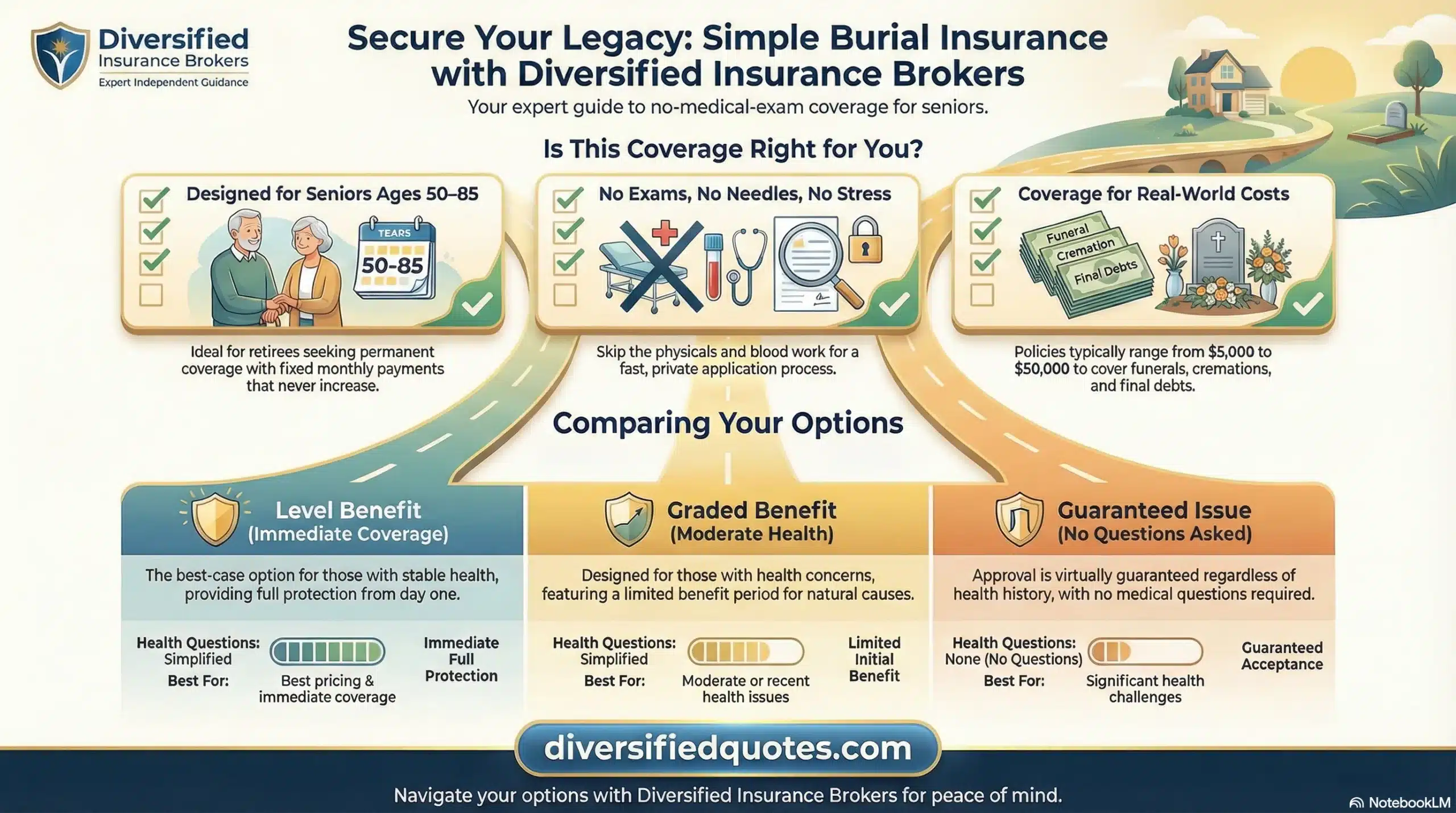
Burial insurance (also called final expense insurance) is a small permanent life insurance policy designed to help cover end-of-life costs like cremation, funeral services, and remaining bills. The idea is not complicated: when you pass away, the death benefit goes to your chosen beneficiary, and they can use those funds for cremation and related expenses.
Most burial insurance policies are designed around manageable premium payments and smaller coverage amounts—often starting around $5,000 and ranging up to $25,000 (or sometimes higher). These smaller amounts are usually enough to cover most cremation and final expense totals without requiring a large life insurance policy.
Many burial insurance plans offer:
Level premiums that stay stable over time, which helps families budget. Unlike some other types of coverage, the monthly payment is typically designed to stay predictable.
Permanent coverage designed to last for life, which matters because final expenses don’t expire at age 75 or 80.
Flexible beneficiaries so you can leave money to a spouse, child, trusted family member, or even a funeral home if you choose that route (depending on the policy design and state rules).
If you’re supporting an older parent and trying to plan responsibly, resources like burial insurance options for parents over 80 can be helpful because coverage decisions at those ages often look different than they do for a healthy person in their 50s.
How Much Burial Insurance Coverage Should You Get for Cremation?
When families ask, “How much coverage do I need?” the best approach is practical. Start with the total expense you want to cover, then add a small buffer for last-minute decisions and inflation. Cremation costs can rise over time, and families often spend more than they expected when they’re making decisions during an emotional period.
A coverage estimate may include:
1) Cremation provider charges including cremation fee, basic services, transportation, and required paperwork.
2) Memorial service costs such as room rental, officiant honorarium, printed materials, catering, or livestream options for family members who can’t attend.
3) Final resting costs such as urn placement, niche fees, urn burial fees, or a memorial marker.
4) Extra financial cleanup such as utility bills, small debts, or final medical co-pays that the family may want to settle quickly.
Once you total those items, many families choose to round up slightly so the policy provides margin for changes and inflation. Some families land around $10,000 to $20,000. Others choose less if they’re planning a very simple direct cremation and have savings for anything additional.
If the person planning coverage is a veteran, it may also help to explore options like burial insurance for veterans because veterans may have access to specific burial-related benefits. Even when benefits are available, families still frequently want a small policy to cover costs that aren’t covered by veteran programs.
Why Families Choose Burial Insurance Instead of “Just Using Savings”
Some people prefer to pay final expenses from savings. That can work, but it assumes money will be available immediately and that surviving family members can access it without delays. In reality, families sometimes run into timing issues with bank accounts, estate processes, and general administrative delays after a death.
A dedicated burial insurance policy can help avoid those problems because it creates a specific pool of money meant for final costs. Instead of family members passing a hat, using credit cards, or draining emergency savings at an emotional time, the policy provides a clear financial plan that matches the person’s wishes.
Burial insurance is also often chosen because it’s designed to be simpler than larger traditional life insurance. Coverage amounts are smaller, and underwriting can be more flexible for many common health concerns.
Health Issues and Eligibility (Common Concerns)
One of the biggest questions people have is whether health problems will prevent them from getting coverage. While every carrier and plan is different, burial insurance is often more forgiving than larger traditional life insurance policies because the coverage amounts are smaller and the goal is final expense protection.
Many people with manageable conditions still qualify for a fully underwritten final expense plan. Common examples include controlled blood pressure, controlled diabetes, mild heart history, arthritis, and other age-related conditions that may not prevent approval.
For applicants with more serious health history, there are also simplified programs and guaranteed-issue options. Guaranteed issue can be helpful when health is complex, but it is not always the most cost-effective option. If you’re evaluating that path, you may want to read about whether guaranteed-issue life insurance is expensive so you understand why the premiums may be higher and why some plans include waiting periods.
If the applicant uses tobacco, costs are typically higher because insurers price based on mortality risk. That doesn’t mean coverage is unavailable. It simply means the premium structure is different. If this applies to you, it may help to review burial insurance options for smokers.
For applicants who are concerned about weight or BMI, approvals are still possible in many situations, but price categories may vary. Planning resources like burial insurance for overweight people can help families understand how carriers tend to approach those applications.
Blood pressure is another common concern. Many people still qualify when blood pressure is treated and reasonably stable. A helpful reference page is burial insurance for people with high blood pressure.
Choosing Between Direct Cremation and a Full Memorial Plan
For many families, cremation decisions are not just financial—they are emotional. Some families want a formal service with viewing and the structure of a traditional funeral. Other families want to focus on simplicity and keep costs lower with direct cremation and a later celebration of life.
If you’re trying to keep costs as reasonable as possible, direct cremation plus a separate family gathering can reduce funeral home facility fees. If you want the convenience of one provider managing everything, you might choose a memorial service package through a funeral home.
No matter which approach you choose, what matters most is making sure the funding plan matches your preferred arrangements. A burial insurance policy can be sized to fit direct cremation, cremation plus service, or cremation with cemetery placement.
What to Ask a Funeral Home When Pricing Cremation
If you’re comparing providers, it helps to ask direct questions. Families often assume pricing is straightforward, but the details matter. Two direct cremation offers can be very different once you compare what is actually included.
Consider asking:
Is the quoted price all-inclusive? If not, ask for a complete list of expected line items such as removal, paperwork, cremation fee, and the basic container.
Are death certificates included? If not, ask how much each additional certified copy costs and how many are typically needed.
Is transportation included? Some packages include limited mileage, while others charge per mile beyond a certain distance.
What is the timeline? If your family needs a quick turnaround, confirm whether the cremation can be scheduled promptly and whether expedited handling costs extra.
What options exist for memorials? Even if you’re choosing direct cremation, ask what memorial options are available so you can estimate a realistic total budget.
Burial Insurance Calculator: Estimate Costs & Premiums
To see how cremation and final expense coverage may fit into your budget, you can use the Burial Insurance Calculator below. You can adjust the coverage amount based on your estimated cremation costs and get a realistic premium range for your age and situation.
Tip: Try different coverage amounts (for example, $10,000, $15,000, and $20,000) so you can see what premium range feels comfortable while still protecting your family from out-of-pocket costs.
Planning Ahead So Your Family Isn’t Surprised
Final expense planning is not a fun conversation, but it is one of the most practical ways to protect the people you love. When a family is grieving, the last thing they should face is the pressure of finding money immediately, comparing price lists while stressed, or making rushed decisions because finances are tight.
Planning cremation costs ahead of time can reduce stress in several ways. First, it gives your family a clear budget. Second, it helps avoid financial strain at the exact moment they need emotional space. And third, it makes it easier for your loved ones to honor your wishes without compromise or confusion.
A small burial insurance policy matched to your estimated cremation cost can help your family:
Cover cremation and provider costs without borrowing money or using credit cards.
Hold a meaningful gathering if a memorial service is important to your family.
Handle final bills and reduce the financial paperwork burden during a difficult time.
Follow your wishes with clarity and confidence, rather than guessing what you would have wanted.
If you’re continuing your planning research, you may also like this overview: What is burial insurance and who needs it? It explains how these policies are commonly used and why they are often chosen specifically for cremation and final expense needs.
m CTA Box (kept, no contact info) –>Plan Ahead for Cremation & Final Expenses
Estimate your cremation costs and match a final expense plan that fits your budget and protects your family.
Related Burial Insurance Pages
If you’re comparing burial insurance options for different health situations, ages, or goals, these pages can help you narrow down the right approach.
Financial Protection Essentials
Executive coverage strategies, senior care planning, inherited IRA education, and advanced retirement income concepts.
<!– Botto
Talk With an Advisor Today
Choose how you’d like to connect—call or message us, then book a time that works for you.
Schedule here:
calendly.com/jason-dibcompanies/diversified-quotes
Licensed in all 50 states • Fiduciary, family-owned since 1980
FAQs: How Much Does It Cost to Be Cremated?
Is cremation always cheaper than burial?
Usually, yes—but not always. Direct cremation without a service is often much cheaper, but cremation with a full funeral and viewing can approach the cost of a modest burial.
What is the least expensive cremation option?
Direct cremation is typically the lowest-cost option. It includes transportation, basic paperwork, and the cremation itself—without a viewing or formal service at the funeral home.
Do I still need an urn if I choose cremation?
You’ll need some type of container. That can be a simple, low-cost container from the funeral home, or a more decorative urn if you plan to display, bury, or place remains in a niche.
Can burial insurance be used to pay for cremation?
Yes. Burial insurance is designed to cover final expenses, including cremation costs, memorial services, and related bills so your family does not pay out of pocket.
How much burial insurance do I need for cremation?
Add up expected cremation charges, service costs, and small final bills, then choose a policy amount that comfortably covers that total with a bit of extra room for inflation.
About the Author:
Jason Stolz, CLTC, CRPC and Chief Underwriter at Diversified Insurance Brokers (NPN 20471358), is a senior insurance and retirement professional with more than two decades of real-world experience helping individuals, families, and business owners protect their income, assets, and long-term financial stability. As a long-time partner of the nationally licensed independent agency Diversified Insurance Brokers, Jason provides trusted guidance across multiple specialties—including fixed and indexed annuities, long-term care planning, personal and business disability insurance, life insurance solutions, Group Health, and short-term health coverage. Diversified Insurance Brokers maintains active contracts with over 100 highly rated insurance carriers, ensuring clients have access to a broad and competitive marketplace.
His practical, education-first approach has earned recognition in publications such as VoyageATL, highlighting his commitment to financial clarity and client-focused planning. Drawing on deep product knowledge and years of hands-on field experience, Jason helps clients evaluate carriers, compare strategies, and build retirement and protection plans that are both secure and cost-efficient. Visitors who want to explore current annuity rates and compare options across multiple insurers can also use this annuity quote and comparison tool.
