
How to Buy Long Term Care Insurance

Jason Stolz CLTC, CRPC
Buying long term care insurance is not like buying auto insurance, homeowners insurance, or even traditional life insurance. It is a strategic retirement protection decision that directly impacts income stability, asset preservation, tax efficiency, and family independence. The purpose is not simply to “have coverage.” The objective is to structure protection correctly at the right age, with the proper benefit design, funded in a way that integrates with your broader financial plan so that future care costs do not quietly dismantle decades of disciplined saving and investing.
At Diversified Insurance Brokers, long term care planning is never handled in isolation. It is coordinated with retirement income planning, estate considerations, annuity positioning, tax exposure, and even carrier quality analysis. Many clients exploring long term care protection are simultaneously reviewing fixed and indexed annuity strategies such as what happens to my indexed annuity if the market goes down or asking do you lose your principal in an indexed annuity. The reality is that guaranteed income does not eliminate care cost risk. Long term care expenses can rapidly consume even well-structured retirement income streams.
Request a Long Term Care Insurance Strategy Review
We compare traditional and hybrid long term care options from multiple carriers and design a structure aligned with your retirement income and estate goals.
Why Long Term Care Insurance Is Structurally Different
Most insurance products protect against sudden loss. Long term care insurance protects against gradual financial erosion. The risk is rarely a single event. It is extended exposure that may last two, three, or even five years. Nursing home costs frequently exceed six figures annually. Assisted living facilities carry significant monthly expense. In-home care can accumulate quietly but relentlessly. This is why buying long term care insurance is less about price comparison and more about benefit architecture.
Unlike life insurance planning conversations such as what will disqualify me from life insurance or why is it so hard to get life insurance, long term care underwriting evaluates functional and cognitive health rather than mortality risk alone. And unlike lump-sum death benefits described in what death is not covered by life insurance, long term care benefits are structured around reimbursement pools and daily maximums. The framework is entirely different, which is why strategic design matters.
Step One: Measure Your Financial Exposure
Before choosing policy type, it is critical to measure exposure. Consider how much of your retirement income depends on investment accounts, real estate equity, or annuity withdrawals. If one spouse required care for multiple years, would the remaining spouse’s financial security be compromised? Would adult children be forced into caregiving roles? Would assets need to be liquidated at inopportune times?
Individuals comparing annuity strategies often ask who is best suited for an indexed annuity. The same analytical mindset applies to long term care planning. Suitability is driven by asset level, income reliance, risk tolerance, and family structure. Long term care insurance is most impactful for households with accumulated assets they intend to preserve rather than spend down under Medicaid rules.
Step Two: Traditional Versus Hybrid Structures
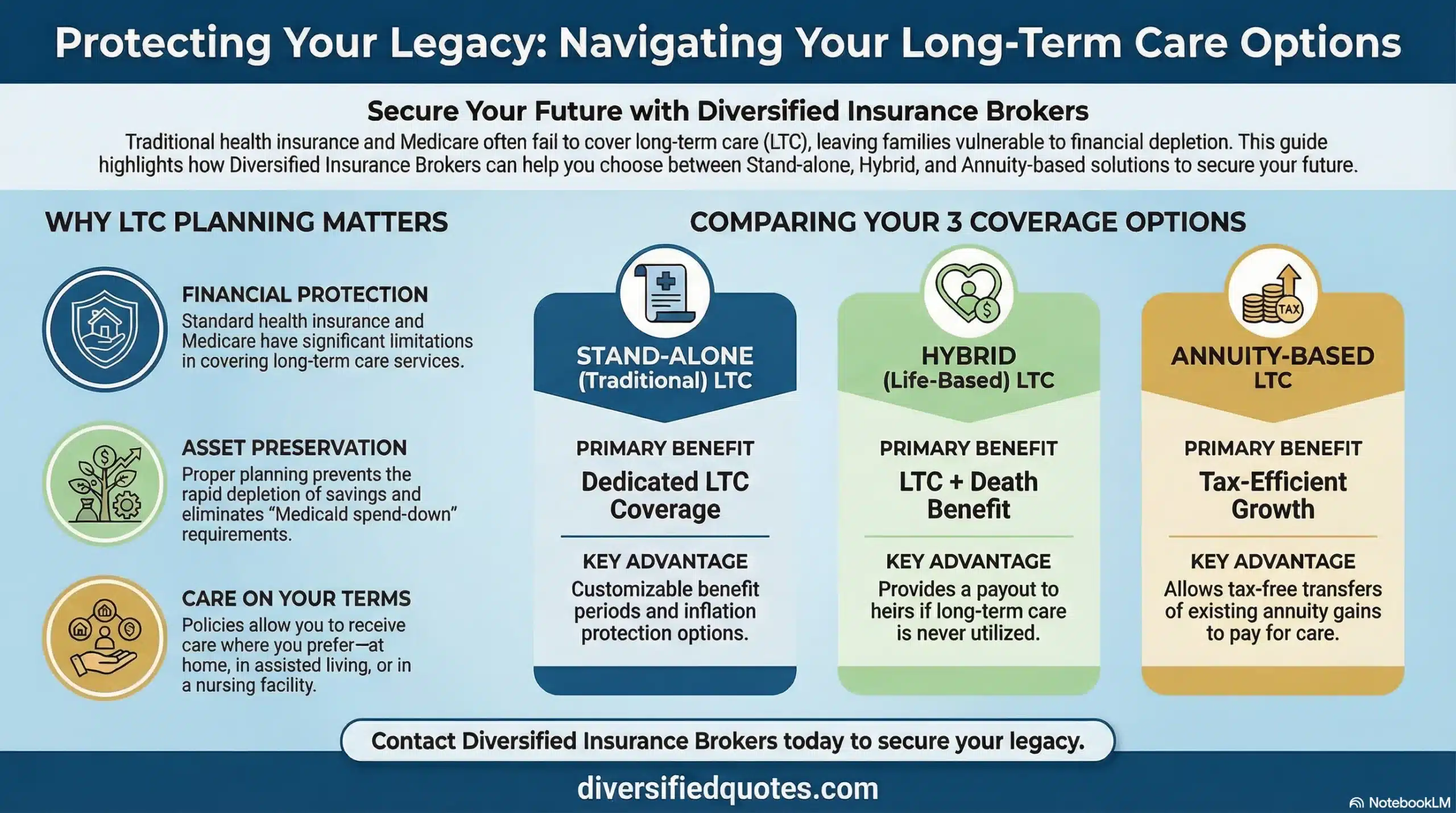
There are two primary approaches to buying long term care protection. Traditional long term care insurance offers pure coverage funded through annual premiums. It typically carries lower upfront cost but may be subject to future premium adjustments. Hybrid long term care insurance combines life insurance or annuity chassis with long term care riders. Premiums are often guaranteed, and if care is never needed, a death benefit or residual value remains.
Hybrid designs appeal to individuals who dislike the “use-it-or-lose-it” perception of traditional coverage. They also integrate efficiently with estate planning conversations that may include reviewing carrier strength such as is Country Financial a good insurance company or is Cincinnati Life a good insurance company. Carrier evaluation is not optional when policies may remain in force for decades.
Step Three: Designing the Benefit Architecture
Benefit design determines whether a policy succeeds or fails. The daily benefit must reflect realistic regional care costs. The benefit period or total pool size must be sufficient to mitigate catastrophic exposure. The elimination period functions as a time-based deductible. Inflation protection, particularly for buyers under age sixty-five, is essential to maintain purchasing power decades into the future.
Couples often benefit from shared-care riders that allow either spouse to draw from a combined pool. This flexibility can increase efficiency while controlling premium. Structuring these variables requires modeling, not guesswork. Buying long term care insurance without coordinated projections frequently results in underinsurance or unnecessary premium burden.
Underwriting and Timing
Long term care insurance requires medical underwriting. Insurers review prescription histories, cognitive screening results, chronic conditions, and mobility limitations. Waiting increases both premium cost and decline probability. Health that appears manageable at age fifty-five may create underwriting barriers at sixty-five. This is similar to timing considerations discussed in at what age should you stop buying term life insurance. The longer you wait, the fewer options you may have.
Evaluating financial strength is equally important. Understanding how insurers are rated and capitalized ensures long-term claims-paying confidence. Long term care coverage is only as strong as the carrier behind it.
Tax Efficiency and Asset Protection
Long term care premiums may be partially tax-deductible depending on age and tax status, and benefits are typically received income tax-free under current law. For business owners, premium deductibility may vary based on entity structure. This tax treatment makes long term care planning distinct from withdrawing retirement assets to self-fund care.
Without coverage, families often rely on personal savings, retirement accounts, home equity liquidation, or Medicaid spend-down strategies. Medicaid eligibility typically requires asset depletion. Purchasing long term care insurance preserves autonomy, protects retirement income streams, and reduces the probability of forced asset liquidation during vulnerable periods.
Coordinating Long Term Care With Broader Protection Planning
Long term care planning does not exist in a vacuum. Many clients simultaneously review disability coverage such as disability insurance for white collar professionals or disability insurance for race car drivers. Others coordinate group health solutions including group health insurance for physician practices or group health insurance for construction crews. The goal is comprehensive risk management, not isolated product purchases.
Even ancillary coverages like best dental insurance rates and best vision insurance rates contribute to overall retirement budgeting clarity. When all protection components are aligned, long term care insurance fits naturally into a structured retirement defense strategy.
Protect Your Retirement From Long Term Care Risk
Compare traditional and hybrid long term care solutions structured around your income, assets, and estate goals.
Related Planning Resources
Financial Protection Essentials
Retirement account mechanics, disability impact planning, carrier evaluations, and specialized insurance education.
Talk With an Advisor Today
Choose how you’d like to connect—call or message us, then book a time that works for you.
Schedule here:
calendly.com/jason-dibcompanies/diversified-quotes
Licensed in all 50 states • Fiduciary, family-owned since 1980
FAQs: How to Buy Long Term Care Insurance
When is the best time to buy long term care insurance?
Most people purchase coverage between ages 50 and 65. Buying while healthy improves approval odds and helps secure more favorable pricing.
Should I choose traditional or hybrid long term care insurance?
Traditional policies may offer strong leverage, while hybrid policies provide value preservation through death benefits or annuity components. The right choice depends on your retirement and legacy goals.
How much long term care coverage do I need?
Coverage needs vary based on income, assets, and whether you want to fully insure projected costs or supplement savings with partial protection.
Can I be denied long term care insurance?
Yes. Policies are medically underwritten. Applying earlier, while in good health, increases approval likelihood and expands options.
Are long term care insurance benefits tax-free?
Benefits are generally received income-tax-free under current tax law, subject to policy structure and IRS limits.
How do I start the buying process?
Begin by requesting a personalized quote through our LTC Quote Request Form. We compare carriers and policy designs to help you select the best fit.
About the Author:
Jason Stolz, CLTC, CRPC and Chief Underwriter at Diversified Insurance Brokers (NPN 20471358), is a senior insurance and retirement professional with more than two decades of real-world experience helping individuals, families, and business owners protect their income, assets, and long-term financial stability. As a long-time partner of the nationally licensed independent agency Diversified Insurance Brokers, Jason provides trusted guidance across multiple specialties—including fixed and indexed annuities, long-term care planning, personal and business disability insurance, life insurance solutions, Group Health, and short-term health coverage. Diversified Insurance Brokers maintains active contracts with over 100 highly rated insurance carriers, ensuring clients have access to a broad and competitive marketplace.
His practical, education-first approach has earned recognition in publications such as VoyageATL, highlighting his commitment to financial clarity and client-focused planning. Drawing on deep product knowledge and years of hands-on field experience, Jason helps clients evaluate carriers, compare strategies, and build retirement and protection plans that are both secure and cost-efficient. Visitors who want to explore current annuity rates and compare options across multiple insurers can also use this annuity quote and comparison tool.
