
Is Pre-Settlement Funding Worth It?

Jason Stolz CLTC, CRPC
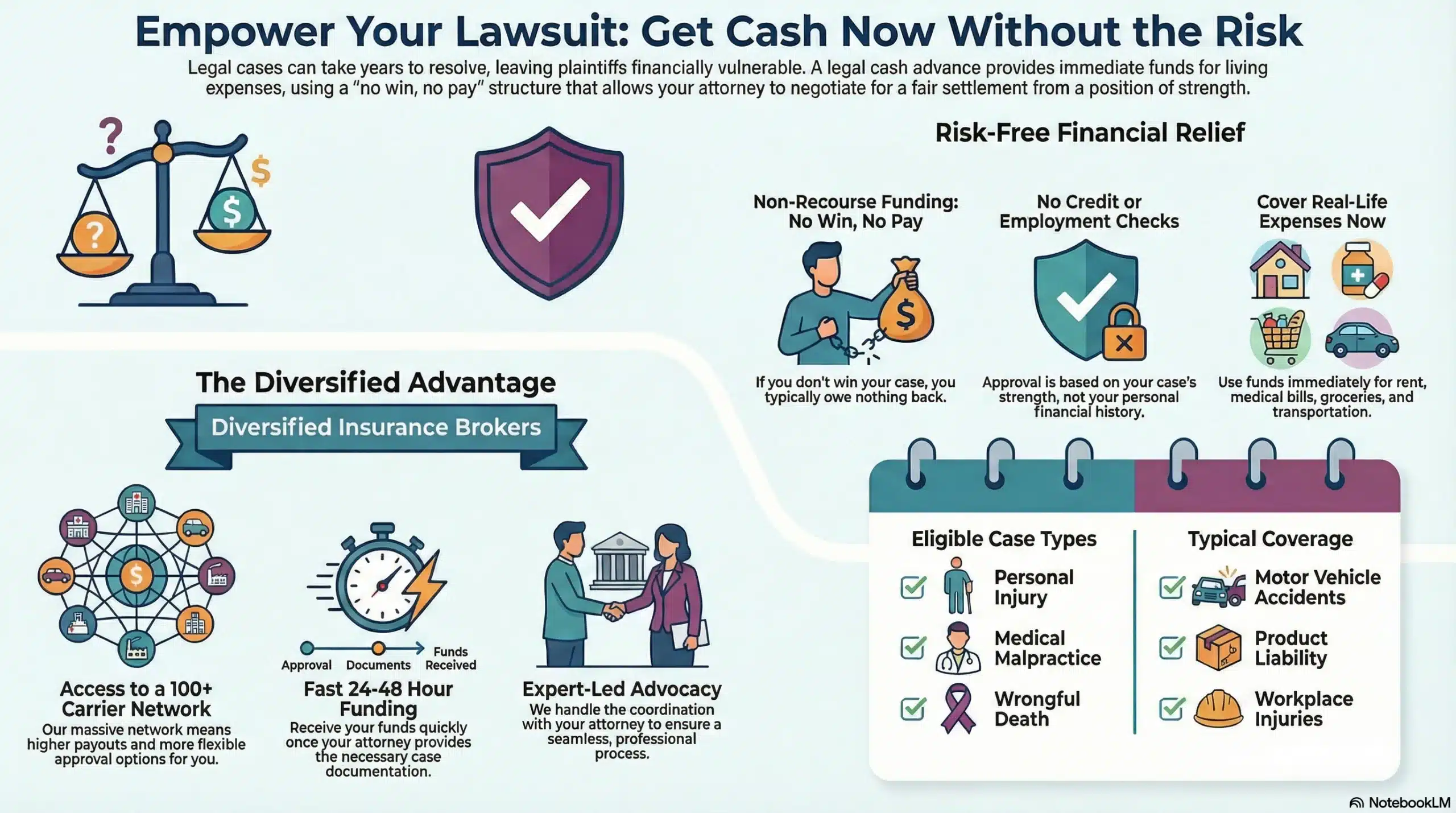
Is pre-settlement funding worth it? That question usually comes at a stressful time. You may be waiting on a personal injury settlement, employment dispute payout, or another civil claim while bills continue to stack up. Rent, mortgage payments, utilities, car notes, medical expenses, and everyday living costs do not pause just because your lawsuit is still pending. Pre-settlement funding — sometimes called lawsuit funding or a legal advance — offers plaintiffs access to cash now, in exchange for a portion of a future settlement if the case succeeds. But whether it is “worth it” depends entirely on your financial situation, the strength of your case, the cost structure of the advance, and what alternatives you realistically have. If you are new to the concept and need a foundational overview before deciding, you can review cash for lawsuit plaintiffs and fast settlement advances to understand how these programs are structured.
Unlike a traditional loan, pre-settlement funding is typically non-recourse, meaning if you lose your case, you usually owe nothing. That feature alone makes it fundamentally different from credit cards, personal loans, or borrowing against retirement savings. Many plaintiffs first explore whether they can obtain an advance on a pending lawsuit before considering other financial strategies. However, the convenience and reduced repayment risk come at a cost, and that cost must be carefully weighed against the financial pressure you are experiencing today. Some individuals even compare legal funding to other forms of short-term liquidity, but it is critical to remember that lawsuit advances are case-based and not tied to income or credit history.
Request a Free Pre-Settlement Funding Review
See if you qualify for non-recourse lawsuit funding with no upfront costs. Fast review. No obligation.
Apply for Pre-Settlement FundingTo determine whether pre-settlement funding is worth it, you must evaluate leverage. Insurance carriers and defense attorneys understand financial strain. When plaintiffs are under pressure, settlement negotiations can shift. If mounting bills push you toward accepting a lower offer, funding can provide breathing room. Instead of accepting less simply to resolve immediate stress, you may be able to pursue full and fair compensation. Plaintiffs often search for legal cash advances specifically to avoid premature settlements that undervalue their injuries or damages.
However, every financial tool has trade-offs. The longer a case takes to resolve, the more funding costs can accumulate depending on the agreement. Transparency matters. You should request a full breakdown of projected repayment amounts at various timelines. Responsible funding companies will provide clear documentation so you understand the cost over time. If you are comparing providers, reviewing options for legal funding companies near you may help you identify reputable firms offering competitive terms.
Another factor is the type of case you have. Personal injury, motor vehicle accidents, workplace injuries, product liability, and certain employment disputes are commonly funded. Approval is primarily based on case strength and documentation from your attorney — not your credit score, job history, or debt-to-income ratio. That makes lawsuit funding accessible to individuals who may not qualify for conventional borrowing. If your case is strong but your finances are strained, funding may serve as a temporary bridge rather than a permanent solution.
When deciding if funding is worth it, calculate your monthly burn rate. How much do you need to remain stable? It may be tempting to take the maximum available amount, but borrowing only what you need can significantly reduce overall repayment. Some plaintiffs explore options to get cash before their case settles in a measured way, using smaller advances to cover essential obligations rather than discretionary spending.
Consider also the opportunity cost of settling too early. If your case has the potential for substantially higher compensation with additional time, the funding cost may represent a smaller percentage of the overall recovery. On the other hand, if liability is uncertain or damages are modest, funding could consume a larger share of proceeds. Honest discussions with your attorney about realistic case valuation are essential before making a decision.
Don’t Let Financial Stress Dictate Your Settlement
Find out if a non-recourse lawsuit advance can give you the flexibility to pursue the compensation you deserve.
Check Your Eligibility NowIt is also helpful to compare lawsuit funding to other liquidity tools. Borrowing from retirement accounts, refinancing property, or using high-interest credit cards can create long-term financial consequences. Unlike those options, lawsuit funding does not require monthly payments and does not affect your credit score in most cases. If you are evaluating broader financial planning strategies alongside legal funding, our retirement checklist can help you explore additional topics that may relate to your overall situation.
Emotional strain should not be underestimated. Financial pressure during litigation can affect decision-making, health, and family stability. The psychological relief of covering essential bills while waiting for a case to resolve can be significant. While that benefit is not easily quantified, it can be just as important as the financial math behind the advance itself.
So, is pre-settlement funding worth it? In many situations, yes — particularly when it prevents a premature, undervalued settlement driven by immediate financial stress. In other scenarios, alternatives may be more cost-effective. The key lies in education, transparency, and conservative borrowing. By understanding costs, reviewing your case timeline, consulting your attorney, and only taking what you truly need, you can determine whether funding serves as a strategic advantage or an unnecessary expense. When used responsibly, pre-settlement funding is not about replacing your settlement — it is about protecting your ability to pursue it fully.
Talk With an Advisor Today
Choose how you’d like to connect—call or message us, then book a time that works for you.
Schedule here:
calendly.com/jason-dibcompanies/diversified-quotes
Licensed in all 50 states • Fiduciary, family-owned since 1980
No. Most pre-settlement funding is structured as non-recourse funding, not a traditional loan. That means repayment typically only occurs if you win or settle your case. If you lose, you generally owe nothing. You can review the mechanics in How Pre-Settlement Funding Works.
Costs vary depending on the funding company and the length of your case. Some agreements use flat fees, while others compound monthly. Always request a payoff schedule before signing.
In some cases, yes. Additional advances may be available if your case value supports it and your attorney agrees. However, taking multiple advances increases total repayment, so careful review is essential.
It depends on your situation. Personal loans require repayment regardless of case outcome, while pre-settlement funding is typically non-recourse. If you lack stable income or strong credit, funding may be more accessible.
Common qualifying cases include personal injury, motor vehicle accidents, employment disputes, and certain civil claims. Approval is based primarily on case strength rather than credit history. If you need immediate financial support while your case is pending, see Get Cash Before Your Case Settles.
About the Author:
Jason Stolz, CLTC, CRPC and Chief Underwriter at Diversified Insurance Brokers, is a senior insurance and retirement professional with more than two decades of real-world experience helping individuals, families, and business owners protect their income, assets, and long-term financial stability. As a long-time partner of the nationally licensed independent agency Diversified Insurance Brokers, Jason provides trusted guidance across multiple specialties—including fixed and indexed annuities, long-term care planning, personal and business disability insurance, life insurance solutions, and short-term health coverage. Diversified Insurance Brokers maintains active contracts with over 100 highly rated insurance carriers, ensuring clients have access to a broad and competitive marketplace.
His practical, education-first approach has earned recognition in publications such as VoyageATL, highlighting his commitment to financial clarity and client-focused planning. Drawing on deep product knowledge and years of hands-on field experience, Jason helps clients evaluate carriers, compare strategies, and build retirement and protection plans that are both secure and cost-efficient.
