
Long Term Care Insurance with Preexisting Conditions

Jason Stolz CLTC, CRPC
Understanding Long Term Care Insurance with Preexisting Conditions
Long term care insurance with preexisting conditions is one of the most frequently misunderstood areas of insurance underwriting. Many individuals assume that having a medical history automatically prevents them from qualifying for coverage, but the reality is more nuanced. Insurance companies evaluate a wide range of health factors when reviewing long term care insurance applications, and a preexisting condition does not always result in a denial. In many cases, individuals with stable or well-managed medical conditions can still qualify for long term care insurance policies that help protect their retirement savings and provide financial support if extended care becomes necessary later in life.
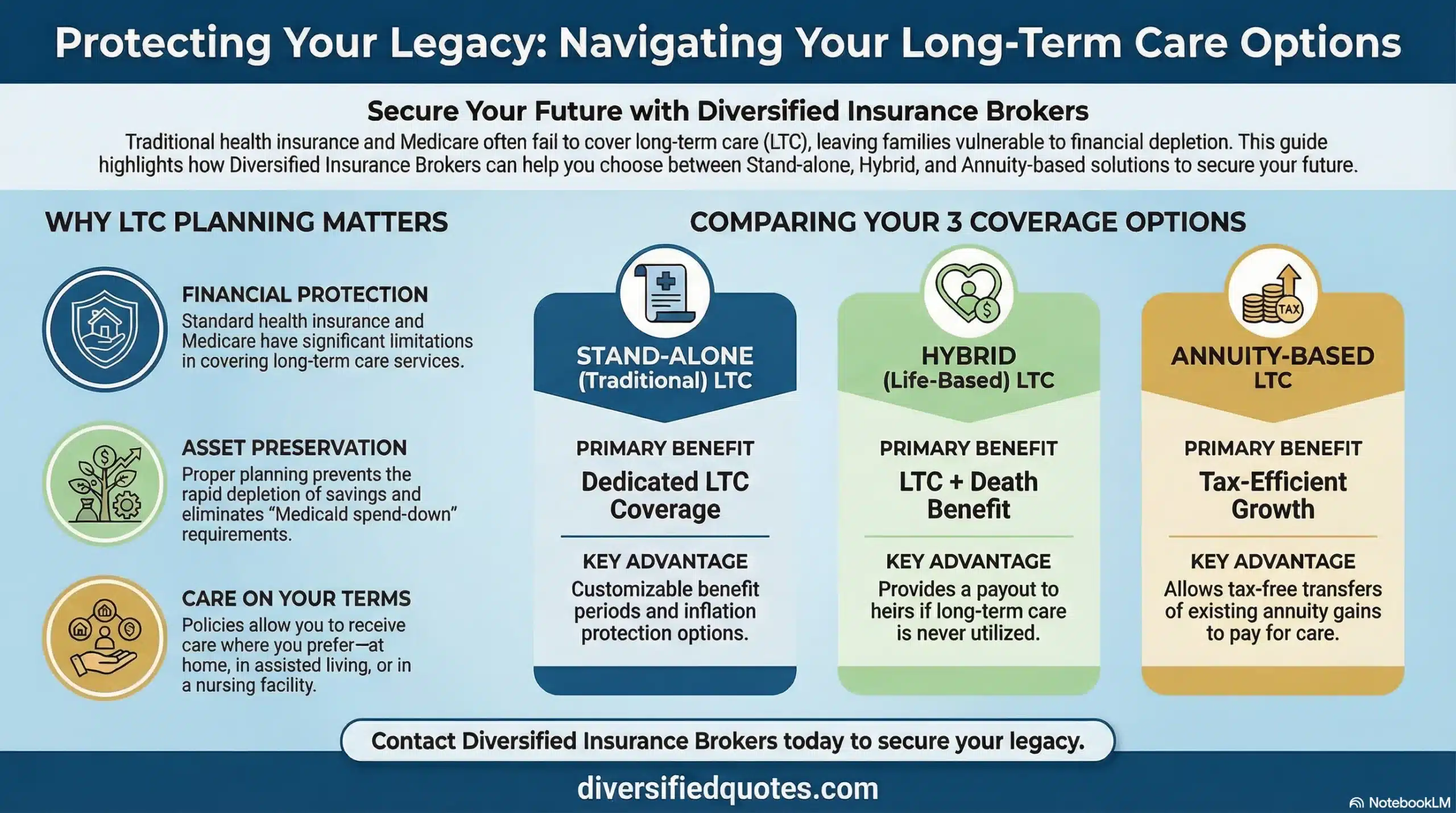
Long term care planning has become increasingly important as life expectancy continues to increase and healthcare costs rise. Many retirees face the possibility of needing assistance with daily activities such as bathing, dressing, mobility, or memory support. Long term care insurance is designed to help cover the costs associated with these services, whether care is provided at home, in assisted living facilities, or in nursing homes. Without this protection, extended care expenses can significantly impact retirement assets and long-term financial security.
For individuals with preexisting conditions, the underwriting process simply becomes more detailed rather than impossible. Insurance carriers review medical history, current treatment plans, prescription medications, and physician records to determine whether a condition is stable and manageable. Many people who initially believe they are uninsurable ultimately discover that coverage options still exist when policies are carefully matched to their medical profile.
Why Long Term Care Planning Matters for Retirement
Financial planning strategies often emphasize protecting assets as retirement approaches. Discussions around retirement security frequently include topics such as capital preservation strategies and how to safeguard accumulated wealth. Long term care insurance plays a major role in this planning because extended healthcare needs can rapidly consume retirement savings if they are not properly insured.
How Insurers Evaluate Preexisting Medical Conditions
Preexisting conditions can include a wide variety of medical histories. Some applicants may have experienced orthopedic injuries, arthritis, or joint issues that affect mobility. Others may have chronic medical conditions such as diabetes, heart disease, or autoimmune disorders that require ongoing treatment. Certain applicants may have recovered from previous medical events but remain concerned about how those histories will influence eligibility for long term care insurance.
Underwriters evaluate several factors when reviewing these conditions. Stability is often one of the most important considerations. A condition that has been stable for several years, requires minimal intervention, and does not significantly impact daily functioning may present a lower underwriting risk than a condition that is actively progressing. Treatment consistency also plays an important role, as applicants who follow physician recommendations and maintain regular medical care may be viewed more favorably.
Cognitive Health and Mobility
Long term care insurance underwriting also considers cognitive health and mobility. Because many long term care claims involve cognitive conditions such as dementia or Alzheimer’s disease, insurers pay particular attention to neurological history and cognitive evaluations. Applicants who demonstrate strong cognitive function and independence in daily activities may still qualify even when other medical conditions are present.
Request a Long Term Care Insurance Review
Why Comparing Insurance Carriers Is Important
One of the reasons long term care insurance remains viable for individuals with medical histories is that underwriting guidelines vary widely between carriers. Some insurers specialize in applicants with more complex health profiles, while others maintain stricter underwriting standards. Because of these differences, comparing multiple insurance carriers significantly improves the likelihood of finding an insurer whose underwriting guidelines align with a particular medical history.
Individuals exploring long term care planning often review different policy structures and benefit options. For example, some policies offer limited benefit periods while others provide lifetime coverage. Understanding these distinctions can help applicants choose a policy that balances affordability with protection. Resources discussing limited versus lifetime long term care benefits can help clarify how benefit structures influence coverage decisions.
Functional Ability and Daily Living Activities
Another factor insurers evaluate is functional ability. Long term care insurance typically provides benefits when individuals require assistance with activities of daily living. Applicants who maintain independence in these activities may still qualify for coverage even if they have certain medical diagnoses. Maintaining mobility, cognitive clarity, and independent functioning is therefore a key component of underwriting decisions.
Medical Documentation Requirements
Medical documentation is often necessary when applying for long term care insurance with preexisting conditions. Underwriters may request physician statements, prescription histories, and medical records that demonstrate how the condition has been managed. Providing accurate and detailed documentation can significantly improve underwriting outcomes and reduce delays during the application process.
Age and Timing of Application
Age is another factor that influences eligibility. Applying earlier in life generally increases the chances of qualifying for long term care coverage. Many financial professionals recommend evaluating long term care insurance during the late 40s through early 60s, when individuals are more likely to qualify and premiums may be more manageable.
Integrating Long Term Care into Retirement Planning
Long term care planning is often integrated into broader retirement strategies that include income planning and asset protection. Some retirees evaluate options such as deferred annuities with lifetime payouts to generate stable income streams. Combining guaranteed income with long term care insurance can create a comprehensive strategy designed to support both healthcare needs and retirement income security.
Hybrid Long Term Care Policies
Hybrid policies have also become more common in recent years. These policies combine life insurance benefits with long term care coverage, allowing policyholders to access funds for care expenses while still preserving a death benefit for beneficiaries. Hybrid structures may provide additional flexibility for applicants who are concerned about qualifying for traditional stand-alone long term care policies.
Applicants sometimes worry that their medical history will prevent them from qualifying for any form of coverage. However, insurers often evaluate each case individually. Conditions that appear concerning on the surface may still be insurable when the overall health picture demonstrates stability and effective treatment management.
Individuals with complex health histories may benefit from working with advisors who can compare multiple carriers and review underwriting guidelines before submitting an application. This approach helps identify insurers that are more likely to approve coverage based on the applicant’s medical profile.
Compare Long Term Care Insurance Options
Protecting Retirement Assets from Long Term Care Costs
Long term care insurance ultimately serves as a safeguard for retirement assets and family financial stability. The potential costs of assisted living, in-home care, and nursing facilities can be significant, and extended care needs often arise unexpectedly. Planning ahead allows individuals to protect their savings while maintaining flexibility in how and where care is received.
Even when preexisting conditions are present, many applicants still have access to meaningful long term care insurance solutions. By understanding underwriting guidelines, preparing medical documentation, and comparing multiple carriers, individuals can often secure coverage that aligns with both their health circumstances and long-term financial goals.
Related Pages
Additional insurance and retirement planning resources.
Financial Protection Essentials
Additional resources covering retirement planning, insurance protection, and financial security strategies.
Talk With an Advisor Today
Choose how you’d like to connect—call or message us, then book a time that works for you.
Schedule here:
calendly.com/jason-dibcompanies/diversified-quotes
Licensed in all 50 states • Fiduciary, family-owned since 1980
Yes, many people with preexisting conditions can still qualify for long term care insurance. Insurance carriers evaluate the stability of the condition, treatment history, and overall health profile. When a medical condition is well managed and stable, applicants may still be approved for coverage, although underwriting guidelines vary by insurer.
Insurance companies review many types of medical conditions during underwriting. Conditions affecting mobility, cognitive function, cardiovascular health, and chronic illnesses may receive additional review. However, many applicants with conditions such as controlled diabetes, arthritis, or past injuries may still qualify depending on overall health stability.
In some cases, preexisting conditions may lead to higher premiums or modified policy terms. However, when a condition has remained stable and well managed for several years, many applicants still qualify for standard coverage pricing. Each insurance company evaluates risk differently.
Yes, insurance companies may decline coverage if an applicant has serious health conditions that significantly increase the likelihood of needing care in the near future. However, many people who assume they will be declined are still able to qualify with another carrier whose underwriting guidelines are more flexible.
Applying earlier often improves the chances of qualifying because applicants tend to be healthier. Many financial professionals recommend evaluating long term care insurance between ages 45 and 60 when premiums are generally lower and underwriting approval rates are higher.
Most modern long term care insurance policies cover several types of care including in-home care, assisted living facilities, adult daycare programs, and skilled nursing facilities. Policies are designed to provide flexibility so policyholders can receive care in the environment that best suits their needs.
Benefits are typically triggered when an insured person needs assistance with two or more activities of daily living such as bathing, dressing, eating, transferring, toileting, or continence. Cognitive impairment such as dementia may also trigger benefits depending on the policy terms.
Long term care insurance helps protect retirement savings from the potentially high cost of extended care services. Without coverage, expenses for home care, assisted living, or nursing facilities may significantly reduce retirement assets and affect long-term financial stability.
About the Author:
Jason Stolz, CLTC, CRPC and Chief Underwriter at Diversified Insurance Brokers (NPN 20471358), is a senior insurance and retirement professional with more than two decades of real-world experience helping individuals, families, and business owners protect their income, assets, and long-term financial stability. As a long-time partner of the nationally licensed independent agency Diversified Insurance Brokers, Jason provides trusted guidance across multiple specialties—including fixed and indexed annuities, long-term care planning, personal and business disability insurance, life insurance solutions, and short-term health coverage. Diversified Insurance Brokers maintains active contracts with over 100 highly rated insurance carriers, ensuring clients have access to a broad and competitive marketplace.
His practical, education-first approach has earned recognition in publications such as VoyageATL, highlighting his commitment to financial clarity and client-focused planning. Drawing on deep product knowledge and years of hands-on field experience, Jason helps clients evaluate carriers, compare strategies, and build retirement and protection plans that are both secure and cost-efficient. Visitors who want to explore current annuity rates and compare options across multiple insurers can also use this annuity quote and comparison tool.
