
North American NAC Control.X Fixed Indexed Annuity – Growth, Control, and Guaranteed Protection
At Diversified Insurance Brokers, we work with more than 75 top-rated insurance carriers to help clients nationwide secure safe, smart retirement strategies. One of the most compelling options available today is the NAC Control.X Fixed Indexed Annuity, issued by North American Company for Life and Health Insurance. This annuity was built for individuals who want the power of market-linked growth without putting their retirement principal at risk due to market downturns. For the right investor profile, Control.X can be a strong fit for long-term accumulation, tax-deferred growth, and retirement income planning—especially for people who want flexibility without giving up protection.

The North American NAC Control is a Fixed indexed annuity. They are often misunderstood because they don’t behave like traditional investments. They aren’t designed for day-to-day trading, and they aren’t meant to follow the stock market tick for tick. Instead, a fixed indexed annuity uses a defined interest crediting method tied to an index, while keeping your account protected from negative market years. You can think of it as a contract built around long-term stability: the upside is limited by the chosen crediting method, but the downside is protected by the annuity structure. If you want a full breakdown of how this works in plain English, start here: How Does a Fixed Indexed Annuity Work?
The reason a product like NAC Control.X gets so much attention is simple: many retirees and pre-retirees are looking for an alternative to “all market risk” or “all cash and CDs.” Interest rates change, markets fluctuate, and retirement timelines don’t wait. People want an option that offers a meaningful opportunity for growth while still making it difficult to lose money at the wrong time. That’s where a fixed indexed annuity can play an important role in a broader retirement plan—especially when paired with a strategy for guaranteed income and long-term liquidity.
Control.X is designed to give you choices and control, which is exactly what many annuity buyers want. Some annuity contracts feel restrictive, either because the crediting choices are limited or because the liquidity structure doesn’t match real-life needs. Others are strong products, but they aren’t built to adapt as your goals evolve. North American’s approach with Control.X is focused on customization—so that a conservative saver can prioritize stability and simple crediting methods, while someone who wants more indexing flexibility can build a strategy that feels more tailored.
Before selecting any annuity, we always recommend reviewing the “big three” fundamentals: how the annuity grows, how you access money, and how it can create income. Those three pillars are the difference between a contract that feels great on paper and a contract that actually works when real life happens. Control.X checks those boxes in a way that tends to appeal to many retirement-focused households, especially people who want to avoid market losses but still want more upside potential than a traditional fixed annuity.
Ensure you are receiving the absolute top rates
Current Fixed Annuity Rates
Compare today’s best fixed annuity rates from top carriers.
Current Bonus Annuity Rates
See which annuities offer the highest upfront bonus today.
Request an Annuity Quote
Submit our annuity request form to get personalized rate options.
Lifetime Income Calculator
Use our calculator to see how much guaranteed income your annuity can provide.
The NAC Control.X delivers customizable index strategies, strong principal protection, and planning flexibility that can work well for both accumulation-focused clients and those building a future income foundation. For many retirees, the value of an annuity is not just “what it earns,” but also how reliably it can support your plan when markets are unpredictable. A strong fixed indexed annuity can help create a retirement structure that reduces stress, lowers sequence-of-returns risk, and improves long-term confidence.
One of the easiest ways to think about Control.X is that it aims to put you in control of how your money grows, how your funds stay protected, and how you plan for income. That control matters because retirement planning is rarely static. You may start with a growth-first approach, then later pivot toward income. You may want a strategy that protects principal early, but provides liquidity for unexpected health events later. Or you may want your annuity to support legacy goals while still giving you an income option if you decide you want it. Control.X is designed to make those shifts possible within the framework of a long-term annuity contract.
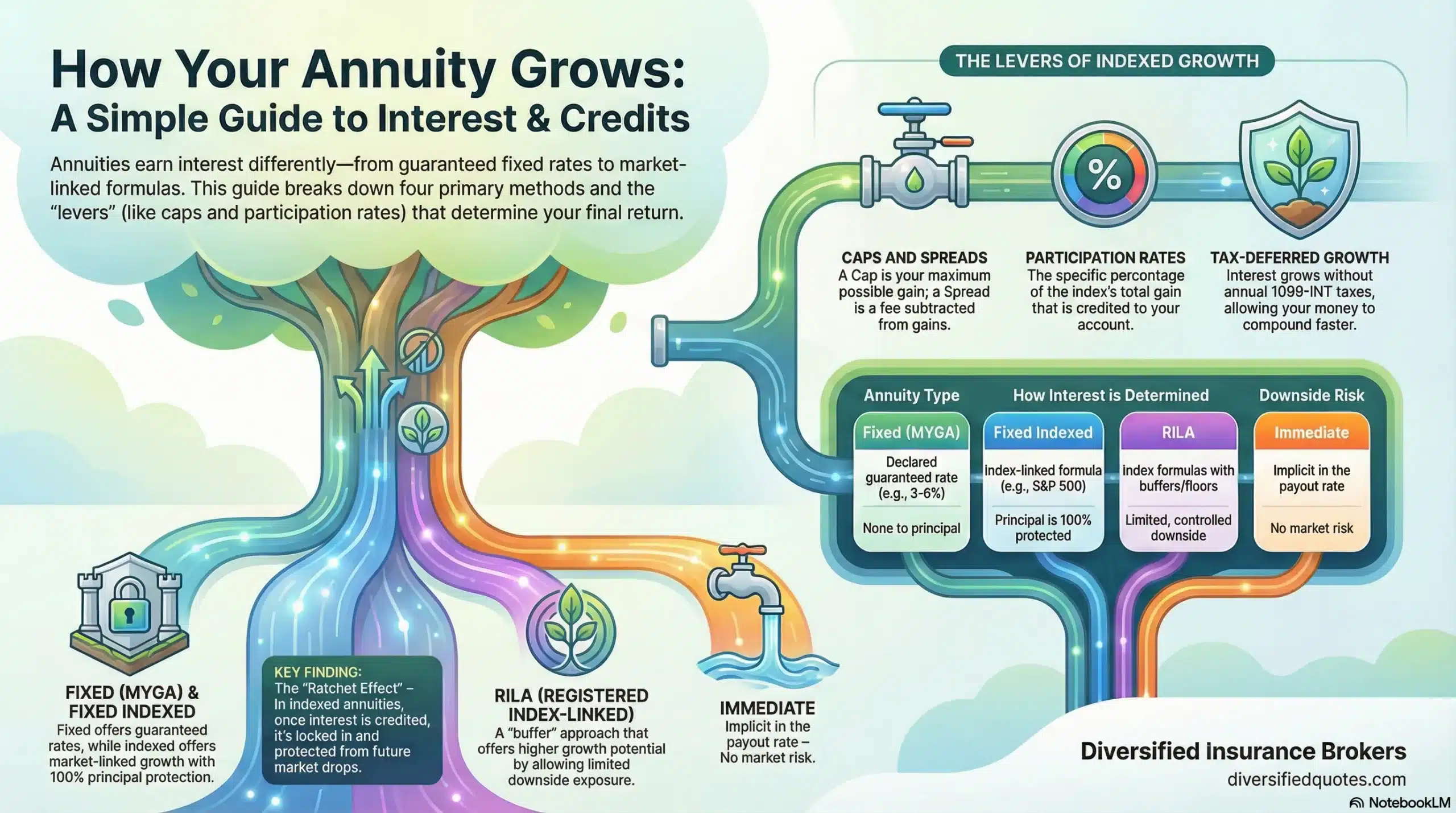
If you’re comparing annuities, it can also help to understand the difference between fixed annuities and fixed indexed annuities. A traditional fixed annuity credits a declared interest rate, which is straightforward and predictable. A fixed indexed annuity credits interest based on an index strategy, which can potentially outperform a fixed rate in certain environments, but may be subject to caps, participation rates, or trigger limits. If you want to compare those approaches side-by-side using real market conditions and updated offers, use this resource: Current Fixed Annuity Rates.
Why Consider the NAC Control.X Fixed Indexed Annuity?
This annuity stands out because it combines a modern index strategy menu with a retirement-friendly structure. When someone is considering an annuity for retirement, they usually fall into one of three categories. The first is the conservative saver who wants protection above all else. The second is the retiree who wants income certainty and wants to reduce reliance on market performance. The third is the planner who wants a balance of growth opportunity and safety, while keeping liquidity options and flexibility available. Control.X tends to fit best in that third category, but depending on how it’s configured, it can also fit many conservative retirement plans.
It’s also important to understand that annuity strategy isn’t just about picking a “good company” or a “top rate.” Those things matter, but they’re only part of the equation. The most important part is how the contract works for your timeline. A 7-year annuity can be excellent for someone who wants flexibility sooner, while a 10-year annuity may be better for someone who wants a longer runway for compounding and structured planning. When we evaluate annuities, we focus on the total structure: the surrender schedule, the indexing options, the contract features, the income rider availability, and the liquidity rules. That’s how you prevent regret later.
North American is known for building annuities that compete aggressively in the FIA space, and many clients specifically like their balance of product design and long-term guarantees. If you’re researching the carrier itself, you can start here: Is North American a Good Company?. Carrier stability matters because annuities are long-term contracts. When you purchase an annuity, you’re entering into an agreement that may last 7 to 10 years (or longer if you keep it beyond the surrender period). So evaluating the issuing company is always a smart first step.
Now let’s break down the major advantages of Control.X and what they could mean for your retirement strategy.
Growth Potential Without Market Losses
The core promise behind a fixed indexed annuity is that your annuity’s credited interest is linked to index performance, but your principal is not directly invested in the market. In a year when the index is down, your contract doesn’t lose money due to that negative return. Instead, the strategy typically credits a floor of zero (or a defined minimum credit, depending on strategy) and your account value stays intact. For retirees who remember how painful 2008 was—or anyone who has watched market volatility become more frequent—this downside protection is often the #1 reason they want to learn about FIAs in the first place.
At the same time, the goal isn’t to eliminate growth. The goal is to create a steadier growth experience that avoids the emotional and financial damage caused by major downturns. The reason this matters is because in retirement, it’s often not the average return that causes the biggest problems. It’s the timing of returns. A large loss early in retirement can be devastating, especially if withdrawals are happening at the same time. Using protected strategies can help reduce that risk and keep a retirement plan more stable across market cycles.
Multiple Index Crediting Strategies and Customization
Control.X offers multiple indexing strategy choices, which gives you the ability to tailor how your interest is credited over time. That matters because different strategies fit different types of investors. Some people want a straightforward annual point-to-point design. Others want trigger strategies that feel easier to understand. Some want a mix of index exposures. What matters most is not the name of the index, but the method: how returns are measured, when interest is credited, and what limits apply.
When reviewing index strategies, we always guide clients through the practical questions: What happens in a flat year? What happens in a strong year? What happens in a down year? And just as important, what happens if the insurance company changes caps or participation rates at renewal? Understanding those mechanics is how you choose a strategy you can stick with—because consistency is what makes annuity planning work over time.
If you’re exploring similar annuity structures and want to compare riders and crediting choices more broadly, you may also find this page useful: Current Annuity Rates. That’s where you can see what’s competitive right now and how products compare across the market.
Optional Bonuses (When Available) and a Strong Starting Position
Some versions or configurations in the annuity marketplace may offer premium bonuses, giving your contract a potential head start. The key with bonuses is understanding how they apply. Some bonuses go to the account value, while others apply to an income base (which impacts income calculations rather than surrender value). If you’re comparing a bonus annuity to a non-bonus annuity, the correct comparison isn’t only “how big is the bonus?” The better question is “what do I give up in exchange for the bonus?” That might include lower caps, longer surrender schedules, or different rider costs.
If you want to see which companies are currently offering the most competitive bonus opportunities, you can review them here: Current Bonus Annuity Rates. Bonus products can be useful in the right situation, especially if they help offset the cost of repositioning or if they boost long-term income projections in a meaningful way.
Participation Rates and Trigger Methods That Can Fit Different Risk Preferences
One of North American’s strengths in the annuity world is that they often compete well on participation rate structures. Participation rates determine how much of the index gain you participate in for a given strategy. For example, if the index returns 10% and your participation rate is 60%, your credited interest might be 6% (subject to other limits and definitions). Trigger methods, by contrast, typically credit a stated rate if the index ends above a certain level at the end of the term, which can make returns easier for some clients to conceptualize.
Both approaches can be valid. What matters is making sure the method aligns with your personal expectations. A trigger method may be appealing for simplicity. A participation-based method may be appealing if you want more direct relationship to index performance. In our process, we help clients compare those methods using illustrations and scenario-based discussions so the strategy makes sense before you commit.
Liquidity Options That Support Real Life
Liquidity is one of the biggest mistakes people make when choosing an annuity. Many retirees understand growth and safety, but they underestimate how important access is. Most FIAs, including Control.X, allow penalty-free withdrawals of up to 10% annually after the first year. That feature matters because it gives you access without breaking the contract structure. It’s not designed to encourage frequent withdrawals, but it’s incredibly valuable when life happens—unexpected repairs, family emergencies, healthcare needs, or strategic tax planning.
In addition to standard free-withdrawal provisions, many annuities also include benefit triggers or waiver provisions tied to certain health or life events. The exact rules vary by contract and state, but the goal is the same: to make sure the annuity can remain a helpful tool even if your situation changes. If liquidity is an important part of your plan, you may also want to review how “free withdrawal rules” work across annuities in general: Annuity Free Withdrawal Rules.
Income Rider Options for Retirement Paychecks
Many clients exploring Control.X aren’t just looking for accumulation—they’re looking for income they can depend on. The ability to attach an income rider can be a major advantage because it allows you to create a future income stream without annuitizing the contract (which would typically mean giving up access to principal). Income riders can be especially useful for retirement planning because they allow you to preserve flexibility while building a guaranteed withdrawal framework.
This is an important distinction. People often hear the term “annuity” and assume it always means you’re locking money away forever and giving it up to the insurance company. That’s not necessarily how modern FIAs work. With many contracts, you keep ownership of the money, you keep the ability to withdraw within contract limits, and you can structure income while maintaining control. If you want a deep breakdown of income structures, you may also want to explore: Lifetime Income Annuity Strategies.
For many retirees, the end goal is simple: create guaranteed income that covers core expenses. Social Security may cover part of that. A pension may cover part. But if there’s a gap, an annuity with an income rider can help fill it, creating stability even when markets are unpredictable.
Tax-Deferred Growth and Retirement Tax Planning
One advantage that often gets overlooked is how annuities can support tax-deferred growth. In a non-qualified annuity (money invested outside an IRA), growth is tax-deferred, meaning you don’t pay annual taxes on interest crediting as long as funds stay in the contract. That can help certain retirement savers compound more efficiently over time, especially compared to taxable accounts where interest or dividends may be taxed annually.
For qualified annuities (held inside an IRA), the tax treatment follows IRA rules, but the annuity structure still may provide value through principal protection and income planning features. If you’re rolling IRA funds into an annuity for protected accumulation or income planning, you may find this guide helpful: What Is an IRA Annuity?
Tax planning is never one-dimensional, and the right approach depends on your income, your retirement account structure, your future income needs, and your long-term goals. That’s why we always review how an annuity fits alongside your broader strategy rather than treating it as a standalone decision.
Who the NAC Control.X May Be a Strong Fit For
The NAC Control.X Fixed Indexed Annuity may be a strong fit for individuals who want principal protection with upside potential, but who also want the ability to customize how their strategy works. This includes conservative investors who are tired of the “market roller coaster,” retirees who want to create predictable income in the future, and pre-retirees who want a protected accumulation option as they move closer to retirement.
It can also be a solid fit for rollover clients who want to reposition money that feels overly exposed to market volatility. For example, someone nearing retirement might not want a large percentage of their money tied to market performance right before they start taking withdrawals. A protected FIA strategy can help create stability and improve confidence, especially when paired with a clear plan for future income and liquidity.
The right annuity choice always depends on the details. Your age, your time horizon, your liquidity needs, your income planning goals, and your risk tolerance all matter. That’s why we recommend comparing more than one option rather than choosing based on a single feature. Control.X may be the right answer, or it may be one of several excellent options depending on the scenario. Our job is to help you compare those choices with clarity.
How Diversified Insurance Brokers Helps You Compare the Right Way
At Diversified Insurance Brokers, we take a planning-first approach. That means we don’t just show you one illustration and call it a day. We help clients compare crediting methods, understand surrender schedules, review income rider costs, evaluate liquidity rules, and match the annuity timeline to a real retirement income plan. This approach helps prevent the two biggest annuity mistakes people make: buying something they don’t fully understand, or buying something that doesn’t match how they’ll actually use the money.
We also help clients compare annuities beyond the headline rate. The “best annuity” isn’t the product with the biggest number on a marketing sheet. The best annuity is the one that fits your timeline, protects what you need protected, and supports income the way you actually plan to use it. That’s why we’ll often compare a product like Control.X against alternatives from other carriers so you can make a decision that feels confident, not rushed.
If you want to see how this annuity compares to what else is available right now—especially in terms of fixed rates, indexed options, and income planning features—you can start by exploring: Current Annuity Rates. That gives you a broader view of what’s competitive across the market.
Want to explore if NAC Control.X is right for you?
If you’re considering the NAC Control.X Fixed Indexed Annuity, the next step is making sure it matches your timeline, your liquidity expectations, and your income planning goals. The structure matters. The strategy matters. And the way the contract is positioned inside your overall retirement plan matters just as much as the product itself.
Our team at Diversified Insurance Brokers can help you compare the NAC Control.X to other leading fixed indexed annuities, review the crediting strategies in plain English, and determine whether this contract is a strong fit for your retirement plan.
Talk to an Advisor or Request Your Annuity Quote
Ready to explore this annuity in more detail—or compare it with other carriers to see if even higher rates are available? With guaranteed income, principal protection, and long-term growth potential on the line, making the right choice is essential. The experienced advisors at Diversified Insurance Brokers will guide you through the options and design a strategy tailored to your retirement goals.
Schedule here:
calendly.com/jason-dibcompanies/diversified-quotes
Licensed in all 50 states • Fiduciary, family-owned since 1980
FAQs: North American NAC Control Annuity
What is the North American NAC Control annuity?
The NAC Control annuity from North American is a fixed indexed annuity designed for long-term accumulation with downside protection. It allows you to allocate premium among different crediting strategies — combining potential index-linked growth with stable fixed-interest options.
How does NAC Control credit interest?
Interest is credited via one or more index-linked strategies (using caps, participation rates, or spreads) or a fixed-interest account. Positive index performance may result in credited interest; negative index returns will not reduce your principal — the account value is protected from market losses.
Are there liquidity or withdrawal options?
Yes. NAC Control typically allows penalty-free withdrawals up to a set percentage (often 5–10%) annually after the first contract year. Withdrawals beyond that limit during the surrender period may incur surrender charges or adjustments.
Is an income rider available?
In many cases, NAC Control offers an optional income rider for an additional fee. This rider can provide a separate benefit base and allow for guaranteed lifetime withdrawals when you begin retirement income.
Is my principal protected from market downturns?
Yes. As a fixed indexed annuity, NAC Control ensures your principal and any credited interest cannot decrease due to negative index performance. Market losses do not reduce contractual value.
What surrender charge schedule applies?
The contract includes a surrender charge period, which declines over time. Early full surrender or excess withdrawals during this period may trigger surrender charges and, if applicable, a market value adjustment (MVA).
Who should consider NAC Control?
This annuity is suitable for individuals seeking a balance of safety and growth — those who want the security of principal protection, the upside potential of indexed crediting, and flexibility to choose or change crediting strategies over time.
About the Author:
Jason Stolz, CLTC, CRPC and Chief Underwriter at Diversified Insurance Brokers, is a senior insurance and retirement professional with more than two decades of real-world experience helping individuals, families, and business owners protect their income, assets, and long-term financial stability. As a long-time partner of the nationally licensed independent agency Diversified Insurance Brokers, Jason provides trusted guidance across multiple specialties—including fixed and indexed annuities, long-term care planning, personal and business disability insurance, life insurance solutions, and short-term health coverage. Diversified Insurance Brokers maintains active contracts with over 100 highly rated insurance carriers, ensuring clients have access to a broad and competitive marketplace.
His practical, education-first approach has earned recognition in publications such as VoyageATL, highlighting his commitment to financial clarity and client-focused planning. Drawing on deep product knowledge and years of hands-on field experience, Jason helps clients evaluate carriers, compare strategies, and build retirement and protection plans that are both secure and cost-efficient.
