
Travel Medical and Evacuation from Pakistan

Jason Stolz CLTC, CRPC
Traveling to Pakistan offers a mix of vibrant culture, world-class cuisine, and dramatic landscapes—from the cities of Islamabad, Karachi, and Lahore to the northern regions that draw trekkers from around the world. But like many destinations with large rural areas and varied infrastructure, Pakistan also comes with health and logistical realities that travelers should plan for ahead of time. Access to advanced care can be limited outside major cities, and even when quality providers exist, navigating admissions, deposits, and urgent decision-making in an unfamiliar system can be stressful during an emergency. That’s why securing travel medical and emergency evacuation insurance from Pakistan is a practical step before you go. At Diversified Insurance Brokers, we help travelers choose plans designed for real-world international situations—coverage that can help pay for eligible emergency treatment and coordinate medically necessary evacuation when local resources are not sufficient.
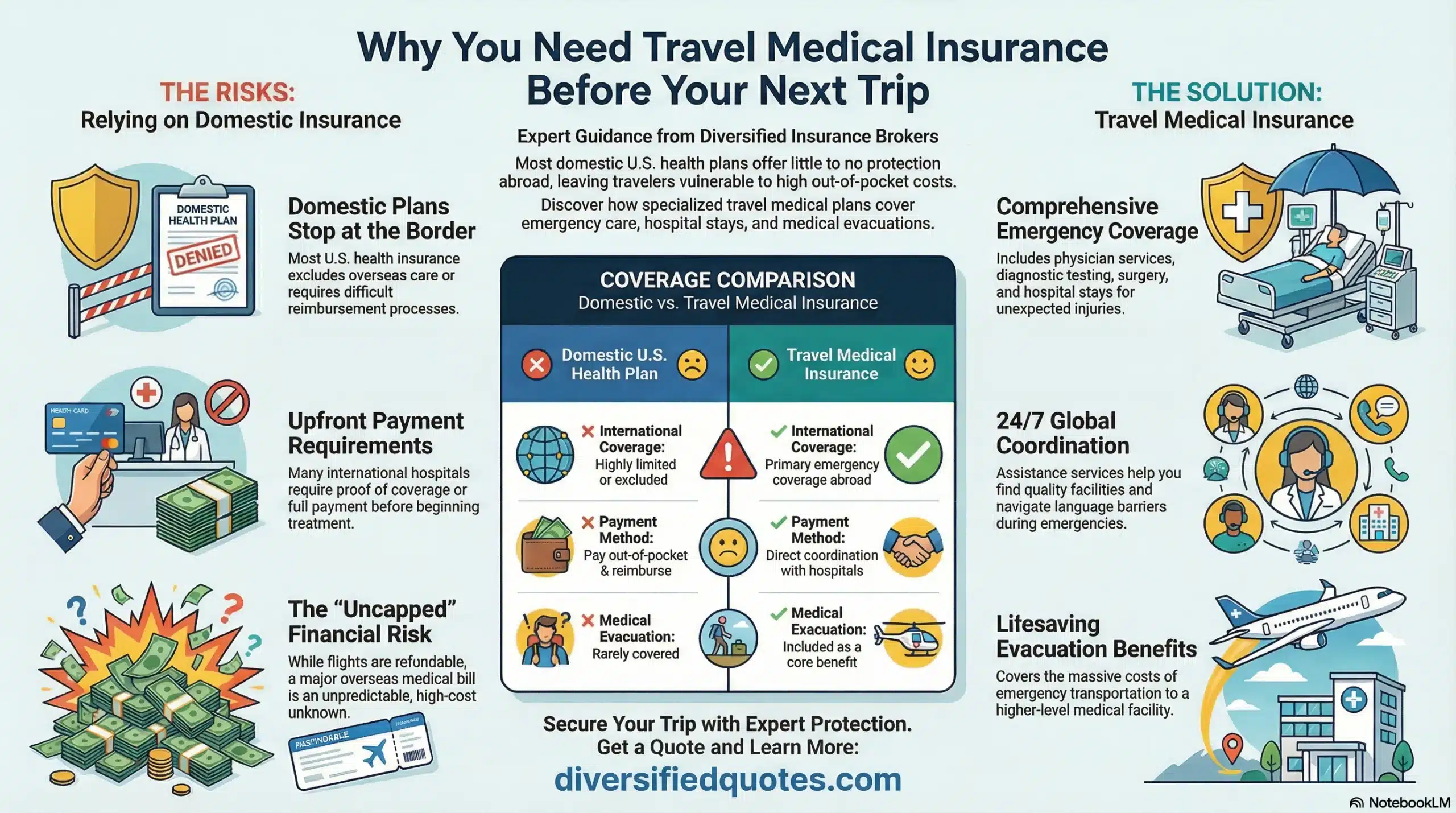
Many travelers assume that “nothing will happen” or that they can rely on credit cards and reimbursement later. The problem is that a serious medical event rarely waits for a convenient time, and the most expensive part of a claim is often the part people don’t plan for: the logistics. A strong travel medical plan is not only about paying a hospital bill; it’s about having access to a 24/7 assistance team that can coordinate where you go, how you get there, and what happens next. In Pakistan, where travel may involve long overland distances, regional flights, or higher-altitude itineraries, that coordination can be the difference between a manageable event and a chaotic one.
If you want a plain-English overview of what these plans actually cover, start with our guide to travel medical insurance. It explains the difference between travel medical benefits (treatment + assistance) and “trip insurance” reimbursement benefits (cancellation/interruption). They’re not the same—and for Pakistan, medical + evacuation benefits are the core protection most travelers need.
Travel Medical & Evacuation Coverage for Pakistan
Apply online for coverage designed to help with emergency medical bills and medically necessary evacuation coordination.
Why coverage is essential in Pakistan comes down to geography, variability of care, and the reality of emergency logistics. Pakistan is a large country. Even if you’re staying in major cities, side trips are common. If you’re traveling north—Gilgit-Baltistan, Hunza, Skardu, or the Karakoram foothills—you can be hours (or more) away from facilities capable of handling complex trauma, severe infection, cardiac events, or respiratory emergencies. And if you’re traveling for business, you may be moving between cities and sites where access to higher-acuity treatment is uneven.
1) Quality of care varies by location. Pakistan has capable clinicians and reputable private hospitals in larger metro areas, but outside major population centers you may encounter limited diagnostics, limited specialist availability, and fewer intensive-care resources. Travel medical insurance can help pay for eligible emergency treatment where available, and evacuation benefits can be crucial when “where available” is not adequate for the condition you’re facing.
2) Emergency evacuation is often the biggest financial risk. A severe case isn’t always “treat locally and rest.” For cardiac events, complicated fractures, major infections, or neurological symptoms, physicians may recommend transfer to a facility with specialized capability. Depending on the situation, the “nearest appropriate facility” could be in another city or in a nearby country. Evacuation is medically staffed transport with coordination—costs can climb quickly when you add staffing, routing, airport access, and time sensitivity. That’s why we focus heavily on evacuation limits, coordination rules, and the strength of the assistance provider.
3) High-altitude and trekking itineraries add a different risk profile. Pakistan’s northern regions attract hikers, climbers, photographers, and adventure travelers. High altitude can compound underlying health issues and can turn a “minor” condition into something more serious. Some policies include restrictions by activity type or elevation. If your itinerary includes trekking, remote valleys, or technically challenging routes, you want to confirm the plan’s activity coverage, any maximum elevation language, and whether special riders are needed.
4) Food and water risk is real. Travelers frequently deal with gastrointestinal illness, dehydration, and infections related to food/water exposure—especially during long days of travel or when moving between regions. These are usually not “dramatic” events, but they can become expensive when you need IV fluids, diagnostics, prescriptions, or observation. A good plan helps cover eligible outpatient and urgent care expenses so you can address issues early rather than pushing through until it becomes severe.
5) Accidents happen on ordinary days. Many claims come from simple slips, vehicle accidents, or injuries during normal tourism activities. You don’t need a high-risk itinerary to need medical care. The value is knowing that if something happens, you can call one number, get directed to appropriate care, and have the claim pathway documented from the start.
Example scenario: A business traveler in Karachi experiences chest pain and is evaluated locally. Doctors recommend transfer to a specialty facility for advanced cardiac imaging and intervention. With a comprehensive travel medical and evacuation policy, the assistance team coordinates transfer logistics and the plan can help cover eligible treatment and transport. Without insurance, travelers may face large deposits, out-of-pocket transport costs, and stressful coordination during a time-sensitive event.
What travel medical insurance typically covers in Pakistan (depending on plan design and eligibility rules) includes emergency hospital and physician charges, diagnostic testing, medically necessary prescriptions, and urgent care visits for unexpected illness or injury. Many plans also include benefits like emergency dental (limited), telemedicine options, and coverage for unexpected medical transport when appropriately authorized. The most important feature is often the 24/7 assistance team because they can direct you to appropriate facilities, coordinate approvals, and help manage documentation from day one.
How medical evacuation usually works is a common misunderstanding. Most plans do not allow you to “book your own flight” and submit it later for reimbursement. Medical evacuation is typically arranged and authorized through the assistance provider. The medical team assesses your condition with the treating physician and determines whether evacuation is medically necessary, where the “nearest appropriate facility” is, and how transport should be handled. If you bypass that process, you can create coverage problems. In a serious situation in Pakistan, your best move is to call the assistance line immediately—before committing to transport decisions.
How much coverage should you consider? Many travelers choose at least $100,000 in medical coverage and $250,000+ for evacuation. If you’re traveling to remote areas, staying longer, or you want higher confidence that a worst-case scenario is financially protected, higher limits can be appropriate. The goal is to avoid being underinsured on the evacuation side, because evacuation is where costs can escalate fastest.
Pre-existing conditions: Policies handle these differently. Some plans exclude pre-existing conditions entirely. Others cover limited acute onset events (often with strict definitions). Some offer waivers if purchased within a specific time window after your initial trip payment. If you have any meaningful medical history—cardiac, diabetes, asthma, autoimmune disease, prior surgery, or ongoing prescription meds—confirm the plan’s definition of “pre-existing,” the look-back period, and whether any waiver rules apply.
Adventure activities, motorbikes, and altitude: If your itinerary includes motorbike use, rafting, climbing, or trekking at elevation, confirm coverage. Some plans exclude certain activities or require riders. Others require compliance with safety rules (helmets, licensing, guided routes). If your trip involves the north, don’t assume all trekking is covered the same way—verify the details.
What to do before you depart to make the plan usable in real life: save the assistance phone number offline, print your policy ID card, keep your itinerary accessible, and share details with a travel companion. Store key documents in two places (phone + paper). If connectivity is limited, offline access matters.
Who should consider travel medical and evacuation coverage for Pakistan? In practice, it’s useful for nearly anyone traveling there—tourists, business professionals, students, humanitarian workers, expats visiting family, and adventure travelers. The needs vary: business travelers often want strong hospital networks and quick coordination; trekkers care about remote-response logistics; students and long-stay visitors may need a longer-duration structure. If you’re staying for an extended period or you want a more comprehensive approach than a short-term travel plan, compare options on our international health insurance page.
Travel Safely in Pakistan
Apply for travel medical and emergency evacuation coverage before your trip.
Common questions travelers ask before choosing a plan include: “Will the plan pay hospitals directly?”, “What if the hospital demands a deposit?”, “How do I initiate evacuation?”, and “What happens if I’m in a remote area?” The short answer is that many strong plans include assistance services that can coordinate billing support and provide guidance, but the key is to contact the assistance team early. The earlier the case is documented and coordinated, the smoother it tends to go.
Bottom line: Pakistan can be an incredible destination, but in a serious medical situation, the best outcome often depends on speed, coordination, and access. Travel medical and evacuation coverage is how you build that pathway before you need it—so you’re not trying to solve it during an emergency.
Get Travel Medical and Evacuation Coverage for Pakistan
Apply online in minutes and secure coverage designed for medical emergencies and evacuation needs.
Related Travel Medical Pages
Helpful resources to compare plan types, medical benefits, and evacuation coordination.
Related Destination Pages
Compare coverage needs by destination, access to care, and evacuation logistics.
Talk With an Advisor Today
Choose how you’d like to connect—call or message us, then book a time that works for you.
Schedule here:
calendly.com/jason-dibcompanies/diversified-quotes
Licensed in all 50 states • Fiduciary, family-owned since 1980
Travel Medical & Evacuation Insurance — Pakistan (FAQ)
Do I need travel medical & evacuation insurance for Pakistan?
Yes. Care quality varies by region, and serious conditions may require transfer or evacuation to a higher-acuity facility. A comprehensive plan helps cover eligible emergency treatment and evacuation coordination.
What does travel medical coverage usually pay for in Pakistan?
Most plans cover eligible emergency medical treatment for unexpected illness or injury—such as hospital and physician charges, diagnostics, and certain prescriptions—during your covered travel dates.
What does medical evacuation usually include for trips to Pakistan?
Evacuation benefits often include coordination by a 24/7 assistance team, transport to the nearest appropriate facility when local care isn’t adequate, and medically necessary routing decisions based on your condition.
How much medical and evacuation coverage should I consider?
Many travelers choose at least $100,000 in medical coverage and $250,000+ for evacuation, especially if traveling outside major cities or visiting remote or high-altitude regions.
Will the plan pay a hospital directly, or do I have to pay up front?
It depends on the facility and the plan. Stronger plans include assistance services that can help coordinate payment support or documentation where available. Contact the assistance hotline early so the case is properly coordinated.
Are pre-existing conditions covered?
Coverage varies. Some plans exclude pre-existing conditions, others offer limited acute onset coverage, and some provide waivers with specific purchase timing rules. Always review definitions and look-back periods before buying.
I’m trekking or going to high-altitude areas—what should I verify?
Confirm that trekking and high-altitude travel are covered under your plan’s activity rules. Check any elevation limits, exclusions for technical climbing, and whether any riders are needed for your itinerary.
Are motorbikes or adventure activities covered?
Some policies restrict higher-risk activities or require add-on riders. If you plan to ride a motorbike or join guided adventure excursions, verify coverage and comply with any safety requirements.
How do I initiate an evacuation or start a claim in Pakistan?
Call the 24/7 assistance number immediately. Provide your location, condition, and facility details. The assistance team coordinates approvals, transfers, and the documentation you’ll need for the claim.
When should I buy coverage and how long should it last?
Buy coverage before departure so it starts on day one, and set policy dates to cover your entire trip—including transit and side trips—to avoid gaps.
About the Author:
Jason Stolz, CLTC, CRPC and Chief Underwriter at Diversified Insurance Brokers (NPN 20471358), is a senior insurance and retirement professional with more than two decades of real-world experience helping individuals, families, and business owners protect their income, assets, and long-term financial stability. As a long-time partner of the nationally licensed independent agency Diversified Insurance Brokers, Jason provides trusted guidance across multiple specialties—including fixed and indexed annuities, long-term care planning, personal and business disability insurance, life insurance solutions, Group Health, and short-term health coverage. Diversified Insurance Brokers maintains active contracts with over 100 highly rated insurance carriers, ensuring clients have access to a broad and competitive marketplace.
His practical, education-first approach has earned recognition in publications such as VoyageATL, highlighting his commitment to financial clarity and client-focused planning. Drawing on deep product knowledge and years of hands-on field experience, Jason helps clients evaluate carriers, compare strategies, and build retirement and protection plans that are both secure and cost-efficient. Visitors who want to explore current annuity rates and compare options across multiple insurers can also use this annuity quote and comparison tool.
