
Are Annuities Insured?

Jason Stolz CLTC, CRPC
One of the most common questions people ask when evaluating retirement income products is whether annuities are insured. The short answer is yes—but not in the same way bank deposits are insured. Annuities are insurance contracts issued by life insurance companies, which means the guarantees within the contract are backed by the financial strength and claims-paying ability of the issuing insurer. In addition, each state provides a level of consumer protection through insurance guaranty associations that help protect annuity policyholders if an insurance company becomes insolvent.
Ensure you are receiving the absolute top rates
Current Fixed Annuity Rates
Compare today’s best fixed annuity rates from top carriers.
Current Bonus Annuity Rates
See which annuities offer the highest upfront bonus today.
Request an Annuity Quote
Submit our annuity request form to get personalized rate options.
Lifetime Income Calculator
Use our calculator to see how much guaranteed income your annuity can provide.
How Annuities Are Protected
Understanding how annuities are insured requires a clear distinction between different types of financial protection. Bank accounts such as savings accounts and certificates of deposit are typically insured by the Federal Deposit Insurance Corporation (FDIC). Investment accounts such as brokerage accounts may receive limited protection through the Securities Investor Protection Corporation (SIPC). Annuities, however, are protected through the insurance regulatory system rather than federal deposit insurance.
State Insurance Regulation
Insurance companies issuing annuities operate under strict regulatory oversight from state insurance departments. These regulatory bodies monitor the financial health of insurance companies, review reserve requirements, and establish capital standards designed to ensure that insurers can meet their long-term obligations to policyholders. Because annuities often involve decades-long income guarantees, insurers must maintain significant reserves to support the promises made within their contracts.
State Guaranty Association Protection
Beyond regulatory oversight, every U.S. state operates an insurance guaranty association that provides additional protection for policyholders if an insurer fails. These guaranty associations are funded by the insurance industry and are designed to protect consumers by covering certain policy benefits up to specific limits. While coverage levels vary by state, annuity protections often range from $100,000 to $500,000 per policyholder depending on the state and type of contract.
The presence of these protections means annuity owners have multiple layers of security supporting their contracts. First, the insurance company itself must maintain financial reserves and capital to support policy guarantees. Second, state insurance regulators oversee insurers to ensure financial stability. Third, guaranty associations provide additional consumer protection in the unlikely event that an insurance company becomes insolvent.
Insurance Company Financial Strength
Because the financial strength of the insurance company is so important, evaluating insurer ratings is a critical step when purchasing an annuity. Independent rating agencies such as AM Best, Standard & Poor’s, and Moody’s assess the financial strength of insurance companies based on factors such as capital reserves, investment portfolios, and long-term claims-paying ability. Reviewing insurer ratings helps consumers select companies with strong financial foundations.
Many individuals researching annuities begin by exploring broader educational resources such as questions to ask when researching annuities. Understanding the financial strength of the insurer, the guarantees within the contract, and the available protections can help investors make more informed decisions.
Types of Annuities
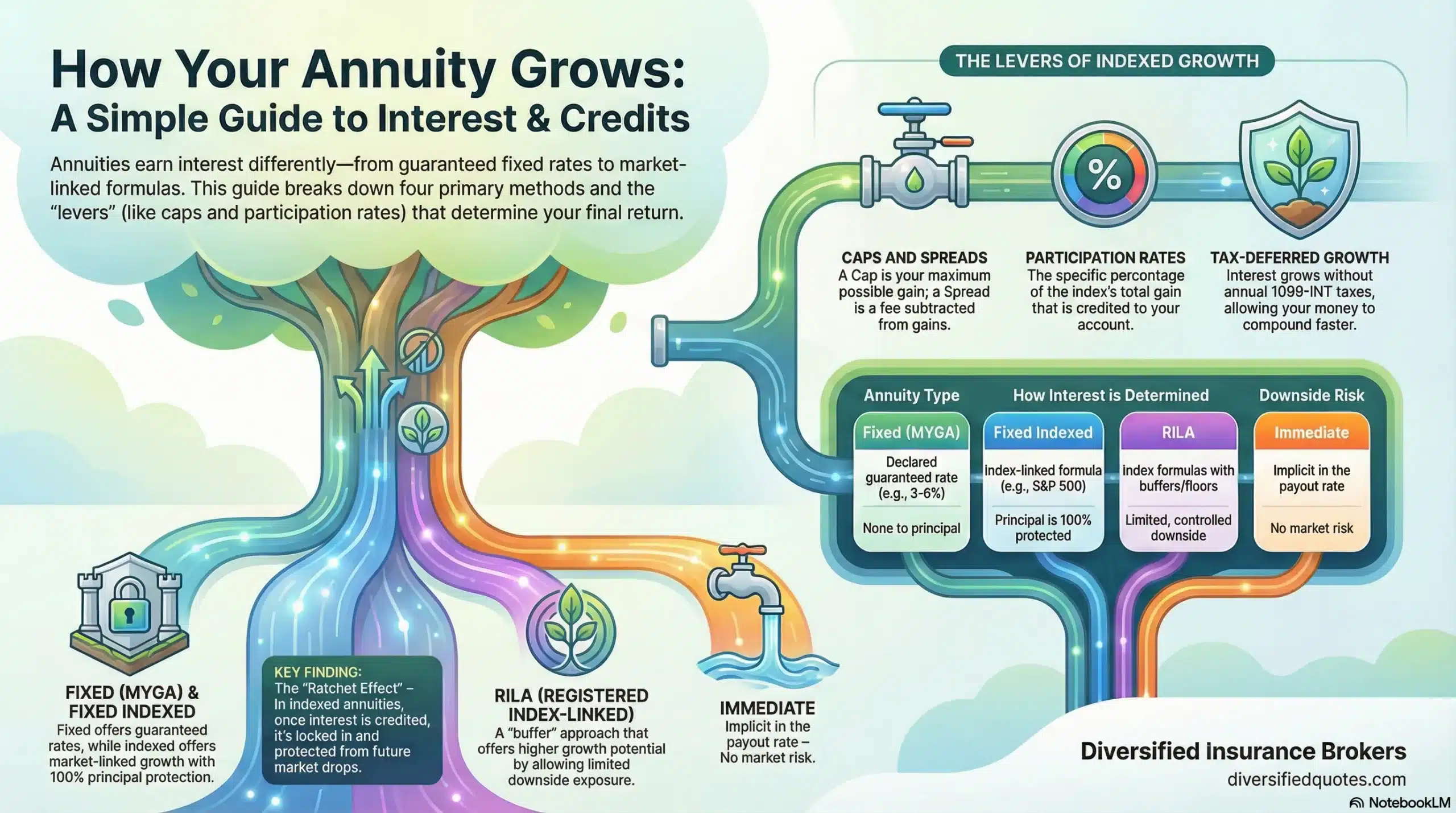
Another important consideration is the type of annuity being evaluated. Fixed annuities and fixed indexed annuities generally provide contractual guarantees backed by the insurance company. These products often include principal protection and guaranteed interest rates or income benefits. Variable annuities, on the other hand, involve market-based investments and may include additional risk depending on the underlying investment options selected.
For individuals focused on retirement income, annuities are often used to create predictable cash flow during retirement. Understanding how to use an annuity in retirement can help clarify how these contracts provide guaranteed income streams supported by insurance company reserves.
Compare Today’s Best Annuity Options
Insurance Company Investment Strategy
The concept of insurance-backed guarantees is central to how annuities function. When you purchase an annuity, the insurance company assumes certain financial obligations depending on the terms of the contract. These obligations may include paying interest on your account value, guaranteeing a minimum return, or providing lifetime income payments regardless of how long you live.
Many retirees use annuities to address longevity risk—the possibility of outliving their savings. Products such as deferred annuities with lifetime payout options allow policyholders to convert accumulated savings into guaranteed income streams that may continue for life.
Insurance companies manage these long-term obligations by investing premiums in diversified portfolios of bonds and other conservative assets. The returns generated from these investments help insurers meet their contractual obligations while maintaining reserves required by regulators. Because annuity liabilities extend over long periods, insurers typically prioritize stability and capital preservation in their investment strategies.
Some annuity contracts also include optional riders that enhance income guarantees or provide additional protections. For example, certain policies include features designed to increase income potential over time or protect beneficiaries if the contract owner dies before receiving the full value of the annuity.
Modern Annuity Products
Modern annuity products have evolved significantly over the past several decades. For example, contracts such as income-focused indexed annuities combine principal protection with opportunities for interest growth linked to market indexes while maintaining insurance-backed guarantees.
Another important factor in annuity security is diversification among insurers. Some investors choose to allocate funds across multiple annuity contracts from different insurance companies. This strategy can help diversify exposure and remain within guaranty association coverage limits.
Estate Planning and Annuities
In addition to financial guarantees, annuities may also provide estate planning benefits. Many annuity contracts allow the owner to name beneficiaries who receive remaining contract value upon the owner’s death. These beneficiary provisions can help transfer assets more efficiently compared with certain estate planning methods.
Some investors researching retirement income strategies also explore advanced financial planning concepts discussed in resources such as institutional investing strategies used by sophisticated investors. These approaches often incorporate annuities as one component of a diversified income strategy.
Annuity Safety and Financial Protection
Ultimately, the safety of annuities depends largely on the strength of the issuing insurance company and the regulatory system supporting it. By selecting financially strong insurers, reviewing contract terms carefully, and understanding the protections provided by state guaranty associations, investors can gain confidence in the security of their annuity contracts.
Request Personalized Annuity Comparisons
For many retirees, annuities represent a way to transform savings into predictable income backed by the financial strength of the insurance industry. While annuities are not insured by federal programs such as FDIC, they are supported by state insurance regulation, guaranty associations, and the capital reserves of the issuing insurer. When properly structured, these layers of protection help ensure that annuities remain a reliable component of long-term retirement planning.
Related Pages
Explore additional annuity education and retirement planning resources.
Financial Protection Essentials
Additional financial protection strategies and insurance planning resources.
Talk With an Advisor Today
Choose how you’d like to connect—call or message us, then book a time that works for you.
Schedule here:
calendly.com/jason-dibcompanies/diversified-quotes
Licensed in all 50 states • Fiduciary, family-owned since 1980
No. Annuities are not insured by the Federal Deposit Insurance Corporation (FDIC) because they are not bank products. Instead, annuities are issued by insurance companies and regulated by state insurance departments. While FDIC insurance does not apply, annuity contracts may receive protection through state guaranty associations if an insurance company becomes insolvent.
Yes. Annuities are insurance contracts issued and backed by life insurance companies. The guarantees associated with annuity products—including interest rates, principal protection, and income payments—depend on the financial strength and claims-paying ability of the issuing insurer. This is why evaluating an insurer’s financial ratings is an important part of the annuity selection process.
Every U.S. state has an insurance guaranty association designed to protect policyholders if a licensed insurance company becomes insolvent. These associations typically provide coverage up to certain limits for annuity contracts. While coverage levels vary by state, guaranty associations are designed to help ensure policyholders continue receiving benefits even if an insurer encounters financial difficulties.
Coverage limits vary by state but commonly range from $100,000 to $500,000 in annuity benefits per owner per insurance company. Because limits differ depending on where the policyholder lives, it is important to understand your state’s guaranty association coverage when evaluating annuity products.
Many retirees consider annuities to be relatively stable financial products because they are issued by regulated insurance companies and may include contractual guarantees such as principal protection and lifetime income. The overall safety of an annuity depends on the financial strength of the issuing insurer and the structure of the contract.
Certain types of annuities, such as fixed annuities and fixed indexed annuities, include protection from market losses. These contracts generally guarantee that the principal cannot decline due to stock market downturns. However, other types of annuities, such as variable annuities, may involve investment risk and market exposure.
About the Author:
Jason Stolz, CLTC, CRPC and Chief Underwriter at Diversified Insurance Brokers (NPN 20471358), is a senior insurance and retirement professional with more than two decades of real-world experience helping individuals, families, and business owners protect their income, assets, and long-term financial stability. As a long-time partner of the nationally licensed independent agency Diversified Insurance Brokers, Jason provides trusted guidance across multiple specialties—including fixed and indexed annuities, long-term care planning, personal and business disability insurance, life insurance solutions, and short-term health coverage. Diversified Insurance Brokers maintains active contracts with over 100 highly rated insurance carriers, ensuring clients have access to a broad and competitive marketplace.
His practical, education-first approach has earned recognition in publications such as VoyageATL, highlighting his commitment to financial clarity and client-focused planning. Drawing on deep product knowledge and years of hands-on field experience, Jason helps clients evaluate carriers, compare strategies, and build retirement and protection plans that are both secure and cost-efficient. Visitors who want to explore current annuity rates and compare options across multiple insurers can also use this annuity quote and comparison tool.
