
Disability Insurance Riders Explained

Jason Stolz CLTC, CRPC
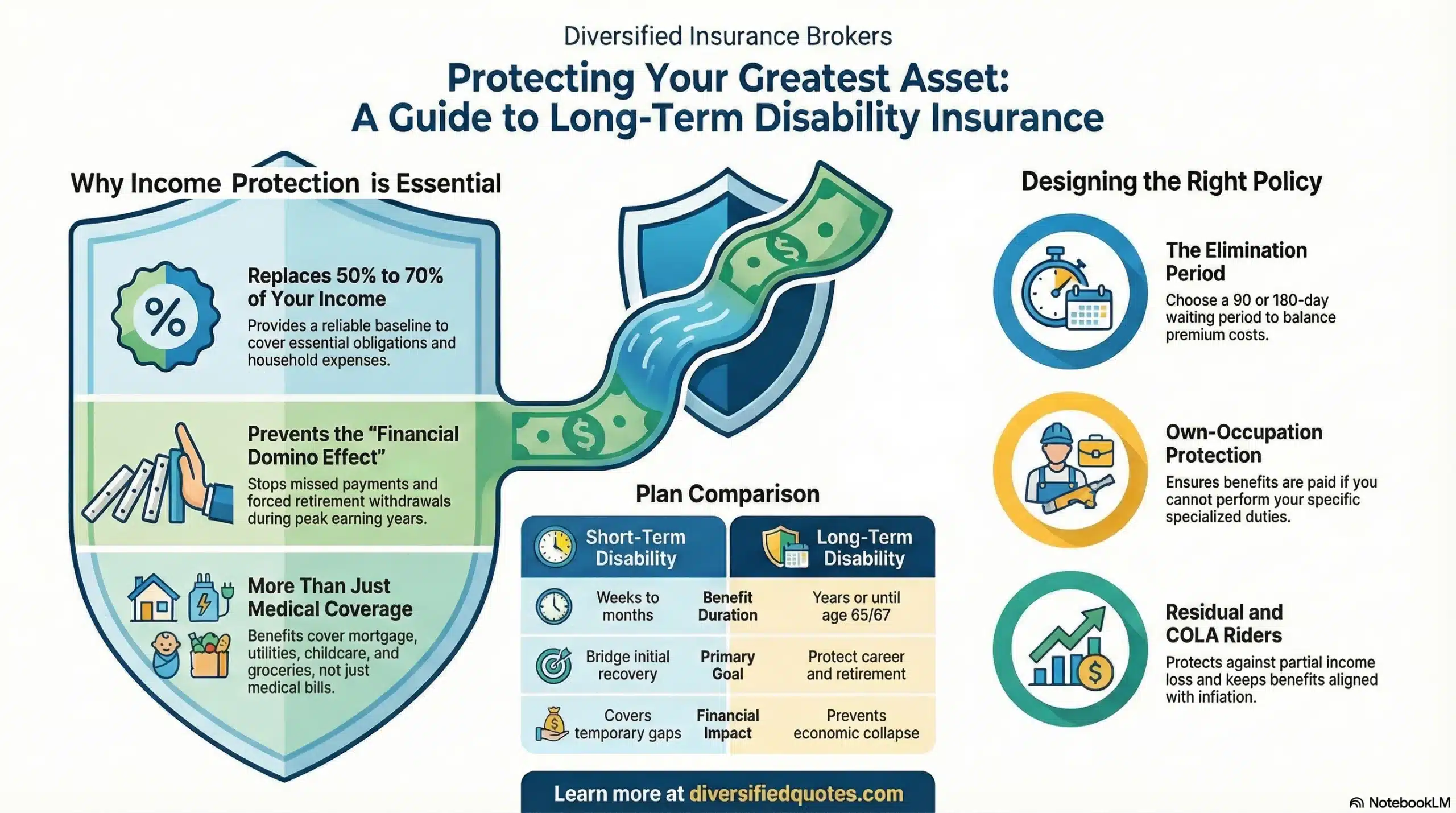
Disability insurance riders are the customization layer of a disability income policy—the contract provisions that turn a basic benefit into a highly personalized income protection strategy. Most people understand the core concept of disability insurance: if you cannot work due to illness or injury, the policy replaces a portion of your income. What many professionals, business owners, and high-risk earners don’t realize is that the real power of an individual disability policy lies in the riders. These add-ons determine how benefits increase over time, how partial disabilities are treated, how future income is protected, and how claims are defined. In other words, riders often determine whether your coverage performs exactly as expected—or falls short when you need it most. If you’re new to disability coverage, you may want to first review Short-Term vs. Long-Term Disability Insurance to understand the foundational structure before diving into rider design.
At its core, a disability insurance rider modifies the base contract. Some riders increase flexibility. Others expand the definition of disability. Some protect future insurability. And a few are designed specifically for higher-income professionals or those in specialized occupations, such as aviation or hazardous trades. If you work in a specialized field, you may also find value in reviewing Disability Insurance for High Risk Occupations to understand how occupation class and underwriting interact with rider options. Riders are not “one-size-fits-all.” The right combination depends on your profession, age, income growth trajectory, financial reserves, and long-term retirement planning strategy.
One of the most valuable riders in an individual policy is the Own-Occupation Rider. Without this enhancement, a policy may define disability as the inability to perform any gainful occupation for which you are reasonably suited by education and experience. With a true own-occupation rider, you are considered disabled if you cannot perform the material and substantial duties of your specific occupation—even if you choose to work in another field. For surgeons, pilots, engineers, dentists, and business owners, this distinction is enormous. A surgeon who develops a tremor may no longer operate but could technically teach or consult. Without an own-occupation rider, benefits might be denied. With it, income protection remains intact. This rider often represents the difference between partial protection and true occupational income security.
Closely related is the Residual or Partial Disability Rider, which pays proportional benefits if you suffer a loss of income due to reduced capacity, rather than a total inability to work. Many disabling events are not absolute; they reduce hours, responsibilities, or stamina. Instead of waiting until you are completely unable to work, a residual rider can provide benefits when income declines by a defined percentage. For a deeper breakdown of how proportional benefits function, see Residual Disability Insurance Benefits Explained. Without this rider, many partial claims would never trigger payments.
Another critical rider is the Future Increase Option (FIO) or Guaranteed Insurability Rider. Early in your career, income may be modest—but projected to grow rapidly. Physicians, attorneys, executives, and entrepreneurs often double or triple income within a decade. A future increase rider allows you to purchase additional coverage later without medical underwriting. That means if you develop a health condition, you can still expand coverage based solely on financial eligibility. Without this rider, future health changes could permanently cap your income protection ceiling.
For inflation protection, many policies offer a Cost of Living Adjustment (COLA) Rider. Long-term disability claims can last decades. Without COLA, a $6,000 monthly benefit today may lose significant purchasing power over 15–20 years. COLA riders typically increase benefits annually during a claim, often tied to CPI or a fixed percentage (such as 3%). This is especially important for younger professionals who face longer claim horizons. Just as retirement income planning requires inflation awareness—similar to considerations discussed in Annuity vs 401k comparisons—disability income planning must also address long-term purchasing power.
The Catastrophic Disability Rider is another enhancement worth evaluating. This rider provides additional benefits if you suffer severe disability, such as loss of two limbs, loss of sight, or cognitive impairment that prevents independent living. Catastrophic riders often add a secondary monthly benefit on top of your base policy, designed to cover long-term care expenses, home modifications, or specialized support.
Some riders address the waiting period before benefits begin. While elimination periods are selected in the base policy, certain riders can modify how partial disabilities accumulate toward that waiting period. For a full explanation of waiting periods, review Disability Insurance Elimination Periods Explained. Understanding how riders interact with elimination structures is essential for aligning risk tolerance with cash reserve strategy.
Business owners may also consider Business Overhead Expense (BOE) Riders, which reimburse fixed operating expenses if the owner becomes disabled. Rent, utilities, payroll, and insurance premiums continue—even if revenue stops. While BOE coverage is technically a separate policy type, it functions similarly to a rider structure in strategic planning.
Protect Your Income With the Right Rider Strategy
Request Disability Income Quote
Get personalized rider recommendations tailored to your occupation and income.
Start Your Disability QuoteChoosing riders also requires evaluating cost efficiency. Each rider increases premium. The key is aligning coverage with probability and financial impact. A young professional with limited savings may prioritize residual and future increase riders. A mid-career executive with substantial assets may emphasize own-occupation precision and COLA. A business owner may prioritize overhead protection. This layered approach mirrors retirement income structuring strategies such as Laddering Annuities, where diversification of structure improves long-term stability.
It’s also important to consider integration with broader financial planning. Disability insurance protects income during working years. Retirement strategies—such as evaluating How to Transfer an IRA to an Annuity or understanding What is a QLAC?—protect income during retirement. Both phases require contractual clarity. Riders are the contractual levers that ensure your working-income protection is as strong as your retirement-income planning.
In summary, disability insurance riders transform a generic income policy into a customized financial shield. Own-occupation definitions protect professional identity. Residual riders safeguard partial earnings. Future increase options preserve upward mobility. COLA riders defend purchasing power. Catastrophic enhancements provide added security against life-altering events. The right combination depends on your career trajectory, savings, debt structure, and long-term income goals.
Ensure You Are Receiving the Absolute Top Rates
Current Fixed Annuity Rates
Compare today’s best fixed annuity rates from top carriers.
Current Bonus Annuity Rates
See which annuities offer the highest upfront bonus today.
Lifetime Income Calculator
Use our calculator to see how much guaranteed income your annuity can provide.
Related Pages to Explore
Financial Protection Essentials
Specialized underwriting guidance, Medicare planning resources, travel medical protection, and lawsuit funding education.
Talk With an Advisor Today
Choose how you’d like to connect—call or message us, then book a time that works for you.
Schedule here:
calendly.com/jason-dibcompanies/diversified-quotes
Licensed in all 50 states • Fiduciary, family-owned since 1980
A disability insurance rider is an optional add-on that modifies or enhances your base policy. Riders can expand the definition of disability, increase benefits over time, protect future insurability, or provide partial income replacement depending on your needs.
For many professionals, the own-occupation rider is considered the most important because it protects your specific career specialty. Residual disability riders are also critical because they pay benefits if you experience a partial income loss rather than a total disability. Learn more here: Residual Disability Insurance Benefits Explained.
A COLA rider increases your monthly benefit during a long-term claim to help offset inflation. This is especially important for younger professionals who may face decades of potential benefit payments.
A future increase option (FIO) rider allows you to purchase additional disability coverage later without medical underwriting. This protects your ability to increase coverage as your income grows.
Yes. Individuals in specialized or higher-risk fields often require precise contract language. Riders can clarify occupational definitions and benefit structures. See: Disability Insurance for High Risk Occupations.
Yes. Each rider adds cost to your base premium. However, riders often provide significant additional protection and flexibility that can outweigh the incremental expense.
Some riders modify how partial or residual claims apply during your elimination period. Understanding this interaction is important when structuring your policy. Learn more: Disability Insurance Elimination Periods Explained.
About the Author:
Jason Stolz, CLTC, CRPC and Chief Underwriter at Diversified Insurance Brokers, is a senior insurance and retirement professional with more than two decades of real-world experience helping individuals, families, and business owners protect their income, assets, and long-term financial stability. As a long-time partner of the nationally licensed independent agency Diversified Insurance Brokers, Jason provides trusted guidance across multiple specialties—including fixed and indexed annuities, long-term care planning, personal and business disability insurance, life insurance solutions, and short-term health coverage. Diversified Insurance Brokers maintains active contracts with over 100 highly rated insurance carriers, ensuring clients have access to a broad and competitive marketplace.
His practical, education-first approach has earned recognition in publications such as VoyageATL, highlighting his commitment to financial clarity and client-focused planning. Drawing on deep product knowledge and years of hands-on field experience, Jason helps clients evaluate carriers, compare strategies, and build retirement and protection plans that are both secure and cost-efficient.
