
International Health Insurance

Jason Stolz CLTC, CRPC
International health insurance is designed for people and families who live, work, study, or spend extended time outside their home country. Unlike short-term travel medical plans that focus primarily on emergency events during a trip, international health insurance is built for ongoing global living. It is meant to function more like a major medical plan—portable across borders, renewable for longer time horizons, and structured to support both unexpected medical needs and the reality that life abroad often includes routine care, prescriptions, follow-up visits, and continued treatment if something changes.
At Diversified Insurance Brokers, we help expatriates, global employees, retirees abroad, missionaries, international students, digital nomads, and globally mobile families compare international health insurance options that fit their coverage area, travel patterns, and expectations for provider access. The goal is simple: you should be able to live internationally without wondering whether a clinic visit, a specialist consultation, or a hospital event will turn into a difficult financial surprise or a logistics problem that disrupts your plans.
International Health Insurance Quotes
Compare long-term global medical plans designed for international living and cross-border care.
What International Health Insurance Is
International health insurance is long-term medical coverage intended for people who will be outside their home country for months or years. These plans are typically renewable, can be structured with high maximums, and can be tailored to a defined “area of coverage.” Depending on the plan, that area may be worldwide excluding the U.S., or worldwide including the U.S., with U.S.-inclusive coverage generally costing more because of the price of American healthcare. This flexibility matters because many globally mobile people spend most of the year overseas but return to the U.S. for limited periods, and they want their medical protection to follow them without creating gaps.
International health insurance is also built around access and logistics. A strong plan should not only reimburse eligible care, but also support how care is delivered abroad—through global assistance services, a network of hospitals and clinics, and a claims process that is workable when you are in another time zone or another language environment. If you are deciding between international health insurance and a shorter travel plan, it can help to start with our broader overview of travel medical insurance so the differences are clear from the beginning.
Who International Health Insurance Is Best For
International health insurance is most valuable when your life is genuinely international rather than “one trip at a time.” That includes expats on multi-year assignments, digital nomads who are abroad most of the year, retirees who relocate internationally, students studying overseas for an extended program, missionaries and humanitarian staff living in-country for months at a time, and families who move between countries and need a consistent medical structure. In these situations, it is common for medical needs to be more than a one-time emergency. Follow-up care, prescriptions, routine treatment, and referrals can become part of normal life, and international health insurance is built to handle that reality more smoothly than short-term travel products.
If your travel is more occasional—two weeks here, a month there—travel medical insurance may be sufficient. If you want to evaluate emergency-focused protection first, our guide to cheap travel insurance is a practical way to understand how benefit limits, deductibles, and exclusions can change as prices go down. That comparison often makes the “why” of international health insurance feel much clearer for long-term international living.
International Health Insurance vs. Travel Medical Insurance
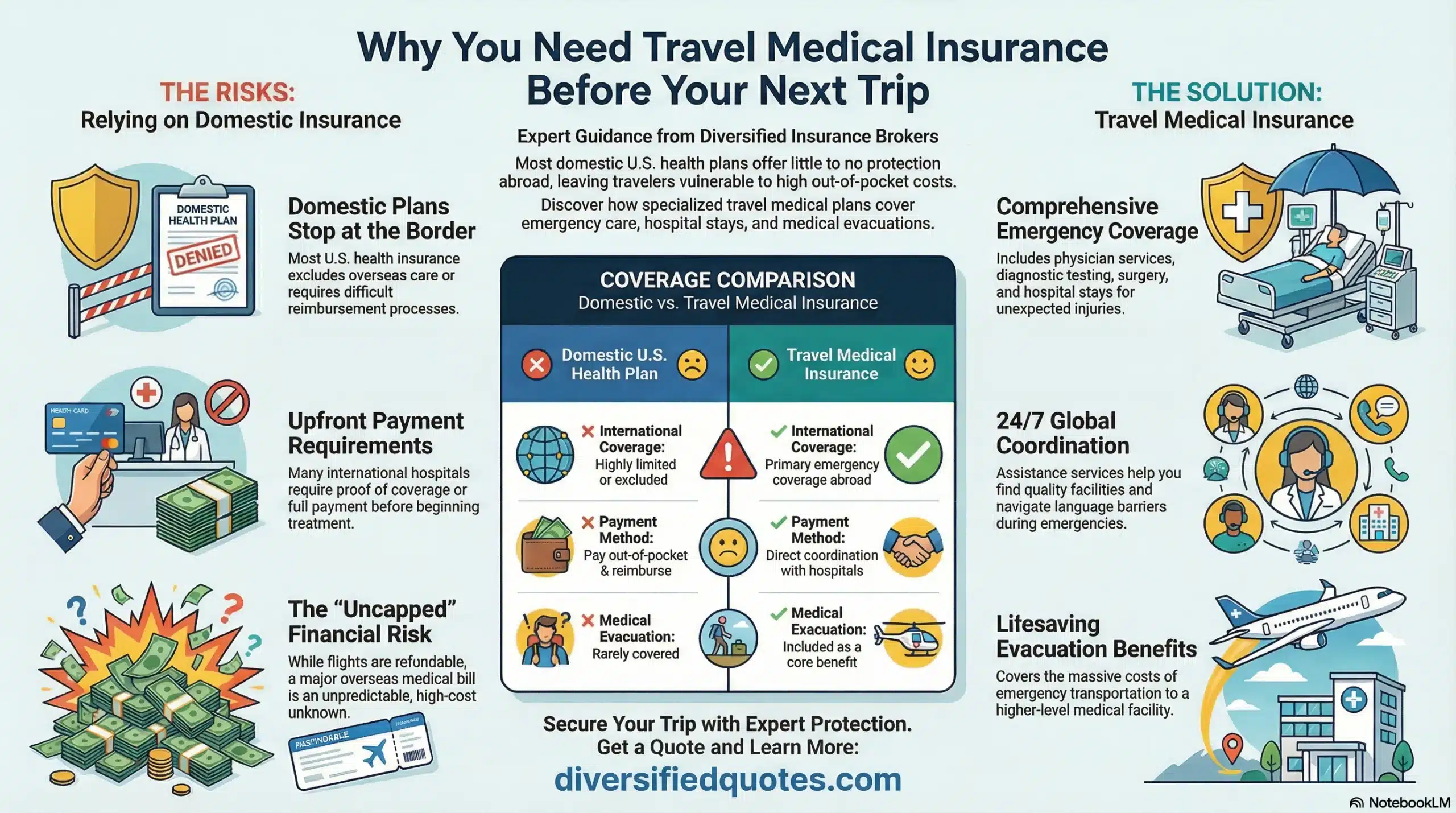
Travel medical insurance is usually designed for shorter durations and is primarily emergency-oriented. It can be excellent for a defined trip because it is simple, affordable, and built to handle unexpected illness or injury while traveling. International health insurance, by contrast, is designed for ongoing coverage and can include broader categories of care. While specific benefits vary by plan, international health insurance is typically positioned to support a longer time horizon—so that if you need continued care abroad, or your life overseas changes, your coverage can remain consistent.
A practical way to decide is to ask two questions. First, are you outside your home country long enough that routine care will likely come up? Second, would a significant medical event require more than just an emergency room visit—such as specialist care, imaging, prescriptions, and follow-up? If the answer to either is “yes,” international health insurance becomes a more natural fit. If evacuation planning is part of the decision—especially for remote living or higher-risk regions—our guide to emergency medical evacuation insurance helps you understand why evacuation wording and assistance coordination can matter as much as the dollar limit.
What International Health Insurance Typically Covers
Coverage varies by carrier and plan tier, but many international health insurance policies include inpatient hospitalization, surgery, emergency services, outpatient physician visits, specialist care, diagnostic testing, and prescription medications. Some plans also support optional benefits such as maternity coverage, mental health support, wellness and preventive care, and sometimes dental or vision riders. Because these plans are meant for longer-term living abroad, the design often emphasizes ongoing care access, not just “one emergency event.”
International health insurance can also matter for continuity if you move between countries. Rather than resetting a new plan for every trip, you can often maintain one coverage structure while changing addresses and travel patterns over time. For people who travel or live in places where medical infrastructure varies, the ability to access a broader provider network can be a meaningful advantage, especially if you need a reliable hospital option rather than a local clinic that may not have the diagnostics or specialists you would prefer.
Provider Networks, Direct Billing, and Real-World Access
Many international plans are built around global provider networks and assistance services. In practice, that means you may have access to network facilities where the insurer can coordinate payment more directly, especially for inpatient hospitalization. For outpatient care, the process may involve paying and submitting for reimbursement, depending on location and plan design. The key is choosing a plan that fits how you actually live abroad. If you expect to use private hospitals, want predictable claims handling, or need support coordinating care in unfamiliar health systems, those features should be part of the selection criteria.
In higher-risk destinations or locations with uneven medical access, evacuation becomes an important “access benefit” rather than just a financial benefit. When a facility cannot provide an adequate level of care, the plan’s assistance team can coordinate movement to an appropriate hospital. If you are comparing options for higher-risk itineraries, it can help to review high risk travel insurance as a framework for how plan structure often changes when conditions are less predictable.
How Premiums Are Determined
International health insurance premiums typically reflect age, area of coverage, chosen deductible, benefit maximums, and any optional riders selected. Worldwide coverage that includes the United States generally increases cost significantly because of U.S. medical pricing. Deductible selection can meaningfully change premium levels, and many people structure the plan around a deductible that fits their expected usage and emergency comfort level, rather than optimizing solely for the lowest monthly cost.
For digital nomads and globally mobile professionals, one of the major benefits of international health insurance is that it is not tied to a single employer plan structure. If you are self-employed or remote, international health insurance can create a stable baseline that does not change every time work or residence changes. For nomadic lifestyles specifically, our page on travel insurance for digital nomads can help clarify when a travel-based plan is still sufficient and when the longer-term structure is worth it.
Pre-Existing Conditions and Underwriting Considerations
Some international health insurance plans involve underwriting, especially when the coverage is comprehensive and designed for longer-term use. Pre-existing conditions may be excluded, covered with limitations, or included subject to plan rules, waiting periods, or pricing adjustments. The practical goal is to select a plan that aligns with your real needs and avoids surprises after you relocate or begin using care abroad. If you have ongoing prescriptions or known conditions, it is important to compare how each plan defines and treats pre-existing conditions so your expectations match the contract.
If you are unsure whether your situation is better served by travel medical or international health coverage, start with your timeline and your typical healthcare usage. Short trips with low expected usage often align with travel medical. Long stays, frequent border crossing, or the need for more predictable access often point toward international health insurance. If you also want a broader “major medical” structure internationally, you may prefer a plan category closer to international major medical rather than trip-based travel medical.
How Diversified Insurance Brokers Helps
At Diversified Insurance Brokers, we help you choose international health insurance based on where you will live, how long you will be outside your home country, how you expect to use healthcare, and whether you need U.S. access included in the coverage area. We focus on clarity—what is covered, what is excluded, how claims work, how provider access works, and how to think about deductible and maximum decisions without guessing. The goal is to match you with coverage that fits your international life instead of forcing your international life to fit a policy that was designed for something else.
If you are building a broader international protection plan that includes emergency response planning, evacuation coordination, and coverage for complex itineraries, it often helps to view international health insurance as one layer in a larger structure. Many globally mobile people also carry travel medical protection for certain trips, or they coordinate international coverage with specific travel needs depending on destination risk and duration. Your plan should reflect how you actually live and travel, not a generic assumption.
Start With the Right International Health Insurance Coverage
If you are moving abroad, already living overseas, or planning extended international living, international health insurance can protect you from unexpected medical costs and reduce uncertainty around access to care. Choosing the right plan at the start helps you avoid gaps, reduces administrative friction, and creates stability across countries, providers, and time zones. The right coverage is not just about “having insurance.” It is about having a workable healthcare plan for global life.
Get International Health Insurance Today
Compare global medical plans and secure coverage that fits your international lifestyle and long-term needs.
Related International Coverage Pages
Explore coverage options that pair well with international health insurance for long-term global living.
Related Evacuation & Higher-Risk Guides
Use these guides to understand evacuation, assistance services, and coverage structure for complex itineraries.
Talk With an Advisor Today
Choose how you’d like to connect—call or message us, then book a time that works for you.
Schedule here:
calendly.com/jason-dibcompanies/diversified-quotes
Licensed in all 50 states • Fiduciary, family-owned since 1980
International Health Insurance FAQs
What is international health insurance?
International health insurance is long-term medical coverage designed for people living, working, studying, or traveling abroad for extended periods. It typically covers both routine care and major medical events, often with access to global provider networks.
How is international health insurance different from travel medical insurance?
Travel medical insurance is usually short-term and focused on emergencies, while international health insurance is built for long-term living abroad and can include outpatient care, prescriptions, and ongoing treatment—depending on the plan.
Does international health insurance cover routine doctor visits and prescriptions?
Many plans do, especially comprehensive options that include outpatient benefits. Some lower-cost plans focus more on hospitalization, so it’s important to confirm whether outpatient visits and prescription coverage are included.
Can I use international health insurance in my home country?
Some plans include limited home-country coverage for short visits, while others exclude the home country entirely. Eligibility and benefits depend on the plan’s “area of coverage” rules.
Are pre-existing conditions covered?
It depends on the insurer and plan. Some plans underwrite medical history and may exclude or limit pre-existing conditions, while others may offer coverage with waiting periods or different terms.
Do these plans include emergency medical evacuation?
Many international health plans include emergency evacuation and repatriation, or offer it as an add-on. Coverage details vary, including limits and whether pre-authorization is required.
How do claims and direct billing work internationally?
Some insurers offer direct billing with network hospitals, while other services may require you to pay first and submit a claim for reimbursement. The process depends on the provider network and the country where care is received.
How much does international health insurance cost?
Premiums are based on age, location, coverage area, benefit level, deductible, and optional riders (like maternity or dental). Choosing a higher deductible can reduce monthly costs.
Can families and dependents be covered under one plan?
Yes. Most international health insurers offer family plans that include spouses and dependents, often with options to tailor benefits for each family member.
How do I choose the right plan?
Start with where you’ll live and travel, your budget, and whether you need outpatient care, prescriptions, maternity, or chronic-condition support. We help compare carriers and narrow options to plans that fit your situation.
About the Author:
Jason Stolz, CLTC, CRPC and Chief Underwriter at Diversified Insurance Brokers (NPN 20471358), is a senior insurance and retirement professional with more than two decades of real-world experience helping individuals, families, and business owners protect their income, assets, and long-term financial stability. As a long-time partner of the nationally licensed independent agency Diversified Insurance Brokers, Jason provides trusted guidance across multiple specialties—including fixed and indexed annuities, long-term care planning, personal and business disability insurance, life insurance solutions, Group Health, and short-term health coverage. Diversified Insurance Brokers maintains active contracts with over 100 highly rated insurance carriers, ensuring clients have access to a broad and competitive marketplace.
His practical, education-first approach has earned recognition in publications such as VoyageATL, highlighting his commitment to financial clarity and client-focused planning. Drawing on deep product knowledge and years of hands-on field experience, Jason helps clients evaluate carriers, compare strategies, and build retirement and protection plans that are both secure and cost-efficient. Visitors who want to explore current annuity rates and compare options across multiple insurers can also use this annuity quote and comparison tool.
