
Is Long Term Care Insurance Worth It

Jason Stolz CLTC, CRPC
Is Long Term Care Insurance Worth It? Many retirees and pre-retirees wonder whether purchasing long-term care (LTC) insurance is a smart move—or just an expensive gamble. On one hand, LTC insurance can help cover the high costs of assisted living, nursing home care, or in-home care when health or mobility declines. On the other hand, premiums can feel expensive, benefits are based on contract triggers, and many people worry they’ll pay for years and never use it.
The “right” answer depends on what risk you’re trying to solve. Some families want to protect retirement accounts from a multi-year care event. Some want to preserve a surviving spouse’s lifestyle. Others want to avoid becoming dependent on adult children for caregiving and coordination. This guide walks through what you get with LTC coverage, who tends to benefit most, when it makes sense, when it might not, and what alternatives to consider if you don’t want a traditional standalone policy.
Find Out If LTC Insurance Is Worth It for You
We’ll compare traditional LTC, hybrid options, and self-funding scenarios so you can make a confident decision.
Start Your LTC ReviewWhat Does Long Term Care Coverage Provide?
Long-term care insurance is designed to pay for services that traditional health insurance or Medicare usually won’t cover for extended periods. These services may include in-home care, adult day care, assisted living, memory care support, skilled nursing, home health care, and other personal care needs. When you purchase an LTC policy, you generally choose a daily or monthly benefit amount, a benefit pool or benefit period (how long payments can last), and a waiting period (often called an elimination period)—the time after you become eligible before benefits begin.
Because long-term care can become extremely expensive, the value of LTC insurance is less about “beating the insurance company” and more about protecting a retirement plan from an unpredictable expense that can arrive at exactly the wrong time. A well-designed policy can help reduce the chance you’re forced to liquidate accounts quickly, change living arrangements abruptly, or lean heavily on family for care management and financial support.
It also helps to remember that care often starts at home. Many people assume long-term care is primarily a nursing-home expense, but a large percentage of care begins with part-time support—help with bathing, dressing, meal prep, and supervision. A strong LTC plan is usually built to follow you across settings, rather than locking you into a single facility type.
Who Benefits Most from LTC Coverage?
LTC insurance tends to make the most sense for individuals or couples who have meaningful retirement assets, a desire to protect a spouse, or a goal of leaving a legacy. If you’ve built a comfortable nest egg, own a home you’d like to preserve, or want to reduce the chance that a care event becomes a financial emergency, LTC coverage can function like a “shock absorber” for the plan.
LTC coverage can also make sense when family support is limited. If adult children live far away, have demanding work and family obligations, or simply aren’t in a position to provide hands-on care, insurance can help pay for services and reduce caregiver strain. Even when family is nearby and supportive, many households prefer to keep caregiving decisions from becoming financial decisions. LTC benefits can help keep those roles separate.
Finally, LTC insurance can be valuable for people who are comfortable paying a known cost (premiums) to reduce an unknown risk (years of care expenses). In that sense, it can be viewed less as a “bet” and more as a risk transfer—similar to homeowners insurance. You’re not hoping to use it. You’re trying to avoid a worst-case outcome.
Key Pros of Buying LTC Insurance
The biggest benefit of LTC insurance is protection against long-duration, high-cost care. If you need assisted living or nursing home care for several years, a policy can cover a large portion of those expenses and help keep retirement accounts intact.
Another major advantage is preserving household stability and legacy. Even families who could “technically” pay out of pocket often prefer not to, because it can change the surviving spouse’s lifestyle, force accelerated withdrawals, or reduce what’s left for heirs. Coverage can help keep the plan working as intended.
Insurance can also expand care choices. When families rely solely on personal funds or public assistance, choices can narrow. With a policy, you may have more flexibility to choose home care longer, adjust care hours, or pick a setting that matches safety and comfort rather than only what is affordable in the moment.
There can also be tax advantages depending on how coverage is structured and your situation. Many people ask about deductibility of premiums and whether benefits are tax-favored. The key is to treat taxes as an important factor—but not the main reason to buy. The main reason is household protection.
Common Drawbacks and Trade-Offs
Despite the benefits, LTC insurance isn’t a perfect solution. Premiums can be significant, especially when purchased later in life or with health issues that limit options. And unlike life insurance, there’s no guarantee you’ll ever use it. Paying premiums for decades only to never tap benefits is a real possibility.
It’s also important to understand that LTC benefits typically require meeting claim triggers. You may need to prove inability to perform certain Activities of Daily Living or document cognitive impairment requiring supervision. Policies can vary in how they define covered services, how they handle elimination periods, and how reimbursement works. Those contract details matter because they determine how smoothly the policy pays when you actually need it.
Another practical concern is long-term affordability. Even a strong policy isn’t worth much if it becomes too expensive later and is dropped. That’s why a “right-sized” plan—one you can reasonably keep long term—often beats the biggest plan on paper.
When LTC Insurance Might Not Be Worth It
If you have modest savings and would likely need to rely on public assistance, or if you already have substantial liquid assets and are comfortable self-funding, standalone LTC may offer limited value. Some families simply prefer to keep control of assets and accept the risk, especially if their plan already has significant cushion.
It can also be a weaker fit when the premium budget would strain other priorities. For example, if paying LTC premiums means you’re under-funding emergency reserves, ignoring other insurance needs, or putting too much pressure on retirement income, the strategy may be counterproductive.
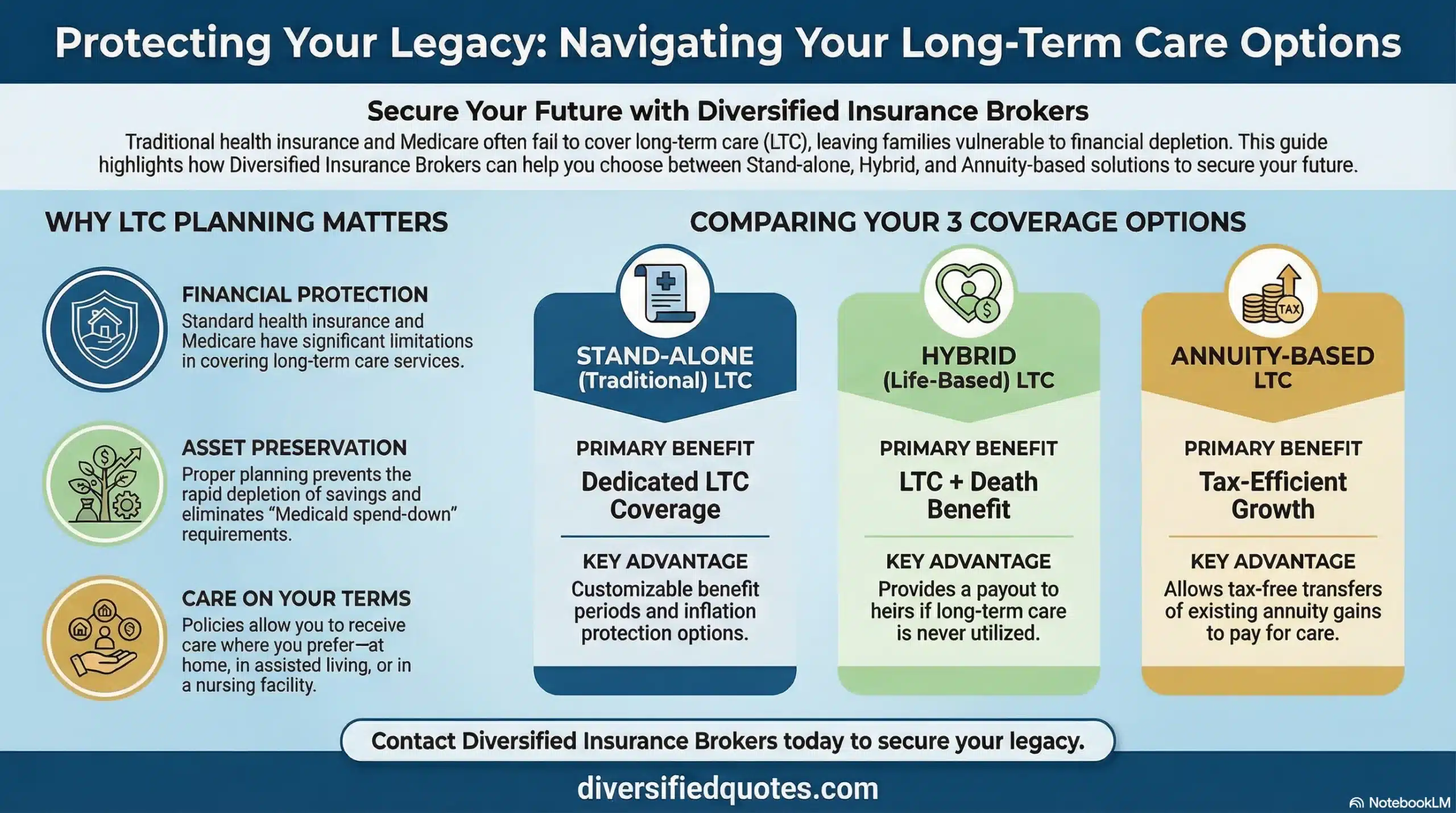
In these situations, families often consider alternatives that still create structure. A smaller LTC plan can be combined with a dedicated “care reserve.” Or a hybrid approach can be used to create a “benefit if care is needed, value if it isn’t” outcome. Some hybrid products can be classified as a Modified Endowment Contract (MEC) depending on how they’re funded, which can affect tax treatment. That doesn’t automatically make them bad—it simply means the funding and goals should be coordinated carefully.
How to Decide: Questions to Ask Before Buying LTC
The decision becomes clearer when you frame it as a risk-management choice instead of a “good deal vs bad deal” purchase. Consider the questions below and answer them honestly based on your household—not on what you wish were true.
Decision questions that usually reveal the right path:
How much do you have in retirement savings, and how long do those savings need to last? Do you have a spouse you must protect? Do you own assets you want to preserve or leave to heirs? How long could you self-fund care if it lasted multiple years? Are you comfortable with that risk? What would a care event do to your monthly income plan?
It’s also wise to compare what premiums look like for your age and health profile and then stress-test affordability. A plan that looks reasonable today but becomes uncomfortable in ten years is not a win. If you’re comparing annuity-based approaches as part of the overall plan, you may also want to understand how different crediting mechanics work, including the concept of an annuity spread rate.
Protecting Against Rising LTC Costs: Practical Tips
Not everyone chooses to buy a full standalone LTC policy right away. If you decide to self-insure for now or you want to build a “Plan B” alongside a smaller policy, the goal is to create structure, not vague hope. Here are practical ways families prepare without committing to maximum coverage immediately.
Build a dedicated care fund. Instead of thinking “we’ll figure it out later,” carve out a specific pool earmarked for care. That might be a conservative account, a bond ladder, or a portion of reserves that is mentally and financially labeled for care exposure.
Consider hybrid designs. Some life insurance or annuity strategies offer LTC-style benefits while still preserving a value path if care is never needed. The trade-off is that funding style, tax treatment, and benefit structure must be understood before committing. If you’re looking at life-based hybrids, the MEC rules referenced above matter because they affect how the policy behaves tax-wise.
Maintain liquidity and flexibility. Downsizing, maintaining a realistic emergency reserve, and avoiding a retirement plan that is “asset rich but cash poor” can make a massive difference if care begins at home and expenses rise quickly.
Reassess periodically. Care planning isn’t a one-time decision. Health changes, asset levels change, and family support can shift. A strategy that didn’t make sense at 55 might make perfect sense at 62, or vice versa. The key is keeping the plan updated rather than ignoring it until a crisis forces action.
How We Help at Diversified Insurance Brokers
At Diversified Insurance Brokers, we help clients evaluate whether LTC insurance—or a hybrid alternative—fits their overall financial picture. Instead of treating LTC as a standalone purchase, we look at the household plan: assets, income sources, spouse protection, legacy goals, and how much risk you’re actually willing to carry if care lasts longer than expected.
In most cases, we present multiple paths side-by-side: a traditional policy option, a hybrid option if the household wants value outcomes in a “no claim” scenario, and a self-funding framework so you can see what the plan looks like without insurance. That comparison often answers the “worth it” question quickly because you can see the trade-offs in plain English.
Not sure if long-term care insurance is worth it for you?
We’ll review your age, health, savings, retirement income sources, and goals—and show how LTC coverage, self-funding, or a combination can work in your situation.
Start Your Long-Term Care ReviewNo pressure—just clear numbers and options based on your situation.
Related Pages
Explore related topics that often come up when comparing LTC coverage and alternative planning strategies.
Talk With an Advisor Today
Choose how you’d like to connect—call or message us, then book a time that works for you.
Schedule here:
calendly.com/jason-dibcompanies/diversified-quotes
Licensed in all 50 states • Fiduciary, family-owned since 1980
FAQs: Is Long Term Care Insurance Worth It?
What is long-term care insurance (LTC)?
Long-term care insurance helps pay for extended care services such as in-home help, assisted living, or nursing home care — services typically not covered by regular health insurance or Medicare. It’s meant to protect savings from expensive long-term care costs.
Who benefits most from buying LTC insurance?
LTC insurance tends to make the most sense for people with significant assets or savings they want to protect — especially if they want to preserve their nest egg or leave an inheritance. It also helps those who want to avoid burdening family members and want more care-option flexibility.
What are the main advantages of having LTC coverage?
LTC insurance can help cover sky-high long-term care costs, preserve your savings/retirement funds, provide peace of mind, offer more care-setting options (home care, assisted living, nursing home), and relieve financial burden from family caregivers.
What are the drawbacks or risks of LTC insurance?
Premiums can be expensive and may rise over time. You might pay for years and never use the benefits. Some policies cap benefit amounts or only pay under certain conditions. And poor health or pre-existing conditions may make coverage expensive or unavailable.
Can premiums change over time?
Yes. Many standalone LTC policies are subject to rate increases. Even if premiums start affordable, insurers may raise rates later — making long-term costs less predictable.
Are there alternatives to traditional LTC insurance?
Yes. Options include hybrid life insurance or annuity-based products with long-term care riders, self-funding through savings, or relying on Medicaid if eligible. These alternatives may suit people wary of rising premiums or uncertainty of need.
When might LTC insurance not be worth it?
If you have limited savings, already expect to rely on Medicaid, or are unlikely to need extended care — the cost of premiums over many years may outweigh any potential benefit. Also, if you can set aside savings to self-fund care, LTC insurance may not provide enough value.
How do I decide if LTC insurance is right for me?
Consider your age, health status, savings, family history, likelihood of needing long-term care, and your comfort with premium risk. A thoughtful review of your retirement plan — including other assets and potential care costs — helps clarify the decision.
About the Author:
Jason Stolz, CLTC, CRPC and Chief Underwriter at Diversified Insurance Brokers (NPN 20471358), is a senior insurance and retirement professional with more than two decades of real-world experience helping individuals, families, and business owners protect their income, assets, and long-term financial stability. As a long-time partner of the nationally licensed independent agency Diversified Insurance Brokers, Jason provides trusted guidance across multiple specialties—including fixed and indexed annuities, long-term care planning, personal and business disability insurance, life insurance solutions, Group Health, and short-term health coverage. Diversified Insurance Brokers maintains active contracts with over 100 highly rated insurance carriers, ensuring clients have access to a broad and competitive marketplace.
His practical, education-first approach has earned recognition in publications such as VoyageATL, highlighting his commitment to financial clarity and client-focused planning. Drawing on deep product knowledge and years of hands-on field experience, Jason helps clients evaluate carriers, compare strategies, and build retirement and protection plans that are both secure and cost-efficient. Visitors who want to explore current annuity rates and compare options across multiple insurers can also use this annuity quote and comparison tool.
