
What is Adult Daycare
What is Adult Daycare

Jason Stolz CLTC, CRPC, DIA, CAA
Adult day care is a structured, community-based daytime care program that provides supervision, social engagement, personal care support, health monitoring, and meals for older adults who cannot safely remain home alone during the day. It sits at the intersection of two major planning challenges in long-term care: how to maintain an older adult’s independence and home living as long as possible, and how to sustain family caregivers without burning them out. For millions of families, adult day care becomes the care infrastructure that makes both goals achievable simultaneously. Rather than forcing a choice between “staying home unsupervised” and “moving into residential care,” adult day care creates a third option: going home to sleep in a familiar bed, but spending structured weekday hours in a safe, engaging, professionally staffed environment. Adult day care is generally the least expensive option for senior caregiving, with a national average monthly rate of $2,167, according to Genworth — about $100 per day or $26,000 annually. For context, that is less than half the cost of a part-time home health aide and less than a third of the median assisted living cost. Understanding what adult day care provides, how it is funded, and how it fits into a long-term care plan is essential for any family navigating care decisions for an aging parent or spouse.
The financial framing matters because adult day care is consistently underutilized relative to its planning value. Many families discover it late — after exhausting informal home-based options and before committing to residential care — rather than incorporating it deliberately into a long-term care strategy from the beginning. Early introduction of adult day care can meaningfully extend the period during which a senior can remain at home, preserving both quality of life and retirement assets by delaying transitions to higher-cost care settings. For the 44 million American adults who provide unpaid care to a family member, adult day care also provides the daily structure — reliable care hours, professional supervision, and caregiver respite — that makes sustained home caregiving economically and emotionally feasible. When combined with in-home care services for evenings, weekends, and medical needs that require one-on-one support, adult day care can form the structural core of a complete home-based long-term care plan. Our long-term care insurance services overview covers how these care settings are covered under LTC policies, and our guide on how to find, evaluate, and apply for long-term care insurance covers the coverage procurement process.
Most long-term care insurance policies cover adult day care costs once the policy’s benefit triggers are met. These triggers are based on the need for assistance with a defined number of activities of daily living or a qualifying cognitive impairment diagnosis. Understanding whether your existing LTC insurance covers adult day care — and understanding the triggers required to access those benefits — is one of the most practical steps any family caregiver can take before adult day care costs become urgent. For families who don’t yet have LTC coverage, understanding how adult day care fits into the broader long-term care cost picture is one of the most compelling arguments for purchasing coverage while still eligible. Our resource on how to qualify for long-term care insurance covers the underwriting and eligibility process, and our independent LTC broker resource covers how to compare policies across carriers to find coverage that specifically includes adult day care as a covered benefit.
Build a Long-Term Care Plan Before Care Is Urgent
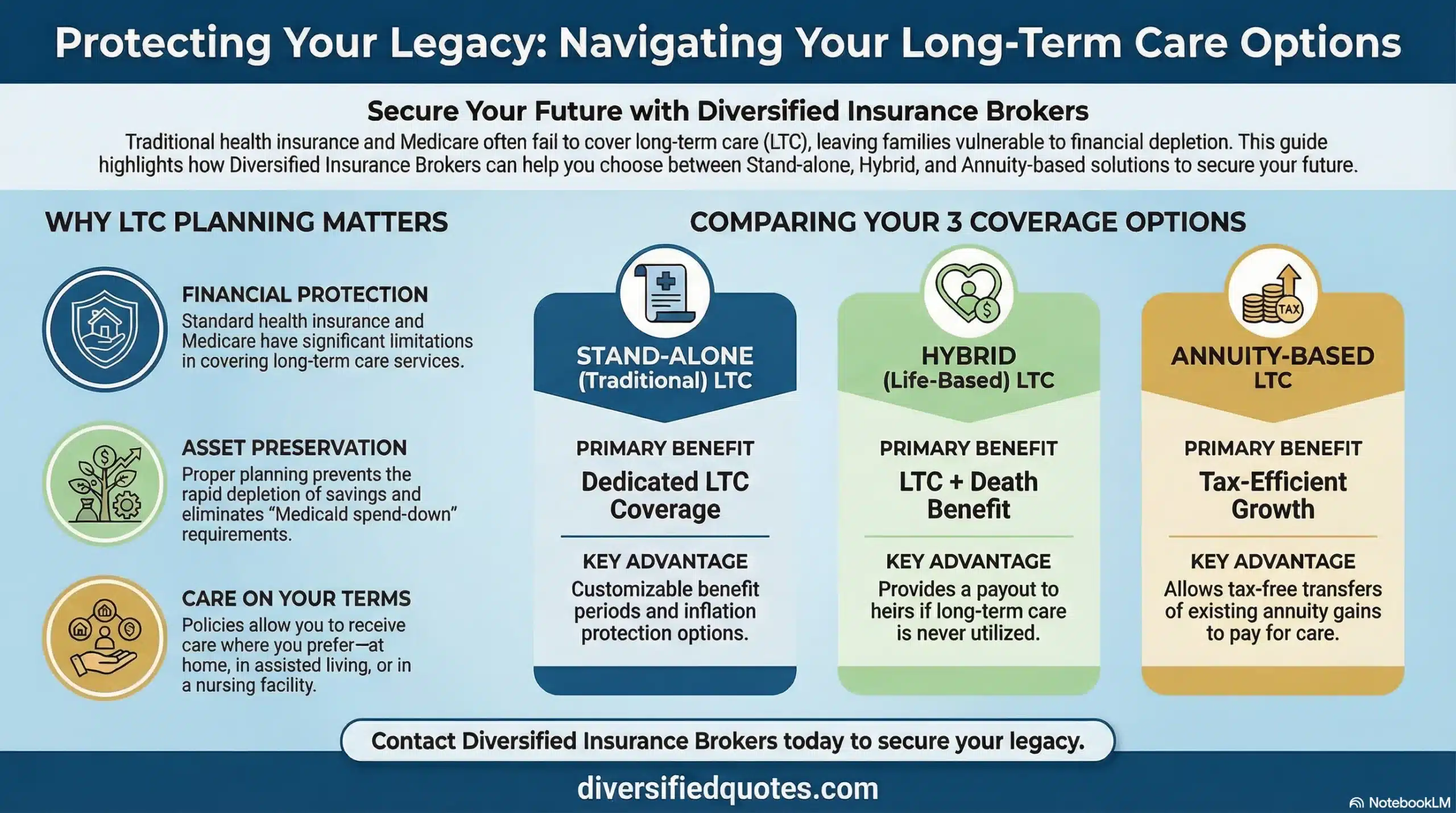
We help families compare LTC insurance, hybrid LTC strategies, and annuity-based care funding options that can help cover adult day care and other long-term care services. Independent comparison, no obligation.
Two Types of Adult Day Care — Social vs. Health Care Models
Adult day care is not a single uniform service. It exists along a spectrum of intensity and medical oversight, and understanding the distinction between the two primary models is critical for matching the right program to an individual’s actual care needs and maximizing LTC insurance coverage eligibility. The two primary models — Social Adult Day Care and Adult Day Health Care (ADHC) — share some features but differ significantly in staffing, medical oversight, services available, and cost.
| Feature | Social Adult Day Care | Adult Day Health Care (ADHC) |
|---|---|---|
| Primary Focus | Socialization, supervision, activities | Medical monitoring + social programming |
| Staffing | Activity staff, direct care aides | Nurses, social workers, therapists, aides |
| Meals / Nutrition | Yes — typically included | Yes — often medically tailored |
| Health Monitoring | Basic observation; may check vitals | Regular nursing assessment; condition management |
| Medication Management | Reminders only in most programs | Administration by licensed nursing staff |
| Therapy Services | Not typically included | Physical, occupational, speech therapy available |
| Dementia Care | May offer, depends on program | Specialized memory programs more common |
| Transportation | Sometimes included; varies by center | More commonly included; door-to-door |
| Cost Range (Daily) | $60–$100/day | $90–$160/day depending on services |
| Best For | Mild supervision needs; socially isolated seniors | Chronic conditions; dementia; medication management needs |
| LTC Insurance Coverage | Typically covered once triggers met | Typically covered; may qualify more easily due to medical need |
Most participants who qualify for long-term care insurance benefits will be evaluated based on their ADL or cognitive impairment status, not on which type of adult day care program they attend. However, Adult Day Health Care programs tend to generate better documentation of care needs through nursing assessments and care plans, which can support LTC insurance claims more effectively. Families should discuss which program level is appropriate with both the care coordinator at the center and their LTC insurance claims representative before enrollment, particularly if the purpose of enrollment is partly to initiate or support an LTC insurance claim. Our resource on LTC care coordination benefits covers how care coordination support within LTC policies can help families navigate these decisions.
Adult Day Care vs. Other Senior Care Settings — 2026 Cost Comparison
The financial case for adult day care in a long-term care plan is most clearly made by comparing it directly to the alternatives. With a national median of around $100 per day, adult day care is significantly more affordable than the daily equivalent for other senior services. Comparatively, homemaker services often average close to $200 per day, and in-home health aides can cost even more for the same hours. The table below captures the cost comparison across the full spectrum of senior care settings.
| Care Setting | National Median Daily | National Median Monthly | Annual Cost (Estimate) |
|---|---|---|---|
| Adult Day Care | ~$100 | ~$2,167 | ~$26,000 |
| Homemaker / Companion Services | ~$180–$200 | ~$4,000–$5,000 | ~$48,000–$60,000 |
| Home Health Aide (40 hrs/week) | ~$180 | ~$5,440 | ~$65,000 |
| Assisted Living Facility | ~$200–$210 | ~$6,000–$6,300 | ~$70,000–$74,400 |
| Skilled Nursing Facility (Semi-Private) | ~$300+ | ~$9,000+ | ~$108,000+ |
Sources: Genworth/CareScout 2024-2025 Cost of Care Survey; U.S. News 2026 data. Adult day care costs assume full-time attendance (standard weekdays, ~21.7 days/month). Partial-week attendance produces proportionally lower monthly costs. Costs vary significantly by geographic region — urban markets and coastal states exceed national medians. A hybrid care plan using adult day care on weekdays plus periodic in-home aide support on evenings and weekends typically costs significantly less than full-time in-home care while providing comparable supervision hours.
Services Typically Provided at Adult Day Care Centers
The service portfolio at adult day care centers determines both the care value for the participant and the breadth of LTC insurance reimbursement eligibility. Understanding what is typically included — and what varies by program — helps families evaluate centers accurately and compare them against each other on dimensions that matter for their specific situation.
Social programming is the universal foundation of every adult day care center. Structured activities — crafts, music therapy, games, reminiscence groups, exercise classes, and educational programming — occupy the majority of the day and serve both recreational and therapeutic purposes. Social engagement at this level has documented benefits for cognitive health: regular structured social interaction is associated with slower cognitive decline in older adults, reduced rates of depression, and maintenance of daily living skills. For seniors who have been increasingly isolated since retirement, a spouse’s death, or a reduction in mobility, the social environment of adult day care can be among the most impactful changes in their daily experience.
Nutritional support is a core component. Most programs serve at least one full meal (typically lunch) and one or two snacks during the day. Meals are often designed to accommodate dietary restrictions — diabetic-friendly, cardiac-appropriate, low-sodium, and texture-modified diets for participants with swallowing difficulties. Staff observe appetite, fluid intake, and eating ability, which can provide valuable early warning of health changes that families and primary physicians may not readily detect at home. For seniors with appetite concerns, dehydration risk, or dietary management needs tied to chronic conditions, consistent mealtime supervision is a meaningful health benefit beyond the social component.
Transportation is a particularly valuable feature for families managing logistics alongside caregiving. Many programs offer door-to-door transportation — a driver or van picks the participant up at home in the morning and returns them in the afternoon. For working caregivers who cannot personally transport a parent or spouse to and from a center, transportation availability is often the deciding factor in whether adult day care is a viable option. Programs without transportation typically require family or third-party transportation coordination, which can be a meaningful logistical burden.
Personal care assistance varies widely by program type and licensing. Social adult day care programs typically provide supervision and assistance reminders but may not provide hands-on personal care. Adult Day Health Care programs can offer assistance with transfers, toileting, grooming, and hygiene under the supervision of licensed staff. For participants who need consistent personal care support during daytime hours, matching the program’s service capacity to the individual’s actual needs is critical — a program that cannot provide the assistance the participant requires will not function as a viable care environment regardless of its other qualities.
Who Benefits Most From Adult Day Care
Adult day care is not appropriate for every older adult, and it is not always the right fit at every stage of a care journey. Understanding who benefits most helps families have more productive conversations about when to introduce it and how to evaluate readiness.
Seniors with mild to moderate cognitive impairment — including early to mid-stage dementia or Alzheimer’s disease — are among the highest-value participants. The structured environment, predictable routine, trained staff, and secure facility design address exactly the risks that make home-alone living unsafe for this population. Memory-focused programs within adult day care centers maintain cognitive engagement through targeted activities, provide the supervision needed to prevent wandering or medication errors, and create a daily structure that reduces the anxiety and behavioral agitation that can accompany unstructured time for individuals with dementia.
Seniors with physical limitations who are still ambulatory or mobile with assistance — but who cannot safely manage a full day at home alone — benefit from the supervision, mobility assistance, and fall prevention awareness that trained staff provide. Participants who have experienced recent falls, balance changes, or reduced confidence in their mobility are particularly well-served by an environment designed around their physical realities with appropriate staffing ratios.
Seniors experiencing social isolation represent one of the largest underserved populations. Social isolation is a documented risk factor for accelerated cognitive decline, depression, and physical health deterioration. For a senior who has experienced a spouse’s death, stopped driving, or found that mobility changes have reduced their social circle, adult day care provides structured human connection that family caregivers — even with the best intentions — often cannot provide at the frequency and quality that a program can. The social dimension is not a soft benefit — it is a documented health intervention.
For family caregivers who work full-time, care for multiple dependents, or have health needs of their own, adult day care provides the daytime care structure that makes sustained home caregiving sustainable. The Family Caregiver Alliance estimates that approximately 44 million Americans provide unpaid care to a family member or loved one — a role that is associated with elevated rates of physical illness, depression, and financial strain. Adult day care that is reliable, professionally staffed, and affordable relative to alternatives provides these caregivers with the daily respite that makes continued caregiving sustainable for months or years longer than it would otherwise be.
Adult Day Care for Dementia and Alzheimer’s — Specialized Memory Programs
Memory-focused adult day care programs are among the most clinically validated interventions in early and mid-stage dementia care. These programs are specifically designed around the cognitive and behavioral profile of participants with Alzheimer’s or other dementias — with structured programming that maintains daily routine, staff trained in dementia communication and de-escalation techniques, secure facilities that prevent unsafe wandering, and activities calibrated to the individual’s cognitive capacity rather than requiring abilities they may have lost.
Research consistently shows that structured daytime programming in dementia reduces behavioral agitation, improves mood, and delays functional decline when introduced early in the disease course. The Alzheimer’s Association has specifically identified adult day care as one of the key community-based supports that allows individuals with dementia to remain at home longer while preserving caregiver capacity. For a family managing a loved one’s dementia at home, a memory-focused adult day care program typically provides three distinct benefits simultaneously: safe daytime supervision, cognitive stimulation, and caregiver respite — all for a daily rate that is approximately one-tenth of what memory care residential placement would cost.
The timing of introduction matters. Families who wait until dementia has advanced to the point where full-time residential care is imminent often miss the window where adult day care provides the most stabilizing benefit. Earlier introduction — when the participant can still form relationships with staff, adapt to the routine, and actively engage with programming — produces better outcomes and more effective caregiver relief than late-stage introduction after behavioral symptoms have become severe.
How LTC Insurance Covers Adult Day Care — Triggers, Documentation, and Claims
Most modern long-term care insurance policies include adult day care as a covered benefit, but coverage requires the participant to meet the policy’s benefit eligibility triggers. The two standard trigger categories are functional impairment — needing substantial assistance with at least two of six defined activities of daily living — and cognitive impairment — a diagnosis of a severe cognitive condition requiring substantial supervision to protect against health and safety threats. The six activities of daily living typically assessed are bathing, dressing, eating, transferring (moving from bed to chair), continence, and toileting.
For LTC insurance purposes, adult day care facilities typically must hold appropriate state licensing, operate under a documented care plan for each participant, and provide services that align with the participant’s assessed needs. The insurer typically requires documentation of the care need — often through a physician’s statement or functional assessment — before approving claim payments. Adult Day Health Care programs, which involve nursing assessment and documented medical oversight, typically generate the most robust documentation for LTC insurance claims and may have a somewhat smoother path to claim approval than social-only programs when it comes to demonstrating that the participant meets benefit trigger criteria.
For families evaluating whether adult day care costs will be reimbursed under an existing LTC policy, the most productive step is reviewing the policy’s elimination period (the waiting period before benefits begin), the daily benefit amount available, and whether the policy is structured as a reimbursement model (reimburses actual costs up to the daily benefit) or an indemnity model (pays the daily benefit regardless of actual cost). Our resource on tax benefits of long-term care insurance covers the tax treatment of LTC policy benefits as well. For families evaluating new LTC coverage that specifically includes adult day care, the are long-term care benefits taxable resource covers the full tax picture for benefit recipients.
Medicare, Medicaid, and VA Coverage of Adult Day Care
Understanding the government coverage landscape for adult day care prevents one of the most common planning mistakes: assuming that a government program will pay for adult day care when the participant’s need level doesn’t meet eligibility criteria or when the coverage is more limited than expected.
Medicare — the federal health insurance program for adults 65 and older — generally does not cover adult day care costs. Medicare’s coverage is focused on acute medical care: physician services, hospital stays, and short-term skilled nursing following a qualifying hospitalization. Custodial care and daytime supervision — the primary functions of adult day care — fall outside Medicare’s scope. Some Medicare Advantage plans (Part C) have begun covering limited non-medical services under expanded supplemental benefits, and a small number of plans may include some adult day care coverage as a supplemental benefit. Reviewing your specific plan’s Evidence of Coverage document is the only reliable way to determine whether your Medicare Advantage plan includes any adult day care benefit. For current Medicare supplement comparison, our Medicare rates resource covers the supplement landscape.
Medicaid does cover adult day care for eligible low-income seniors through Home and Community-Based Services (HCBS) waiver programs. These state-administered programs — which vary significantly in eligibility criteria, covered services, and waitlist availability — allow Medicaid to fund adult day care as an alternative to more costly institutional care. Medicaid HCBS waivers are need-tested and income/asset-tested, meaning families with significant retirement assets typically will not qualify unless they are in spend-down status. For planning purposes, Medicaid should generally be viewed as the last resort for adult day care funding — private LTC insurance and out-of-pocket resources are exhausted first. Our overview of the long-term care insurance landscape covers how LTC insurance serves as the primary alternative to Medicaid spend-down planning.
The Department of Veterans Affairs (VA) offers an Adult Day Health Care program for eligible veterans through the VA’s Community Living Center program and HCBS programs. VA-covered adult day care is available to veterans who require assistance with activities of daily living, have a cognitive impairment, or are at risk of institutional care placement. Eligible veterans receive these services at little or no cost through VA-approved community programs or VA-operated facilities. Veterans and their families should contact their local VA medical center’s Social Work department to determine eligibility and available programs in their area.
How to Choose the Right Adult Day Care Center — Evaluation Criteria
Selecting an adult day care center is a multi-dimensional decision that requires evaluating program quality, staff competency, facility safety, care philosophy, and logistical compatibility with the family’s specific situation. The following framework covers the essential evaluation criteria for any center visit or inquiry.
Staff-to-participant ratio is one of the most directly observable indicators of care quality. Lower ratios — more staff per participant — mean each participant receives more individual attention, supervision is more consistent, and staff can respond more quickly to behavioral changes, medical concerns, or assistance needs. State licensing typically establishes minimum staff ratios, but many higher-quality programs exceed those minimums. Ask directly about the ratio during different times of day, including transition periods like arrival, departure, and meals when supervision demand is highest.
Dementia training and staff certification should be evaluated specifically for any participant with cognitive impairment. Staff who work with dementia participants should have specific training in dementia communication, behavioral de-escalation, wandering prevention, and person-centered care. Programs that serve a significant memory-impaired population without this specialized training create safety and quality-of-care risks that are not always visible during a brief center visit. Ask what specific training all direct care staff receive and whether any staff hold dementia-specific certifications.
Program structure and activity variety indicate the sophistication of the center’s approach to participant engagement. Visit during program hours — not just administrative tours — and observe how participants are engaged. Are activities appropriately matched to functional levels? Do participants appear to be genuinely engaged or simply present? Is the environment calm and organized, or does it feel chaotic and understaffed? The quality of the daily experience cannot be assessed from a brochure or a website — direct observation is necessary.
Safety features are particularly important for cognitively impaired participants. Secure entry and exit systems that prevent wandering without staff supervision, appropriate flooring and handrails for fall prevention, and clear emergency protocols should all be observable or documented. Ask specifically about fall incident rates, emergency procedures, and how the center communicates health changes or incidents to families.
Coordinating Adult Day Care With a Complete LTC Financial Strategy
Adult day care is most valuable when positioned correctly within a complete long-term care financial strategy rather than used reactively as an emergency response when other options have been exhausted. The optimal sequence for most families is to identify adult day care as the appropriate care level before it becomes urgent, determine whether existing LTC insurance coverage includes it (or whether a new policy should be purchased to cover it), and integrate the adult day care cost into the household’s retirement income plan before care begins. Waiting until a care crisis to begin this planning — when health-based LTC insurance underwriting may no longer be available and when costs must be funded immediately from retirement assets — consistently produces worse financial outcomes than proactive planning.
For families with existing retirement assets who are self-funding care, adult day care’s cost advantage over other settings allows retirement assets to last significantly longer. The difference between funding adult day care at $26,000/year versus home health aide care at $65,000/year is $39,000 per year — which, over a three-year care period, preserves an additional $117,000 in retirement assets that remain available for the healthy spouse’s ongoing needs or for potential future care escalation. This arithmetic makes a compelling case for deliberate use of lower-cost care levels when they are clinically appropriate rather than defaulting to more expensive settings. For couples specifically, our resource on long-term care insurance with shared spousal benefits covers how LTC coverage for both spouses can be structured to maximize benefit flexibility as care needs evolve. For individuals exploring hybrid insurance products that combine LTC benefits with a financial asset, our resource on fixed annuity with long-term care benefits covers the asset-based alternative to traditional LTC insurance. For partnership-qualified LTC policies that provide Medicaid asset protection in addition to insurance benefits, our resource on partnership-qualified long-term care insurance covers that specialized coverage category.
Related Long-Term Care Education
What Is a Skilled Nursing Facility?
Activities of Daily Living
Shared Spousal LTC Benefits
Partnership-Qualified LTC Insurance
Tax Benefits of LTC Insurance
See If Your LTC Policy Covers Adult Day Care
Many long-term care policies reimburse adult day care once ADL or cognitive triggers are met. We help you review your coverage and explore planning options — independent, no obligation.
Talk With an Advisor Today
Choose how you’d like to connect—call or message us, then book a time that works for you.
Schedule here:
calendly.com/jason-dibcompanies/diversified-quotes
Licensed in all 50 states • Fiduciary, family-owned since 1980
FAQs: What Is Adult Day Care?
What is adult day care and how does it work?
Adult day care is a structured, community-based daytime program providing supervision, social engagement, meals, personal care support, and health monitoring for older adults who cannot safely remain home alone during the day. Participants typically attend weekdays during business hours — arriving in the morning and returning home in the afternoon — while family caregivers work or manage other responsibilities. Most centers provide meals, activities, transportation, and varying levels of personal care or medical oversight depending on whether the program is a social model (basic supervision and activities) or a health care model (adds nursing oversight, therapy services, and medication management).
How much does adult day care cost in 2026?
The national median cost of adult day care is approximately $100 per day, or $2,167 per month for full-time attendance on standard weekdays, according to Genworth’s CareScout Cost of Care Survey. Annually, this represents approximately $26,000 — making adult day care the most affordable senior care option Genworth tracks. For comparison, a home health aide (40 hours/week) costs approximately $5,440/month nationally, assisted living averages $6,000–$6,300/month, and skilled nursing facilities average over $9,000/month. Costs vary significantly by geographic region and program type, with Adult Day Health Care programs (which include nursing oversight and therapy) typically costing $20–$60 more per day than social-only programs.
Does long-term care insurance pay for adult day care?
Most modern long-term care insurance policies do cover adult day care once the policy’s benefit eligibility triggers are met. These triggers typically require that the participant needs substantial assistance with at least two of six activities of daily living (bathing, dressing, eating, transferring, continence, toileting), or that they have a qualifying cognitive impairment requiring supervision. The adult day care facility must typically hold appropriate state licensing and operate under a documented care plan. Families should review their specific policy’s benefit trigger language, elimination period, and facility requirements before assuming coverage — provisions vary by carrier and policy generation.
What is the difference between adult day care and Adult Day Health Care?
Social adult day care focuses on supervision, activities, meals, and social engagement with basic aide support. Adult Day Health Care (ADHC) adds a medical layer: licensed nursing staff, regular health assessments, medication administration, chronic condition monitoring, and often physical, occupational, or speech therapy services. ADHC programs are more expensive ($90–$160/day vs. $60–$100/day for social programs), more closely regulated, and more appropriate for participants with significant medical needs or dementia requiring professional clinical oversight during the day. Both types are typically covered by LTC insurance once benefit triggers are met, but ADHC programs often generate better documentation for LTC insurance claims through formal nursing assessments and care plans.
Is adult day care covered by Medicare?
Traditional Medicare (Parts A and B) generally does not cover adult day care. Medicare covers acute medical care — physician services, hospital stays, and short-term skilled nursing after qualifying hospitalizations — but not custodial supervision or daytime adult programming. Some Medicare Advantage (Part C) plans have begun including limited non-medical supplemental benefits that may include some adult day care coverage; review your specific plan’s Evidence of Coverage to determine whether any adult day care benefit is included. Medicaid does cover adult day care for eligible low-income seniors through Home and Community-Based Services (HCBS) waiver programs, which vary by state. Veterans may be eligible for VA-funded Adult Day Health Care through the Department of Veterans Affairs.
Is adult day care good for dementia patients?
Yes — memory-focused adult day care programs are among the most clinically validated community-based interventions for early to mid-stage dementia and Alzheimer’s. Structured daily programming with trained dementia staff, secure facility design, consistent routine, and cognitive engagement activities reduce behavioral agitation, improve mood, and delay functional decline when introduced early in the disease course. For family caregivers managing a loved one’s dementia at home, a memory-focused program simultaneously provides safe supervision, cognitive stimulation, and caregiver respite — all at a daily cost approximately one-tenth of memory care residential placement. Early introduction, before behavioral symptoms have become severe, consistently produces better outcomes than late-stage introduction.
Can adult day care delay the need for assisted living or nursing home placement?
Yes — this is one of adult day care’s most significant practical benefits. By providing structured daytime supervision, social engagement, nutritional support, health monitoring, and caregiver respite within a community-based setting, adult day care addresses the primary drivers of premature residential care placement. Families who can sustain home caregiving longer with adult day care support frequently delay assisted living or nursing home transitions by months or years, preserving both the senior’s quality of life (remaining in a familiar home environment) and the household’s retirement assets (at $26,000/year for adult day care vs. $70,000–$108,000/year for residential options). This cost deferral is financially significant over multi-year care timelines.
How do I choose the right adult day care center?
Key evaluation criteria include: staff-to-participant ratio (lower ratios mean more individual attention); staff training and dementia certification for cognitively impaired participants; program structure and activity quality — visit during program hours and observe participant engagement; safety features including secure entry/exit for programs serving dementia participants; meal quality and dietary accommodation for medical restrictions; transportation availability; state licensing and regulatory compliance history; communication protocols for health changes or incidents; and the program’s experience with participants at the specific care level of your family member. Never rely solely on a brochure or website tour — direct observation during program hours is essential for any serious evaluation.
About the Author:
Jason Stolz, CLTC, CRPC, DIA, CAA and Chief Underwriter at Diversified Insurance Brokers (NPN 20471358), is a senior insurance and retirement professional with more than 25 years of real-world experience helping individuals, families, and business owners protect their income, assets, and long-term financial stability. As a long-time partner of the nationally licensed independent agency Diversified Insurance Brokers, Jason provides trusted guidance across multiple specialties—including fixed and indexed annuities, long-term care planning, personal and business disability insurance, life insurance solutions, Group Health, Travel Medical and Evacuation Insurance, and short-term health coverage. Diversified Insurance Brokers maintains active contracts with over 100 highly rated insurance carriers, ensuring clients have access to a broad and competitive marketplace.
His practical, education-first approach has earned recognition in publications such as VoyageATL, and contributions from his agency featured in Kiplinger and GoBankingRates— highlighting his commitment to financial clarity and client-focused planning. Drawing on deep product knowledge and years of hands-on field experience, Jason helps clients evaluate carriers, compare strategies, and build retirement and protection plans that are both secure and cost-efficient. Visitors who want to explore current annuity rates and compare options across multiple insurers can also use this annuity quote and comparison tool.
Explore More Long Term Care Insurance Options: Browse our complete guide to Tax, Medicare & Special Situations — covering tax advantages, Medicare vs LTC, seniors, couples, diabetics & age-specific coverage from top carriers.
Last Reviewed: June 2, 2026 |
Reviewed by: Jason Stolz, CLTC, CRPC, DIA, CAA
Chief Underwriter, Diversified Insurance Brokers, Inc. | NPN: 20471358 | Diversified Insurance Brokers, Inc. — Licensed in all 50 states
Fact Checked by: Tonia Pettitt, CMIP©
Medicare Specialist, Diversified Insurance Brokers, Inc. | NPN: 14374308 | Diversified Insurance Brokers, Inc. — Licensed in all 50 states
Did you find this content helpful? Leave us a Google review — it helps others find trustworthy guidance too.
Editorial Standards: Diversified Insurance Brokers maintains rigorous editorial standards to ensure accuracy, clarity, and independence in all content. Learn more about our editorial standards and commitment to transparency.
