
Long Term Care Insurance After Age 80

Jason Stolz CLTC, CRPC
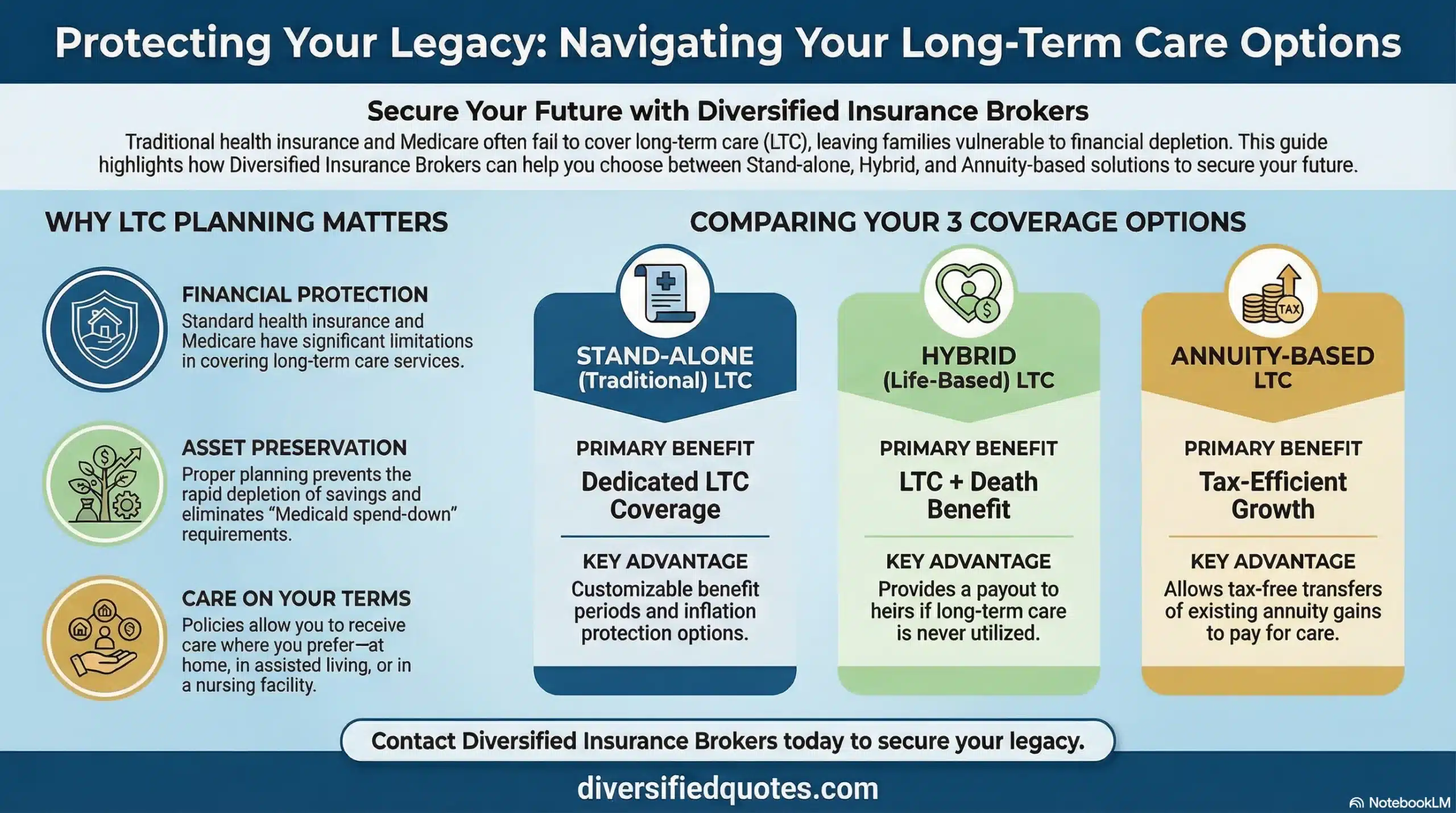
Long term care insurance after age 80 is one of the most misunderstood areas in retirement planning. Many families assume coverage is no longer available, prohibitively expensive, or medically impossible to qualify for. While traditional standalone long term care policies often become difficult to secure at advanced ages, there are still viable strategies — especially when repositioning existing assets. In particular, certain annuity-based long term care designs allow approval into the mid-to-late 80s, creating opportunities for individuals who thought the window had closed entirely. For retirees holding large nonqualified deferred annuities, idle cash, or conservative fixed accounts earmarked “just in case,” restructuring those dollars into a long-term-care-focused solution can dramatically change both tax efficiency and leverage for care expenses.
One powerful strategy involves repositioning an existing non qualified annuity into a Pension Protection Act (PPA) compliant annuity with long term care benefits. Under federal tax law, gains transferred through a properly structured 1035 exchange can later be withdrawn income-tax-free when used for qualified long term care expenses. That means dollars that would otherwise trigger ordinary income tax upon withdrawal may instead be used more efficiently for care. For clients in their 80s who have accumulated deferred annuity gains over decades and never turned on income, this creates a practical way to repurpose assets without triggering immediate taxation. Instead of liquidating and paying taxes in one year, the funds remain inside a care-focused chassis that multiplies available benefits for eligible care events.
Approval standards vary, but certain annuity-based long term care solutions allow simplified underwriting, sometimes requiring applicants to answer only a handful of medical eligibility questions. Coverage amounts may extend into seven figures depending on age and structure, and in some cases a spouse can be added to share benefits. For individuals age 80 to 87 who are still functionally independent and not currently receiving long term care services, this can be a meaningful planning opportunity. While benefit multipliers and compensation schedules vary by age band, the key takeaway is that coverage DOES NOT automatically disappear at 80. The structure simply shifts from traditional reimbursement policies to asset-based strategies that emphasize repositioning existing dollars rather than paying large new annual premiums.
For retirees comparing liquidity strategies, it is important to view long term care planning in context of the broader retirement income picture. Many households are simultaneously evaluating annuity structures for income efficiency, considering whether to reposition IRA funds, or comparing annuity payout options versus systematic withdrawals. If you are also reviewing retirement distribution timing, see what to do with a deferred compensation plan after retirement and how structured income planning integrates with long term care funding decisions.
The tax angle is often the deciding factor. Suppose a retiree holds a deferred annuity purchased 20 years ago with significant unrealized gain. If they surrender it outright to pay for care, gains are taxed first as ordinary income. That could increase provisional income, potentially impacting Social Security taxation and Medicare premium brackets. By contrast, repositioning that annuity into a compliant long term care annuity allows gains to remain sheltered and, if used for qualified care expenses, distributed income-tax-free. This transforms what would have been a tax liability into a leveraged care pool. Even for clients who never need care, many structures provide residual value or death benefit components that pass to beneficiaries.
Age does influence design. Between 80 and 85, benefit multipliers and maximum issue ages remain more favorable. From 86 to 87, some structures reduce benefit leverage but solutions are still available for individuals in good functional health. The underwriting emphasis is less about chronic diagnoses and more about current ability to perform activities of daily living independently. That is why proactive planning matters. Waiting until care is already required will typically disqualify eligibility.
Long term care insurance after age 80 also intersects with estate planning. Families often ask whether they should self-insure, rely on children, or reposition assets. If an annuity is already part of the estate, restructuring it may reduce future tax drag while earmarking funds specifically for care. For those reviewing how annuities are taxed at death, understanding concepts like the annuity exclusion ratio and beneficiary income treatment can clarify the tradeoffs between leaving taxable gain to heirs versus using those dollars efficiently for care.
Some retirees also compare this approach to laddering income products. If you are evaluating multiple annuities across different time horizons, review laddering annuities to understand how segmenting contracts can preserve liquidity while still positioning a portion specifically for long term care leverage. Strategic segmentation allows one bucket for predictable income, one for liquidity, and one dedicated to care amplification.
It is equally important to compare long term care funding to broader retirement allocation questions, such as annuity versus 401(k) retirement strategies. Many retirees hold qualified accounts and nonqualified annuities simultaneously. Understanding which asset class to reposition first can materially affect after-tax outcomes. Nonqualified annuities often provide the cleanest repositioning path for PPA-compliant long term care conversions because cost basis and gain can transfer without triggering current taxation.
For individuals considering IRA repositioning strategies before funding long term care structures, review how to transfer an IRA to an annuity so you understand the distinction between qualified and nonqualified money. Qualified funds follow different tax rules and may require distribution planning before repositioning into certain care-focused designs.
Ultimately, long term care insurance after age 80 is not about finding a traditional annual premium policy. It is about intelligently repositioning existing conservative assets to create tax-advantaged leverage for potential care. The goal is to protect liquidity, reduce tax exposure on deferred gains, and create a defined care pool that can multiply available dollars if needed. For retirees who are otherwise healthy but concerned about future nursing home, assisted living, or in-home care expenses, this strategy can provide clarity and control during a life stage where options feel limited. As a final thought, many retirees plan to live overseas. Considering how you would use your Long Term Care policy benefits overseas is critical.
Related Long Term Care & Retirement Planning Topics
Explore additional strategies that integrate annuities, income distribution, and asset protection planning.
Talk With an Advisor Today
Choose how you’d like to connect—call or message us, then book a time that works for you.
Schedule here:
calendly.com/jason-dibcompanies/diversified-quotes
Licensed in all 50 states • Fiduciary, family-owned since 1980
FAQs: Long Term Care Insurance After Age 80
Is long term care insurance really available after age 80?
Yes, certain asset-based long term care annuity strategies are available into the mid-to-late 80s, depending on health and functional status. These are typically structured differently than traditional standalone LTC policies and often involve repositioning existing annuity assets rather than paying new annual premiums.
Can I use an existing annuity to fund long term care benefits?
In many cases, yes. A properly structured 1035 exchange into a long term care-focused annuity may allow gains to be used tax-efficiently for qualified care expenses. If you are reviewing retirement account repositioning, also see how to transfer an IRA to an annuity to understand the distinction between qualified and nonqualified funds.
What happens if I never need long term care?
Most asset-based LTC designs include a residual value or death benefit. If care is never needed, remaining contract value typically passes to beneficiaries. Understanding how annuities are taxed at death is important, especially when evaluating strategies like the annuity exclusion ratio and gain treatment.
Can qualified retirement funds be used for long term care planning?
Qualified funds such as IRAs can sometimes be repositioned, but tax treatment differs from nonqualified annuities. Distribution timing matters. If you are comparing retirement income strategies, reviewing annuity vs. 401(k) retirement planning can help clarify which assets to reposition first.
Is underwriting strict after age 80?
Underwriting typically focuses on current functional independence rather than past diagnoses alone. Applicants must generally not be receiving long term care services at the time of application. Approval guidelines vary by age band and overall health.
How does this fit into overall retirement income planning?
Long term care funding should be coordinated with income planning. Some retirees segment assets by purpose, which may include income annuities, liquidity reserves, and care-focused contracts. If you are reviewing income timing decisions, see what to do with a deferred compensation plan after retirement for broader distribution considerations.
About the Author:
Jason Stolz, CLTC, CRPC and Chief Underwriter at Diversified Insurance Brokers, is a senior insurance and retirement professional with more than two decades of real-world experience helping individuals, families, and business owners protect their income, assets, and long-term financial stability. As a long-time partner of the nationally licensed independent agency Diversified Insurance Brokers, Jason provides trusted guidance across multiple specialties—including fixed and indexed annuities, long-term care planning, personal and business disability insurance, life insurance solutions, and short-term health coverage. Diversified Insurance Brokers maintains active contracts with over 100 highly rated insurance carriers, ensuring clients have access to a broad and competitive marketplace.
His practical, education-first approach has earned recognition in publications such as VoyageATL, highlighting his commitment to financial clarity and client-focused planning. Drawing on deep product knowledge and years of hands-on field experience, Jason helps clients evaluate carriers, compare strategies, and build retirement and protection plans that are both secure and cost-efficient.
