
Personal Injury Lawsuit Loan – Fast & Risk-Free Funding

Jason Stolz CLTC, CRPC
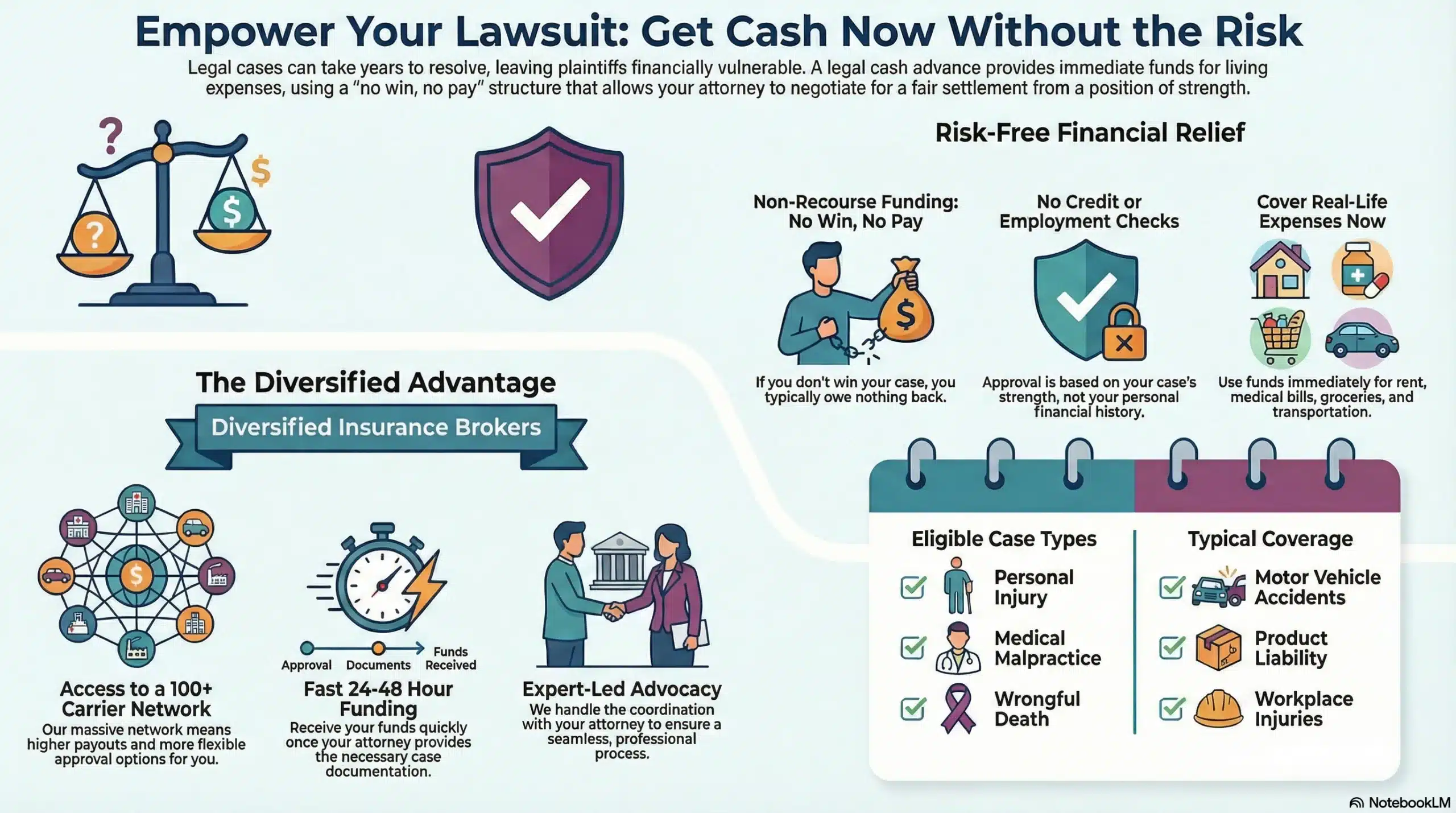
If you’ve been injured in an accident, medical bills, rent, and daily living expenses don’t wait for your settlement to arrive. A personal injury lawsuit loan can give you the financial breathing room you need while your attorney fights for the maximum compensation you deserve. This type of funding provides immediate access to a portion of your future settlement—typically without monthly payments, credit checks, or upfront fees.
Even when liability is clear and the facts support a strong case, the legal timeline often moves slowly. Your medical treatment may take months. Records and expert reviews can take longer than expected. Insurance adjusters may delay negotiations. Court calendars can create scheduling bottlenecks. Meanwhile, the accident you didn’t ask for may have disrupted your ability to work, increased your out-of-pocket costs, and forced tough decisions at exactly the wrong time.
That’s where pre-settlement funding comes in. Instead of settling early for less than your case is worth just to survive financially, a personal injury lawsuit loan can provide support during the waiting period—so you can keep up with your obligations, stabilize your household, and make legal decisions based on what’s fair rather than what’s fast.
Apply for a Personal Injury Lawsuit Loan
Fast approvals, high payouts, and no repayment if you lose your case.
What Is a Personal Injury Lawsuit Loan?
A personal injury lawsuit loan is generally not a traditional loan. It’s typically structured as a non-recourse cash advance against your pending settlement. “Non-recourse” means repayment usually depends on a successful case outcome. If your case does not settle or win, you generally do not repay the advance—assuming the agreement is truly non-recourse and clearly states that condition.
Because underwriting focuses on the case rather than your credit profile, most funding decisions are based on the strength and expected value of your claim. In many cases, there’s no need for a credit check, employment verification, or personal collateral. The case is the primary factor, not your income.
People sometimes use different terms for the same concept—lawsuit loan, legal funding, pre-settlement funding, settlement advance, or cash advance on a lawsuit. The wording may vary, but the key idea is consistent: you receive funds now based on expected recovery, and repayment typically comes from settlement proceeds later.
How It Works (Step by Step)
The process is designed to be straightforward and attorney-coordinated. A legitimate funding provider generally requires attorney verification and documentation because the case details—not credit—are what determine approval.
- Apply with basic information about your case and your attorney.
- Attorney coordination to confirm representation and provide case documents.
- Case review evaluates liability, damages, insurance coverage (when relevant), and timeline.
- Offer provided with clear disclosures so you can see terms before accepting.
- Funds issued after agreements are signed—often within 24–48 hours once documentation is complete.
It’s worth repeating: the fastest approvals happen when attorneys provide documentation promptly. If your attorney is responsive and the case file is organized, the timeline often moves much quicker.
Why People Use Pre-Settlement Funding After an Injury
Most plaintiffs don’t apply because they “want” a lawsuit loan. They apply because the injury created immediate real-life needs, and the legal system doesn’t resolve those needs quickly. Common reasons people seek a personal injury lawsuit loan include:
- Paying rent or mortgage during recovery
- Keeping utilities on and household bills current
- Covering transportation costs and car payments
- Handling medical bills, prescriptions, or out-of-pocket costs
- Replacing lost wages during time off work
- Supporting a family while an injury impacts earnings
- Avoiding eviction, repossession, and cascading late fees
The biggest strategic benefit is reducing the pressure to accept an early low settlement. Insurance companies know that time and financial stress can push people into fast decisions. Funding can remove that leverage and allow you and your attorney to pursue a resolution that reflects the real value of your injuries and losses.
Cases We Commonly Fund
Personal injury lawsuit loans are most common in civil cases where there is a realistic expectation of settlement or judgment and there are documented damages. Many case types can qualify, including:
- Auto, truck, and motorcycle accidents
- Slip and fall injuries
- Workplace accidents (depending on structure and jurisdiction)
- Medical malpractice claims
- Defective product injuries
Eligibility always depends on the specifics: liability, documented damages, insurance coverage/policy limits (when applicable), liens, and where the case is in the legal process. If you’re unsure whether your claim qualifies, that’s normal—most approvals start with attorney verification and documentation.
How Much Can You Get?
Funding amounts are typically based on what underwriters believe the case is likely to recover, along with the timeline and risk. Providers often fund only a portion of expected settlement because the settlement must also cover attorney fees, medical liens, case costs, and other obligations.
You may see broad estimates online, but the real answer depends on factors like:
- Liability clarity (how clear fault is)
- Documented damages (medical records, treatment plan, impairment)
- Available coverage (policy limits or collectible recovery)
- Case stage (earlier cases can be less predictable)
- Timeline (longer timelines often increase cost/risk)
- Liens that may reduce net proceeds
The best funding decisions are usually intentional, not maximum. The purpose is stability—covering essential needs so you can avoid panic decisions—without taking so much that it significantly reduces what you keep later.
What Your Attorney Usually Needs to Provide
Because underwriting is case-based, attorney participation is typically required. While requirements vary, common documentation includes:
- Signed authorization permitting review
- Accident or incident details and claim status
- Insurance carrier information and coverage details (when relevant)
- Medical records or treatment summaries
- Any demand package or settlement negotiations (if available)
- Known liens or obligations that could affect net recovery
Attorney responsiveness is one of the biggest predictors of how fast funding happens. If documentation is provided quickly, many cases can move from request to funding in a short window.
Why Work With Us
We have access to a large pool of legal funding capital, which helps us compare offers and pursue strong funding terms for qualifying cases. Our process is designed to be quick and attorney-friendly—meaning we coordinate directly with your lawyer, reduce paperwork back-and-forth, and move your request through review without unnecessary delays.
When you’re searching for funding during a personal injury case, speed matters—but so does structure. A rushed deal with unclear costs can create problems later. We focus on clear communication, attorney coordination, and helping you understand what you’re agreeing to before you accept anything.
Strengthen Your Legal Position
Insurance companies often use delay tactics to pressure injured victims into accepting low settlements. A lawsuit loan can give you the breathing room to cover rent, medical bills, and daily expenses while your attorney fights for maximum compensation. In the meantime, some people also choose to protect their household finances with additional coverage—like short-term health insurance for unexpected care, high-risk disability insurance if your injury affects your ability to work, accidental death coverage to safeguard your family, and life insurance quotes for long-term protection.
Funding doesn’t replace the legal process—it supports you during it. When financial panic is reduced, your attorney has more flexibility to negotiate, document, and pursue a fair outcome rather than the first offer on the table.
Get Your Funds Quickly
Apply today for a personal injury lawsuit loan and get funded as fast as the same or next business day once attorney documentation is verified.
Related Pages
Explore related legal funding options and settlement-advance resources.
Talk With an Advisor Today
Choose how you’d like to connect—call or message us, then book a time that works for you.
Schedule here:
calendly.com/jason-dibcompanies/diversified-quotes
Licensed in all 50 states • Fiduciary, family-owned since 1980
Personal Injury Lawsuit Loan: Frequently Asked Questions
What is a personal injury lawsuit loan?
Which types of cases qualify?
How soon can I get funds?
Do I owe anything if I lose my case?
What documents or involvement does my attorney need?
What costs or fees apply?
Can this funding help me reject low settlement offers?
Am I eligible regardless of credit or employment status?
Is this funding available in all states?
About the Author:
Jason Stolz, CLTC, CRPC and Chief Underwriter at Diversified Insurance Brokers, is a senior insurance and retirement professional with more than two decades of real-world experience helping individuals, families, and business owners protect their income, assets, and long-term financial stability. As a long-time partner of the nationally licensed independent agency Diversified Insurance Brokers, Jason provides trusted guidance across multiple specialties—including fixed and indexed annuities, long-term care planning, personal and business disability insurance, life insurance solutions, and short-term health coverage. Diversified Insurance Brokers maintains active contracts with over 100 highly rated insurance carriers, ensuring clients have access to a broad and competitive marketplace.
His practical, education-first approach has earned recognition in publications such as VoyageATL, highlighting his commitment to financial clarity and client-focused planning. Drawing on deep product knowledge and years of hands-on field experience, Jason helps clients evaluate carriers, compare strategies, and build retirement and protection plans that are both secure and cost-efficient.
