
Assurity Life Critical Illness Insurance

Jason Stolz CLTC, CRPC

At Diversified Insurance Brokers, we help families protect their income and lifestyle when life takes an unexpected turn. Assurity Life’s Critical Illness Insurance is designed to pay a lump-sum cash benefit after a covered diagnosis, so you can focus on recovery instead of worrying about how to pay the bills.
Because we’re an independent, family-owned agency, we often look at Assurity’s critical illness protection alongside other tools that protect your household in different ways, such as disability income coverage for paycheck replacement and longer-range planning options like long-term care strategies that can help manage extended care costs later in life. If Assurity ends up being the right fit, we’ll show you how critical illness coverage can complement your existing health insurance, savings, and retirement plan—so you’re not forced to drain accounts or make rushed financial decisions during a crisis.
If you prefer to handle your own application online, you can do that here as well. The quote-and-apply experience is designed to be self-directed, so you can start, stop, and finish on your schedule—without needing a sales appointment—while still having access to our team if you want a second opinion on benefit levels or plan design.
Quote & Apply for Assurity Critical Illness Insurance Online
Prefer to apply on your own schedule? You can get a quote, customize your benefits, and submit your Assurity Critical Illness Insurance application completely online.
Start Your Quote & Application
Apply 100% online. If you get stuck, our advisors are available to help you compare options or review your quote.
What Is Assurity Critical Illness Insurance?
Assurity’s Critical Illness Insurance is a cash-benefit policy. If you’re diagnosed with a covered condition and the claim is approved, the policy pays a lump sum directly to you—not to doctors or hospitals. That distinction matters, because even with solid health coverage, the real financial stress often comes from what health insurance doesn’t address: deductibles, coinsurance, time away from work, travel to treatment, family logistics, and the everyday bills that still show up every month.
Covered conditions commonly include major events like heart attack and stroke, certain types of cancer, kidney failure, major organ transplant, paralysis, coma, and advanced Alzheimer’s disease. Exact definitions and covered conditions vary by state and policy form, but the goal stays consistent: create a financial cushion at the worst possible time, when your focus should be on treatment decisions—not on whether you can keep up with the mortgage or keep cash in the bank.
Because of that “cash first” design, Assurity critical illness can be a natural complement to your health insurance rather than a replacement for it. And if you’re also thinking about how a serious diagnosis can create longer-term care needs, it can coordinate well with long-term care planning, especially for families who want protection against both the initial shock of diagnosis and the possibility of ongoing care costs later.
How the Cash Benefit Can Be Used
The biggest advantage of critical illness insurance is flexibility. Once your benefit is paid, you can generally use it for whatever your household needs most in that moment. For many people, the first use is medical out-of-pocket costs—deductibles, copays, coinsurance, prescriptions, imaging, or specialty consults. But the benefit can be just as valuable for non-medical expenses that are almost always part of the story: covering time off work, keeping childcare steady, paying for travel to a treatment center, or simply protecting your emergency fund so you don’t have to sell investments or pull from retirement accounts during a stressful period.
For some households, the cash benefit also supports practical “quality-of-life” needs—help at home, transportation, or assistance with activities of daily living while you recover or adjust. And if you’re balancing multiple protection strategies and you care about how the pieces fit together financially, you may also find value in understanding the bigger planning picture we outline on our tax benefits of long-term care insurance page, especially when coordinating coverage and budgeting across different policy types.
Coverage Amounts and Underwriting
Assurity structures critical illness coverage so that many people can qualify without the “heavy lift” you see with certain other insurance lines. In many cases, moderate benefit levels can be approved through a simplified process that relies on health questions rather than lab work. As benefit amounts rise, underwriting typically becomes more detailed and may involve exams, labs, and medical records. The practical takeaway is that you can often start protection quickly at a benefit level that meaningfully helps with out-of-pocket exposure, then decide later whether additional layers make sense as your income, savings, and family responsibilities change.
If your goal is speed and simplicity, starting through the online Quote & Apply portal can be a clean way to get a plan in place. From there, some households choose to layer additional protection that covers different risks—like pairing a lump-sum critical illness benefit with paycheck replacement coverage through disability income insurance, or adding longer-horizon protection with return-of-premium long-term care planning for later-life care needs.
Key Features and Optional Riders
Assurity critical illness designs commonly include options intended to make coverage more useful over time rather than “one and done.” Depending on the version and state availability, some plans are structured to allow additional benefits if a second, unrelated covered condition occurs later (after policy rules are satisfied), which can matter because serious health events sometimes come in stages rather than as a single isolated episode.
Many designs are also intended to be dependable in the long run, with renewal provisions that keep coverage in force as long as premiums are paid, subject to the contract terms. In some cases, optional riders may include a return-of-premium feature (often structured to refund a portion of premiums paid, net of claims) or an increasing-benefit option that gradually raises the benefit amount to help the policy stay relevant as costs rise over time. Because these features affect both premiums and long-term value, it’s smart to compare a couple of plan designs side-by-side, similar to how we evaluate carriers and product structures in broader company reviews like Is Assurity a Good Insurance Company?.
Important Limitations and Exclusions
Like every critical illness policy, Assurity’s coverage comes with limitations you’ll want to understand before you apply. One of the most important concepts is how pre-existing conditions are treated. Many policies include a pre-existing condition provision that can limit benefits for a period of time if a covered diagnosis is tied to conditions present before the policy was issued. Another common provision is age-based benefit changes in later years; some designs reduce the benefit after a specified age, with the reduced benefit continuing afterward. The details vary, but the purpose is to keep premiums aligned with long-term risk.
Policies also commonly include exclusions for certain high-risk or illegal activities, self-inflicted injury, war, and similar categories. In addition, availability, riders, and definitions can vary by state, and the product may not be available in every jurisdiction.
It’s also worth saying plainly: critical illness insurance is not a substitute for comprehensive major medical coverage or Medicare. It’s a supplemental tool that pays cash to you. If you’re trying to separate what Medicare does and doesn’t cover—especially around longer-term care needs—these pages can help: Does Medicare Cover Long-Term Care? and Are Medicare and Long-Term Care Insurance the Same?.
Who Is a Good Fit for Assurity Critical Illness Insurance?
Assurity Critical Illness Insurance can be a strong fit for people who want a defined lump sum available if they’re diagnosed with a serious covered condition. It’s especially appealing to households that have health insurance but still worry about the real-world costs that follow a diagnosis—high deductibles, coinsurance, time away from work, travel, and the day-to-day expenses that don’t pause just because you’re dealing with treatment. It can also make sense for people in their working years who depend on income to support family and lifestyle, and for planners who want “options money” so they can make decisions based on care and recovery—not based on cash flow pressure.
If your primary concern is extended care costs rather than the immediate shock of a diagnosis, it may be smart to compare critical illness coverage with care-focused solutions. Some families like shared-benefit designs for couples, while others prefer hybrid approaches depending on assets and goals. A good starting point is shared-benefit long-term care, and if you’re exploring hybrid-style repositioning strategies, you can also review non-qualified long-term care annuity options as another way families sometimes structure protection.
How Assurity Critical Illness Compares to Other Protection
Critical illness insurance is one piece of a broader risk-management strategy, and it helps to understand how it differs from the other major categories people often compare. Health insurance is built to pay providers, but it still leaves you exposed to deductibles, coinsurance, and non-medical costs. Disability insurance is built to replace a portion of your income if you can’t work, but it generally doesn’t pay a lump sum at diagnosis. Long-term care insurance is designed to help pay for ongoing care when you can’t perform certain daily activities, but it’s usually not built to solve the immediate financial “shock” right after diagnosis.
That’s why many households decide on a layered plan. Some pair critical illness cash with income protection for stability, and some add longer-term care coverage later as budgets allow. At Diversified Insurance Brokers, our role is to help you decide where Assurity Critical Illness Insurance fits in your overall plan—so the pieces support each other instead of overlapping or leaving gaps.
Next Steps
If you’re ready to apply, the fastest path is usually to start with the online Quote & Apply system and build a benefit level that matches your risk tolerance and household budget. If you’d rather compare multiple approaches—critical illness alone, critical illness plus disability, or critical illness as a first step toward a broader long-term care strategy—we can help you line up the options and make the choice that feels most practical for your situation.
Related Pages
Additional resources to help you compare coverage options, evaluate carriers, and strengthen your overall financial protection strategy.
Financial Protection Essentials
Core strategies to protect retirement income, prepare for healthcare costs, and build long-term financial stability.
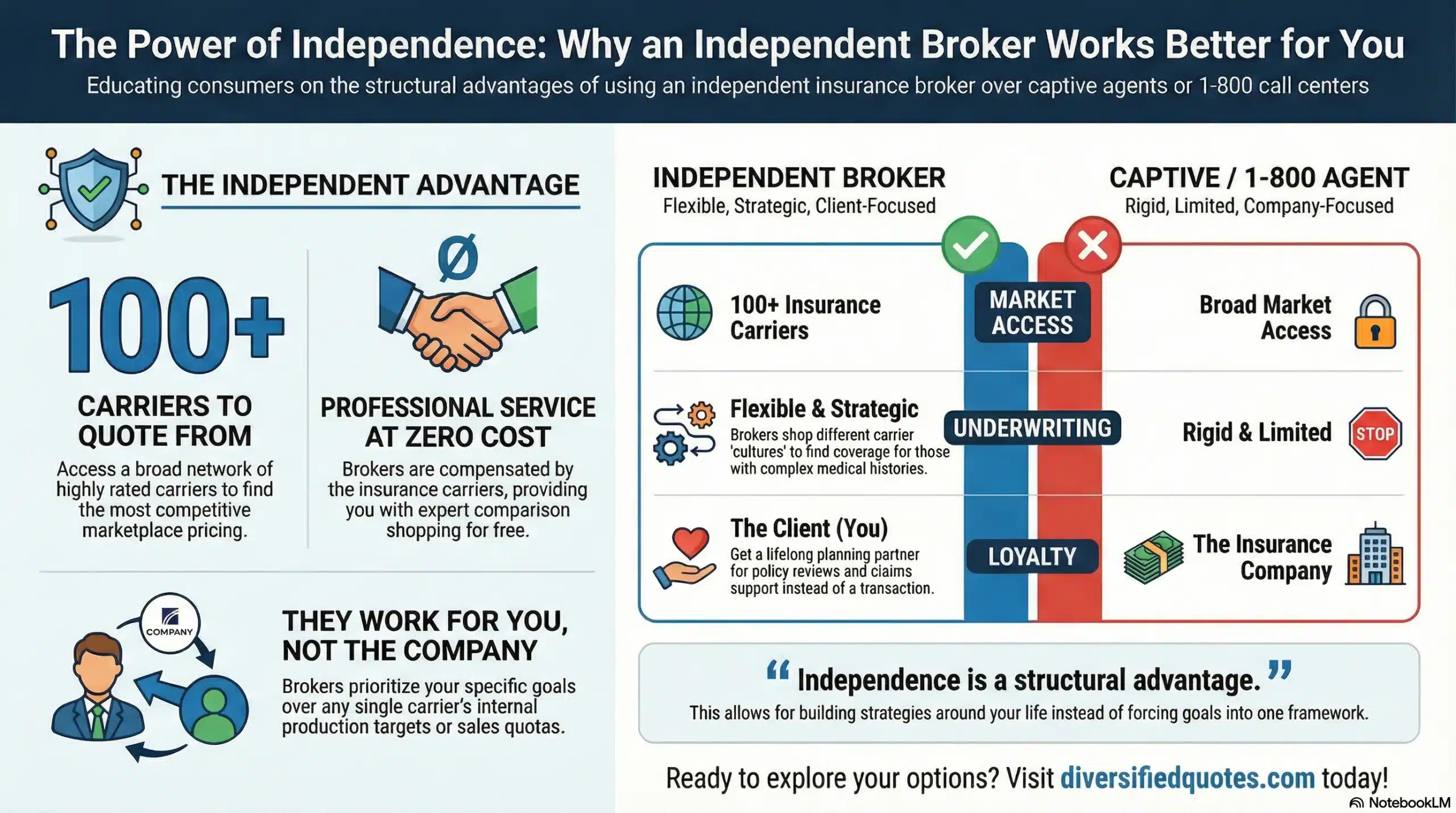
Talk With an Advisor Today
Choose how you’d like to connect—call or message us, then book a time that works for you.
Schedule here:
calendly.com/jason-dibcompanies/diversified-quotes
Licensed in all 50 states • Fiduciary, family-owned since 1980
FAQs: Critical Illness Insurance
What is critical illness insurance?
Critical illness insurance pays a lump-sum cash benefit if you are diagnosed with a covered
serious condition, such as certain cancers, heart attack, or stroke (as defined in the policy).
The money is paid directly to you, not to a doctor or hospital, and can be used however you
choose.
How does a critical illness policy work with my health insurance?
Critical illness coverage does not replace health insurance. Instead, it supplements
your existing plan by providing extra cash you can use for deductibles, co-pays, out-of-network
bills, travel for treatment, or everyday expenses while you focus on recovery.
What conditions are typically covered?
Coverage varies by company and policy, but commonly covered conditions include certain forms
of cancer, heart attack, stroke, major organ transplant, end-stage kidney disease, and
coronary artery bypass surgery. Always review the actual policy definitions and exclusions
before you apply.
How can I buy critical illness insurance online?
Many carriers, including Assurity, offer a secure online Quote & Apply platform. You enter
basic information, choose a benefit amount, answer medical and lifestyle questions, and sign
electronically. Some applicants receive a fast decision without needing a phone call or exam.
What can I use the lump-sum benefit for?
The benefit is flexible. People often use it to pay medical bills and deductibles, cover
mortgage or rent, replace income during treatment, pay for childcare or in-home help, or fund
travel to specialty treatment centers. There are no restrictions on how you use the benefit.
Will my health history affect approval and rates?
Yes. Underwriting typically considers your age, medical history, medications, build, and
lifestyle factors such as tobacco use. Certain past conditions or ongoing treatment can lead to
higher premiums or a decline. If you have a complex history, working with an experienced
advisor can help you find the most flexible carrier.
Is the benefit from critical illness insurance tax-free?
In many cases, benefits paid from individually owned critical illness policies are received
income-tax free, but tax treatment depends on your specific situation. You should consult a
qualified tax professional for guidance on your circumstances.
How much critical illness coverage do I need?
There is no one-size-fits-all answer. Many people choose an amount large enough to cover a year
or more of essential expenses, anticipated medical costs, and travel or home-care needs. An
advisor can help you estimate a realistic benefit based on your income, debts, and savings.
Can I have critical illness coverage and disability insurance at the same time?
Yes. Critical illness insurance and disability insurance are designed to work together. Disability
insurance can replace a portion of your monthly income if you cannot work, while critical illness
provides an immediate lump-sum payment at diagnosis. Many families use both to strengthen their
overall protection.
Can I talk to an advisor instead of buying online?
Absolutely. Online quote and apply tools are great for do-it-yourself buyers, but you can also
work with an advisor to compare carriers, coordinate critical illness coverage with life
insurance and disability, and make sure the plan fits your broader financial goals.
Note: Product details, covered conditions, and availability vary by state and carrier. Always
review the current policy, outline of coverage, and disclosures before applying.
About the Author:
Jason Stolz, CLTC, CRPC and Chief Underwriter at Diversified Insurance Brokers, is a senior insurance and retirement professional with more than two decades of real-world experience helping individuals, families, and business owners protect their income, assets, and long-term financial stability. As a long-time partner of the nationally licensed independent agency Diversified Insurance Brokers, Jason provides trusted guidance across multiple specialties—including fixed and indexed annuities, long-term care planning, personal and business disability insurance, life insurance solutions, and short-term health coverage. Diversified Insurance Brokers maintains active contracts with over 100 highly rated insurance carriers, ensuring clients have access to a broad and competitive marketplace.
His practical, education-first approach has earned recognition in publications such as VoyageATL, highlighting his commitment to financial clarity and client-focused planning. Drawing on deep product knowledge and years of hands-on field experience, Jason helps clients evaluate carriers, compare strategies, and build retirement and protection plans that are both secure and cost-efficient.
