
Best Long Term Care Insurance Rates

Jason Stolz CLTC, CRPC
Looking for the best long term care insurance rates? The “best rate” is rarely the lowest premium on a spreadsheet. The best long term care insurance rate is the one that buys real protection—a benefit structure that matches how you’d actually want care, includes the right inflation approach for your time horizon, and stays affordable so you can keep the policy in force long enough for it to matter.
At Diversified Insurance Brokers, we help you compare long term care coverage across multiple carriers and plan types so you can identify strong value instead of guessing. That means looking beyond the price tag and focusing on the parts that actually determine whether the policy works: benefit pool size, benefit triggers, inflation protection, elimination period design, and premium stability. This page breaks down what impacts long term care insurance rates, how to compare them the right way, and how to avoid “cheap” policies that become expensive mistakes later.
Compare the Best LTC Rates for Your Age and State
We’ll show which carriers price your profile best and what benefit design delivers the strongest value.
Why long term care insurance rates vary so much
Long term care insurance is not a one-size-fits-all product. Carriers price policies based on projected claims, expected policy duration, care-cost inflation assumptions, underwriting experience, and administrative costs. That’s why two carriers can produce noticeably different premiums for a plan that “looks similar” at first glance.
It’s also why comparing rates without comparing plan design can lead you to the wrong conclusion. One quote may look less expensive because the benefit amount is lower, inflation protection is missing, the elimination period is longer, or the benefit trigger is stricter. Another quote may look higher because it is buying more usable protection. The goal isn’t to find the lowest premium. The goal is to find the best rate for the level of protection you actually want.
In practice, long term care rates are most influenced by age at purchase, health profile, benefit amount, benefit period (or pool size), inflation protection, elimination period, and any shared-benefit or spousal discount features. For couples, certain shared designs can improve overall value when structured correctly, which is why many households explore shared benefit structures early in the comparison process.
What “best long term care insurance rates” really means
When people say “best rates,” they usually mean one of three things, even if they don’t phrase it that way. First, they want a premium that fits budget without feeling like a perpetual drain. Second, they want a policy that will realistically pay for the care they’d choose if life changes. Third, they want confidence the plan is designed to last—so they’re not forced to reduce coverage later or drop the policy when they’re older.
So, a “good rate” is a premium that buys a durable plan. It may include inflation protection that keeps pace with rising care costs. It may use an elimination period that matches a realistic emergency reserve. It may prioritize home care benefits and caregiver flexibility. And it should be built around benefit triggers that make sense in real life, which typically means understanding ADLs, cognitive triggers, and how carriers define qualification.
If you want a deeper read on qualification triggers and how carriers decide when benefits begin, it’s worth reviewing how to qualify for long term care insurance as part of your shopping process, because a policy can appear attractive on paper but be harder to trigger than expected if you don’t understand the definitions.
The biggest drivers of LTC rates
If you want to understand why one quote is $X and another is $Y, focus on the levers that matter most. These factors don’t just change premium—they change the usefulness of the plan during a claim.
Age at purchase
Age is a core pricing driver because it influences the likelihood of a future claim and how long the carrier expects to collect premium before benefits might begin. Buying earlier can meaningfully reduce premium for the same benefit design and often improves underwriting options. Waiting can raise premium and can reduce carrier choices if health changes.
From a rate perspective, age also changes what “good value” means. A buyer in their 50s usually needs inflation protection to preserve purchasing power over a longer timeline. A buyer in their late 60s may prioritize stronger starting benefits with a moderate growth option depending on how soon care might be needed and local cost levels.
Health profile and underwriting class
Long term care underwriting focuses heavily on independence risk. Carriers look at mobility, fall history, cognitive red flags, chronic conditions that affect daily functioning, and medication usage patterns. Two people of the same age can receive very different rates depending on health history and underwriting class.
Because underwriting appetites vary by carrier, the “best rate” for your profile often comes from matching your history to the carrier most favorable to it. That’s one reason working with a multi-carrier agency matters. A decline or high-priced offer from one carrier does not automatically mean every carrier will respond the same way.
If you want to understand the underwriting path and the common evaluation steps, use how to qualify for long term care insurance as a practical checklist before you apply, especially if you have a complex medication list or a history of falls, surgeries, or chronic conditions.
Benefit pool size and daily or monthly benefit
The benefit amount is the most visible pricing lever. A policy might use a daily maximum, a monthly maximum, or a total pool structure that funds care over a chosen benefit period. Larger benefits cost more, but the right benefit amount depends on your goals. Some families want to cover most facility costs. Others want to cover a strong portion of home care and keep facility exposure as a “shared risk” with savings and retirement income.
The best rate often comes from sizing benefits to your plan rather than defaulting to the highest available benefit. Many buyers choose a benefit that meaningfully offsets cost while leaving some controlled out-of-pocket responsibility so premiums stay sustainable long term.
Benefit period, pool mechanics, and shared designs
Benefit period and pool mechanics determine how long the policy can pay once triggered. Longer durations generally cost more, but they protect against the longer-duration claims that create the biggest financial disruption, particularly cognitive claims.
For couples, shared-benefit designs can create a strong value balance when structured correctly. Instead of buying two “max” policies, some couples buy a shared pool that either spouse can access. That flexibility can create better protection per premium dollar in households where one spouse might need care longer than the other. If this is a key planning topic for you, explore shared designs through shared benefit structures.
Elimination period
The elimination period is the policy’s “time deductible”—the window you fund care out of pocket before benefits begin. Shorter elimination periods typically cost more. Longer elimination periods can materially reduce premium if you have the financial flexibility to cover the early phase of care without stress.
The best elimination period is not the shortest one. It’s the one that matches how you would realistically pay for early care and aligns with how you expect care to start. Many households prefer home care first, and in that scenario, the elimination period can be an intentional part of the plan rather than a surprise expense.
Inflation protection
Inflation protection often determines whether your policy is “enough” when you need it. Care costs tend to rise over time, and the risk of underinsuring grows the further you are from retirement. Inflation riders increase premium, but they can dramatically improve the long-term value of the policy by preserving purchasing power.
When buyers try to “get the best rate” by removing inflation protection, they often lower premium today but increase the chance the policy is inadequate later. A smarter approach is usually to keep an inflation feature and adjust other levers—benefit amount, benefit period, or elimination period—to keep premium sustainable.
Traditional LTC vs hybrid LTC and why the rates look different
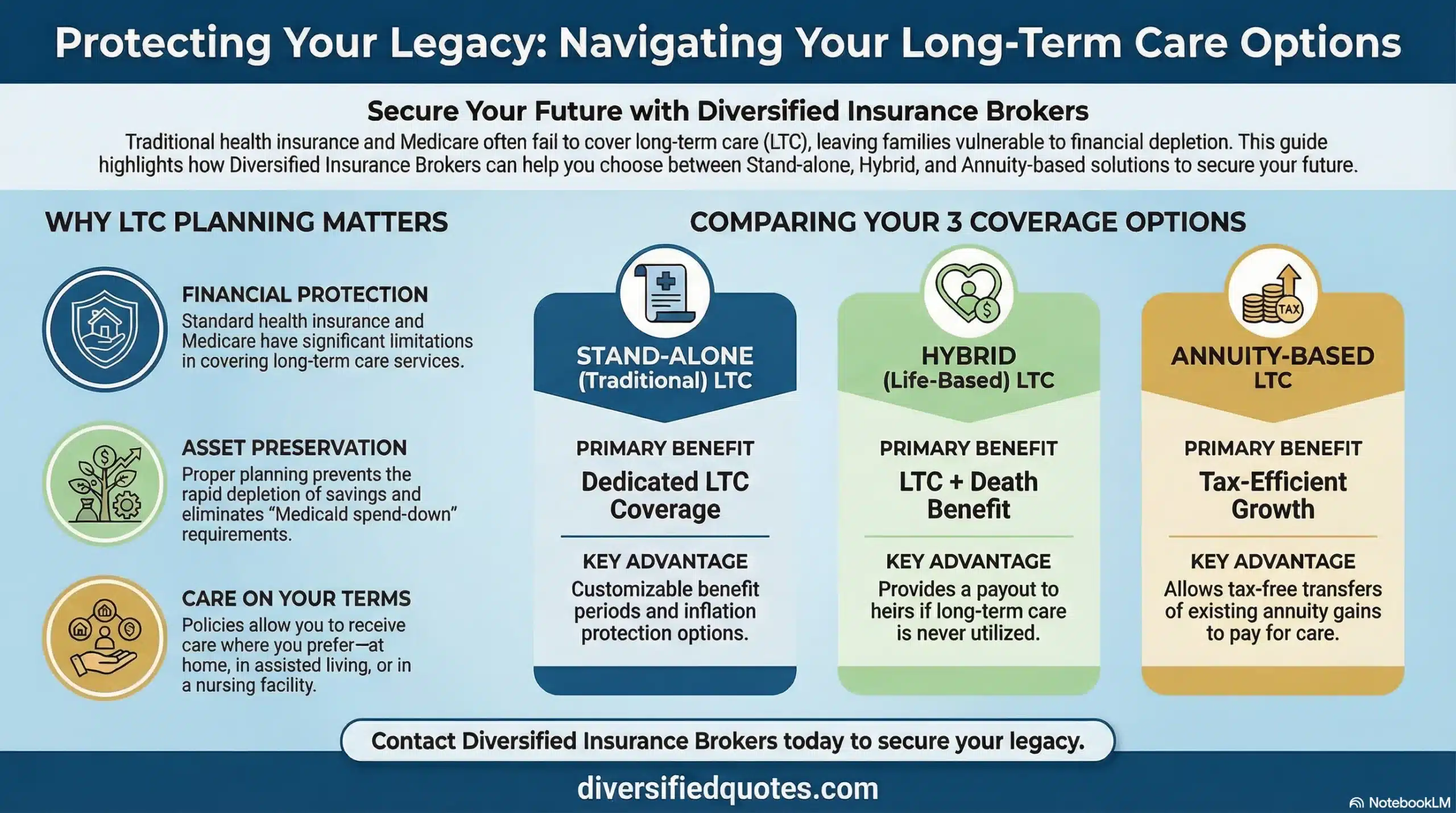
Many people compare rates without realizing they’re comparing different types of solutions. A traditional stand-alone LTC policy is priced as pure long term care coverage. A hybrid or asset-based LTC policy is priced differently because it often includes a life insurance component, a return-of-premium approach, or a structured benefit pool funded in a different way.
Traditional LTC insurance often offers strong LTC leverage—meaning a relatively manageable premium can buy a large pool of potential benefits if a claim occurs. The tradeoff is that traditional policies may not return value if you never use care, and some traditional designs can be subject to premium increases depending on the carrier and state-approved rate actions.
Hybrid LTC policies are often chosen for premium predictability and “value if no claim.” They can have higher upfront cost, but many buyers like the clarity of knowing there is usually a benefit (often a death benefit or a return-of-premium feature) if long term care is never used. If you want to explore this category as part of your rate comparison, review hybrid LTC policy options and consider how guarantees and value-return features change what “best rate” means for your household.
In other words, the cheapest traditional LTC premium might not be “best” if premium stability is your top priority. And a hybrid plan might not be “best” if your only goal is maximum LTC leverage per premium dollar. Best rate depends on what you value most.
How to get the best long term care insurance rates without underinsuring
There are practical strategies that consistently help buyers improve the quality of outcomes when comparing LTC rates. These strategies focus on increasing your chance of approval, improving price-to-value, and building a plan you can keep.
Apply earlier rather than later. A younger application age often produces better pricing and broader carrier choice. Waiting can raise premium and reduce options due to health changes.
Design benefits around your real plan. Many people overbuy the daily benefit and underbuy inflation protection, or they buy a short benefit period without realizing it ends during the most disruptive years. The best rate is usually found through a balanced design rather than a maximal design.
Use the elimination period intentionally. If you have an emergency reserve, using a longer elimination period can reduce premium while still protecting against the extended-care scenario that threatens retirement stability.
Compare multiple carriers. This sounds obvious, but it is the main reason “best rates” exist. Carriers price and underwrite differently. A single-carrier quote can be a random outcome rather than a real market comparison.
Check benefit triggers and definitions. Rates should never be evaluated without understanding how benefits trigger. If a policy’s language is overly restrictive or if the structure makes it hard to claim, a lower premium can become expensive later.
See “Best Rate” Options Side by Side
We’ll compare traditional vs hybrid designs and show how inflation and elimination periods change long-term value.
Why using a broker matters for LTC rates
Because so many variables influence LTC premiums, working with an independent broker can significantly improve the quality of the decision. A quote is not just a price—it is a design. If your design is off, the “rate” comparison becomes misleading.
At Diversified Insurance Brokers, our process is focused on clarity. We identify which carriers are competitive for your age and state, which carriers have the most favorable underwriting appetite for your health profile, and which plan structures best match your goals. We also model how the plan behaves over time, including how inflation protection grows benefits and how elimination periods affect out-of-pocket exposure early in a claim.
We also help you coordinate LTC planning with broader retirement decisions. Long term care planning should not exist in isolation. It often overlaps with Medicare budgeting and retirement income protection, and understanding those relationships helps you choose an LTC premium that remains comfortable over time.
When the lowest LTC rate might be a mistake
A low premium can be tempting, but the lowest rate can be a poor outcome if the plan cannot realistically cover the care you would want. Warning signs usually show up in the structure, not the marketing.
One warning sign is a benefit that is too small to make a meaningful difference. A very low daily or monthly cap may not cover realistic costs of care, especially in assisted living or skilled nursing. Another warning sign is no inflation protection for buyers who are still many years away from likely care needs. A third warning sign is unclear benefit triggers. If the policy is difficult to trigger because of restrictive definitions, you may pay for years and then struggle to use the coverage.
Finally, premium stability matters. If you select a plan type that is more exposed to future premium changes, the “best rate” today can become the worst rate later if the premium grows beyond affordability. The solution is not panic. The solution is choosing a structure you can keep and a design you understand.
Next steps: evaluate, compare, and lock in protection while you’re eligible
If you want to move from general research to real quotes, the best next step is to compare a few designs with consistent assumptions. That means testing a traditional design and a hybrid design with the same general target benefit. Then you can decide whether your household values maximum LTC leverage, premium predictability, or value-return features most.
If you are unsure how much benefit to target, start with your plan goals. Some households want a plan that covers most care costs. Others want a plan that protects a spouse and prevents a rapid asset drawdown. If you’re beginning with benefit sizing, a helpful companion topic is how much long term care insurance do I need, because the “best rate” decision is easiest when you already know what you want the policy to accomplish.
If you’re comparing LTC versus self-funding, it’s also helpful to revisit self paying for long term care so you can see what risk self-funding really means when care is measured in years, not weeks.
Get Quotes for the Best Long Term Care Insurance Rates
We’ll compare carriers and plan types to find strong value, clear benefits, and a premium you can keep long term.
Related Long Term Care Pages
Explore plan design, qualification, self-funding comparisons, and hybrid alternatives.
Related Retirement Planning Pages
Helpful context for coordinating LTC planning with retirement protection strategies.
Financial Protection Essentials
Family-focused riders, college planning options, and carrier reviews to support long-term financial protection.
Talk With an Advisor Today
Choose how you’d like to connect—call or message us, then book a time that works for you.
Schedule here:
calendly.com/jason-dibcompanies/diversified-quotes
Licensed in all 50 states • Fiduciary, family-owned since 1980
FAQs: Best Long-Term Care Insurance Rates
Why do LTC premiums vary so much between carriers?
Rates differ due to differences in underwriting assumptions, benefit pool size, benefit period, inflation protection, health class, and pricing models across carriers.
Does buying LTC earlier really result in lower premiums?
Yes. Younger applicants generally pay significantly lower premiums because the statistical likelihood of needing care during the policy period is lower.
What’s better: traditional LTC or hybrid/asset-based LTC?
Traditional LTC often costs less initially, but hybrid policies offer guaranteed benefits, premium stability, or return-of-premium/death benefits, making them more appealing for those concerned with legacy value or premium hikes.
Does inflation protection make LTC premiums much more expensive?
Inflation protection increases premium costs but ensures your benefit keeps pace with rising care costs, which often makes it a worthwhile long-term value—especially if you purchase decades before needing care.
Can I reduce LTC rates by increasing the elimination period?
Yes. Choosing a longer elimination (waiting) period before benefits begin typically reduces premiums, especially if you have savings to cover short-term care or rehabilitation.
Should couples buy joint/shared LTC policies?
Shared or spousal-discount LTC policies can offer better value for couples by combining benefit pools, reducing overall cost, and simplifying administration — but they should be evaluated carefully to ensure both partners’ needs are covered.
What happens if I never need long-term care?
If you choose a hybrid or asset-based LTC policy with return-of-premium or death benefit features, your family may receive a benefit even if care is never used — minimizing the chance of “wasted” premiums.
About the Author:
Jason Stolz, CLTC, CRPC and Chief Underwriter at Diversified Insurance Brokers (NPN 20471358), is a senior insurance and retirement professional with more than two decades of real-world experience helping individuals, families, and business owners protect their income, assets, and long-term financial stability. As a long-time partner of the nationally licensed independent agency Diversified Insurance Brokers, Jason provides trusted guidance across multiple specialties—including fixed and indexed annuities, long-term care planning, personal and business disability insurance, life insurance solutions, Group Health, and short-term health coverage. Diversified Insurance Brokers maintains active contracts with over 100 highly rated insurance carriers, ensuring clients have access to a broad and competitive marketplace.
His practical, education-first approach has earned recognition in publications such as VoyageATL, highlighting his commitment to financial clarity and client-focused planning. Drawing on deep product knowledge and years of hands-on field experience, Jason helps clients evaluate carriers, compare strategies, and build retirement and protection plans that are both secure and cost-efficient. Visitors who want to explore current annuity rates and compare options across multiple insurers can also use this annuity quote and comparison tool.
