
Burial Insurance for Parents Over 80

Jason Stolz CLTC, CRPC
Request a Burial Insurance Quote for Parents Over 80
We compare carriers to find final expense coverage for seniors in their 80s—level benefit when possible, graded when needed.
Burial insurance for parents over 80 is still possible, and for many families it’s one of the simplest ways to protect loved ones from final expenses. At this stage of life, the goal is rarely “a huge policy.” It’s usually about creating a predictable death benefit that can be used quickly for funeral costs, cremation or burial fees, travel for family, and any last bills that show up during an already emotional week.
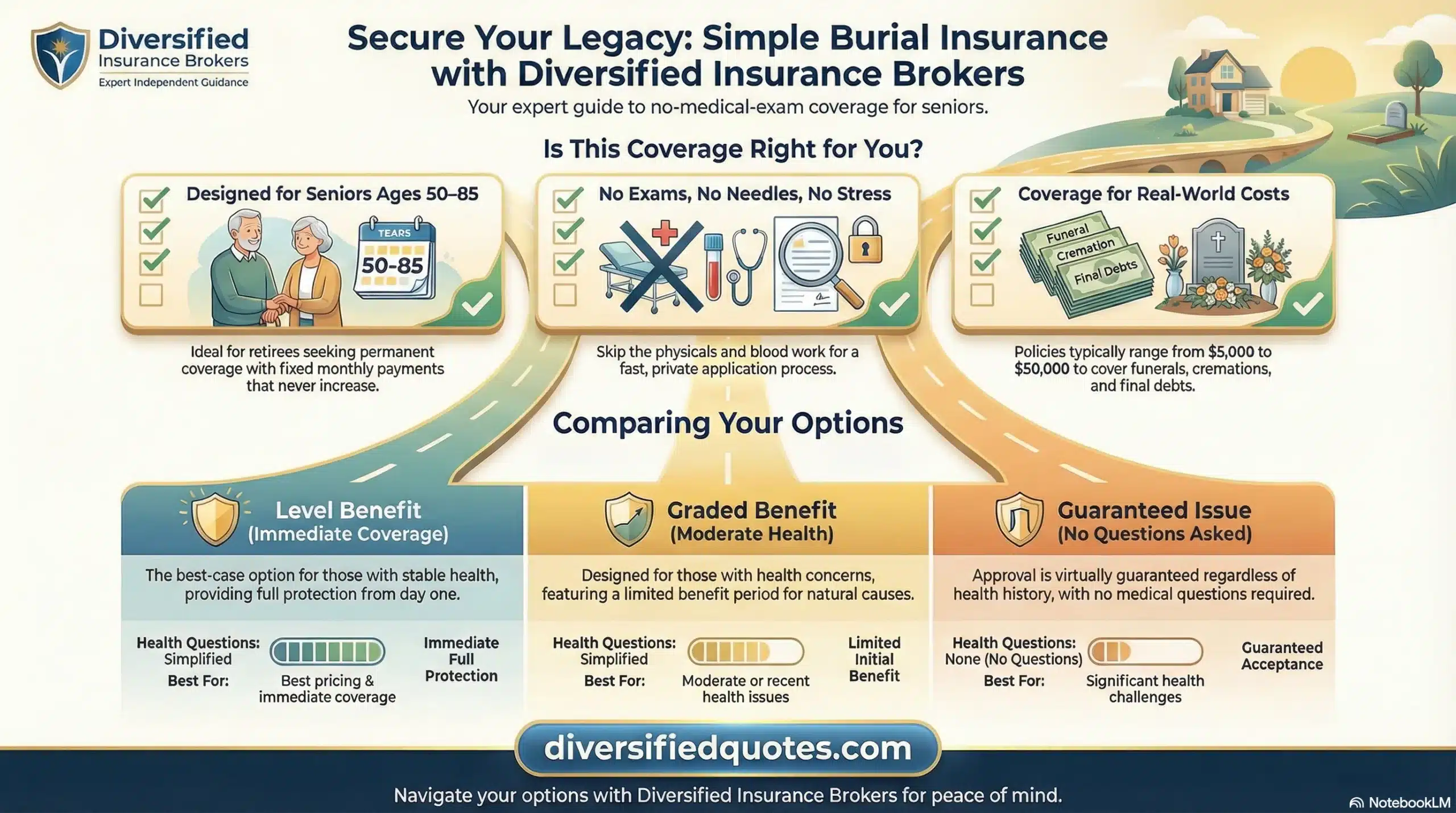
Final expense coverage is typically structured as whole life insurance with level premiums and lifetime coverage as long as premiums are paid. Most policies are designed for modest face amounts—often $5,000 to $25,000—because they’re intended to cover final expenses rather than replace decades of income.
On this page, you’ll learn what approval looks like for seniors in their 80s, how carriers decide between immediate coverage versus waiting-period policies, what affects pricing after age 80, and how to use the calculator to get a baseline estimate before applying.
Can Parents Over 80 Qualify for Burial Insurance?
Yes—many parents over 80 can still qualify. The underwriting path is simply more sensitive to recent events and daily functioning. Most coverage for this age range is placed through either simplified-issue policies (short health questions, no medical exam) or guaranteed-issue policies (no health questions, typically with a graded benefit early on).
At these ages, carrier selection matters even more than it does in the 60s or 70s. One insurer may be comfortable with a stable set of medications and controlled chronic conditions, while another may steer the same applicant toward a graded benefit plan. This is why families often benefit from comparison shopping instead of applying directly with only one company.
Our approach is simple: start with a gentle pre-screen about medications, recent hospitalizations, and major diagnoses, then target the carriers most likely to approve your parent on the best structure available—level benefit when realistic, graded or guaranteed issue when necessary.
Why Burial Insurance Matters for Seniors Over 80
Final expenses arrive quickly. Funeral home decisions often have to be made within days, and families are asked to place deposits or pay in full before services happen. For many families, costs can run into five figures once you add together the funeral home, burial plot or cremation services, a modest ceremony, obituary costs, flowers, transportation, and any last medical bills that weren’t fully resolved.
Even when a parent has savings, burial insurance can serve a specific purpose: it creates a dedicated fund that is separate from estate timelines. Bank accounts can be frozen, beneficiaries may not be listed, or family members may not have immediate access. A final expense policy is designed to pay a beneficiary directly, which can give a family practical flexibility when time matters most.
Burial insurance can also reduce family tension. When adult children are coordinating logistics from different states, money can quickly become a friction point. A clear, dedicated policy can remove uncertainty about who pays and how quickly funds will be available.
Burial Insurance Costs and Coverage Amounts After 80
Premiums after age 80 are influenced by a handful of straightforward factors: age, gender, tobacco use, state, and the policy type you qualify for (level benefit vs graded vs guaranteed issue). In general, the older the applicant, the higher the monthly premium for the same face amount. That’s why many families look for a coverage amount that accomplishes the goal without putting stress on the monthly budget.
For many households, the “sweet spot” is often $10,000–$15,000 because it can cover most funeral and last expenses without over-insuring. Some families choose $5,000–$8,000 when budget is tight, while others choose $20,000–$25,000 when local costs are higher or when travel and family arrangements add additional expense.
If your parent is on a fixed income, it can help to focus on “a premium that stays comfortable for years” rather than “the highest face amount.” A smaller policy that stays in force is usually better than a larger policy that becomes hard to maintain.
For budget strategies and what “affordable” can realistically look like, this page is a helpful companion: affordable burial insurance for low-income seniors.
Burial Insurance Calculator for Parents Over 80
Run instant quotes for seniors age 80–89, then we’ll help you choose the right carrier and policy type.
Level, Graded, and Guaranteed Issue Options After Age 80
At these ages, the policy structure matters as much as the face amount. Families often hear “burial insurance” and assume every policy is the same. In reality, there are meaningful differences in how benefits pay during the early policy years, and those differences should be matched to your parent’s health profile and your family’s priorities.
Level benefit is typically the goal when your parent is relatively stable. This structure generally pays the full death benefit immediately for natural causes of death (subject to standard policy provisions, including the contestability period). If your parent’s health is well controlled and there haven’t been major recent events, level benefit may be realistic even in the early 80s.
Graded benefit is common when health issues are more significant or there have been more recent concerns, but the applicant is still insurable. In many graded designs, natural-cause deaths in the first 2–3 years may result in a limited payout (often a return of premium plus interest). After the graded period ends, the policy typically transitions to the full face amount.
Guaranteed issue is designed for situations where simplified underwriting is unlikely—often due to complex or severe health histories. These policies usually have no health questions and are structured with a graded period for natural causes in the early years. For many families, guaranteed issue is not the “first choice,” but it can be the most practical way to put protection in place when other options are limited.
If you want to compare how acceptance and pricing can differ between seniors in their 70s and seniors in their 80s, this page is a useful reference point: burial insurance for parents over 70.
Common Health Realities in the 80–89 Age Range
Many parents in their 80s manage multiple medications. Carriers typically focus less on the number of prescriptions and more on what those prescriptions represent—stability versus progression. A parent with stable blood pressure medication and routine checkups can look very different than a parent with recent hospitalizations, oxygen use, or significant mobility limitations.
Controlled blood pressure is common and is often still workable under simplified underwriting. If this is part of your parent’s profile, this page provides additional context: burial insurance for people with high blood pressure.
Diabetes is also frequently part of the picture. What matters is how well it’s controlled and whether there are complications. If diabetes is relevant, start here: burial insurance for people with diabetes.
Cardiac history is another common consideration. A past heart attack or procedure does not automatically prevent approval, but recent cardiac events can shift the likely outcome toward graded or guaranteed issue. If heart history is involved, this guide can help: burial insurance after a heart attack.
In some households, disability or special-needs considerations are also part of the planning conversation—especially when adult children are coordinating care and finances. If that applies, this page may be helpful: burial insurance for disabled adults.
How to Apply for Final Expense Insurance After 80
The application process for a parent over 80 works best when it’s simple and organized. Families typically start by choosing a target face amount and monthly budget. Many families aim for $10,000–$15,000 because it covers a large share of final expenses without turning the policy into an ongoing financial strain.
Next, we focus on matching the parent’s profile to the right underwriting lane. This usually means a short pre-screen conversation about medications, diagnoses, and whether there have been recent hospital stays. That information helps avoid wasted applications and keeps the process respectful and low-stress.
Once a carrier is selected, the application is typically completed electronically or by phone. Many policies do not require an exam at these ages, and decisions can come quickly depending on the carrier and the answers provided. We also help families structure ownership and premium payment. With the parent’s consent, an adult child can often be listed as owner and/or payer to help keep the policy in force long-term.
Real-World Scenarios for Parents Ages 80–89
Scenario 1: An 81-year-old parent with stable medications and no recent hospitalizations may qualify for simplified-issue level benefit coverage. Many families choose $10,000–$15,000 to cover the essentials. The value here is immediate protection without a graded structure.
Scenario 2: An 84-year-old parent with a more recent health event—such as a hospitalization within the last year—may still be insurable, but the likely outcome is often graded benefit. For families, this can be a reasonable middle ground: coverage is in place now, the premium can be more manageable than guaranteed issue, and the policy typically transitions to full benefits after the graded period.
Scenario 3: An 88-year-old parent with multiple significant conditions may be best served by guaranteed issue. While the early-year payout for natural causes is limited, the benefit becomes full after the graded period, and the family has the reassurance that a dedicated plan exists for final expenses.
Common Mistakes to Avoid When Buying After Age 80
The first mistake is waiting too long because you’re hoping premiums will improve. At these ages, premiums generally rise over time, and the chance of a new health complication increases. If a family has decided burial insurance is needed, securing coverage sooner often provides more options than waiting.
The second mistake is overbuying coverage. A policy that is hard to afford is at risk of lapsing, which defeats the purpose. It is usually better to buy an amount that fits comfortably and stays in force. Another mistake is misunderstanding graded structures on guaranteed issue policies. The family should clearly understand what the policy pays during the early years and when full benefits begin.
Finally, many families only compare one carrier. The difference between carriers can be meaningful at these ages, so comparison shopping can improve the chance of getting the best structure available for the parent’s profile.
Need Help Choosing Level vs Graded Coverage?
We’ll pre-screen gently and match your parent to the carriers most likely to approve the best policy structure available.
Related Burial Insurance Pages
More resources for cost, underwriting, and immediate-coverage planning.
Related Health & Approval Topics
If health history is involved, these pages can help set expectations.
Financial Protection Essentials
Income planning tools, burial coverage guidance, and travel protection solutions designed to strengthen financial security.
Talk With an Advisor Today
Choose how you’d like to connect—call or message us, then book a time that works for you.
Schedule here:
calendly.com/jason-dibcompanies/diversified-quotes
Licensed in all 50 states • Fiduciary, family-owned since 1980
FAQs: Burial Insurance for Parents Over 80
Can my parent still be approved for burial insurance at age 80–89?
In many cases, yes. Final expense policies for this age group are designed to be more forgiving, often using simplified questions or guaranteed-issue approval instead of medical exams. The key is matching your parent’s health profile to a carrier that is comfortable with their conditions and medications.
How much coverage do families usually choose after age 80?
Most families choose between $5,000 and $20,000 of coverage, with $10,000–$15,000 being very common. That amount is typically enough to cover a basic funeral, burial or cremation, and some final bills without overcommitting the monthly budget.
Do burial insurance premiums increase as my parent gets older?
No. Once the policy is in place, final expense whole life coverage is usually designed with level premiums that do not increase with age. As long as payments are made, the coverage and payment amount stay stable.
What is a graded death benefit and why is it important?
A graded death benefit means the policy limits payout for natural causes during the first few years, often returning premiums plus interest instead of the full face amount. After the graded period, the full benefit becomes available. Understanding this feature is crucial when choosing guaranteed-issue or more lenient plans for seniors in their eighties.
Can I, as an adult child, own or pay for my parent’s policy?
Yes. With your parent’s consent, you can be listed as owner and/or payer on the policy. This arrangement is common and helps ensure premiums are paid on time and beneficiaries remain accurate, especially when multiple siblings are involved.
How quickly are burial insurance claims paid to beneficiaries?
Once the claim forms and death certificate are submitted and approved, most insurers pay benefits relatively quickly, often within days. This prompt payout helps families cover funeral costs and other urgent expenses without turning to high-interest debt.
Disclaimer: Eligibility, benefit structures, and timelines vary by company and state. This information is general in nature and not a substitute for personalized advice.
About the Author:
Jason Stolz, CLTC, CRPC and Chief Underwriter at Diversified Insurance Brokers, is a senior insurance and retirement professional with more than two decades of real-world experience helping individuals, families, and business owners protect their income, assets, and long-term financial stability. As a long-time partner of the nationally licensed independent agency Diversified Insurance Brokers, Jason provides trusted guidance across multiple specialties—including fixed and indexed annuities, long-term care planning, personal and business disability insurance, life insurance solutions, and short-term health coverage. Diversified Insurance Brokers maintains active contracts with over 100 highly rated insurance carriers, ensuring clients have access to a broad and competitive marketplace.
His practical, education-first approach has earned recognition in publications such as VoyageATL, highlighting his commitment to financial clarity and client-focused planning. Drawing on deep product knowledge and years of hands-on field experience, Jason helps clients evaluate carriers, compare strategies, and build retirement and protection plans that are both secure and cost-efficient.
