
Disability Insurance for Aquatic Therapists

Jason Stolz CLTC, CRPC
Disability insurance for aquatic therapists is a vital form of income protection for professionals whose careers depend on physical ability, patient interaction, and consistent performance in a water-based therapeutic environment. Aquatic therapists work with patients recovering from injury, managing chronic conditions, or improving mobility, often relying on a combination of strength, balance, coordination, and clinical expertise.
Because aquatic therapy is highly hands-on, any limitation in mobility, strength, or endurance can significantly impact your ability to work. Unlike some healthcare roles, there are limited alternatives that allow you to generate the same income without direct physical involvement. Disability insurance helps protect that income if injury or illness prevents you from performing your duties.
At Diversified Insurance Brokers, we help aquatic therapists structure disability insurance strategies that reflect the physical demands of therapy work, income variability, and long-term career sustainability. A properly designed policy ensures that your financial stability remains intact even if your ability to work is interrupted.
Protect Your Income as an Aquatic Therapist
Compare disability insurance options designed for therapy professionals and hands-on healthcare careers.
Why Disability Insurance Is Essential for Aquatic Therapists
Aquatic therapists rely on their physical ability to assist, guide, and support patients in a water environment. This includes helping patients with movement, maintaining stability, and ensuring safety during therapy sessions. If you are unable to perform these tasks, your ability to generate income can stop immediately.
Many aquatic therapists work in private practices, rehabilitation centers, or on a contract basis, which may limit access to employer-sponsored disability coverage. Even when coverage exists, it may not fully replace income or reflect the specialized nature of your work.
While some professionals consider broader planning tools such as life insurance with chronic illness riders, disability insurance specifically addresses the risk of income loss during your working years.
The Physical Demands of Aquatic Therapy
Aquatic therapy requires continuous physical engagement. Therapists must support patients, maintain balance in water, and perform repetitive movements throughout the day. The buoyancy of water can reduce strain for patients, but it still requires significant effort and coordination from the therapist.
Over time, this can lead to wear and tear on joints, muscles, and connective tissue. Common issues include shoulder strain, lower back problems, and fatigue-related conditions. Injuries may develop gradually or occur suddenly due to slips, missteps, or unexpected patient movement.
Because therapy sessions require hands-on interaction, even minor injuries can limit your ability to perform your role effectively.
Cognitive and Clinical Responsibilities
In addition to physical demands, aquatic therapists must maintain strong clinical judgment and communication skills. You are responsible for evaluating patient progress, adjusting treatment plans, and ensuring safe execution of exercises.
Conditions that affect cognitive function, focus, or decision-making can impact your ability to deliver effective therapy. This creates an additional layer of risk, as both physical and cognitive impairments can affect your income.
Understanding long-term financial planning strategies such as retirement distribution planning can support your future, but protecting your current income remains the priority.
Income Structure and Financial Risk
Aquatic therapists may earn income through salaries, hourly rates, or per-session billing. In many cases, income is directly tied to the number of sessions completed. If you are unable to work, those sessions are canceled, and income stops immediately.
This creates a direct link between your physical ability and financial stability. Unlike salaried roles with paid leave, many therapy positions do not provide extended income protection.
Incorporating strategies such as cost of living adjustments into your disability policy can help ensure that long-term benefits maintain their value over time.
Case Study: Aquatic Therapist Earning $75,000 Per Year
Consider an aquatic therapist earning $75,000 annually through a combination of sessions and clinical work. If this individual experiences an injury that prevents them from working for five years, the financial impact can be significant.
| Scenario | Without Disability Insurance | With Disability Insurance |
|---|---|---|
| Annual Income | $0 | $42,000–$52,000 |
| 5-Year Income | $0 | $210,000–$260,000 |
| Career Impact | Loss of income and patient base | Financial support during recovery |
This example demonstrates how disability insurance can help maintain income and reduce financial stress during recovery.
Designing a Policy for Aquatic Therapists
Disability insurance for aquatic therapists should reflect both the physical nature of the work and the structure of income. Benefit amounts should align with earnings, including session-based income where applicable.
Elimination periods should be selected based on your financial reserves. A shorter waiting period provides quicker access to benefits, while a longer period may reduce premiums.
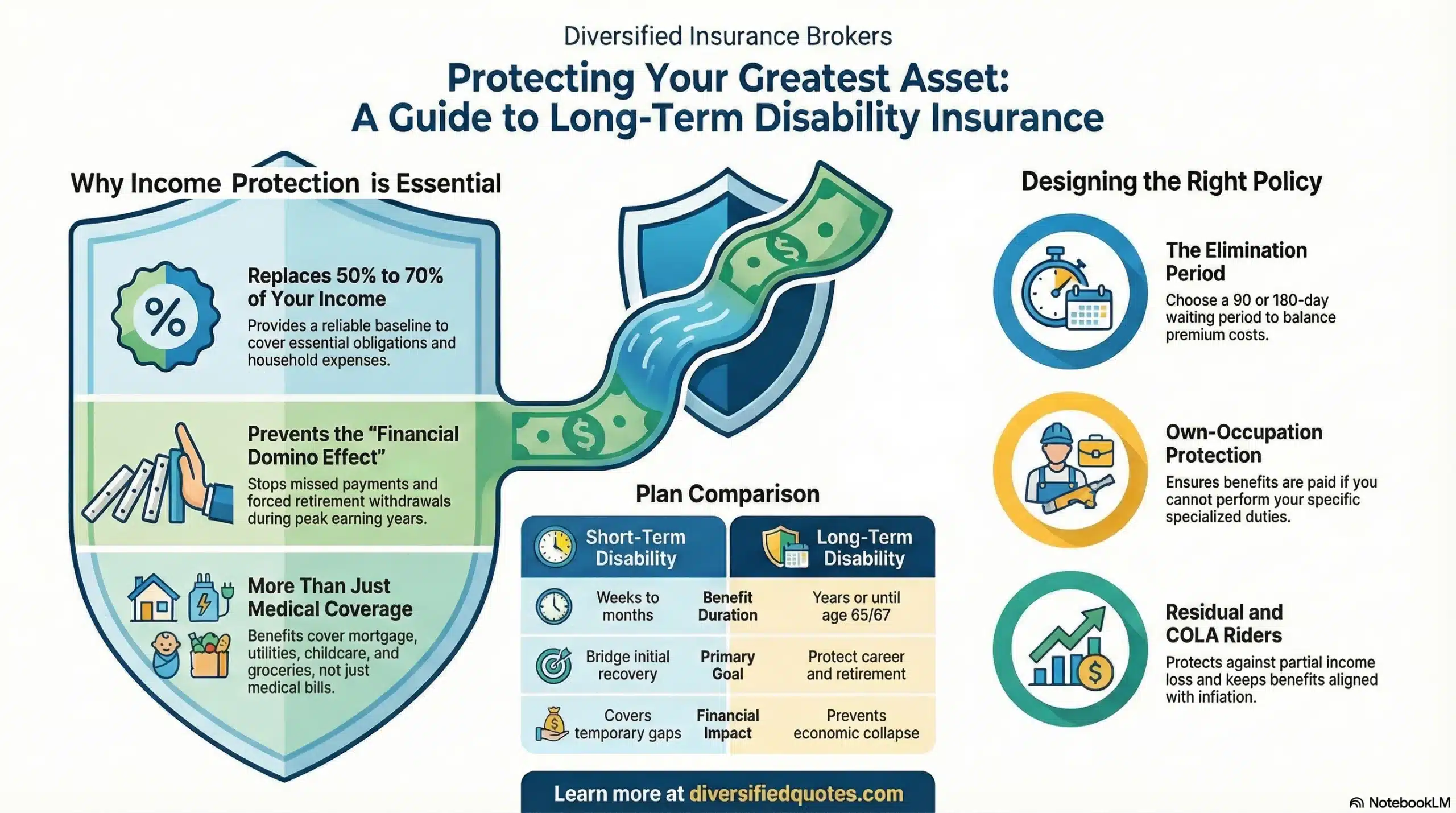
Residual or partial disability coverage is especially valuable. It provides income support if you can still work in a limited capacity but cannot maintain your previous level of earnings.
It is also important to ensure your benefits keep pace with inflation. Reviewing strategies such as cost of living adjustments can help maintain purchasing power over time.
Why Work with an Independent Disability Insurance Broker
Disability insurance for healthcare professionals can vary significantly between carriers. Working with an independent broker allows you to compare options and design coverage that fits your specific needs.
An independent broker focuses on structuring policies that align with your income, responsibilities, and long-term goals. This approach often results in stronger protection and more competitive pricing.
To understand the advantages of this approach, review why working with an independent disability insurance broker matters.
Integrating Disability Insurance Into Your Financial Plan
For aquatic therapists, disability insurance is a foundational component of financial planning. It protects the income that supports your lifestyle, savings, and long-term goals.
Exploring additional financial strategies such as estate planning concepts can complement income protection and strengthen your overall financial position.
Final Thoughts
Aquatic therapists depend on physical ability, clinical expertise, and consistent performance to generate income. Disability insurance ensures that if your ability to work is disrupted, your financial life remains stable.
A well-structured policy provides income protection, peace of mind, and the ability to focus on recovery. Working with an experienced broker ensures that your coverage is tailored to your profession and aligned with your goals.
Related Pages
Talk With an Advisor Today
Choose how you’d like to connect—call or message us, then book a time that works for you.
Schedule here:
calendly.com/jason-dibcompanies/diversified-quotes
Licensed in all 50 states • Fiduciary, family-owned since 1980
Disability Insurance for Aquatic Therapists FAQs
Yes, aquatic therapists typically qualify for disability insurance. Coverage is based on occupational duties, income, and the physical demands of therapy work.
Common issues include shoulder strain, back injuries, joint problems, and fatigue-related conditions from repetitive movement and patient support.
Yes, many policies include residual disability benefits that provide income support if you can still work but cannot maintain your previous earnings.
Income is typically based on salary, hourly wages, or session-based earnings, supported by pay records or tax documentation.
Benefit periods vary and can range from a few years to coverage lasting until retirement age, depending on the policy.
The best time to apply is while you are healthy and actively working, which allows you to secure better rates and broader coverage.
About the Author:
Jason Stolz, CLTC, CRPC and Chief Underwriter at Diversified Insurance Brokers (NPN 20471358), is a senior insurance and retirement professional with more than two decades of real-world experience helping individuals, families, and business owners protect their income, assets, and long-term financial stability. As a long-time partner of the nationally licensed independent agency Diversified Insurance Brokers, Jason provides trusted guidance across multiple specialties—including fixed and indexed annuities, long-term care planning, personal and business disability insurance, life insurance solutions, Group Health, and short-term health coverage. Diversified Insurance Brokers maintains active contracts with over 100 highly rated insurance carriers, ensuring clients have access to a broad and competitive marketplace.
His practical, education-first approach has earned recognition in publications such as VoyageATL, highlighting his commitment to financial clarity and client-focused planning. Drawing on deep product knowledge and years of hands-on field experience, Jason helps clients evaluate carriers, compare strategies, and build retirement and protection plans that are both secure and cost-efficient. Visitors who want to explore current annuity rates and compare options across multiple insurers can also use this annuity quote and comparison tool.
