
Life Insurance for Leukemia
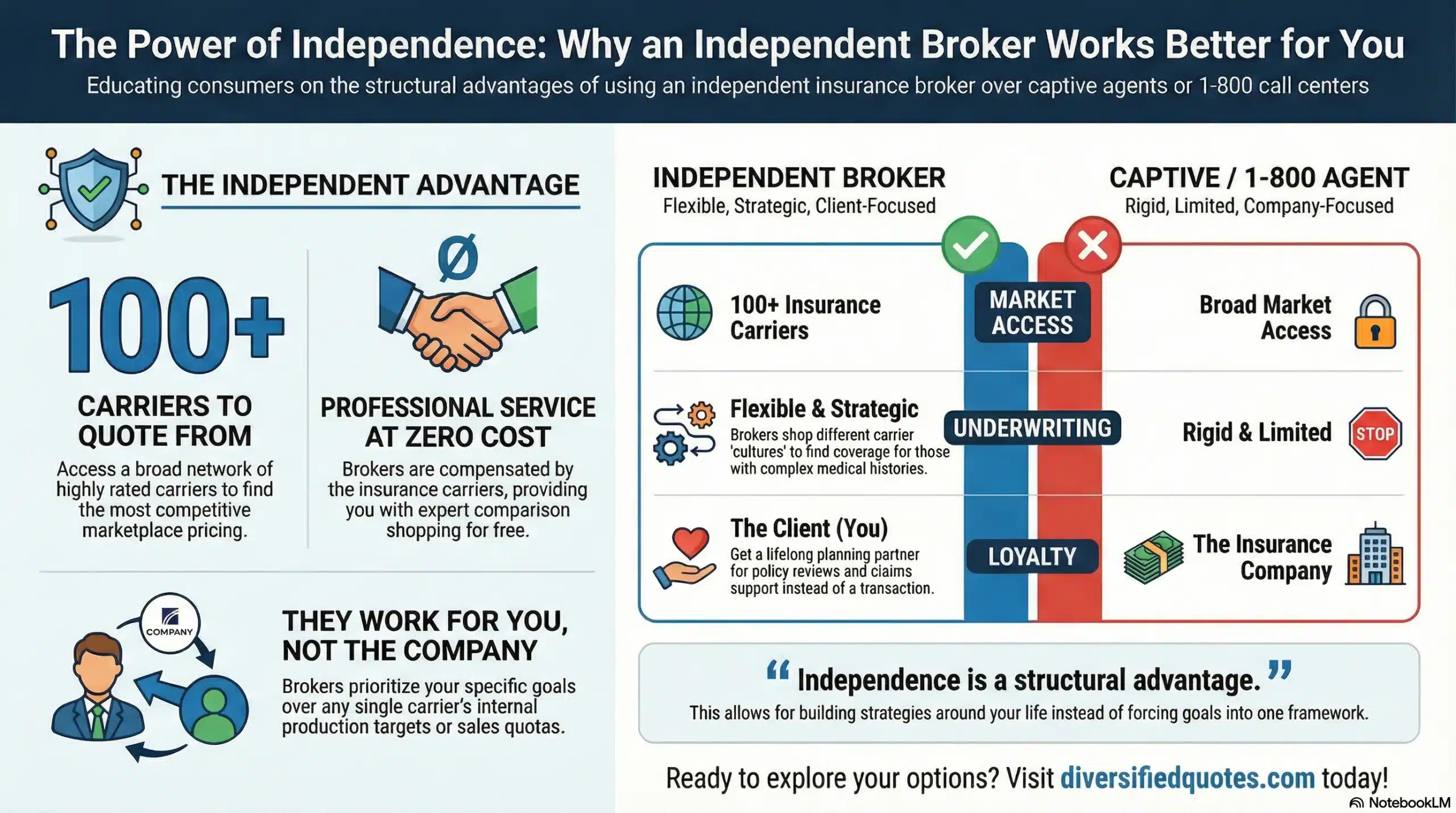
As an Independent Life Insurance Broker, we compare rates across 100+ carriers and prescreen every application before submission.
Life Insurance for Leukemia

Jason Stolz CLTC, CRPC, DIA, CAA
Being told you have leukemia can change your perspective overnight — especially when it comes to protecting your family financially. Many people assume that once leukemia appears in a medical record, life insurance becomes either unavailable or too expensive to be realistic. The truth is far more nuanced. Life insurance with a leukemia history is often possible, and in many cases it is achievable sooner than most applicants expect when remission, stability, and follow-up documentation are clearly established and the application is matched to the right carrier. At Diversified Insurance Brokers, Jason Stolz, CLTC, CRPC, DIA, CAA, helps leukemia survivors and individuals under monitoring pursue coverage that reflects their current health and long-term outlook — not just a diagnosis code — across all 50 states through an independent carrier network of 100+ A-rated companies. Different insurers approach leukemia underwriting in genuinely different ways, and when the carrier fit is right, underwriting can move forward with fewer delays, fewer surprise requirements, and a clearer path to approval.
If you are navigating medical underwriting more broadly — whether leukemia is the only health consideration or one part of a larger health profile — our guide to life insurance with pre-existing conditions explains why the same person can receive dramatically different underwriting outcomes depending on which carrier reviews the application and how the case is presented. That principle — carrier selection as a strategic variable, not a commodity choice — is the foundational insight that most leukemia survivors have not encountered when they approach the coverage process through online platforms or captive agents.
Life Insurance with a Leukemia History
When remission is documented and follow-ups are consistent, many leukemia survivors can still qualify for meaningful life insurance coverage.
Tip: The more current your hematology/oncology notes are, the smoother underwriting typically goes.
See Real-Term Rates Side by Side
Life Insurance Quoter
Compare real-time life insurance quotes from top carriers.
How Leukemia Affects Life Insurance Underwriting
Life insurance companies evaluate leukemia carefully because underwriting is designed to measure long-term risk — and “leukemia” is not one single risk category. It is a broad group of blood cancers that can range from an aggressive, acute event that is treated and resolved, to a more chronic condition that is monitored over time and managed through targeted therapy or watchful waiting over years. That range of clinical presentations is the first reason why leukemia underwriting requires specialist knowledge: the risk profile of a 42-year-old who had acute lymphoblastic leukemia, completed chemotherapy and bone marrow transplant 8 years ago, and has been in confirmed complete remission since is categorically different from the risk profile of a 65-year-old with chronic lymphocytic leukemia currently on a watch-and-wait protocol with stable blood counts and no treatment required. Both have “leukemia” in the medical record. The underwriting approach, the carrier selection, the documentation that matters most, and the achievable classification differ substantially between these presentations.
The first underwriting goal is clarity — and this is the variable that is most directly within the applicant’s and broker’s control. When a carrier receives an application that shows only “history of leukemia” without clinical context, the underwriting process defaults to the most conservative available assumption about what that history implies for long-term mortality risk. When the same carrier receives a well-organized file that clearly establishes the specific leukemia type, the treatment course, the remission documentation, the serial follow-up record, and the current clinical status, the underwriter has everything needed to evaluate the actual risk rather than the worst-case assumption. This is why we approach leukemia cases with documentation organization as the primary preparation step — before carrier selection, before application, before anything else.
It also helps to understand that carriers never underwrite leukemia in isolation. The complete health profile matters independently of the cancer history: blood pressure, cholesterol, glucose, tobacco use, build, and any comorbid conditions all influence the final classification. An applicant with excellent overall health metrics alongside a well-documented long-term leukemia remission consistently achieves better outcomes than an applicant whose leukemia history is otherwise similar but who also has uncontrolled hypertension, elevated A1C, or other independent risk factors compounding the evaluation. This is why working with an independent agency that considers the whole picture and matches the application to a carrier that handles both the survivorship history and the overall risk profile reasonably matters for every leukemia case. If you are comparing other cancer-related underwriting scenarios, our page on life insurance for Hodgkin’s and lymphoma history is a useful companion, because many of the survivorship underwriting principles overlap even though the diagnoses are hematologically distinct.
What Underwriters Look For in Leukemia Survivors
When you apply for life insurance after leukemia, the best way to think about the underwriting evaluation is this: the carrier wants a simple, verifiable, and consistent clinical story. That story should clearly explain what happened, when it happened, what treatment was required, how the treatment concluded, what the current monitoring status is, and what your health looks like now. Underwriters are not looking for a perfect health history — what they want is consistency of documentation, clarity of the timeline, and evidence of stability over time that they can verify against the medical records they obtain.
Most leukemia cases rise or fall based on the same core evaluation categories. The leukemia type and classification is the first category, because it directly influences recurrence risk, treatment intensity, the standard monitoring requirements, and the actuarial data that the carrier’s underwriters are working from when they evaluate the long-term mortality implications. The treatment course and the date of primary therapy completion is the second category — underwriters consistently use “time since treatment completion” as a milestone for eligibility windows and pricing classifications, because this elapsed time is the most directly measurable proxy for the stability that carriers require. The follow-up pattern is the third category, because consistent hematology or oncology monitoring confirms that the clinical picture is being actively managed and that any recurrence or complication would be identified and documented promptly. The presence or absence of complications, ongoing therapy requirements, or concurrent health conditions is the fourth category, because any of these elements adds complexity to the evaluation that must be addressed clearly in the file.
Underwriters request medical records to confirm the timeline and stability. This typically includes hematology or oncology notes documenting the treatment course and follow-up visits, laboratory results supporting remission status, imaging or bone marrow evaluation results when relevant to the specific leukemia type, and the current follow-up plan that demonstrates the applicant remains under appropriate ongoing care. Understanding what a life insurance exam involves — and what carriers typically test for through the paramedical examination process — helps leukemia survivors prepare for what will be gathered beyond the medical records and how the exam results interact with the cancer history in the combined underwriting evaluation.
One of the most important practical principles for leukemia applications is that the description of the current status on the application itself sets the underwriting direction before any records are received. The difference between describing the history as “leukemia, treatment completed, in confirmed remission since [date], consistent hematology follow-up” versus leaving the condition vaguely described or unclear can redirect the entire underwriting evaluation. A clean application description avoids triggering the most conservative assumptions that ambiguous cancer history language can produce, and that clean description needs to be consistent with what the medical records confirm — any discrepancy between the application and the records creates underwriting concern that extends the process and often worsens the outcome.
Leukemia Types and How Carriers View Each
| Leukemia Type | General Underwriting Framework | Key Underwriting Variables | Favorable Presentation |
|---|---|---|---|
| Acute Lymphoblastic Leukemia (ALL) | Aggressive acute presentation typically treated intensively; underwriting heavily weighted toward time since treatment and confirmed remission | Date treatment completed; confirmed complete remission documentation; bone marrow evaluation results; time in sustained remission; whether bone marrow transplant was required | Multiple years (5+) of confirmed complete remission with consistent hematology follow-up; no recurrence; full blood count stability; clean bone marrow evaluation if performed |
| Acute Myeloid Leukemia (AML) | Considered one of the most challenging acute leukemias from underwriting standpoint; treatment typically intensive including chemotherapy and often bone marrow transplant; long stability windows typically required | Treatment protocol; whether allogeneic or autologous transplant was performed; cytogenetic risk classification; current remission duration; graft-versus-host disease status if transplant occurred | Favorable cytogenetics at diagnosis; complete remission sustained for 5+ years with clean surveillance; no GVHD complications if transplanted; consistent specialist follow-up documentation |
| Chronic Lymphocytic Leukemia (CLL) | Most common adult leukemia; wide spectrum from indolent watch-and-wait to treatment-requiring progressive disease; underwriting varies significantly by Rai/Binet stage and current management status | Current Rai/Binet stage; whether treatment has been initiated or watch-and-wait protocol applies; treatment response if treated; IGHV mutation status and other prognostic markers; current blood count trend | Low Rai stage (0 or I) on watch-and-wait with stable blood counts over years; favorable prognostic markers (IGHV mutated); no treatment required to date; consistent hematology follow-up with stable disease |
| Chronic Myeloid Leukemia (CML) | Transformed by targeted therapy (tyrosine kinase inhibitors); most CML cases now achieve complete cytogenetic or molecular remission on TKI therapy; underwriting reflects transformation in long-term outcomes | Current BCR-ABL level (molecular response depth — MMR, MR4, MR4.5); TKI medication compliance; duration of sustained molecular response; whether dose reductions have been made; absence of blast crisis | Deep sustained molecular remission (MR4 or better) maintained for multiple years on TKI therapy; confirmed medication compliance; no blast crisis or accelerated phase history; consistent hematology monitoring |
Across leukemia types, carriers also pay close attention to risk factors that compound the leukemia history in the combined mortality model. Significant cardiovascular risk alongside leukemia history adds independent mortality weight that affects the final classification beyond what leukemia history alone would produce. Uncontrolled diabetes, obesity, tobacco use, and hypertension each add to the combined evaluation in ways that are independent of the leukemia but interact with it in the underwriting outcome. This is one of the primary reasons we approach leukemia cases with a full-profile review rather than focusing only on the oncologic history — the complete picture determines which carrier and which classification is most achievable.
Why Remission Length and Stability Matter So Much
If there is one underwriting factor that consistently moves leukemia cases into better outcomes, it is time since treatment completion and the quality of the stability documentation accumulated during that time. Underwriters use elapsed time as a powerful actuarial signal because the mortality risk associated with leukemia declines in a measurable, data-driven way as years of confirmed remission accumulate. The longer an applicant remains in documented remission with no evidence of recurrence and consistent specialist follow-up, the more confidence the carrier develops that the survivorship story represents a durable long-term outcome rather than a temporary remission before recurrence.
That said, time is not a standalone variable — it must be accompanied by documentation that confirms the stability during that time. An applicant who is 10 years post-treatment with incomplete follow-up records, gaps in hematology monitoring, or undocumented years where no specialist care is confirmed does not achieve the same underwriting outcome as an applicant who is 10 years post-treatment with annual hematology follow-up notes, serial blood count confirmation, and clear documentation of continued remission at every interval. The time elapsed is identical; the underwriting evidence available to the carrier is not. The most persuasive remission documentation is a complete, chronological record from treatment completion to the present — showing consistent monitoring, consistently stable results, and specialist confirmation of ongoing remission status at each visit.
Remission history also helps carriers determine which product type is most realistic for the current application. An applicant who is many years into stable complete remission may qualify for traditional term life or permanent life coverage depending on age, the specific leukemia type, and the completeness of documentation. An applicant who recently completed treatment may need additional stability time before traditional fully underwritten coverage becomes accessible at the most favorable available pricing — though interim coverage options can provide meaningful family financial protection during that period. Understanding how life insurance table ratings work helps leukemia survivors evaluate what any given offer means in practical premium terms, since table-rated offers are common in leukemia underwriting even for favorable long-remission profiles and represent approved coverage at modified pricing rather than a denial. Getting a second opinion on a life insurance quote after receiving any offer is often valuable for leukemia survivors, because the variation in how different carriers price the same leukemia history can be substantial, and a second opinion confirms whether the first offer received reflects the best available in the full market.
What Premiums May Look Like After Leukemia
Pricing after leukemia depends on the same underwriting building blocks that carriers use for any significant medical history: age, coverage amount, term length, overall health profile today, and how the leukemia history is classified in the underwriting outcome. Many leukemia survivors assume they will only qualify for extremely expensive options that are not financially practical — in reality, pricing can range widely depending on the specific leukemia type, remission duration, and the completeness of the stability documentation.
Some applicants in long-term stable remission — particularly those with favorable leukemia types, clean long-remission records, and excellent overall health profiles — receive offers that are considerably closer to standard pricing than they expected, with table ratings that add a measurable but not prohibitive premium to the standard rate. Other applicants with more complex histories, shorter remission windows, or more challenging leukemia types may receive higher table ratings that reflect a more conservative underwriting assessment. In more complicated scenarios — short stability windows, recent treatment completion, ongoing complications, or active therapy — the carrier may postpone coverage until the file becomes more stable, which is why understanding the full range of interim coverage alternatives alongside the fully underwritten path is important for applicants who are earlier in their post-treatment timeline.
One important principle is that the “right” offer is not always the cheapest one available. Sometimes the best offer is the one that provides the most reliable approval path, the cleanest long-term policy structure, the most favorable conversion provisions, and the fewest underwriting surprises — even if another carrier offers a modestly lower premium with more restrictive policy terms or less stability in the approval process. This is why comparison shopping across carriers that specialize in cancer survivorship underwriting is valuable for leukemia survivors — carrier philosophies on survivorship are genuinely not uniform, and the same medical history can receive meaningfully different pricing and classification from different underwriters. For applicants evaluating term coverage specifically, 15-year term life insurance and 10-year term life insurance provide context for how different term lengths interact with coverage goals — the best term length for a leukemia survivor depends on what specifically is being protected and over what time horizon.
Our Underwriting Strategy for Leukemia Cases
Leukemia survivorship underwriting is rarely a situation where “apply and hope” produces the best available outcome. The best results come from a deliberate strategy that aligns the specific leukemia profile, the remission timeline, and the stability documentation with carriers that underwrite survivorship reasonably and have historically offered favorable outcomes for comparable profiles. At Diversified Insurance Brokers, our approach is designed to protect the applicant’s insurability, reduce unnecessary declines that create MIB record complications, and position the file in the best possible light before any formal application is submitted.
The process begins with clarifying the key clinical details that underwriters care most about: the specific leukemia type and classification, the treatment completion timeline, the current follow-up schedule and frequency, the documentation available to confirm sustained remission, and whether any complications or concurrent health conditions need to be addressed as part of the combined evaluation. From there, the overall health profile is assessed because independent risk factors — blood pressure, build, tobacco history, diabetes, cardiovascular risk — can shift the combined outcome in ways that the leukemia history alone would not predict. The complete picture is then matched to the carriers most likely to offer a fair review for the specific combination of factors present. Pre-screening the application with target carriers before formal submission identifies which carriers are positioned to evaluate the profile favorably at the current time point without triggering premature MIB records from formal applications to unsuitable carriers.
For many leukemia survivors, the most significant advantage of working with an independent brokerage is access to the full carrier market rather than a single company’s underwriting philosophy. One carrier might be cautious with a specific leukemia type and postpone longer than necessary. Another may offer a realistic approval path for the same history because their actuarial framework views survivorship stability differently. Carrier fit — matching the specific leukemia type, remission duration, and overall health profile to the carrier whose guidelines are most favorable for exactly that combination — is often the difference between “not possible” and “approved.” The high-risk underwriting framework we apply to leukemia cases is the same one we use across all complex medical history placements through our high-risk life insurance practice.
Confidential Leukemia Review
Submit your leukemia history and we’ll match your profile to carriers most likely to underwrite it fairly.
Call 800-533-5969
Common Mistakes That Hurt Leukemia Life Insurance Approvals
One of the most frustrating experiences for leukemia survivors is being told they are “uninsurable” after applying through the wrong channel. Many declines or postponements are not evidence that coverage is impossible — they are a result of poor case positioning, incomplete documentation, or submitting the application to a carrier whose specific leukemia underwriting guidelines are not well-matched to the profile being presented. Understanding the most common mistakes allows applicants and their brokers to avoid them intentionally rather than discovering them after an unnecessary decline has been recorded.
Submitting a generic application that lacks clinical detail about remission or stability is the most common and most damaging mistake. When underwriters do not see clear dates, clear treatment completion documentation, and clear follow-up evidence in the application itself, they tend to assume the most conservative risk profile consistent with what is presented — and then request extensive additional records to fill the gaps, creating delays, additional scrutiny, and often worse outcomes than a complete initial file would have produced. The application description of the leukemia history should be specific, chronological, and affirmatively establish remission status rather than leaving the underwriter to infer it from ambiguous language.
Applying with a direct-to-consumer carrier or online platform that has rigid survivorship guidelines and limited underwriting flexibility is the second most common mistake. These carriers may produce quick quotes and efficient online processes, but their leukemia underwriting frameworks are often not designed to accommodate the range of survivorship profiles that a specialist broker can match to more appropriate carriers. A “decline” from a carrier with conservative blanket survivorship rules is not a market-wide verdict — it is a statement about that specific carrier’s guidelines for the specific profile submitted.
Inconsistencies between the application and the medical records are the third category of damaging mistakes. If the treatment end date described on the application does not precisely match what the medical records show, or if the follow-up history described as “consistent” is contradicted by records showing multi-year gaps in specialist care, the underwriting process slows, additional information requests multiply, and the carrier’s confidence in the overall file diminishes. The most effective prevention is reviewing the medical records before the application is completed to ensure complete consistency between what is stated and what the records confirm.
Finally, some applicants assume they should wait indefinitely for the “perfect” stability window before applying. In many leukemia cases, meaningful coverage is accessible sooner than applicants expect — and deferring the decision leaves the household financially exposed during a period when it does not need to be. The right approach is to get a realistic review of what is achievable now and what would improve with additional elapsed time, so the decision is based on accurate information about the full range of current options.
Example Case
A 48-year-old woman with a history of chronic lymphocytic leukemia had been stable for seven years with consistent hematology follow-ups and no evidence of recent recurrence. Her CLL had been diagnosed at Rai Stage I, and she had been on a watch-and-wait protocol for the entire seven years without requiring treatment — a particularly favorable CLL clinical profile from an underwriting standpoint. After being declined by multiple carriers through a direct-to-consumer process, she came to us looking for a clearer path forward. We organized her remission timeline, confirmed the stable monitoring documentation, confirmed favorable prognostic markers in her original diagnostic records, and targeted carriers known to be more flexible with stable, low-stage, treatment-naïve CLL profiles. She ultimately secured a $200,000 20-year term policy at a better outcome than what she had previously been shown, and the process moved forward with significantly less underwriting friction because her file was packaged cleanly and submitted to the right carrier from the start.
Life Insurance for Cancer Conditions
Explore underwriting guidelines and coverage options for different cancer types and survivor situations.
Compare Term Life Insurance Lengths
Explore different term periods to find coverage that best matches your timeline and budget.
Talk With an Advisor Today
Choose how you’d like to connect—call or message us, then book a time that works for you.
Schedule here:
calendly.com/jason-dibcompanies/diversified-quotes
Licensed in all 50 states • Fiduciary, family-owned since 1980
Frequently Asked Questions: Life Insurance for Leukemia
Can I get life insurance after a leukemia diagnosis?
Yes — life insurance after leukemia is possible for many survivors when remission is documented, follow-up is consistent, and the application is matched to carriers whose underwriting guidelines evaluate survivorship reasonably. The outcome depends on the specific leukemia type (acute versus chronic, ALL versus AML versus CLL versus CML), the treatment course and completion date, the duration and quality of the remission documentation, the consistency of specialist monitoring, and the overall health profile including any comorbid conditions. Recipients with several years of clearly documented stable remission can often qualify for fully underwritten term or permanent coverage. The most important variable after the clinical facts is carrier selection — one carrier’s conservative blanket guidelines do not represent the full market, and the same medical history submitted to a more favorable carrier often produces a meaningfully different outcome.
Does the type of leukemia I had affect my life insurance options?
Yes — significantly. Leukemia type is one of the most consequential underwriting variables because different leukemia subtypes have different natural histories, treatment protocols, recurrence risk profiles, and long-term survival data. CLL at low Rai stage on a watch-and-wait protocol with stable blood counts for years is evaluated very differently from AML requiring intensive chemotherapy and allogeneic bone marrow transplant. CML achieving deep molecular remission on TKI therapy has a transformed prognosis that experienced underwriters recognize and evaluate more favorably than the historical actuarial data on CML would suggest. ALL in long-term complete remission post-treatment is evaluated based on treatment intensity, bone marrow transplant requirements, and years in sustained remission. Understanding which type-specific factors are most relevant to the underwriting evaluation for the specific diagnosis guides the carrier selection and documentation strategy.
How long do I need to be in remission before I can get life insurance?
The answer depends on the specific leukemia type and the quality of the stability documentation, but most traditional fully underwritten carriers require at least 2 to 5 years of confirmed remission before offering their most favorable classifications. For acute leukemias (ALL, AML), 5 or more years in confirmed complete remission is typically when the range of available carriers meaningfully expands and achievable classifications improve most substantially. For chronic leukemias, the timeline is more nuanced — CLL on stable watch-and-wait can sometimes be evaluated earlier than acute leukemia cases because no treatment has been initiated and the clinical picture may support stable disease evaluation rather than post-treatment remission evaluation. CML achieving deep molecular remission on TKI therapy can often be evaluated at shorter elapsed times because the documented response to targeted therapy is itself a strong stability signal. Time alone is not sufficient — the documentation quality confirming stability during that elapsed period is equally important.
Why was I declined for life insurance after leukemia when I’ve been in remission for years?
A decline from one carrier — particularly a direct-to-consumer carrier or one with conservative blanket survivorship guidelines — is not a market-wide verdict on your insurability. Most declines in leukemia cases result from one of four addressable factors: the application was submitted to a carrier whose guidelines for the specific leukemia type are conservative regardless of remission duration; the application was submitted without sufficient clinical detail about remission and stability, causing the underwriter to assume the most conservative risk interpretation; the documentation was incomplete or contained inconsistencies that created additional scrutiny; or the application was submitted before the carrier’s minimum stability window for the specific leukemia type had elapsed. Identifying which factor produced the decline determines the correct path forward — different carrier selection, improved documentation preparation, additional elapsed stability time, or a combination of these approaches. Pre-screening with target carriers before any new formal applications prevents additional unnecessary MIB records from premature submissions.
What documentation is most helpful for a leukemia life insurance application?
The most impactful documentation for a leukemia life insurance application covers the complete clinical story chronologically from diagnosis to the present. The original diagnostic workup confirming the specific leukemia type, classification, and prognostic markers is foundational. The treatment summary documenting what therapy was administered, when it was completed, and the clinical response provides the treatment course evidence. All hematology or oncology follow-up notes from treatment completion to the present — confirming consistent monitoring, stable results, and the specialist team’s assessment of ongoing remission status — establish the stability trajectory that underwriters are evaluating. Serial complete blood count results and relevant leukemia-specific markers (BCR-ABL for CML, IGHV mutation status for CLL, bone marrow evaluation results for ALL/AML) organized chronologically demonstrate the objective evidence of stability. Organizing all elements in chronological order and ensuring the most recent records are within 6 to 12 months of the application date consistently produces faster and more favorable underwriting decisions.
About the Author:
Jason Stolz, CLTC, CRPC, DIA, CAA and Chief Underwriter at Diversified Insurance Brokers (NPN 20471358), is a senior insurance and retirement professional with more than 25 years of real-world experience helping individuals, families, and business owners protect their income, assets, and long-term financial stability. As a long-time partner of the nationally licensed independent agency Diversified Insurance Brokers, Jason provides trusted guidance across multiple specialties—including fixed and indexed annuities, long-term care planning, personal and business disability insurance, life insurance solutions, Group Health, Travel Medical and Evacuation Insurance, and short-term health coverage. Diversified Insurance Brokers maintains active contracts with over 100 highly rated insurance carriers, ensuring clients have access to a broad and competitive marketplace.
His practical, education-first approach has earned recognition in publications such as VoyageATL, and contributions from his agency featured in Kiplinger and GoBankingRates— highlighting his commitment to financial clarity and client-focused planning. Drawing on deep product knowledge and years of hands-on field experience, Jason helps clients evaluate carriers, compare strategies, and build retirement and protection plans that are both secure and cost-efficient. Visitors who want to explore current annuity rates and compare options across multiple insurers can also use this annuity quote and comparison tool.
Explore More Life Insurance Options: Browse our complete guide to Life Insurance for Cancer — covering breast, colon, cervical, prostate, testicular, skin, and other cancer diagnoses from 100+ carriers.
Last Reviewed: June 15, 2026 |
Reviewed by: Jason Stolz, CLTC, CRPC, DIA, CAA
Chief Underwriter, Diversified Insurance Brokers, Inc. | NPN: 20471358 | Diversified Insurance Brokers, Inc. — Licensed in all 50 states
Fact Checked by: Tonia Pettitt, CMIP©
Medicare Specialist, Diversified Insurance Brokers, Inc. | NPN: 14374308 | Diversified Insurance Brokers, Inc. — Licensed in all 50 states
Did you find this content helpful? Leave us a Google review — it helps others find trustworthy guidance too.
Editorial Standards: Diversified Insurance Brokers maintains rigorous editorial standards to ensure accuracy, clarity, and independence in all content. Learn more about our editorial standards and commitment to transparency.
