
Life Insurance for Skin Cancer
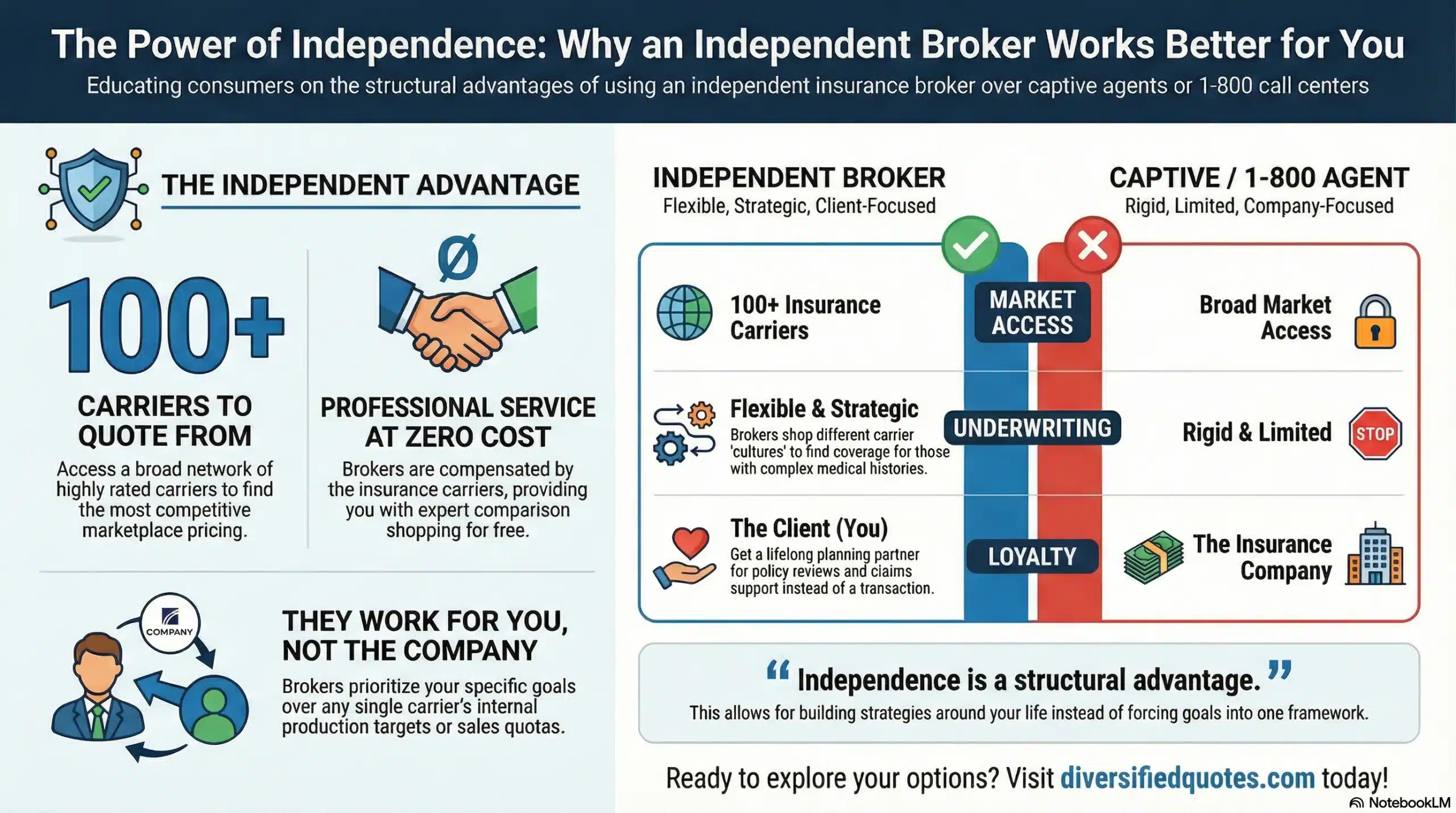
As an Independent Life Insurance Broker, we compare rates across 100+ carriers and prescreen every application before submission.
Life Insurance for Skin Cancer

Jason Stolz CLTC, CRPC, DIA, CAA
Life insurance with a history of skin cancer is underwritten across a wider spectrum than most applicants expect — and the outcome depends almost entirely on the details of the specific diagnosis, not just the fact that skin cancer occurred. At one end of that spectrum sits basal cell carcinoma: a slow-growing, locally confined cancer with cure rates exceeding 95% when caught and treated early, which many carriers approach much like a minor surgical event once excision is complete with clear margins. Many basal cell carcinoma applicants qualify for Standard Non-Smoker rates with no premium increase at carriers that view the treated, clear-margin BCC case the same way they view a healed appendectomy — a resolved medical event, not an ongoing risk indicator. At the other end of the spectrum sits invasive melanoma with lymph node involvement: a diagnosis that triggers postponement periods of five or more years at most traditional carriers, because the recurrence potential and systemic spread risk associated with lymph-node-positive melanoma require a substantially longer disease-free window before underwriters are prepared to offer traditional coverage. Between these two poles lies the full range of skin cancer underwriting — squamous cell carcinoma histories, melanoma in situ, thin invasive melanomas with favorable pathology, and thicker lesions with ulceration or concerning mitotic rates — each carrying a different underwriting profile that maps to a different set of carrier options, waiting periods, and rate class expectations.
The most important fact for any skin cancer applicant to understand about the life insurance market is that carrier underwriting guidelines for skin cancer are not standardized. One carrier’s definition of what constitutes a favorable melanoma history — in terms of Breslow thickness threshold, disease-free interval requirement, and acceptable rate class for that interval — can differ materially from another carrier’s definition of the same. A melanoma applicant who receives a table rating or a postponement decision from one carrier may receive a Standard approval at a melanoma-friendly carrier using the same pathology data, simply because that carrier’s guidelines draw the line differently on Breslow thickness or disease-free interval. This variation is not a technicality — it is the central strategic fact of skin cancer underwriting. It means that the same medical history can produce fundamentally different outcomes depending solely on which carrier receives the application. And it means that submitting to the wrong carrier first — without understanding that carrier’s specific guidelines and appetite for skin cancer histories — creates an adverse insurance record that complicates the entire subsequent search. At Diversified Insurance Brokers, we work with more than 100 life insurance carriers and we place skin cancer cases every week. We know which carriers are most favorable for each skin cancer type, Breslow thickness range, and disease-free interval, and we match applications to carriers before submission rather than after discovering a mismatch through an adverse outcome.
The third core principle of skin cancer underwriting is that documentation quality controls the outcome as much as the underlying medical facts. Underwriters are not working from your verbal summary of your diagnosis — they are working from your pathology report, your operative notes, your follow-up documentation, and any specialist records relevant to the treatment course. An underwriter who receives a complete, well-organized file with a clear pathology report showing Breslow thickness, margins, mitotic rate, ulceration status, and sentinel node biopsy results — alongside clean dermatology follow-up notes documenting regular surveillance and no evidence of recurrence — is evaluating documented stability. An underwriter who receives an application without a pathology report is evaluating uncertainty, and uncertainty defaults to conservative pricing. The practical implication is that gathering and organizing the right documentation before application is one of the most powerful ways to improve underwriting outcomes for skin cancer cases — not because the documents change the medical facts, but because they allow the underwriter to evaluate the actual risk rather than a worst-case estimate of what it might be. Our resource on high-risk life insurance services covers the broader framework within which skin cancer cases are positioned, and our resource on life insurance with pre-existing conditions covers how multi-condition profiles are evaluated when skin cancer is accompanied by other health factors. Our resource on best life insurance for pre-existing conditions covers the carrier comparison framework that applies when the application requires matching the health profile to a specific carrier’s underwriting philosophy rather than applying generically.
See Real-Term Life Insurance Rates Side by Side
Life Insurance Quoter
Life Insurance With Skin Cancer History
We compare 100+ carriers to match your specific diagnosis type, pathology, and disease-free timeline to the most favorable underwriting outcome available in the current market.
Request Skin Cancer Life Insurance ReviewOr call: 800-533-5969
Life Insurance for Other Cancer Conditions
How Underwriters Evaluate Skin Cancer — The Complete Framework
Life insurance underwriting for skin cancer is simultaneously simpler and more nuanced than applicants often expect. Simpler because basal cell carcinoma — the most common skin cancer — is evaluated by most carriers with a level of straightforwardness that treats it closer to a routine surgical history than to a systemic cancer. More nuanced because melanoma evaluation requires specific pathology detail that, handled incorrectly or without carrier-matching expertise, can produce an outcome that significantly underestimates the underwriting value of a favorable history. The six dimensions underwriters consistently evaluate across all skin cancer profiles are the diagnosis type (BCC, SCC, or melanoma), the pathology and staging details that characterize how the specific cancer behaved, the completeness of treatment and margin status, the time elapsed since treatment completed, the consistency and documentation of ongoing surveillance, and the overall health profile that surrounds the skin cancer history. For melanoma specifically, a seventh dimension — the Breslow thickness measurement from the pathology report — carries particular weight because it correlates directly with recurrence risk and is the single most important data point in the melanoma underwriting file.
Comparing Skin Cancer Types — What Underwriters See Differently
| Factor | Basal Cell Carcinoma (BCC) | Squamous Cell Carcinoma (SCC) | Melanoma |
|---|---|---|---|
| Typical underwriting view | Most favorable — often treated like a minor surgical event once treated | Generally insurable when localized and fully treated; more caution with recurrence or aggressive features | Most conservatively evaluated; pathology details drive the entire outcome |
| Typical timing to apply | Can often apply immediately after successful treatment with clear margins; no mandatory waiting period at many carriers | Typically 6–24 months after treatment for optimal underwriting outcomes | Varies significantly by stage and Breslow thickness; thin lesions 3+ years; lymph node involvement 5+ years minimum at most carriers |
| Typical rate class outcome (favorable history) | Standard Non-Smoker or better at many carriers; some Preferred carriers possible | Standard Non-Smoker in most favorable scenarios; table ratings possible for higher-risk profiles | Table 2–Table 4 for thin lesions after 3+ years disease-free; higher tables or postponement for thicker/advanced disease |
| Key pathology factors | Lesion type, treatment method, margin status; multiple lesions reviewed but not automatically disqualifying | Depth of invasion, margin status, high-risk location (face, ears, lips), recurrence, smoking status | Breslow thickness (mm), ulceration, mitotic rate, sentinel lymph node biopsy results, Clark level (older reports) |
| Impact of recurrence | Multiple BCCs at different sites does not automatically reset clock; pattern of surveillance important | Frequent recurrence can signal higher risk behavior; may increase caution but not necessarily disqualifying | Any melanoma recurrence resets the disease-free clock to zero and substantially increases underwriting difficulty |
| Smoking impact | Standard smoker/non-smoker rate differential applies; smoking not a specific BCC concern | Active smoking can convert a moderate-risk SCC case into a decline at some carriers; former smoker better; non-smoker status critical | Compounds overall risk; non-smoker status is significantly better for melanoma underwriting |
| Decline scenarios | Rare for treated BCC with clear margins; much more unusual than for SCC or melanoma | Possible for aggressive SCC with deeper invasion, recurrence, and active smoking at conservative carriers | Stage 2+, lymph node-positive, or recurrent melanoma triggers declines at most traditional carriers; carrier-specific appetite varies |
This table reflects general market underwriting patterns across the broad carrier market and does not represent any single carrier’s specific guidelines. Actual outcomes depend on the complete medical history, pathology details, disease-free interval, follow-up documentation, age, other health factors, and the specific carrier’s current underwriting guidelines. Carriers adjust underwriting guidelines periodically; always verify current requirements through an independent broker before submitting any application.
Basal Cell Carcinoma — The Most Favorable Skin Cancer History
Basal cell carcinoma is underwritten by most carriers as a locally confined skin event with cure rates that exceed 95% when caught early and treated with clean excision margins. Unlike systemic cancers that spread through the lymphatic system or bloodstream, BCC rarely metastasizes and does not have the recurrence-and-spread risk profile that drives conservative underwriting for melanoma or internal organ cancers. Many carriers treat a fully treated, clear-margin BCC with the same level of underwriting concern they give to a healed surgical procedure — looking primarily to confirm the lesion type, that excision was complete, and that routine follow-up is in place. In favorable BCC cases, the outcome is often Standard Non-Smoker with no premium surcharge, applied immediately after successful treatment without a mandatory disease-free waiting period. Some carriers may offer better than Standard for thin BCCs with excellent surgical outcomes and otherwise clean profiles.
Multiple basal cell carcinomas at different sites over time do not automatically disqualify or reset the underwriting clock the way a melanoma recurrence would. Carriers reviewing multiple BCC histories typically focus on whether each lesion was treated successfully with clear margins, whether the surveillance plan is consistent and documented, and whether the pattern of lesions suggests adequately controlled behavior rather than a concerning trajectory. A patient with five BCCs over ten years, each promptly treated and each followed by clean dermatology visits, represents a very different underwriting profile than a case where multiple lesions were discovered late, treated incompletely, or are currently under investigation. Consistency of dermatologic surveillance — documented six-month or annual skin checks depending on the dermatologist’s recommendation — is one of the most effective signals for favorable BCC underwriting at carriers that evaluate the complete documented pattern rather than just the count of prior lesions.
Squamous Cell Carcinoma — Localized and Treated Usually Means Insurable
Squamous cell carcinoma occupies a middle position in the skin cancer underwriting spectrum — more conservative than basal cell but typically still very insurable when the lesion was localized, fully treated, and followed by documented, clean surveillance. Localized SCC that is excised with clear margins, with no evidence of spread and no high-risk anatomical location (face, ears, lips, genitals, hands), can often be approved at or near Standard rates after a waiting period that typically ranges from six months to two years at most carriers, depending on how long ago treatment was completed. More conservative evaluation applies when pathology indicates deeper invasion, when the lesion occurred at a high-risk location associated with more aggressive SCC behavior, or when the case involves multiple recurrent lesions rather than a single treated event.
Smoking status is uniquely important for squamous cell carcinoma underwriting in a way it is not for basal cell carcinoma. Active smoking combined with an SCC history creates compounding risk signals that some carriers treat as sufficient for a decline, particularly when the SCC involved a high-risk site or showed features suggesting aggressive behavior. Non-smoker status — and for former smokers, documented cessation with a clear quit date — is more than a routine rating consideration for SCC cases; it can be the difference between approval and decline at carriers with conservative combined-risk guidelines. Former smoker status is meaningfully better than current smoking for SCC underwriting, particularly when cessation occurred well before or around the time of the SCC diagnosis. The carrier selection dimension is equally critical for SCC: the same localized, treated SCC history that produces a Standard approval at a carrier experienced with favorable SCC profiles may produce a table rating or postponement at a carrier whose underwriting guidelines are more conservative for the specific SCC profile. Our resource on Medicare supplement coverage for cancer treatment covers how Medicare supplement plans interact with ongoing dermatology surveillance costs for skin cancer patients approaching Medicare age.
Melanoma — Where Pathology Details Drive Everything
Melanoma underwriting is the most detail-dependent and outcome-variable segment of skin cancer life insurance. The same generic “melanoma history” can represent anything from a melanoma in situ — a non-invasive pre-cancerous change that does not penetrate the dermis — to a Stage 3 melanoma with lymph node involvement and systemic spread risk. These two scenarios produce completely different underwriting outcomes, and the only way an underwriter can distinguish them is through the pathology report. This is why the pathology report is the single most important document in a melanoma life insurance file, and why applicants who submit without it — or who provide vague verbal descriptions of their diagnosis — receive conservative estimates rather than outcomes that reflect their actual pathology.
The core pathology dimensions that drive melanoma underwriting are Breslow thickness (the measured depth of the tumor in millimeters), ulceration status (whether the surface of the tumor is ulcerated, which is associated with more aggressive behavior), mitotic rate (the number of dividing cells per square millimeter, a measure of how actively the tumor was growing), sentinel lymph node biopsy status (whether lymph nodes were biopsied and whether they were positive or negative), and the overall stage classification (Stage 1A, 1B, 2A, 2B, 3, or 4 under the current AJCC staging system). Each of these factors informs the underwriter’s assessment of recurrence risk — the primary risk that drives melanoma underwriting above all other considerations — and the combination of these factors with the disease-free interval since treatment determines what rate class is available, if any. Our resource on life insurance table ratings explained covers how table ratings translate to actual premium impacts for applicants who receive a table rating rather than a Standard approval after a melanoma history.
Breslow Thickness — The Most Important Number in Melanoma Underwriting
Breslow thickness is the pathologist’s measurement of the vertical depth of the melanoma tumor in millimeters, from the top of the epidermis to the deepest point of tumor invasion. It is the single most predictive prognostic factor in early-stage melanoma and the most important number in the melanoma underwriting file. Under 1.0 mm is considered thin, with 5-year survival rates exceeding 95% for Stage 1A disease — the biological basis for why thin melanomas with favorable pathology are insurable at all and why the disease-free interval requirements are shortest for this category. Melanomas measuring 1.0–2.0 mm (Stage 1B or Stage 2A depending on ulceration and mitotic rate) carry modestly increased recurrence risk that insurers reflect in longer required disease-free intervals and higher table ratings when coverage is offered. Melanomas above 2.0 mm (Stage 2B or higher depending on other factors) carry meaningfully higher recurrence risk, and most carriers impose extended postponement periods or decline coverage until a substantial disease-free interval — often five or more years — has been established with documented clean follow-up throughout. When Breslow thickness is under 1mm, no ulceration is present, mitotic rate is low, and the sentinel lymph node biopsy (when performed) returned negative results, the melanoma profile is as favorable as a melanoma history can be — and some carriers can offer Table 2 to Table 4 ratings after three or more years of documented disease-free status.
Disease-Free Intervals — How Time Opens Underwriting Doors
The disease-free interval — the time elapsed since successful treatment completion with no evidence of recurrence — is the second most important variable in melanoma underwriting after pathology detail. Time matters because the recurrence risk for melanoma is highest in the first two to five years after treatment, and carriers price this temporal reality into their underwriting guidelines. Under two years of disease-free status generally produces the most limited options and the highest table ratings when coverage is available at all. Three to five years of documented disease-free status opens meaningfully better pricing and more carrier options. Five or more years disease-free — particularly for thin, Stage 1A melanomas — can bring underwriting results that approach Standard rates at carriers experienced with favorable long-term melanoma histories. These timelines are not rigid rules that apply uniformly across all carriers; they are general market patterns around which individual carrier guidelines vary. The implication for melanoma applicants is that timing the application intelligently — understanding where you are in the disease-free interval and which carriers are most favorable for your specific interval and pathology combination — is as important as gathering the right documentation.
There is also an important trade-off to evaluate: waiting longer produces better rates, but every year of waiting is a year of aging, and older age at application increases the base premium rate. For most melanoma applicants under age 50, every additional year of age adds approximately 8-12% to the base premium. The net question is whether the table rating improvement from an additional year of disease-free status outweighs the age-related premium increase from that same year of delay. The answer varies by specific scenario — age, pathology, current disease-free interval, and the rate difference between table options. An independent broker can model this calculation with real carrier quotes for a specific profile and provide the analysis needed to make an informed timing decision rather than defaulting to the intuition that “waiting always produces a better outcome.” Any recurrence event resets the disease-free clock completely regardless of how much time had elapsed — which is why consistent dermatologic surveillance and prompt documentation of any new suspicious lesions is critical both medically and for the ongoing insurance picture.
What Medical Documentation Carriers Request — And Why It Matters
Documentation quality is the most controllable variable in skin cancer underwriting outcomes. Carriers typically request a combination of pathology confirmation, treatment records, and follow-up documentation — and the completeness of what arrives in the underwriting file directly determines whether the outcome reflects the actual medical facts or a conservative estimate of what those facts might be. For basal cell and squamous cell carcinoma, the standard file includes the pathology report confirming the lesion type and margin status, the procedure note or operative report, and follow-up dermatology notes. For melanoma, the standard file is more detailed: the full pathology report showing Breslow thickness, Clark level (if referenced), ulceration status, mitotic rate, and margins; the surgical notes including the scope of excision and whether a wide local excision was performed; sentinel lymph node biopsy records and results if the procedure was performed; any imaging records that were part of the staging workup; oncology or dermatology follow-up notes documenting no evidence of recurrence; and the current surveillance plan. When sentinel lymph node biopsy was performed, those results are examined closely — negative nodes support a significantly more favorable underwriting trajectory than positive nodes, and the distinction is not visible without the actual biopsy documentation.
Carriers also evaluate the consistency and timing of follow-up visits. A documented pattern of regular dermatology surveillance — whether every six months or annually as directed by the dermatologist — communicates stability and compliance. A long gap in follow-up creates a documentation void that underwriters interpret as uncertainty rather than confidence: if you have been monitoring consistently for five years with clean results, that documented history is meaningful evidence of stability. If the last dermatology visit was three years ago after a period of regular visits, the underwriter cannot confirm whether the subsequent three years have been clean. Consistent follow-up documentation is therefore not just medically important — it is an underwriting asset that directly supports favorable outcomes. Our resource on why to work with an independent life insurance broker covers how an independent broker manages the documentation presentation process to arrive at the underwriting table “underwriter-ready” rather than creating opportunities for the underwriter to fill documentation gaps with conservative assumptions. For a case where a prior declination has already occurred, our resource on what happens if you’re denied life insurance covers how to reset strategy and approach the market again after an adverse prior decision. And for understanding what a table rating means in practical premium terms, our resource on life insurance table ratings explained covers how each table step translates to actual dollar cost changes on a specific policy.
Common Mistakes That Lead to Avoidable Declines
Most adverse skin cancer underwriting outcomes are preventable with the right strategy applied before the first application is submitted. The first and most consequential mistake is applying with the wrong carrier without knowing that carrier’s specific skin cancer guidelines. Some carriers are conservative with melanoma histories regardless of pathology detail; others have developed expertise with favorable thin-lesion melanoma cases and produce Standard or near-Standard outcomes for profiles that another carrier would postpone. A decline from the wrong carrier creates an MIB record that every subsequent carrier will see, potentially complicating all future applications. Applying to the right carrier first — based on knowledge of that carrier’s specific underwriting appetite for the specific skin cancer type, pathology, and disease-free interval — is the most important risk management step available before any application is submitted.
The second mistake is submitting without a pathology report. An underwriter who receives a melanoma application with no pathology cannot evaluate Breslow thickness, ulceration status, mitotic rate, or margin status — the dimensions that determine whether the case can be favorably underwritten. Without those details, the underwriter defaults to a conservative estimate based on incomplete information. The third mistake is poor timing — applying too soon after treatment, when the disease-free interval is insufficient for the carrier’s guidelines, rather than waiting for the interval that unlocks better options. The fourth is inconsistent follow-up documentation — missing dermatology appointments, having gaps in the surveillance record that make the underwriter question whether the disease-free claim is supported by actual documented surveillance. The fifth is misidentifying the diagnosis on the application — using terms like “skin cancer” without specifying whether it was BCC, SCC, or melanoma, which forces the underwriter to request records for clarification and delays the decision. For candidates who have experienced previous adverse decisions and need to reassess their approach, our resource on what happens if you’re denied life insurance covers how to reframe the search after a decline.
Term and Permanent Coverage After Skin Cancer
Most skin cancer applicants evaluate term life insurance first because it provides the most death benefit per premium dollar for the years that matter most — income replacement during working years, mortgage protection, and family financial security through the period when dependents rely most on earned income. For favorable BCC and SCC histories, term options are broadly available across a wide range of term lengths and face amounts, with Standard or near-Standard pricing at carrier-matched applications. For melanoma cases with table ratings, term coverage is still typically the most cost-efficient approach even with a surcharge, because the table rating is applied to a competitive term base rate that produces a manageable premium for a meaningful death benefit. Our resource on what is term life insurance covers the foundational structure and purpose of term coverage for applicants evaluating it for the first time or after a gap. Our how much life insurance do I need resource covers the coverage amount framework before pricing becomes the focus. Our how much does life insurance cost and life insurance quotes resources provide the broader market context. For some skin cancer applicants — particularly those with higher table ratings who want the option to access better pricing if their health picture improves over time — the term conversion option is a valuable planning tool: our resource on how to convert term to permanent life insurance covers how this option works and when it is strategically useful.
Permanent life insurance — whole life, guaranteed universal life, or indexed universal life — is appropriate when coverage that does not expire is the objective: estate planning, final expense coverage that must outlast working years, business succession protection, or lifetime wealth transfer planning. Permanent policies require more complex underwriting conversations for skin cancer cases because the longer commitment duration makes the actuarial implications of any residual recurrence risk more significant over the policy’s life. No-exam options are worth evaluating for smaller face amounts in favorable BCC and SCC cases where the prescription history and MIB records support clean outcomes without requiring a full medical underwriting pathway: our resource on no-exam life insurance covers how accelerated underwriting works and when it is available for applicants with health histories. Our life insurance services overview covers the full product landscape for applicants still evaluating which coverage structure fits their planning objectives. For the financial implications of coverage — specifically how death benefits are treated from a tax standpoint — our resource on are life insurance benefits taxable covers that framework. And our resource on how life insurance works provides the foundational explanation for applicants building their understanding of the product before focusing on the skin cancer underwriting specifics. Our second-opinion life insurance quote review provides independent comparison for applicants who have received a quote they want to verify against the full market, and our resource on why to work with the best independent insurance agent covers the broader case for independent broker representation in skin cancer and other high-risk underwriting cases. Our resource on medically underwritten annuities covers situations where a skin cancer history intersects with annuity product evaluation rather than life insurance specifically. Finally, for the broader context of how skin cancer life insurance underwriting intersects with Medicare coverage for ongoing dermatology surveillance costs, our resource on Medicare supplement coverage for cancer treatment covers how Medigap plans handle cancer-related dermatology follow-up care for Medicare-eligible patients.
The Case Study — How Carrier Matching Changes the Outcome
A 54-year-old non-smoker presented with melanoma measuring 0.7mm Breslow thickness, no ulceration, negative sentinel lymph node biopsy — fully excised with clear margins three years prior. Follow-up dermatology visits had been consistent every six months with no evidence of recurrence. Another agency had projected a high table rating, citing the melanoma diagnosis as the basis. We reviewed the pathology report — thin lesion, favorable features, negative nodes, three full years of clean documented follow-up — and matched the case to a carrier whose underwriting guidelines for thin melanoma histories with strong disease-free documentation align with the actual risk profile of this case. The result was Standard Non-Smoker approval for $300,000 over 20 years, saving the client more than $450 per year compared to prior estimates. That outcome was not luck. It was the direct product of matching a favorable thin-melanoma profile to a carrier whose guidelines recognize the difference between a 0.7mm melanoma with negative nodes and three years of clean follow-up, and a more advanced melanoma requiring conservative pricing. The same pathology data. The same application. Different carrier. Materially different outcome.
Compare Term Life Insurance Lengths
Explore different term periods to find coverage that best matches your timeline and budget.
Talk With an Advisor Today
Choose how you’d like to connect—call or message us, then book a time that works for you.
Schedule here:
calendly.com/jason-dibcompanies/diversified-quotes
Licensed in all 50 states • Fiduciary, family-owned since 1980
FAQs: Life Insurance for Skin Cancer
Can I get life insurance if I’ve had skin cancer?
Yes — many applicants with a skin cancer history are approved for traditional fully underwritten life insurance. The outcome depends on the diagnosis type (basal cell carcinoma, squamous cell carcinoma, or melanoma), the pathology details of the specific lesion, how treatment was completed, the time elapsed since treatment, and the quality and consistency of follow-up surveillance documentation. Basal cell carcinoma applicants often qualify at Standard or better rates with no waiting period at many carriers. Squamous cell carcinoma applicants typically qualify after a 6- to 24-month window with localized, treated disease. Melanoma applicants face the most variable outcomes depending on Breslow thickness, staging, and sentinel lymph node status — but favorable thin-lesion melanoma histories with documented disease-free intervals can qualify for traditional coverage with table ratings. Working with an independent broker who understands which carriers are most favorable for each skin cancer type produces significantly better outcomes than applying without carrier selection expertise.
Do insurers treat melanoma differently from basal cell or squamous cell carcinoma?
Yes — significantly. Basal cell carcinoma is generally viewed as the most favorable skin cancer history, often treated like a minor surgical event after clear-margin excision, and many carriers offer Standard rates immediately after treatment. Squamous cell carcinoma is evaluated more conservatively but is typically insurable at Standard or near-Standard rates when localized and fully treated, usually after a 6- to 24-month waiting period. Melanoma triggers the most conservative evaluation because its recurrence potential varies significantly with pathology features — Breslow thickness, ulceration, mitotic rate, and sentinel lymph node status can dramatically change the risk profile. A thin melanoma under 1mm with negative nodes after three years disease-free is very insurable; a thicker melanoma with lymph node involvement requires extended waiting periods or results in postponement at most carriers.
What is Breslow thickness and why does it matter for melanoma underwriting?
Breslow thickness is the pathologist’s measurement of the vertical depth of the melanoma tumor in millimeters, from the top of the epidermis to the deepest point of invasion. It is the most important single number in a melanoma underwriting file because it correlates directly with recurrence risk and survival statistics. Under 1.0mm (thin melanoma) corresponds to 95%+ 10-year survival for Stage 1A disease — the basis for favorable underwriting outcomes after adequate disease-free intervals. Over 2.0mm carries meaningfully higher recurrence risk and typically results in extended postponement periods or higher table ratings. Breslow thickness is found in your pathology report, which is the single most important document to gather before applying for life insurance with a melanoma history. Underwriters who do not see this number must estimate risk conservatively rather than using the actual documented prognosis.
How long should I wait after skin cancer treatment to apply for life insurance?
The answer varies significantly by skin cancer type. For basal cell carcinoma with clear margins, many carriers consider applications immediately after successful treatment — no mandatory waiting period. For squamous cell carcinoma, optimal underwriting typically occurs after 6 to 24 months of documented disease-free status following treatment. For melanoma, the disease-free interval required depends on Breslow thickness and staging: thin melanomas (under 1mm) with negative nodes may be insurable after 3+ years disease-free; thicker lesions require longer intervals; lymph node-positive melanoma typically requires 5+ years at most carriers. There is also a trade-off: waiting longer improves the rate class but each year of aging increases the base premium. An independent broker can model the specific trade-off for your age and pathology to determine whether applying now or waiting produces the better net result.
What documents do I need for a skin cancer life insurance application?
For basal cell and squamous cell carcinoma: the pathology report confirming the lesion type and margin status, the procedure or operative note, and follow-up dermatology notes documenting no recurrence. For melanoma: the full pathology report showing Breslow thickness, ulceration, mitotic rate, Clark level (if referenced), and margins; the surgical notes; sentinel lymph node biopsy records and results (if performed); any imaging or oncology records from the staging workup; and most recent dermatology follow-up notes documenting no evidence of recurrence and your current surveillance plan. The pathology report is the most critical document — without it, underwriters cannot evaluate the actual risk factors that determine your rate class and must estimate conservatively. Gathering this documentation before applying rather than waiting for carriers to request it speeds up the decision timeline and prevents avoidable delays.
What happens if I’ve already been declined for life insurance because of skin cancer?
A decline from one carrier does not close the door permanently. Other carriers may evaluate the same history significantly more favorably — especially if more time has passed since treatment, your follow-up documentation has strengthened, or the prior carrier simply has more conservative guidelines for your specific skin cancer type than other active carriers. The MIB (Medical Information Bureau) records the prior adverse decision, which subsequent carriers will see, but an adverse MIB entry does not automatically produce an adverse outcome at a more favorable carrier. The key is working with an independent broker who understands which carriers are most accommodating for your specific skin cancer type and timeline, and who can present your complete documentation — including updated follow-up notes since the prior decline — in the most favorable light before the next application is submitted.
Does having multiple basal cell carcinomas hurt my application?
Multiple basal cell carcinomas at different sites over time do not automatically disqualify or dramatically worsen underwriting outcomes the way a melanoma recurrence would. Unlike melanoma recurrence, which resets the disease-free clock and significantly complicates underwriting, multiple BCCs at separate anatomical sites are evaluated on a pattern basis — whether each lesion was promptly treated with clear margins, whether surveillance has been consistent and documented, and whether the pattern suggests adequately managed risk. Carriers reviewing multiple BCC histories look for consistent dermatology surveillance, completed treatment for each lesion, and no aggressive features suggesting higher-risk BCC behavior. A patient with multiple BCCs each treated promptly and followed consistently can often still qualify for Standard or near-Standard rates at carriers experienced with multiple BCC profiles.
Does smoking affect my skin cancer life insurance application?
Yes — and the impact is most significant for squamous cell carcinoma. Active smoking combined with an SCC history creates compounding risk signals that some carriers treat as grounds for a decline, particularly when the SCC involved a high-risk anatomical location or aggressive features. Non-smoker status and former smoker status (with documented quit date) are both materially better for SCC underwriting than active smoking. For melanoma, smoking compounds the overall risk picture and worsens outcomes across the board. For basal cell carcinoma, the standard smoker/non-smoker rate differential applies, but smoking is not a specific BCC concern in the same way it is for SCC. Regardless of skin cancer type, active tobacco use increases premiums and narrows carrier options — quitting before applying, if feasible, improves both the SCC and overall underwriting picture meaningfully.
About the Author:
Jason Stolz, CLTC, CRPC, DIA, CAA and Chief Underwriter at Diversified Insurance Brokers (NPN 20471358), is a senior insurance and retirement professional with more than 25 years of real-world experience helping individuals, families, and business owners protect their income, assets, and long-term financial stability. As a long-time partner of the nationally licensed independent agency Diversified Insurance Brokers, Jason provides trusted guidance across multiple specialties—including fixed and indexed annuities, long-term care planning, personal and business disability insurance, life insurance solutions, Group Health, Travel Medical and Evacuation Insurance, and short-term health coverage. Diversified Insurance Brokers maintains active contracts with over 100 highly rated insurance carriers, ensuring clients have access to a broad and competitive marketplace.
His practical, education-first approach has earned recognition in publications such as VoyageATL, and contributions from his agency featured in Kiplinger and GoBankingRates— highlighting his commitment to financial clarity and client-focused planning. Drawing on deep product knowledge and years of hands-on field experience, Jason helps clients evaluate carriers, compare strategies, and build retirement and protection plans that are both secure and cost-efficient. Visitors who want to explore current annuity rates and compare options across multiple insurers can also use this annuity quote and comparison tool.
Explore More Life Insurance Options: Browse our complete guide to Life Insurance for Cancer — covering breast, colon, cervical, prostate, testicular, skin, and other cancer diagnoses from 100+ carriers.
Last Reviewed: June 15, 2026 |
Reviewed by: Jason Stolz, CLTC, CRPC, DIA, CAA
Chief Underwriter, Diversified Insurance Brokers, Inc. | NPN: 20471358 | Diversified Insurance Brokers, Inc. — Licensed in all 50 states
Fact Checked by: Tonia Pettitt, CMIP©
Medicare Specialist, Diversified Insurance Brokers, Inc. | NPN: 14374308 | Diversified Insurance Brokers, Inc. — Licensed in all 50 states
Did you find this content helpful? Leave us a Google review — it helps others find trustworthy guidance too.
Editorial Standards: Diversified Insurance Brokers maintains rigorous editorial standards to ensure accuracy, clarity, and independence in all content. Learn more about our editorial standards and commitment to transparency.
