
Life Insurance for Special Needs Child
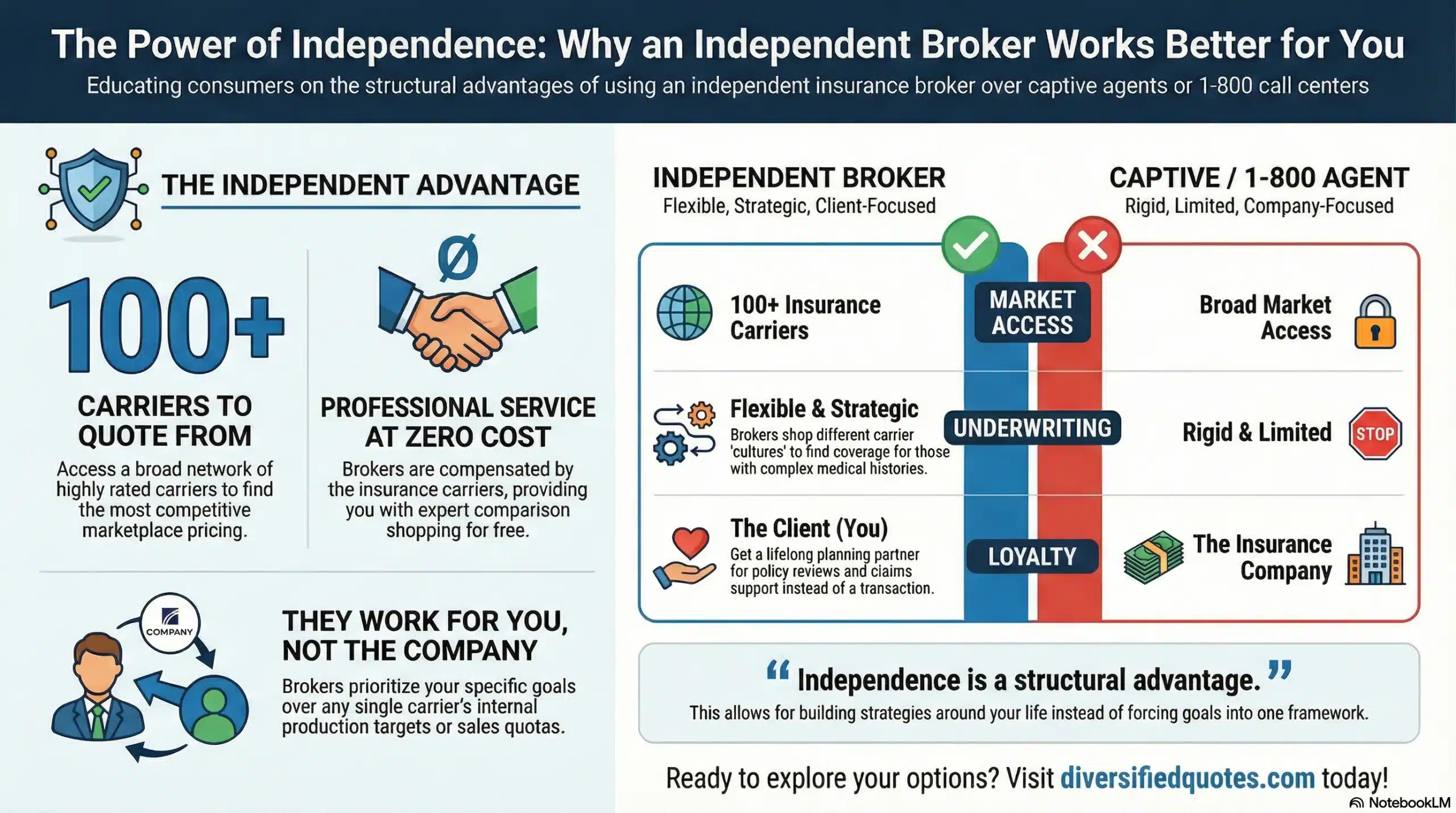
As an Independent Life Insurance Broker, we compare rates across 100+ carriers and prescreen every application before submission.
Life Insurance for Special Needs Child

Jason Stolz CLTC, CRPC, DIA, CAA
Planning for lifelong care is one of the most important — and emotionally demanding — financial decisions that families raising a child with special needs face. Most families are trying to solve several distinct problems at once: protecting day-to-day stability now, creating reliable long-term financial resources for the future, and making sure that whatever plan they build does not accidentally disrupt the critical government benefits their child depends on. That is why life insurance for a special needs child requires a genuinely different approach than standard life insurance planning. It is not simply “buy coverage and name a beneficiary.” The strategy is about creating predictable, lifetime funding while coordinating ownership and beneficiary design in a way that supports the entire planning framework — legal, financial, and care-based — without creating unintended consequences along the way.
At Diversified Insurance Brokers, Jason Stolz, CLTC, CRPC, DIA, CAA, we help families structure life insurance solutions for children and dependents with qualifying conditions such as autism, Down syndrome, cerebral palsy, intellectual disabilities, and other diagnoses that can make traditional underwriting difficult or impossible through standard channels. Importantly, we have access to exclusive special needs life insurance products not available through general carriers or online platforms — purpose-built programs designed for qualifying conditions where traditional underwriting would typically decline coverage or offer terms that do not serve the family’s long-term planning needs. When the policy is designed correctly and coordinated with the right legal tools, life insurance can provide long-term financial support without compromising eligibility for means-tested programs like SSI or Medicaid. The key is aligning the policy with your Special Needs Trust so that benefits are supplemented rather than replaced, and resources can be managed responsibly for the child’s lifetime. What is special needs life insurance and who needs it provides foundational context for families who are beginning to understand how insurance fits into the broader care planning picture.
Visit Our Special Needs Life Insurance Page
Why Life Insurance Planning Looks Different for Special Needs Families
Most families buy life insurance to protect income and pay off major near-term obligations like a mortgage or fund education costs. Special needs planning has an additional and fundamentally different layer: the child’s financial needs may continue for decades, the support structure often outlives a parent’s working years, and the resources that fund that support must be managed in a way that preserves access to government benefit programs rather than inadvertently displacing them. Even when a child is independent in many ways, families may need a reliable funding backstop for care coordination, housing support, therapy, transportation, and supplemental services that public programs do not fully cover across a lifetime.
Certain public benefits are means-tested — eligibility can be affected if assets are owned directly by the child or if money is paid to the child in a way that counts toward resource limits. SSI and Medicaid both apply resource limits, and a lump sum paid directly to a beneficiary with special needs can disqualify them from those programs at exactly the moment the family needs the system to function. The good news is that life insurance can be structured to avoid that outcome entirely. The critical requirement is that it must be structured correctly from the outset — and the difference between a “safe” structure and a “problematic” one almost always comes down to the beneficiary designation, the trust planning around it, and whether the policy ownership aligns with the broader estate plan.
This is why special needs families use life insurance in direct coordination with a Special Needs Trust. Instead of paying proceeds directly to the child — which creates the resource-counting risk — the policy is designed so the trust receives the death benefit, and the trustee uses those funds to support the child in ways that supplement rather than replace government benefits. The result is a plan that preserves eligibility while creating meaningful, managed, long-term financial support. Why a Special Needs Trust explains the legal planning foundation that makes this coordination work and why the trust structure is the central tool in the overall strategy.
How Life Insurance Supports a Special Needs Trust Strategy
For many families, the primary purpose of life insurance in special needs planning is to fund a Special Needs Trust. In a properly drafted trust strategy, the trust holds assets for the benefit of the child without those assets being treated as the child’s direct resources — which is what preserves the child’s eligibility for means-tested programs. The trust can pay for approved supplemental expenses that improve quality of life and functional support without displacing government program eligibility: specialized therapies, home modifications, additional caregiving, certain educational supports, transportation, recreation, and other services that public programs may not cover or may only partially fund.
Life insurance is often the most efficient way to fund that trust because it creates a predictable, guaranteed pool of money at the time it is needed most — when the parents or primary caregivers are no longer available. Instead of requiring families to accumulate a very large cash reserve over decades of savings, a life insurance policy creates a guaranteed death benefit that becomes the foundation of lifetime support through the trust. Families can choose a coverage amount based on realistic lifetime care needs, other available assets, and the expected ongoing role of public benefit programs.
The right structure can look meaningfully different depending on family circumstances. Some families want the child insured so they can create coverage that remains available regardless of future health changes — locking in insurability through the exclusive programs available to us while the child is still young and the health profile is most favorable. Others focus on insuring the parents, because the parents’ death is the moment when ongoing support needs become most financially acute and when trust funding is most urgently required. Many strategies involve both approaches — particularly when the long-term plan includes creating resources for caregiving continuity even after both parents are gone. The best approach is always the one that matches the child’s realistic lifetime needs, the family’s financial circumstances, and the legal framework already in place or being built. Choosing a special needs trustee addresses the governance dimension of the trust strategy that must be coordinated with the insurance coverage decisions.
Our Exclusive Special Needs Care Underwriting Program
When families shop for life insurance for a special needs child, the most common and most frustrating obstacle is underwriting. Many traditional underwriting paths are simply not designed for applicants with certain developmental diagnoses, intellectual disabilities, or complex medical histories. The result is unnecessary declines, confusing conditional offers, or severely limited options that do not serve the family’s actual planning needs. Our Special Needs Care Underwriting Program addresses this challenge with purpose-built underwriting guidelines and a whole life product structure specifically designed for special needs planning — coverage that is not available through standard carrier channels or general broker networks.
This is not a standard product submitted through standard underwriting. These are exclusive programs that we access specifically for qualifying special needs situations — built around the reality of how these families need coverage to function over decades rather than the simplified binary underwriting frameworks that produce declines for diagnoses that would not be problematic under a more informed evaluation. Every case is still reviewed individually because diagnoses alone do not tell the full underwriting story — underwriters look at functional stability, medical complications, comorbid conditions, hospital history, and the overall care profile. But the program is designed with that nuance built in, rather than applying the same standards used for a general life insurance application. Our resource on life insurance with pre-existing conditions provides the broader framework for how carriers evaluate stability and ongoing care patterns when medical complexity is present.
The goal is not just to get a policy issued. The goal is to help families secure coverage that is genuinely useful in the real world — coverage that integrates cleanly into guardianship, estate planning, and trust-based strategies in a way that holds up across decades of use, transitions in caregiving, and changes in the family’s overall situation. That requires a policy structure designed for long-term certainty rather than one optimized purely for the lowest possible premium at the time of issue.
Why Whole Life Insurance Is the Right Structure for Special Needs Planning
Whole life insurance is consistently the preferred structure in special needs planning for reasons that are directly connected to what makes special needs planning different from standard household life insurance planning. Term life insurance has an expiration date. For standard household needs — income replacement during the mortgage years, coverage through the children’s dependency period — a defined term is appropriate because the need itself is defined and time-bounded. Special needs planning is fundamentally different: the child’s needs may be lifelong, the trust’s purpose is perpetual support, and the moment when the death benefit is most needed — the parents’ death — can occur at any age across a very wide range. A policy that expires at age 65 or 70 does not address that reality.
Whole life offers the lifetime duration that special needs planning requires. The death benefit is guaranteed to remain available as long as premiums are paid as required, regardless of when the insured dies — which means the trust funding is available whether the parents die early, late, or anywhere in between. How a whole life insurance policy works covers the mechanics of guaranteed death benefit, premium structure, and cash value accumulation in full. Whole life insurance with cash value growth covers the secondary feature — cash value accumulation — that can provide planning flexibility over time as the policy matures.
Whole life also offers the predictability that families in long-term planning mode need most. Premium schedules are stable, the death benefit is guaranteed, and cash value builds in the background without requiring active investment management. For special needs families, predictability often matters more than optimizing for the lowest possible premium — the goal is a policy that remains in force across decades, does what it is designed to do when the time comes, and requires no forced requalification or renewal decisions along the way. Guaranteed issue life insurance for special needs adults covers the options available when the insured is the adult child rather than the parents — an important alternative path when the strategy requires coverage on the individual with the special needs diagnosis.
The 15-Pay Structure and Why It Fits Special Needs Family Planning
Many families pursuing special needs life insurance choose a limited-pay whole life structure — most commonly a 15-pay design — rather than a traditional lifetime premium payment schedule. The 15-pay structure means premiums are paid over a defined 15-year period, after which the policy remains in force for the insured’s lifetime with no further premium obligations. This structure has specific appeal in special needs planning for reasons that go beyond general premium efficiency.
Parents building a long-term care plan for a special needs child are often simultaneously managing significant current expenses — therapies, medical coordination, specialized educational services, and the day-to-day costs of a household organized around a child with elevated needs. Adding a permanent life insurance premium to that financial picture is a meaningful commitment. A 15-pay structure creates a defined finish line: for 15 years, the premium commitment is active; after that, the policy continues for life with no further payments required. That predictability makes it easier to incorporate the premium into current financial planning without the indefinite open-ended premium obligation that a traditional whole life payment structure creates.
The retirement planning dimension is also significant. Parents who are funding a 15-pay policy in their 40s will complete premium payments before or around retirement age — which means the policy does not become a new fixed expense competing with retirement income in the later years of life. The policy continues providing its guaranteed death benefit and accumulating cash value through retirement without requiring ongoing premium payments from retirement income that may be smaller and less flexible than working income. Limited-pay premiums are higher during the payment period than a traditional whole life schedule, but for many special needs families, the long-term certainty is worth the front-loaded commitment. The question every family must answer is whether higher premiums now — with a defined endpoint — are preferable to lower but indefinite premiums that continue for life.
Ownership and Beneficiary Structures That Protect the Plan
The most consequential structural decisions in special needs life insurance — the ones that determine whether the policy actually protects the child without disrupting benefits — are the ownership design and the beneficiary designation. These decisions must be made carefully and in coordination with the family’s legal planning team, because getting them wrong can undermine the entire strategy even when the policy itself is appropriately designed.
Who should own the policy depends on what the family is trying to accomplish. In many cases, parents own the policy on their own lives and name the Special Needs Trust as beneficiary — which is the structure that allows the death benefit to flow into the trust at the parents’ death and be managed by the trustee for the child’s lifetime benefit without creating a resource-counting problem. In other cases, the trust itself owns the policy, which creates different estate planning implications that are worth discussing with the family’s estate planning attorney. When coverage is placed on the child with the special needs diagnosis rather than the parents, ownership structures may differ again depending on the child’s legal capacity and the guardianship arrangement in place.
Beneficiary design is equally critical and closely related. If proceeds are paid directly to the child — rather than to a properly structured trust — those funds can count toward resource limits for SSI and Medicaid, creating a disqualification risk at exactly the moment when the family intended the policy to provide support. The trust beneficiary designation solves this by directing the death benefit to a legal entity that manages funds for the child’s benefit without those funds being the child’s direct assets. The trust also provides governance structure — how funds can be used, who makes decisions, what happens when caregivers change, and how continuity of support is maintained over time. That governance dimension is often as important as the funding itself, because it ensures the trust functions according to the family’s intentions across decades of changing circumstances.
We frequently coordinate with a family’s attorney or estate planning team when building these structures, because the life insurance is only one component of the plan and it works best when it fits cleanly inside the trust and guardianship strategy that is already in place. Our role is to secure the coverage and structure it correctly; the legal team ensures the trust language is drafted correctly for the specific state and the specific family situation.
Eligibility Considerations and What the Underwriting Evaluation Covers
Eligibility for special needs life insurance — including the exclusive programs available through our Special Needs Care Underwriting Program — depends on several factors beyond the diagnosis label: functional stability, the nature and severity of medical complications, comorbid conditions, hospital history, and the overall care and support profile. Even within a purpose-built program designed for qualifying conditions, each case is evaluated individually because two children with the same primary diagnosis can have very different risk profiles depending on all of these secondary factors.
The most important practical implication of this individual evaluation approach is that families benefit most from working with a broker who can provide honest early guidance about what is realistically available for a specific profile rather than discovering limitations through formal application declines that create MIB record entries. Understanding what to expect before formal application — what documentation is typically helpful, what secondary factors matter most for a specific diagnosis category, and what the realistic product range looks like — allows families to approach the process efficiently and without unnecessary frustration.
When additional diagnoses or medical complications are present alongside the primary special needs condition, understanding how underwriters evaluate layered medical histories provides useful context. Life insurance with pre-existing conditions covers how carriers evaluate risk factors, stability, and ongoing care patterns in complex profiles. What a life insurance exam involves helps families understand what the paramedical examination component of underwriting covers when it is required — though many special needs programs use a simplified underwriting process that reduces or eliminates the exam requirement. Understanding what a flat extra in life insurance is and how table ratings work gives families the vocabulary to evaluate any offer they receive and understand whether it represents an appropriate outcome for the profile or whether alternatives may be available.
Common Mistakes to Avoid in Special Needs Life Insurance Planning
The most common and most consequential mistake families make is focusing on getting a policy without carefully considering how it fits into the benefits eligibility framework. A policy with a beneficiary designation that pays proceeds directly to the child — rather than to a properly structured trust — can create the exact problem it was intended to prevent, disqualifying the child from the government programs that provide their baseline support at the moment when the family’s financial contribution was supposed to be most helpful. The beneficiary designation must be coordinated with the trust structure before the policy is issued, not corrected after a problem is discovered.
Assuming that employer group coverage or standard group life policies solve the special needs planning problem is another common mistake. Group coverage can be useful as a baseline layer, but it lacks the structural flexibility required for a Special Needs Trust strategy, is typically not a permanent lifetime policy, and does not offer the ownership and beneficiary design options that make the plan work correctly. Group vs. individual life insurance covers the practical differences that matter directly for long-term planning needs of this kind.
Waiting until the situation feels urgent is a third major mistake that significantly reduces options. Families sometimes delay because the planning process feels emotionally difficult or because the complexity of coordinating insurance, trust planning, and government benefit rules feels overwhelming. But urgency reduces choices in this specific market more than almost any other. The exclusive programs we access for special needs coverage have eligibility windows and underwriting considerations that are more favorable when families engage early — before additional medical complications develop, before the child ages out of certain program criteria, and before the parents’ own health changes create separate underwriting complexity for the parent-insured strategies. Starting early creates breathing room to design a strategy thoughtfully rather than reacting under time pressure.
Finally, overweighting the cash value dimension and underweighting the death benefit certainty is a common conceptual mistake. Cash value is a secondary feature of whole life that may provide flexibility in certain planning scenarios. The primary planning tool in special needs trust funding is the guaranteed death benefit — the certainty that a defined amount will be available to the trust at the time it is needed regardless of when that moment arrives. Keeping that priority clear produces better structure decisions than approaching the coverage as an investment vehicle first and an insurance plan second.
How This Strategy Works in Real Life
When structured correctly, a life insurance policy serves as the funding engine for the Special Needs Trust. The trust is the beneficiary of the death benefit. At the parents’ death, the proceeds flow into the trust. The trustee — a person or institution named by the parents and governed by the trust document — manages and distributes those funds to support the child over time according to the trust’s instructions and in compliance with the rules that preserve the child’s benefit program eligibility. The funds can pay for things that improve quality of life and long-term stability: support services, housing support, transportation, additional caregiving, specialized therapies, recreation, and other expenses that public programs do not fully cover.
The trust structure also provides the continuity that no informal family arrangement can reliably maintain across decades. The parents can name a trustee and successor trustees, provide specific instructions about how funds should be used and how decisions should be made, and establish a governance system that continues functioning even when the parents are no longer available to manage care personally. That governance dimension — the rules, the accountabilities, the succession plan — is often just as important as the dollar amount, because it ensures that support decisions continue to align with the child’s needs and the family’s values across years of changing circumstances and caregiving transitions.
Life insurance is the efficient mechanism through which families create the funding that the trust will manage. It allows families to create a large, reliable pool of support resources without needing to self-fund that entire amount through savings — which for most families is not realistic given the concurrent demands of caring for a child with special needs. The policy creates the resources; the trust manages them; the combination provides the child with financial security that extends across their lifetime. For families evaluating how this fits alongside coverage for other children in the household, life insurance for kids and Gerber Life children’s whole life cover the options available in the broader child life insurance space for context.
Secure Lifetime Support for Your Special Needs Child
Our experts will help you structure a life insurance plan that supports long-term care and preserves benefits — including exclusive programs not available through standard channels.
Related Life Insurance Pages
Explore these next if you’re planning around underwriting, policy structure, and long-term protection.
Compare Term Life Insurance Lengths
Explore different term periods to find coverage that best matches your timeline and budget.
Talk With an Advisor Today
Choose how you’d like to connect—call or message us, then book a time that works for you.
Schedule here:
calendly.com/jason-dibcompanies/diversified-quotes
Licensed in all 50 states • Fiduciary, family-owned since 1980
Frequently Asked Questions: Life Insurance for a Special Needs Child
Can a child with special needs get life insurance?
Yes — through purpose-built programs specifically designed for qualifying special needs diagnoses, many children who would be declined through standard underwriting channels can obtain whole life coverage. These exclusive programs evaluate functional stability, care history, and the specific clinical picture rather than applying blanket declinations based on diagnosis labels. The underwriting process differs from standard life insurance — it is designed to reflect the realities of special needs care profiles — but coverage is achievable for many families when they work with a broker who has access to these programs and experience presenting special needs cases correctly. The earlier the family engages, the more favorable the eligibility picture typically is, since additional medical complications have had less time to develop and the child’s functional stability is often clearest in the younger years.
Will a life insurance payout disqualify my child from SSI or Medicaid?
A direct payout to the child can create a disqualification risk because SSI and Medicaid are means-tested programs with resource limits — and a lump sum paid directly to the child counts toward those limits. The structure that prevents this problem is naming a properly drafted Special Needs Trust as the beneficiary rather than the child directly. The trust receives the death benefit, and the trustee manages those funds to supplement the child’s care without the assets counting as the child’s direct resources. This is the central planning coordination that makes life insurance work correctly in a special needs context — and it is the reason that getting the beneficiary designation right is just as important as getting the coverage amount right.
Why is whole life insurance preferred over term for special needs planning?
Whole life is preferred because special needs planning is a lifelong commitment, not a defined-term obligation. A term policy expires at the end of its period — which means if the parents are still alive when the term ends, the trust has no funding mechanism in place and the family must requalify for new coverage at older ages and potentially different health classifications. Whole life provides a guaranteed death benefit that remains available regardless of when the insured dies, which aligns with the reality that the moment when trust funding is needed — the parents’ death — can occur at any point across a wide age range. The guaranteed lifetime duration, stable premiums, and predictable structure make whole life the appropriate foundation for this type of planning.
What is a 15-pay whole life policy and why does it appeal to special needs families?
A 15-pay whole life policy is a permanent policy whose premium payments are completed over 15 years, after which the policy remains in force for the insured’s lifetime with no further premium obligations. Special needs families find this structure appealing for two primary reasons. First, it creates a defined endpoint for premium payments — families know exactly when the financial commitment ends, which makes it easier to incorporate into long-term financial planning alongside the ongoing costs of caring for a child with special needs. Second, it prevents the policy from becoming an ongoing premium burden in retirement, when income may be smaller and less flexible. Premiums during the 15-year payment period are higher than a traditional whole life schedule, but the long-term certainty — a fully paid policy that continues for life — is the trade-off that most special needs planning families consider worthwhile.
Who should own the life insurance policy in a special needs plan?
Ownership depends on what the family is trying to accomplish and how the trust is structured. In the most common arrangement, the parents own the policy on their own lives and name the Special Needs Trust as beneficiary — so the death benefit flows into the trust at the parents’ death to be managed by the trustee for the child’s benefit. In some cases, the trust itself owns the policy, which has different estate planning and tax implications worth discussing with the family’s estate planning attorney. When the coverage is placed on the child with the special needs diagnosis, ownership may be held by a parent or guardian depending on the child’s legal capacity and the guardianship arrangement in place. The right structure is always the one that supports the family’s specific legal and financial plan — which is why coordination with the estate planning attorney is essential before finalizing ownership and beneficiary decisions.
About the Author:
Jason Stolz, CLTC, CRPC, DIA, CAA and Chief Underwriter at Diversified Insurance Brokers (NPN 20471358), is a senior insurance and retirement professional with more than 25 years of real-world experience helping individuals, families, and business owners protect their income, assets, and long-term financial stability. As a long-time partner of the nationally licensed independent agency Diversified Insurance Brokers, Jason provides trusted guidance across multiple specialties—including fixed and indexed annuities, long-term care planning, personal and business disability insurance, life insurance solutions, Group Health, Travel Medical and Evacuation Insurance, and short-term health coverage. Diversified Insurance Brokers maintains active contracts with over 100 highly rated insurance carriers, ensuring clients have access to a broad and competitive marketplace.
His practical, education-first approach has earned recognition in publications such as VoyageATL, and contributions from his agency featured in Kiplinger and GoBankingRates— highlighting his commitment to financial clarity and client-focused planning. Drawing on deep product knowledge and years of hands-on field experience, Jason helps clients evaluate carriers, compare strategies, and build retirement and protection plans that are both secure and cost-efficient. Visitors who want to explore current annuity rates and compare options across multiple insurers can also use this annuity quote and comparison tool.
Explore More Life Insurance Options: Browse our complete guide to Life Insurance for Life Stage & Situational Needs — covering new parents, single parents, special needs children, and military service from 100+ carriers.
Last Reviewed: August 22, 2026 |
Reviewed by: Jason Stolz, CLTC, CRPC, DIA, CAA
Chief Underwriter, Diversified Insurance Brokers, Inc. | NPN: 20471358 | Diversified Insurance Brokers, Inc. — Licensed in all 50 states
Fact Checked by: Tonia Pettitt, CMIP©
Medicare Specialist, Diversified Insurance Brokers, Inc. | NPN: 14374308 | Diversified Insurance Brokers, Inc. — Licensed in all 50 states
Did you find this content helpful? Leave us a Google review — it helps others find trustworthy guidance too.
Editorial Standards: Diversified Insurance Brokers maintains rigorous editorial standards to ensure accuracy, clarity, and independence in all content. Learn more about our editorial standards and commitment to transparency.
