
Disability Insurance for Real Estate Appraisers

Jason Stolz CLTC, CRPC
Disability insurance for real estate appraisers is a critical form of financial protection for professionals whose income depends on property inspections, valuation expertise, market analysis, and consistent report production. Real estate appraisers operate at the intersection of fieldwork and analytical work, requiring both physical mobility and cognitive precision.
Whether you are conducting residential appraisals, commercial valuations, or specialized property assessments, your ability to travel to properties, inspect conditions, and produce accurate reports directly impacts your income. If an injury or illness limits your ability to perform any of these functions, your revenue can decline quickly. Disability insurance provides a structured way to protect that income.
At Diversified Insurance Brokers, we help real estate appraisers design disability insurance strategies that reflect the hybrid nature of their work, including field inspections, analytical responsibilities, and often self-employed income structures. A properly structured policy ensures that your financial stability remains intact even if your ability to work is disrupted.
Protect Your Income as a Real Estate Appraiser
Compare disability insurance options designed for real estate professionals and valuation specialists.
Why Disability Insurance Is Essential for Real Estate Appraisers
Real estate appraisers rely on both physical activity and analytical skill to generate income. Property inspections require travel, walking sites, climbing stairs, and evaluating structures, while report writing requires concentration, attention to detail, and market knowledge.
If a disability limits either component, your ability to complete appraisals is reduced or eliminated. Unlike some professions, there is little room for modified duties. You must be able to complete the full scope of work to get paid.
While broader financial strategies such as life insurance with chronic illness benefits can provide additional protection, disability insurance specifically protects your income during your working years.
The Dual Nature of Appraisal Work
One of the defining characteristics of real estate appraisal is the balance between fieldwork and desk work. Appraisers must physically inspect properties to gather accurate data, then translate that information into detailed valuation reports.
This creates two distinct risk areas. Physical limitations, such as injuries affecting mobility, can prevent you from conducting inspections. At the same time, cognitive or neurological conditions can impact your ability to analyze data, apply valuation methods, and produce accurate reports.
Even temporary impairments can delay reports, disrupt client relationships, and reduce income. Because appraisals are often time-sensitive, missed deadlines can have lasting effects on business continuity.
Income Structure and Financial Risk
Many real estate appraisers are self-employed or work on a per-assignment basis. Income is often tied directly to the number of appraisals completed, which creates variability and performance-based earnings.
If a disability occurs, the impact is immediate. Without the ability to inspect properties or complete reports, income can drop to zero. Additionally, clients may turn to other appraisers, making it difficult to recover lost business.
Understanding financial planning tools such as cost of living adjustments can help ensure that disability benefits maintain their value over time.
Case Study: Real Estate Appraiser Earning $100,000 Per Year
Consider a real estate appraiser earning $100,000 annually through a steady flow of assignments. If this individual experiences a disability that prevents them from working for five years, the financial impact can be substantial.
| Scenario | Without Disability Insurance | With Disability Insurance |
|---|---|---|
| Annual Income | $0 | $60,000–$70,000 |
| 5-Year Income | $0 | $300,000–$350,000 |
| Business Impact | Loss of clients and referrals | Financial stability during recovery |
This example highlights how disability insurance helps preserve income and stabilize finances during periods of incapacity.
Designing a Policy for Real Estate Appraisers
Disability insurance for appraisers should reflect both income variability and occupational duties. Benefit amounts are typically based on documented income, often using tax returns or financial statements.
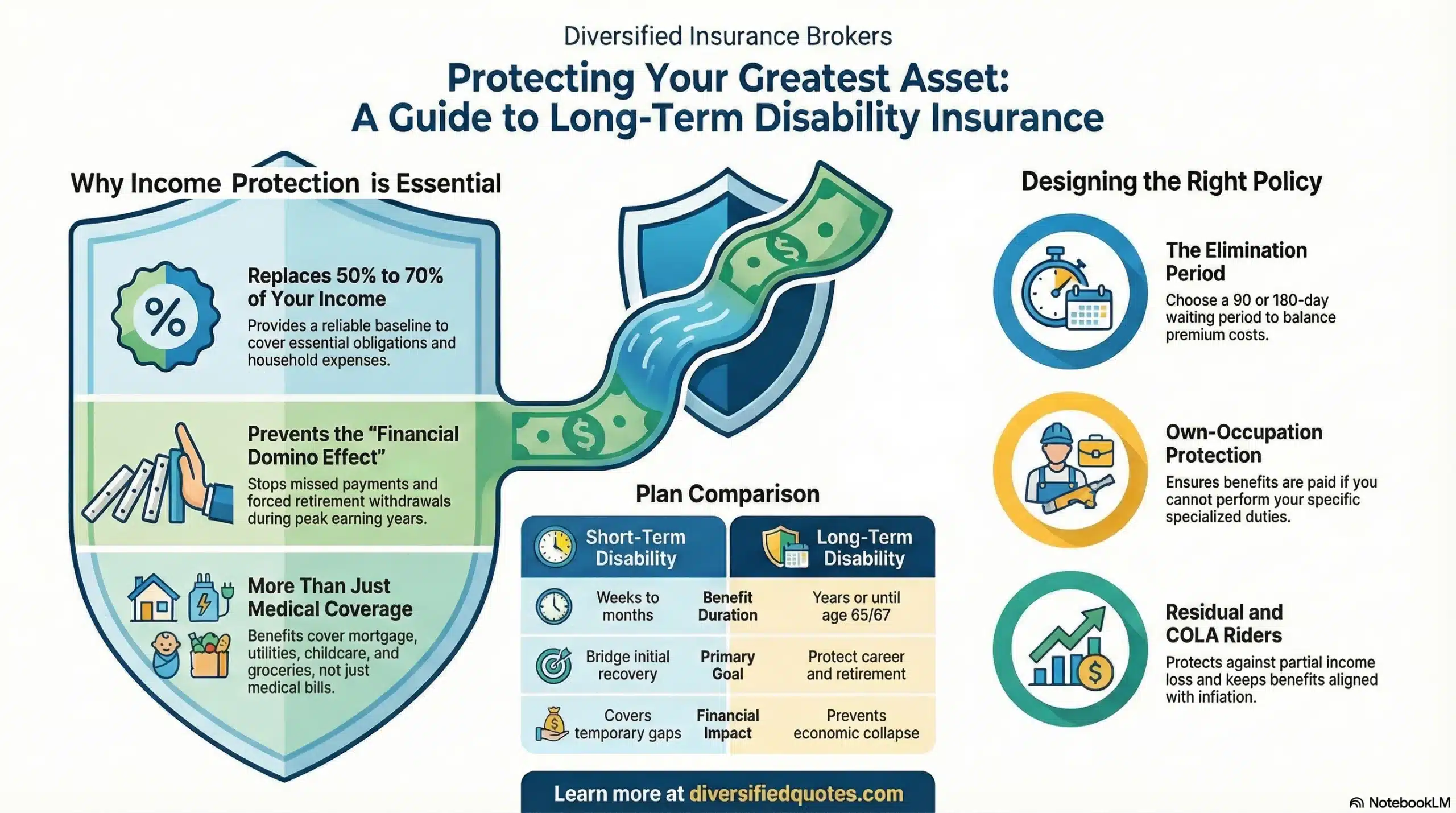
Elimination periods should be selected based on available savings. A shorter elimination period provides faster access to benefits, while a longer period may reduce premium costs.
Residual or partial disability coverage is especially important. It provides income support if you can still perform limited work but cannot complete the same number of appraisals as before.
It is also important to consider inflation over time. Reviewing strategies such as cost of living adjustments helps maintain the real value of benefits.
Why Work with an Independent Disability Insurance Broker
Disability insurance policies vary significantly, especially for self-employed professionals like real estate appraisers. Working with an independent broker allows you to compare multiple carriers and structure a policy that fits your specific needs.
An independent broker focuses on designing coverage that aligns with your income, business model, and long-term financial goals. This approach often results in stronger protection and more competitive pricing.
To understand the advantages, review why working with an independent disability insurance broker matters.
Integrating Disability Insurance Into Your Financial Plan
For real estate appraisers, disability insurance is a foundational part of financial planning. It protects the income that supports daily expenses, savings, and long-term goals.
Exploring strategies such as retirement distribution planning can complement income protection and help create a more resilient financial strategy.
Final Thoughts
Real estate appraisers rely on both physical mobility and analytical expertise to generate income. Disability insurance ensures that if your ability to perform either aspect of your work is disrupted, your financial life remains stable.
A well-structured policy provides income protection, business continuity, and peace of mind. Working with an experienced broker ensures that your coverage is tailored to your profession and aligned with your goals.
Related Pages
Talk With an Advisor Today
Choose how you’d like to connect—call or message us, then book a time that works for you.
Schedule here:
calendly.com/jason-dibcompanies/diversified-quotes
Licensed in all 50 states • Fiduciary, family-owned since 1980
Disability Insurance for Real Estate Appraisers FAQs
Yes, real estate appraisers typically qualify for disability insurance. Coverage is based on income, occupational duties, and whether you are self-employed or working for a firm.
Risks include mobility limitations that prevent property inspections, as well as cognitive or vision-related issues that impact valuation accuracy and report completion.
Yes, many policies include residual disability benefits that provide income support if you can still work but cannot complete the same volume of appraisals.
Insurance companies typically review tax returns and financial records to determine average income and appropriate benefit levels.
Benefit periods vary by policy and can range from a few years to coverage lasting until retirement age.
The best time to apply is while you are healthy and actively working, which allows you to secure better rates and broader coverage options.
About the Author:
Jason Stolz, CLTC, CRPC and Chief Underwriter at Diversified Insurance Brokers (NPN 20471358), is a senior insurance and retirement professional with more than two decades of real-world experience helping individuals, families, and business owners protect their income, assets, and long-term financial stability. As a long-time partner of the nationally licensed independent agency Diversified Insurance Brokers, Jason provides trusted guidance across multiple specialties—including fixed and indexed annuities, long-term care planning, personal and business disability insurance, life insurance solutions, Group Health, and short-term health coverage. Diversified Insurance Brokers maintains active contracts with over 100 highly rated insurance carriers, ensuring clients have access to a broad and competitive marketplace.
His practical, education-first approach has earned recognition in publications such as VoyageATL, highlighting his commitment to financial clarity and client-focused planning. Drawing on deep product knowledge and years of hands-on field experience, Jason helps clients evaluate carriers, compare strategies, and build retirement and protection plans that are both secure and cost-efficient. Visitors who want to explore current annuity rates and compare options across multiple insurers can also use this annuity quote and comparison tool.
