
Injury Lawsuit Cash Advance – Fast Legal Funding

Jason Stolz CLTC, CRPC
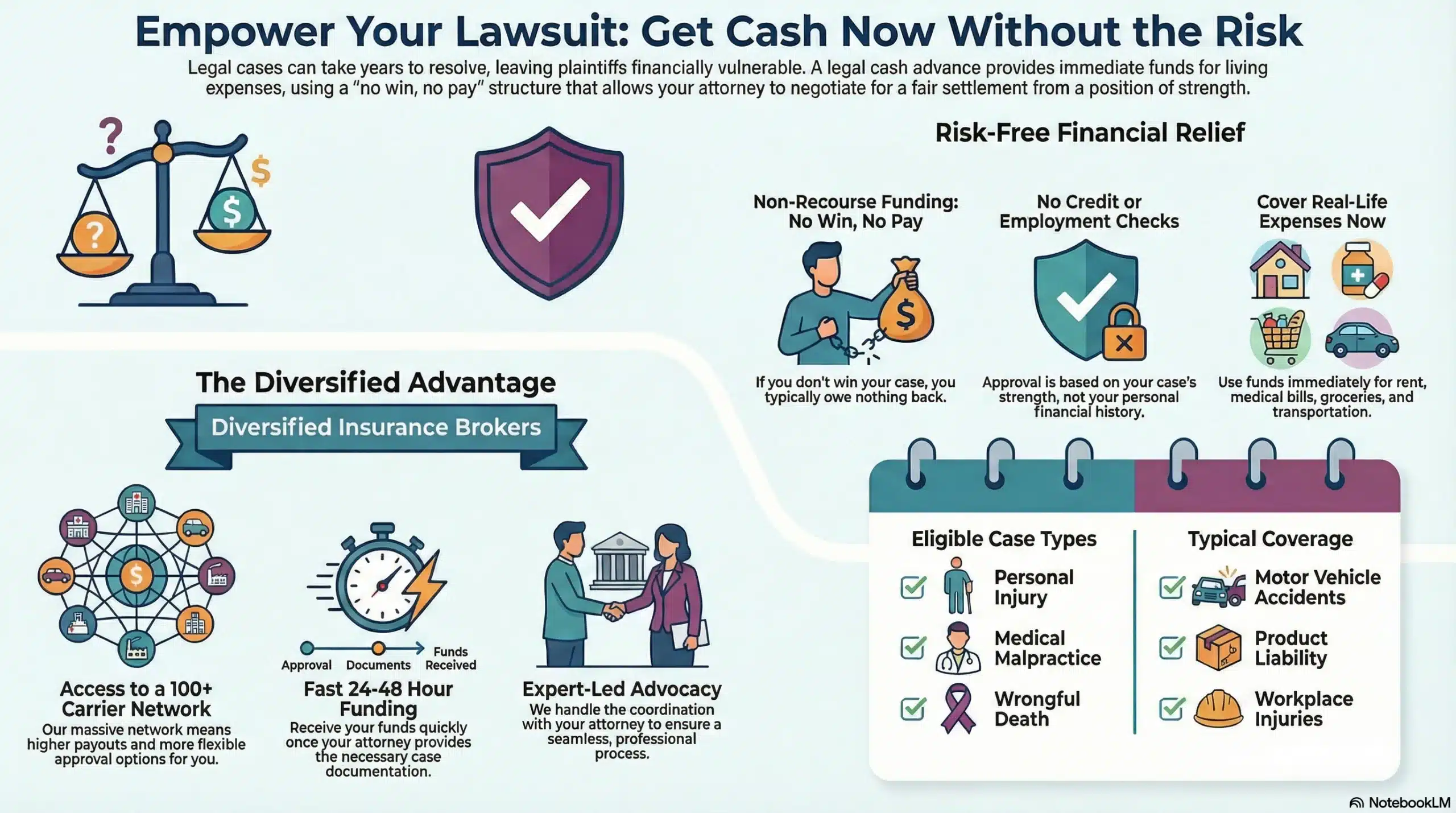
Recovering from an accident-related injury can be overwhelming—physically, emotionally, and financially. Even when liability is clear and your attorney is confident in the claim, the reality is that a settlement can take time. Insurance adjusters move slowly, treatment takes months, and case value often cannot be finalized until you reach a clear medical picture. During that waiting period, your bills still arrive on schedule. That’s where an injury lawsuit cash advance can make a real difference by providing access to a portion of your expected recovery before your case resolves.
An injury lawsuit cash advance is commonly used by plaintiffs who need immediate funds for essentials like rent, utilities, transportation, and medical out-of-pocket costs. If your injury has reduced your ability to work—or created new expenses such as therapy appointments, prescriptions, or travel to specialists—financial pressure can build fast. The purpose of funding is not to change your case strategy. It’s to help you stay stable while your attorney negotiates from a position of strength instead of rushing to settle because the bills can’t wait.
It’s also important to understand what this kind of funding is and what it isn’t. Despite terms like “lawsuit loan” or “legal loan,” this is typically structured as a non-recourse cash advance, not a traditional loan with monthly payments. That distinction matters. With non-recourse funding, repayment generally comes only from case proceeds if there is a recovery. If the case does not result in a settlement or award, the funding is typically not repaid. Your specific agreement governs the details, so reviewing the documents with your attorney is always part of a smart process.
Apply for an Injury Lawsuit Cash Advance
Fast approvals, high payouts, and no repayment if there’s no recovery (non-recourse).
Most people first search for funding after realizing how long the legal process can take. A strong personal injury claim still involves documentation, negotiation, and often multiple rounds of review. Many cases require complete records, updated treatment notes, and a clear understanding of damages—especially when injuries involve ongoing therapy, long recovery timelines, or future care recommendations. Even after settlement terms are agreed to, the time between signing documents and actually receiving a settlement check can add more delay. Funding can be used during any part of that timeline when you need practical help paying expenses.
What Is an Injury Lawsuit Cash Advance?
An injury lawsuit cash advance is typically a non-recourse advance based on the expected value of your claim. The approval decision is focused on the case itself—liability, damages, insurance coverage, and the likelihood of recovery—not your credit score or employment history. In other words, funding is tied to the strength of your case and the supporting documentation your attorney can provide.
Because it is tied to case proceeds, there are usually no monthly payments. Instead, repayment is handled at settlement from the proceeds, through your attorney’s trust account, according to the agreement terms. If there is no recovery, non-recourse funding is typically not repaid. Timing and structure vary by state and provider, so the best outcomes come from an attorney-friendly process that keeps everything clean, documented, and transparent.
If you want a broader overview of how legal funding works across different case stages, it can help to read what pre-settlement funding is and how underwriting decisions are made based on case value, coverage, and risk.
Why People Use Funding During an Injury Case
Most plaintiffs don’t seek funding because they want “extra money.” They seek it because injury-related disruptions have real financial consequences: time away from work, new medical costs, household responsibilities, and the normal expenses that continue no matter what. Funding can help create breathing room when your case is pending and you need stability now.
Another common reason: negotiation leverage. Insurance carriers and defense teams know that financial pressure can influence decisions. When someone is behind on rent or facing utility shutoffs, a low offer can suddenly feel “good enough” even if it is far below the claim’s fair value. Funding can reduce that pressure so your attorney has time to properly document damages and negotiate based on facts rather than urgency.
That said, funding is not for everyone. Because costs can be meaningful and can increase over time, the best approach is usually to borrow only what you need, understand the payoff schedule at different time horizons, and treat funding as a bridge—not a long-term financial plan.
How Approval Is Determined
Funding decisions are typically based on attorney-verified facts, including the claim type, liability clarity, insurance limits, documented medical treatment, and the expected timeline to resolution. A case with clear liability, adequate coverage, consistent treatment, and a realistic settlement pathway will generally be evaluated more favorably than a case with disputed liability or uncertain collection.
Documentation matters. Medical records, bills, treatment plans, and attorney case summaries all help underwriters understand damages and estimate the likely recovery. In many cases, the speed of funding is directly tied to how quickly the necessary information can be confirmed through the law office. That’s why the smoothest experiences come from an attorney-friendly workflow that reduces back-and-forth and keeps requests simple.
If you’re in a vehicle-related injury claim, it may also help to review funding specific to that path, such as car accident lawsuit loan options, which often align closely with the documentation available in auto claims.
What You Can Use the Money For
Most people use funds for practical essentials: rent or mortgage, utilities, groceries, transportation costs, and medical co-pays. Injury-related cases can also create unique expenses—childcare during appointments, travel to specialists, temporary home support, and replacement income when work is limited. The goal is simple: keep your life stable while your case moves forward.
Some clients also use the waiting period to strengthen broader financial protection. For example, if an injury affects your ability to work, learning about high-risk disability insurance options can help you understand longer-term income protection strategies. If you’re looking at ways to protect your family regardless of case outcome, you can also explore life insurance quotes and related coverage types.
Transparent Terms, Costs, and Expectations
The most important thing to understand is that legal funding has tradeoffs. A non-recourse advance can be extremely helpful, but it can also reduce net proceeds because repayment comes from the settlement. Costs can accrue over time, which is why a written payoff schedule is critical. A responsible approach is to request payoff examples at multiple timelines (for example, 6 months, 12 months, and 18 months) so you can evaluate the impact on your expected recovery.
It also helps to know what funding cannot do. It cannot increase liability or “create” a settlement. It does not change the legal facts. It does not replace legal advice. And it should never be used to pressure your attorney into a specific path. The purpose is simply to reduce financial stress while the legal process plays out.
Simple Process (Attorney-Friendly)
The process is designed to be straightforward. You submit basic information, your attorney confirms representation and provides necessary case details, and an underwriter reviews the file for eligibility. If approved, you receive documents that disclose terms and costs, and funds are delivered quickly once everything is signed and verified. In many straightforward cases, that can happen in as little as 24–48 hours, depending on attorney responsiveness and available documentation.
If you want to compare similar options across different lawsuit funding categories, you may also want to review legal cash advances and how they differ based on case type and stage.
Get Started Today
Apply now and receive your injury lawsuit cash advance as quickly as possible once your case is verified.
Related Pages
Explore more lawsuit funding resources and options for getting cash while a case is pending.
Talk With an Advisor Today
Choose how you’d like to connect—call or message us, then book a time that works for you.
Schedule here:
calendly.com/jason-dibcompanies/diversified-quotes
Licensed in all 50 states • Fiduciary, family-owned since 1980
FAQs: Injury Lawsuit Cash Advance
What is an injury lawsuit cash advance?
It’s typically non-recourse pre-settlement funding that provides cash now based on the expected value of your injury case. Repayment generally comes only from case proceeds if there is a recovery.
Is this a traditional loan?
No. In most cases it is structured as an advance, not a bank loan. There are usually no monthly payments, and approval is typically based on the case, not credit score.
Do I need an attorney to qualify?
Yes. Attorney representation is typically required because case verification and repayment handling usually occur through your attorney’s office at settlement.
How fast can I receive funds?
Many straightforward cases can fund within 24–48 hours after attorney verification and receipt of the needed documents. Timing depends on case complexity and responsiveness.
How much can I receive?
Advance amounts depend on estimated case value, liability, available insurance coverage, documented damages, and state rules. Many funders advance a percentage of the expected net recovery.
What happens if I lose my case?
With non-recourse funding, repayment is typically required only if there is a recovery. Review your agreement with your attorney to confirm the exact terms.
Will this affect my settlement negotiations?
Funding doesn’t change liability or damages. However, because repayment comes from proceeds, it can reduce your net recovery. Many clients use it to reduce financial pressure while negotiations continue.
What should I review before signing?
Ask for a written payoff schedule at multiple timeframes and confirm whether fees accrue monthly and whether they compound. Borrowing only what you need is usually the most responsible approach.
About the Author:
Jason Stolz, CLTC, CRPC and Chief Underwriter at Diversified Insurance Brokers, is a senior insurance and retirement professional with more than two decades of real-world experience helping individuals, families, and business owners protect their income, assets, and long-term financial stability. As a long-time partner of the nationally licensed independent agency Diversified Insurance Brokers, Jason provides trusted guidance across multiple specialties—including fixed and indexed annuities, long-term care planning, personal and business disability insurance, life insurance solutions, and short-term health coverage. Diversified Insurance Brokers maintains active contracts with over 100 highly rated insurance carriers, ensuring clients have access to a broad and competitive marketplace.
His practical, education-first approach has earned recognition in publications such as VoyageATL, highlighting his commitment to financial clarity and client-focused planning. Drawing on deep product knowledge and years of hands-on field experience, Jason helps clients evaluate carriers, compare strategies, and build retirement and protection plans that are both secure and cost-efficient.
