
Life Insurance for Kids

Jason Stolz CLTC, CRPC
Life insurance for kids is one of those topics that many parents and grandparents quietly think about—but rarely discuss openly. It’s not about assuming the worst. It’s about planning wisely. At its core, child life insurance is about locking in insurability at the youngest possible age, creating a small but permanent foundation of protection, and in some cases building a flexible long-term asset that can later support milestones like college, a first home, or even business ownership.
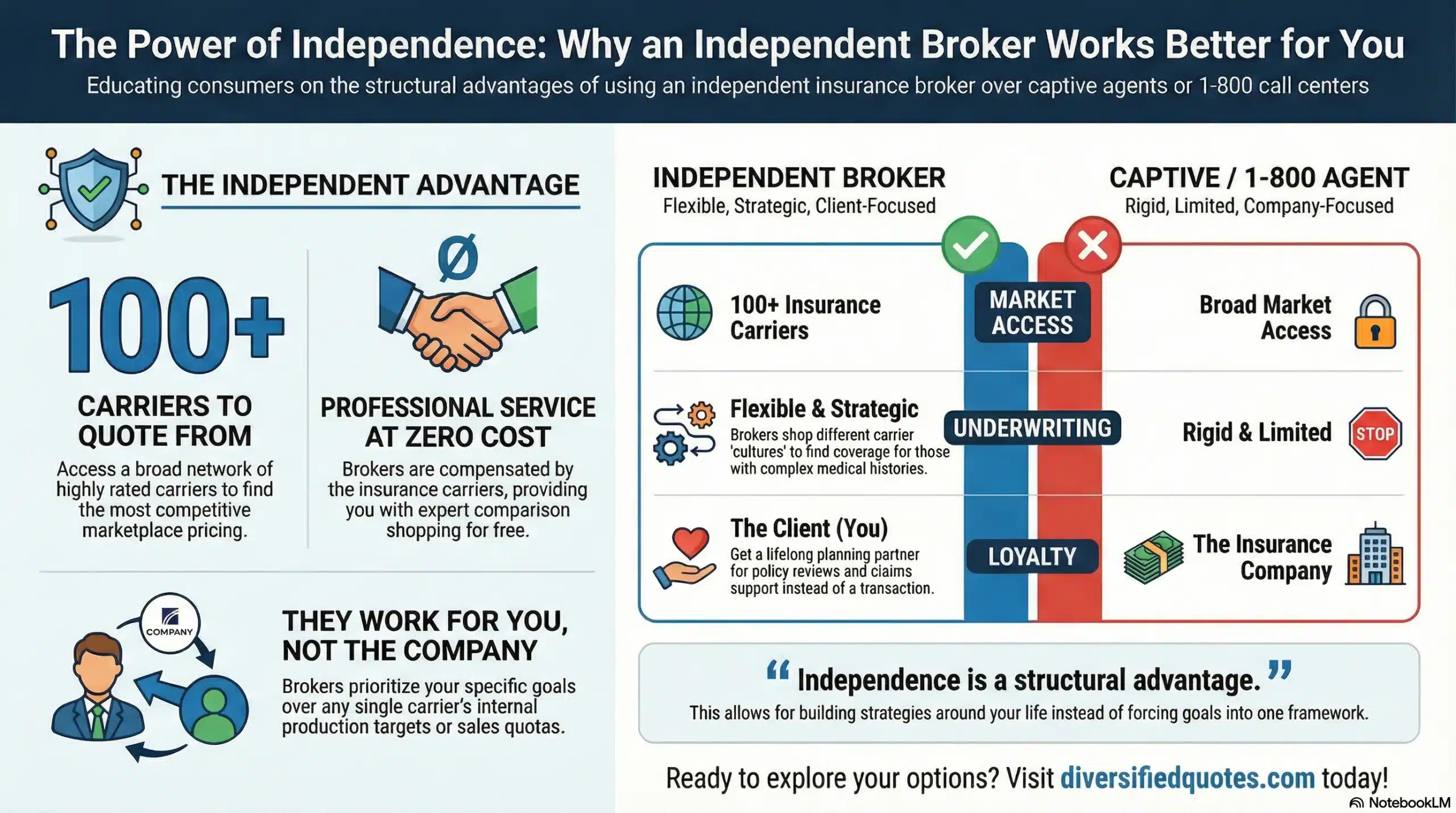
At Diversified Insurance Brokers, we approach life insurance for children carefully and strategically. As an independent, family-owned agency, we compare multiple carriers and policy designs rather than pushing a single company solution. For many families, the right answer is modest coverage and a well-balanced plan. For others, it may not make sense at all. Our job is to help you decide intelligently, not emotionally.
Before considering coverage on a child, we almost always start with the bigger financial picture. In most households, the primary risk exposure is the loss of a parent’s income—not a child’s. That’s why we often recommend reviewing your own protection first using tools like our Term Life Insurance Calculator. Once the foundation is secure, then we evaluate whether a small, permanent child policy fits comfortably into the budget.
Review Your Family’s Life Insurance Plan
Not sure whether a child policy makes sense—or whether your own coverage needs updating first? We’ll walk through both with you, compare options, and give you a clear recommendation.
When families do choose life insurance for kids, it’s usually for one of four reasons: future insurability, long-term guarantees, flexible savings, or simply peace of mind. The first—and arguably most important—is locking in insurability early. Health can change unexpectedly. Conditions like Type 1 diabetes, congenital heart abnormalities, autoimmune disorders, or neurological conditions can dramatically alter underwriting outcomes later in life. We work with many adults seeking life insurance with pre-existing conditions, and the rate differences can be substantial. A policy issued in childhood permanently establishes coverage—even if health changes later.
The second motivation is long-term structural stability. A small whole life policy issued at age one, five, or ten locks in low premiums based on youthful health. Some families design policies to be paid up early, giving the child permanent coverage before adulthood. Later in life, that policy can supplement larger strategies like mortgage protection planning or layered term coverage when they start their own family.
Third is flexibility. Permanent policies accumulate cash value over time. Unlike education-specific vehicles, those funds are not restricted solely to tuition. While strategies for using life insurance to help fund college can be effective when structured properly, the real advantage is optionality. The money can be used for college, a down payment, business startup capital, or even as supplemental retirement savings decades later. That flexibility matters.
Finally, there is peace of mind. While it’s uncomfortable to discuss, even a modest $25,000–$50,000 policy can relieve financial stress if tragedy occurs—covering final expenses, counseling, and time away from work. For some families, that protection alone justifies the modest premium.
There are several structural ways to insure a child. The simplest is a child rider added to a parent’s policy. Riders are inexpensive and typically cover all children in the household under one umbrella. They usually allow conversion to permanent coverage at a certain age without medical underwriting. However, rider amounts are limited and generally do not build meaningful cash value.
A stand-alone whole life policy offers more permanence and guarantees. Whole life provides level premiums, guaranteed cash value growth, and the potential for dividends depending on the carrier. These policies can be structured conservatively or funded more aggressively, though careful design is critical to avoid crossing into Modified Endowment Contract territory—a topic we explain in depth in our guide on Modified Endowment Contracts (MEC rules).
Some families explore universal life (UL) or indexed universal life (IUL) policies on children for premium flexibility and potentially higher long-term growth. These designs can be powerful, but they require active monitoring and realistic expectations. We apply the same disciplined approach we use when discussing advanced life insurance strategies for affluent clients—ensuring projections are conservative and aligned with real-world funding ability.
How much coverage should you buy on a child? Unlike adult coverage, which is tied to income replacement, child coverage is typically about flexibility and future insurability. Many families start between $25,000 and $50,000. Others opt for $75,000 or $100,000 when they want a stronger permanent base and larger cash value potential. There’s no universal number. The right amount depends on your overall protection portfolio, savings priorities, and budget discipline.
Underwriting for children is generally simpler than for adults. Most policies do not require a medical exam. Applications may ask about birth history, current health conditions, medications, and family medical history. In certain cases, especially where there are congenital or ongoing issues, additional information may be requested. Our experience handling complex cases—similar to the strategies used in high-risk underwriting scenarios—helps present the child’s health history accurately and favorably.
It’s also important to compare life insurance for kids with other savings vehicles. A 529 plan offers tax advantages for qualified education expenses but lacks flexibility. A regular savings account offers liquidity but limited growth. Custodial investment accounts provide market exposure but no guarantees. Child life insurance occupies a different category—long-term, stable, flexible, and insurance-based rather than purely investment-driven.
For families with special needs considerations, planning becomes even more nuanced. While this page focuses on insuring the child, many families ultimately place greater emphasis on policies covering the parents to fund long-term trusts and support structures. Our overview of special needs life insurance planning explores those broader coordination strategies.
Get Personalized Guidance Before You Decide
We’ll compare rider vs. stand-alone options, show guaranteed projections, and explain the trade-offs clearly—so you can make a confident decision.
Schedule Your Child Policy Consultation
Prefer to call? 800-533-5969
Ultimately, life insurance for kids should never crowd out more urgent priorities—such as adequate parental term coverage, emergency savings, or retirement contributions. When structured appropriately, however, a modest permanent child policy can become a quiet but powerful long-term asset. It provides guaranteed insurability, stable growth characteristics, and multigenerational continuity.
At Diversified Insurance Brokers, our philosophy is simple: protect income first, protect family second, build flexibility third. If a child policy aligns with that order and fits comfortably within your financial plan, we’ll help you design it responsibly. If not, we’ll tell you that too. Either way, you’ll leave the conversation with clarity—not confusion.
How to Use Life Insurance to Fund a College Savings Plan
Explore how permanent life insurance can be structured as a flexible education funding tool alongside traditional savings strategies.
Read MoreTerm Life Insurance Calculator
Estimate how much life insurance coverage you may need to protect your family’s income and long-term financial goals.
Calculate CoverageLife Insurance Strategies the Wealthy Use
See how high-net-worth families use permanent life insurance for asset protection, tax planning, and multi-generational wealth transfer.
Learn MoreWhat Is Special Needs Life Insurance and Who Needs It?
Understand how life insurance can support special needs trusts and long-term care planning for children with disabilities.
Explore OptionsLife Insurance with Pre-Existing Conditions
See how underwriting works and how to position health history properly to secure competitive life insurance rates.
View GuideCompare Term Life Insurance Lengths
Explore different term periods to find coverage that best matches your timeline and budget.
Talk With an Advisor Today
Choose how you’d like to connect—call or message us, then book a time that works for you.
Schedule here:
calendly.com/jason-dibcompanies/diversified-quotes
Licensed in all 50 states • Fiduciary, family-owned since 1980
FAQs: Life Insurance for Kids
Is it really necessary to buy life insurance for kids?
It’s not required, but it can make sense in specific situations. Many parents and grandparents use it to lock in future insurability, create a small foundation of lifelong protection, and build a flexible cash value asset that the child can use as an adult.
Should I focus on coverage for myself before buying policies for my kids?
Yes. In most cases, protecting the income and lives of the adults comes first. Once you have appropriate coverage on parents or guardians, it can be reasonable to add a child rider or a small permanent policy for the kids.
What’s the difference between a child rider and a stand-alone policy?
A child rider is a small amount of coverage attached to a parent’s policy and usually covers all eligible children. A stand-alone policy is issued directly on the child, can build more cash value, and may offer more robust options for future increases.
How much life insurance do kids typically need?
Most families choose modest amounts, such as $25,000–$100,000. The goal is not large income replacement but future insurability, final expense protection, and potential cash value—balanced with your overall family budget.
Can life insurance for kids build cash value?
Yes. Permanent policies, such as whole life or certain universal life designs, can build cash value over time. That value may be accessed later for college, a first home, or other needs if the policy is funded and managed properly.
Does buying life insurance for kids affect financial aid?
Properly structured life insurance is generally treated differently than college-specific accounts. Families often use it as part of a broader strategy to balance financial aid eligibility with flexible savings options.
Will my child need a medical exam to get coverage?
Many child policies are simplified and do not require a full medical exam, although health questions still apply. In some cases, the insurer may request additional information or records depending on the child’s history.
What happens to the policy when my child becomes an adult?
Typically, ownership can be transferred to the child, who then decides whether to keep, adjust, or add coverage. Many contracts also include rights to purchase additional insurance later without new medical underwriting.
Can grandparents buy life insurance for their grandchildren?
Yes. Grandparents can often be the owners and payers of a policy on a grandchild, usually with parental consent. This can be a meaningful way to create a legacy of protection and future financial flexibility.
How do I know if life insurance for kids is a good fit for our family?
The best way is to review your existing coverage, savings goals, and budget with an advisor. We can show you how a child policy compares to other uses of the same dollars so you can decide with clarity and confidence.
About the Author:
Jason Stolz, CLTC, CRPC and Chief Underwriter at Diversified Insurance Brokers (NPN 20471358), is a senior insurance and retirement professional with more than two decades of real-world experience helping individuals, families, and business owners protect their income, assets, and long-term financial stability. As a long-time partner of the nationally licensed independent agency Diversified Insurance Brokers, Jason provides trusted guidance across multiple specialties—including fixed and indexed annuities, long-term care planning, personal and business disability insurance, life insurance solutions, Group Health, and short-term health coverage. Diversified Insurance Brokers maintains active contracts with over 100 highly rated insurance carriers, ensuring clients have access to a broad and competitive marketplace.
His practical, education-first approach has earned recognition in publications such as VoyageATL, highlighting his commitment to financial clarity and client-focused planning. Drawing on deep product knowledge and years of hands-on field experience, Jason helps clients evaluate carriers, compare strategies, and build retirement and protection plans that are both secure and cost-efficient. Visitors who want to explore current annuity rates and compare options across multiple insurers can also use this annuity quote and comparison tool.
