
Pre Settlement Funding – Fast Legal Case Cash Advance

Jason Stolz CLTC, CRPC
When you’re in the middle of a legal battle, financial stress can compound fast. Even if your case is strong, the timeline rarely feels fair: medical treatment takes time, insurance negotiations drag out, court schedules move slowly, and “waiting” becomes part of the process. Meanwhile, life keeps charging forward—rent is due, car payments hit, groceries cost what they cost, and medical bills don’t pause just because your attorney is still building the case. That’s exactly why pre settlement funding exists: to give plaintiffs access to cash before a case is resolved, so the settlement decision can be driven by the merits of the claim—not by financial desperation.
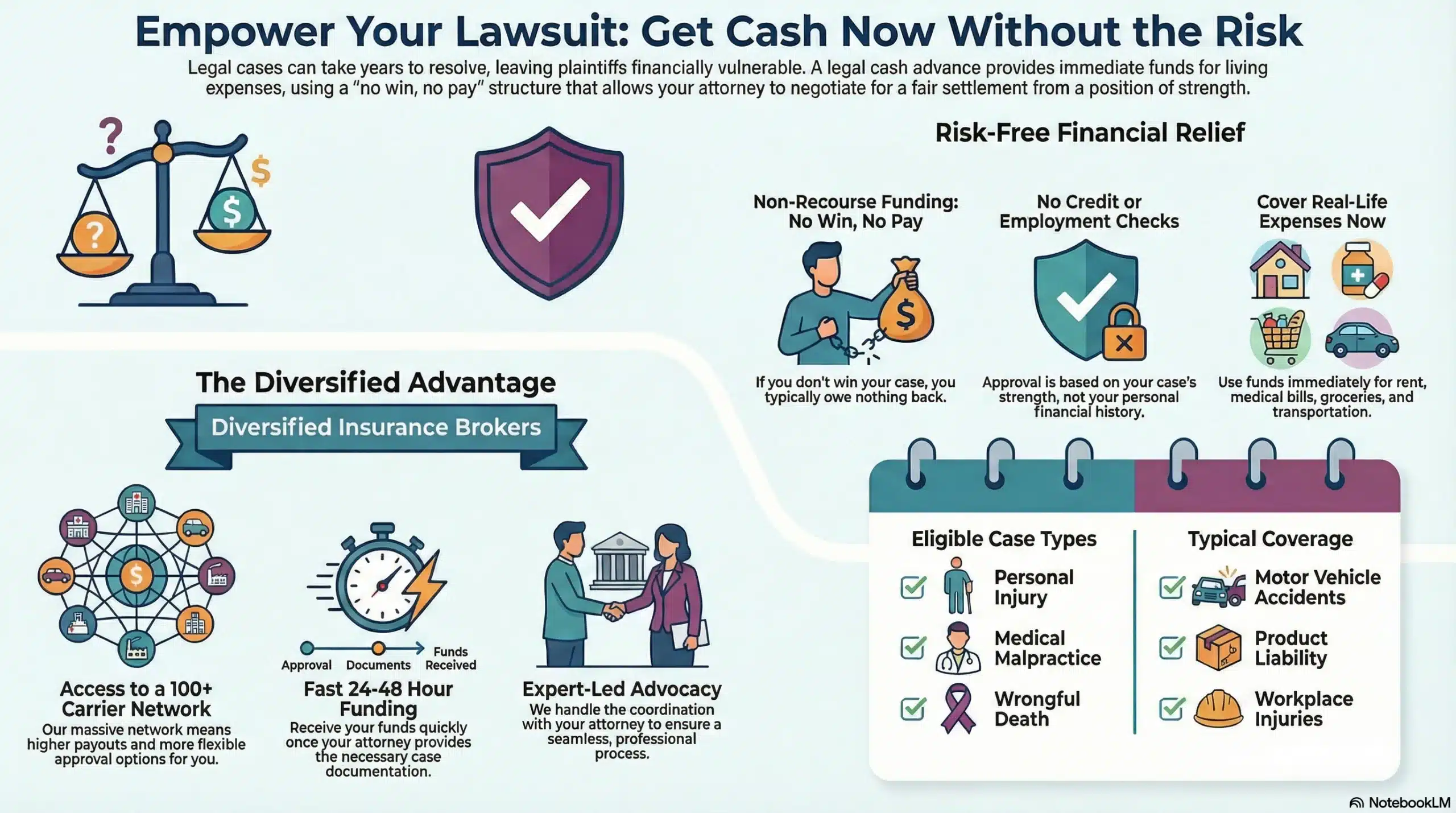
Pre settlement funding (also called lawsuit funding, legal funding, or a legal cash advance) provides money now in exchange for repayment later from the settlement proceeds. In most situations, the funding is structured as non-recourse, meaning repayment is typically required only if your case results in a recovery. That structure is a major reason people consider it when they need financial breathing room but don’t want monthly loan payments or credit-based underwriting. Instead of evaluating your credit score and income, funding providers focus on the case itself: liability, damages, insurance coverage, and the likelihood of an eventual settlement or award.
At Diversified Insurance Brokers, we help plaintiffs access funding through a large network of legal funding sources. That matters because not all funding providers are created equal. Some are small and only approve a narrow slice of cases. Others have limited capital and provide conservative offers that don’t truly solve the financial problem. When you have access to a broader pool, you can compare options, improve the odds of approval, and often land on an offer that makes more sense for your timeline and your net settlement value.
Apply for Pre Settlement Funding Today
Get the financial relief you need now—without waiting for your case to settle.
What Is Pre Settlement Funding?
Pre settlement funding is a cash advance provided to a plaintiff with an active legal claim. You receive a portion of money now, and if your case resolves in your favor later, the advance is typically repaid from the settlement proceeds. You’ll often see the same concept described under different names—legal cash advances, lawsuit advances, legal funding, or pre-settlement funding. Regardless of the label, the core idea is the same: it’s designed to help you cover essential costs while the legal process plays out.
Unlike a traditional personal loan, pre settlement funding is usually not underwritten based on your personal credit profile. That’s important for plaintiffs who are out of work due to injury, dealing with medical restrictions, or simply trying to keep up with expenses while the case timeline stretches out. Funding decisions typically center on case-specific factors such as the strength of liability, documentation of damages, available insurance coverage, and the expected timeline to resolution.
It’s also why the process tends to be attorney-driven. A legitimate funding decision requires documentation and cooperation from your attorney. Your lawyer is the one who can confirm the posture of the claim, provide the records that support damages, and coordinate the eventual repayment from the settlement disbursement. If a company says they can provide meaningful funding without talking to your attorney, that’s usually a signal to slow down and ask more questions.
Why Plaintiffs Use Pre Settlement Funding
Most people don’t go looking for pre settlement funding because it sounds fun or convenient—they look because they’re under pressure. Injuries can disrupt work. Medical treatment can become an ongoing expense. Household obligations don’t go away, and a lawsuit doesn’t resolve on the timeline of your bills. Even strong cases can take longer than expected due to investigation, medical stabilization, carrier negotiations, discovery, depositions, scheduling delays, and court backlogs. It’s common for plaintiffs to feel like they’re being forced to choose between short-term survival and long-term fairness.
Funding can help prevent the most common “forced decision” in litigation: accepting a low settlement early. When money is tight, it’s easier for an insurance carrier to apply pressure with time. When that pressure is reduced, you and your attorney can approach the case with more patience—allowing documentation to strengthen, treatment records to settle, and negotiations to reflect the real value of the claim.
Many plaintiffs use funding to cover essentials like housing, utilities, transportation, groceries, and medical expenses. Others use it to prevent downstream problems—late fees, repossession risk, missed insurance payments, credit damage, or the kind of financial chaos that can make recovery harder. The best funding strategy is typically focused and intentional: enough to stabilize your life, not so much that you later regret the impact on your net settlement.
How Pre Settlement Funding Works
While details vary by provider and by state, the funding flow is usually straightforward. You submit a request, your attorney confirms the case details and provides documentation, underwriting reviews the claim, and an offer is presented with terms that explain how repayment works at settlement. If you accept the offer, funds are disbursed—often quickly once documentation is complete.
Most cases move through a few common steps. First, the plaintiff (you) provides basic information: contact details, attorney information, case type, and a brief summary of what happened. Next, the funding team contacts the attorney to request a package of documents. That typically includes case status, insurance information, liability notes, medical treatment summaries, and any known liens or obligations that could affect net proceeds. Underwriting then evaluates whether the expected recovery supports an advance, and if so, at what amount.
Once a decision is made, you receive an offer that explains the funding amount and the cost structure. This is where it’s important to slow down and truly understand what you’re accepting. Funding costs can be structured in different ways, and how those costs accrue over time matters a lot if your case takes longer than expected. If you’re comparing offers, it can help to review related guidance on lawsuit loan rates and how different fee structures impact your settlement outcome.
Is Pre Settlement Funding a Loan?
People call it a “loan” because you receive money now and repay later, but the structure often differs from a bank loan. Most pre settlement funding is designed as non-recourse funding, where repayment typically depends on a successful recovery in the case. That means you generally don’t make monthly payments while the case is open, and underwriting isn’t centered on your personal creditworthiness. Instead, the claim is the basis for the offer.
That doesn’t mean every contract is identical or that every provider uses the same language. Terms can vary, and state rules can influence disclosures and structures. If you want to understand safety and transparency more deeply, it can help to read is lawsuit funding safe and what to look for before signing. The best approach is always the same: make sure the contract explains the non-recourse nature clearly, shows how costs accrue, and is coordinated through your attorney so there are no surprises at settlement.
What Cases Typically Qualify?
Pre settlement funding is usually available in civil cases where there is a credible damages claim and a realistic expectation of settlement or award. That often includes personal injury cases with documented medical treatment, clear liability facts, and available insurance coverage. It can also include other civil claims depending on provider appetite and the specifics of the matter.
Common case categories include personal injury lawsuits, motor vehicle accident claims, premises liability (like slip and fall injuries), and certain malpractice cases. If you’re researching funding specifically for injury cases, you may also want to review options under personal injury lawsuit loan for a more case-type focused overview.
Eligibility is not just about the case label, though. Two car accident cases can be completely different in funding potential depending on policy limits, medical treatment, liability disputes, and where the case sits in the legal process. If your case is early, uncertain, or missing documentation, offers may be smaller—or delayed until the file is stronger. If liability is clear and damages are well documented, approvals may be more favorable.
How Much Money Can You Get?
Funding amounts are typically a portion of the expected recovery—not the total value of the claim. That’s because the settlement proceeds must cover multiple obligations: attorney fees, litigation costs, medical liens, and other deductions. Funding providers also need to protect against risk: cases can take longer, can settle for less than expected, or can face complications that reduce the net proceeds available at disbursement.
You may see general ranges online, like “10% to 20% of the expected settlement,” but the real numbers depend on your case. Key variables include liability clarity, documented damages, policy limits, defendant collectability, the stage of the claim, and known liens. A strong funding strategy usually aims for “right-sized” funding—enough to reduce stress and protect negotiation leverage, but not so large that the settlement feels heavily diminished later.
What Your Attorney Will Typically Provide
Attorney coordination is central to pre settlement funding. In most cases, the fastest approvals happen when the attorney responds promptly with requested documentation and verifies case status. While requirements vary, a typical review may involve a signed authorization, a summary of the incident and injuries, insurance and coverage information, medical treatment documentation, and any negotiation or demand status if available.
It’s also common for underwriters to ask about known liens or obligations that could impact your net proceeds. That’s not a “gotcha”—it’s simply part of ensuring the advance is safe relative to what the case can reasonably support. When the attorney’s file is organized and responsive, underwriting can move quickly. When documents are missing or delayed, approvals often slow down—regardless of how urgent the plaintiff’s need feels.
What It Costs and Why Comparing Offers Matters
Funding is not free, and costs are one of the most important factors to understand. Providers may price funding using different structures—some are more transparent and predictable than others. Your cost will typically be influenced by the perceived risk of the case, the expected timeline to resolution, and the provider’s pricing model. The same case can produce different offers depending on which provider reviews it, which is exactly why access to a larger network can matter.
One of the most important questions to ask is how costs accrue over time. Some offers use a simple fee schedule. Others may compound in a way that becomes more expensive if the case takes longer than expected. If you’re evaluating multiple options, review the paperwork with your attorney and ask for payoff examples at different timelines (for example: 6 months, 12 months, 18 months). A clear, written breakdown makes it easier to compare apples to apples and avoid surprises at disbursement.
Why Work With Diversified Insurance Brokers?
We’re not a one-provider shop. We work through a broad legal funding network so we can match your situation with the provider that best fits your case type, stage, and funding needs. That network approach can improve approval odds and help you compare offers rather than being locked into a single company’s terms. We keep the process attorney-friendly and documentation-based—because that’s what legitimate underwriting requires.
We also look at the bigger picture. When a legal case impacts income, health, and household stability, it’s often smart to consider additional safeguards that help prevent the next financial emergency. Depending on your situation, that may include exploring short-term health insurance to bridge coverage gaps, income protection like disability insurance, or longer-term protection planning through life insurance. Those options don’t replace legal funding, but they can reduce the chance that a single disruption turns into a cascade of financial problems.
Get Financial Relief Without Settling for Less
Pre settlement funding is about leverage and stability. When you can cover essential expenses, you are less likely to accept an early, low settlement simply because you need the case to end. That’s a practical advantage—not a legal tactic. Your attorney can negotiate based on evidence and value rather than urgency, and you can focus on recovery and keeping life running.
If you need money while your case is pending, the next step is simple: submit your request, and we’ll coordinate with your attorney for documentation and review. If you want to explore adjacent legal funding options, you can also review legal cash advances or lawsuit loans to compare structures and understand what may fit your situation best.
Start Your Pre Settlement Funding Application
Apply today and get cash fast—without monthly payments while your case is pending.
Talk With an Advisor Today
Choose how you’d like to connect—call or message us, then book a time that works for you.
Schedule here:
calendly.com/jason-dibcompanies/diversified-quotes
Licensed in all 50 states • Fiduciary, family-owned since 1980
Pre Settlement Funding FAQs
What is pre settlement funding?
Pre settlement funding is typically a non-recourse cash advance based on the expected value of a pending legal claim. Repayment is generally made from settlement proceeds if the case results in a recovery.
Is pre settlement funding a traditional loan?
It’s often called a “loan,” but most arrangements are structured differently than bank loans. Funding decisions are usually based on the case, and repayment is typically tied to case proceeds rather than monthly payments.
Do I have to make monthly payments?
In many cases, no. Most pre settlement funding is designed so repayment occurs later from settlement proceeds, rather than through monthly payments while the case is pending.
Do you check my credit or income?
Most legal funding decisions focus on the claim itself—liability, damages, coverage, and expected timeline—rather than credit score or employment verification.
What types of cases qualify for pre settlement funding?
Funding is common in civil claims such as personal injury, motor vehicle accidents, premises liability, certain malpractice cases, and other qualifying civil matters—depending on the case details and provider guidelines.
How much money can I receive?
Advance amounts vary and are typically a portion of the expected recovery. The amount depends on factors like case strength, policy limits, damages documentation, liens, and where the case is in the legal process.
How fast can I get funded?
Timelines depend heavily on how quickly attorney documentation is provided. Once the required documents are received, many cases move quickly through underwriting and disbursement.
What does “non-recourse” mean?
Non-recourse generally means repayment is tied to a successful recovery in the case. The agreement should clearly explain how repayment works and what happens if the case does not result in proceeds.
Will my attorney need to be involved?
Yes. Legitimate funding is typically attorney-coordinated and documentation-based. Your attorney usually verifies case status, provides records, and coordinates repayment from settlement disbursement.
What should I look for before signing?
Ask for clear written terms, payoff examples at different timelines, and a straightforward explanation of how costs accrue. Review everything with your attorney before accepting any offer.
About the Author:
Jason Stolz, CLTC, CRPC and Chief Underwriter at Diversified Insurance Brokers, is a senior insurance and retirement professional with more than two decades of real-world experience helping individuals, families, and business owners protect their income, assets, and long-term financial stability. As a long-time partner of the nationally licensed independent agency Diversified Insurance Brokers, Jason provides trusted guidance across multiple specialties—including fixed and indexed annuities, long-term care planning, personal and business disability insurance, life insurance solutions, and short-term health coverage. Diversified Insurance Brokers maintains active contracts with over 100 highly rated insurance carriers, ensuring clients have access to a broad and competitive marketplace.
His practical, education-first approach has earned recognition in publications such as VoyageATL, highlighting his commitment to financial clarity and client-focused planning. Drawing on deep product knowledge and years of hands-on field experience, Jason helps clients evaluate carriers, compare strategies, and build retirement and protection plans that are both secure and cost-efficient.
