
Travel Insurance for Church Groups

Jason Stolz CLTC, CRPC
Travel insurance for church groups helps protect mission teams, youth trips, choir tours, retreats, and conference travel from the unexpected—flight cancellations, medical emergencies, trip interruptions, lost baggage, and more. Whether your group is serving across town or overseas, the right coverage can keep one incident from turning into a financial crisis for your ministry or for the families traveling with you.
At Diversified Insurance Brokers, we work with churches, faith-based nonprofits, and schools across the country to build travel insurance strategies that fit the trip style and budget. That might mean a one-time policy for a single mission trip, an annual plan for frequent travelers, or layering travel coverage with existing group health insurance or church liability policies.
Church travel is different than typical vacation travel. You may be coordinating minors, multiple families, volunteer leaders, and service work—so the best approach is usually a simple, repeatable coverage process that reduces confusion before departure and speeds decision-making if something happens on the trip.
Get Travel Insurance for Your Church Group
Protect your mission team, youth group, or choir tour with travel medical coverage, evacuation planning, and practical trip protection. We’ll help you compare options and avoid the gaps that cause problems when you’re already abroad.
Prefer to talk it through? Call us at 800-533-5969 to review your upcoming trip.
Why church groups need travel insurance
Church trips are unique because the group often includes a wide range of ages and health profiles. You may be traveling with teens on a youth retreat, adults on a mission trip, or a mixed group on a service project. You might be doing construction, medical outreach, or community events in unfamiliar areas. These realities increase the chance of medical needs and disruption, and they also raise the stakes for leaders who are responsible for the group.
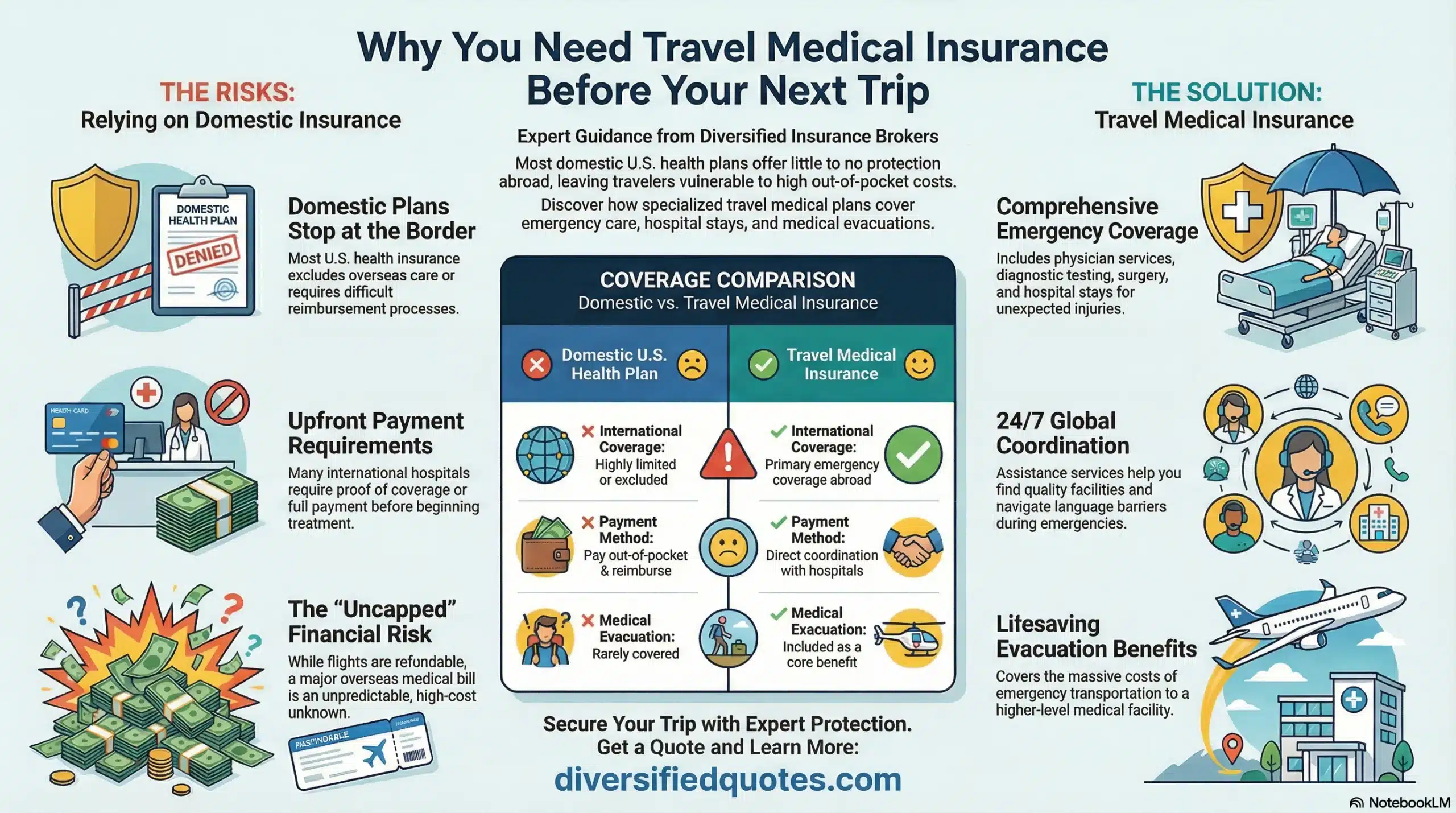
Many families assume their regular health coverage automatically works the same way everywhere. In practice, out-of-network rules, out-of-area provider access, international exclusions, and reimbursement requirements can create stress at the exact moment you need clarity. Travel insurance helps reduce the “decision friction” by making the plan’s process and emergency contacts clear before you depart.
In plain terms, travel insurance for church groups typically aims to address three categories of risk: the trip investment (non-refundable bookings), the medical risk (illness or injury away from home), and the logistics risk (delays, interruption, and coordination when you’re not in your normal system).
Key coverages to prioritize for church and mission trips
The coverage mix should follow your trip reality. For domestic trips, disruption and trip interruption protection may be the primary concern. For international trips, emergency medical and evacuation planning often become the core issue because care can require upfront payment, and the right facility may not be nearby.
Medical limits matter more than many groups expect—especially when you’re traveling with older volunteers or to regions where advanced care is limited. Evacuation benefits are also a key decision point. If a team member needs to be transported to a capable facility or returned to a country where appropriate care is accessible, the logistics and cost can be significant without coverage.
If your group includes members with prior medical history, pay attention to pre-existing condition rules and timing. Some plans allow waivers if coverage is purchased within a certain window of the initial trip deposit. Getting the timing right can be the difference between smooth protection and frustration later.
Finally, activity alignment matters. Many mission trips involve service work that looks very different than tourism. If you’re doing construction, outreach travel to rural areas, or physically demanding projects, your plan must fit that activity profile.
Send us your trip details and we’ll map the right coverage mix
Dates, destination(s), group size, ages, and mission activities are usually enough to identify the right travel medical and trip protection structure.
Coordinating travel coverage with existing health protection
Many churches already provide some benefits for pastors and staff such as small business group health insurance or other benefit programs. Travel insurance shouldn’t replace core health coverage, but it can be a practical “trip-specific” layer that reduces confusion and out-of-pocket exposure when someone needs care away from home.
Before a trip, we typically look at how the existing plan handles out-of-area care, whether international emergency coverage is excluded or limited, how claims are reimbursed, and how pre-existing conditions are treated. The objective is simple: avoid gaps that only become visible when you’re already traveling.
For churches with frequent travel schedules, we also help leaders think in terms of repeatable process—clear emergency instructions, consistent traveler communication, and coverage that fits the organization’s risk profile instead of requiring families to guess what to buy.
Domestic vs. international church travel
Domestic trips often emphasize the trip investment and logistics side—cancellation, interruption, and delays—because medical care is usually available but can be expensive out of network. This is also where baggage and equipment concerns can matter, especially for music teams traveling with instruments or sound gear.
International mission trips typically shift the focus toward emergency medical and evacuation planning. The key differences are provider access, payment expectations, and the possibility that the nearest adequate care is not local. If you’re serving in rural regions, islands, or developing areas, evacuation planning can become one of the most valuable pieces of protection.
For churches with older members on international mission teams, it can also be wise to coordinate travel coverage with Medicare and supplemental coverage and to understand how travel planning fits into broader retirement protection strategies such as protected retirement income strategies.
How travel insurance for church groups works
The process is straightforward when you follow a simple structure. First, you outline the trip basics: dates, destination(s), approximate headcount, age range, and mission activities. Next, you estimate the trip investment so you can choose realistic cancellation and interruption protection if that layer matters for your group.
Then you match medical and evacuation coverage to the destination and activity level. This is where the “mission realities” matter more than the itinerary. A plan that fits tourism may not fit service work, and a plan that fits a major city may not be ideal for remote regions.
Finally, you finalize the traveler list and distribute clear instructions to leaders and families so the group knows what to do if care is needed while traveling. The goal is to reduce confusion and keep leaders focused on the mission rather than paperwork.
Common mistakes church groups make
One common mistake is waiting too long to purchase coverage. Depending on the plan structure, late purchase can reduce cancellation benefits or complicate pre-existing condition provisions. Another issue is assuming that mission activities are automatically covered without confirming how the plan handles construction, outreach, and physically demanding projects.
We also see groups default to everyone buying a random retail policy on their own, which can create mismatched coverage, different emergency contacts, and uncertainty for trip leaders. For many churches, consistency and clarity across the team is the real value—not just the premium amount.
A short planning step before purchase typically prevents the biggest headaches during travel.
Planning a mission trip or youth retreat?
We’ll help you compare travel insurance options, coordinate with existing coverage, and make sure leaders and families know how the policy works before you depart.
Or call us at 800-533-5969 to talk through your trip.
Next steps for your church
If you already have dates and destinations on the calendar, start the travel insurance conversation before airfare and lodging are fully locked in. Early planning makes it easier to align benefits to your group’s needs, coordinate pre-existing condition provisions, and confirm your leaders have clear instructions for emergencies.
Gather your basics—destination(s), trip dates, approximate headcount, age range, and the primary mission activities. From there, we can show you coverage structures that fit your group and explain how medical, evacuation, and trip protection layers work together.
Thoughtful planning today helps your team stay focused on the mission—while we focus on the protection.
Related Travel Medical Pages
Medical-first protection, evacuation planning, and emergency coverage options often used by church and mission travel teams.
Related Planning & Budget Pages
Cost-focused pages and destination-specific context that can help churches plan realistic protection for the trip.
Talk With an Advisor Today
Choose how you’d like to connect—call or message us, then book a time that works for you.
Schedule here:
calendly.com/jason-dibcompanies/diversified-quotes
Licensed in all 50 states • Fiduciary, family-owned since 1980
FAQs: Travel Insurance for Church Groups
Why do church groups need travel insurance?
Church trips often involve large groups, unfamiliar locations, and mission activities that increase risk. Travel insurance helps protect against trip cancellations, medical emergencies, evacuations, and lost baggage so that one incident doesn’t create a financial burden for families or the church.
Does regular health insurance cover medical care on a mission trip?
Sometimes, but not always. Many health plans have limited coverage outside your home network or outside the U.S. Travel insurance can add dedicated medical and emergency evacuation benefits designed specifically for trips away from home, especially international missions.
Can we buy one policy for the whole church group?
Yes. Many carriers offer group travel policies for churches and mission teams. A group plan can streamline enrollment, help ensure consistent coverage for everyone, and may be more cost-effective than having each person buy their own retail policy.
What if someone on the trip has a pre-existing medical condition?
Some travel insurance plans offer limited coverage or waivers for pre-existing conditions if the policy is purchased within a set time after the initial trip deposit. It’s important to discuss health histories and timing with an advisor so you choose a plan that fits your group’s needs.
Does travel insurance cover mission work and service projects?
Many policies can cover mission activities, but the details matter. Construction, medical outreach, or adventure outings may require specific wording or endorsements. When we design coverage for a church group, we make sure the planned activities fit within the policy’s definitions.
When should we buy travel insurance for a church trip?
It’s usually best to purchase coverage soon after you start making deposits for airfare or lodging. Buying early can expand cancellation benefits and may help with pre-existing condition provisions. Waiting until just before departure can limit your options.
What information do we need to get a quote?
You’ll typically need trip dates, destination, approximate group size, traveler ages, estimated trip cost, and a general description of planned activities. With that information, we can compare several carriers and recommend a plan tailored to your church.
How do families file a claim if something happens on the trip?
If there’s a covered event, travelers or leaders contact the insurer’s 24/7 assistance line and follow the claim instructions. We stay available to help church leaders and families understand documentation requirements and navigate the process from start to finish.
About the Author:
Jason Stolz, CLTC, CRPC and Chief Underwriter at Diversified Insurance Brokers (NPN 20471358), is a senior insurance and retirement professional with more than two decades of real-world experience helping individuals, families, and business owners protect their income, assets, and long-term financial stability. As a long-time partner of the nationally licensed independent agency Diversified Insurance Brokers, Jason provides trusted guidance across multiple specialties—including fixed and indexed annuities, long-term care planning, personal and business disability insurance, life insurance solutions, Group Health, and short-term health coverage. Diversified Insurance Brokers maintains active contracts with over 100 highly rated insurance carriers, ensuring clients have access to a broad and competitive marketplace.
His practical, education-first approach has earned recognition in publications such as VoyageATL, highlighting his commitment to financial clarity and client-focused planning. Drawing on deep product knowledge and years of hands-on field experience, Jason helps clients evaluate carriers, compare strategies, and build retirement and protection plans that are both secure and cost-efficient. Visitors who want to explore current annuity rates and compare options across multiple insurers can also use this annuity quote and comparison tool.
