
What is Adult Daycare

Jason Stolz CLTC, CRPC
What is adult daycare? Adult daycare is a structured daytime care program designed to provide supervision, social interaction, personal care support, and basic health monitoring for older adults who cannot safely remain home alone during the day. It is one of the most flexible and cost-effective long-term care solutions available, allowing seniors to remain in their homes and communities while still receiving meaningful daily support.
For many families, adult daycare becomes the bridge between full independence and residential care. Instead of moving immediately into assisted living or skilled nursing, seniors can continue living at home while attending a structured care environment during the day. This combination often improves safety, reduces caregiver stress, and extends the amount of time someone can remain in a familiar home environment.
At Diversified Insurance Brokers, we help families understand how adult daycare fits into a complete long-term care strategy. Many clients initially focus only on major care categories like assisted living or nursing homes, but adult daycare frequently becomes one of the most important tools for maintaining independence longer. When layered correctly with options like in-home care services, adult daycare can form the core of a stable long-term care plan.
Understanding adult daycare is especially important because long-term care rarely happens all at once. Most people experience gradual changes in mobility, cognition, or independence. Having flexible care options available early often produces better outcomes both financially and emotionally for families.
Build a Long-Term Care Plan Before Care Is Urgent
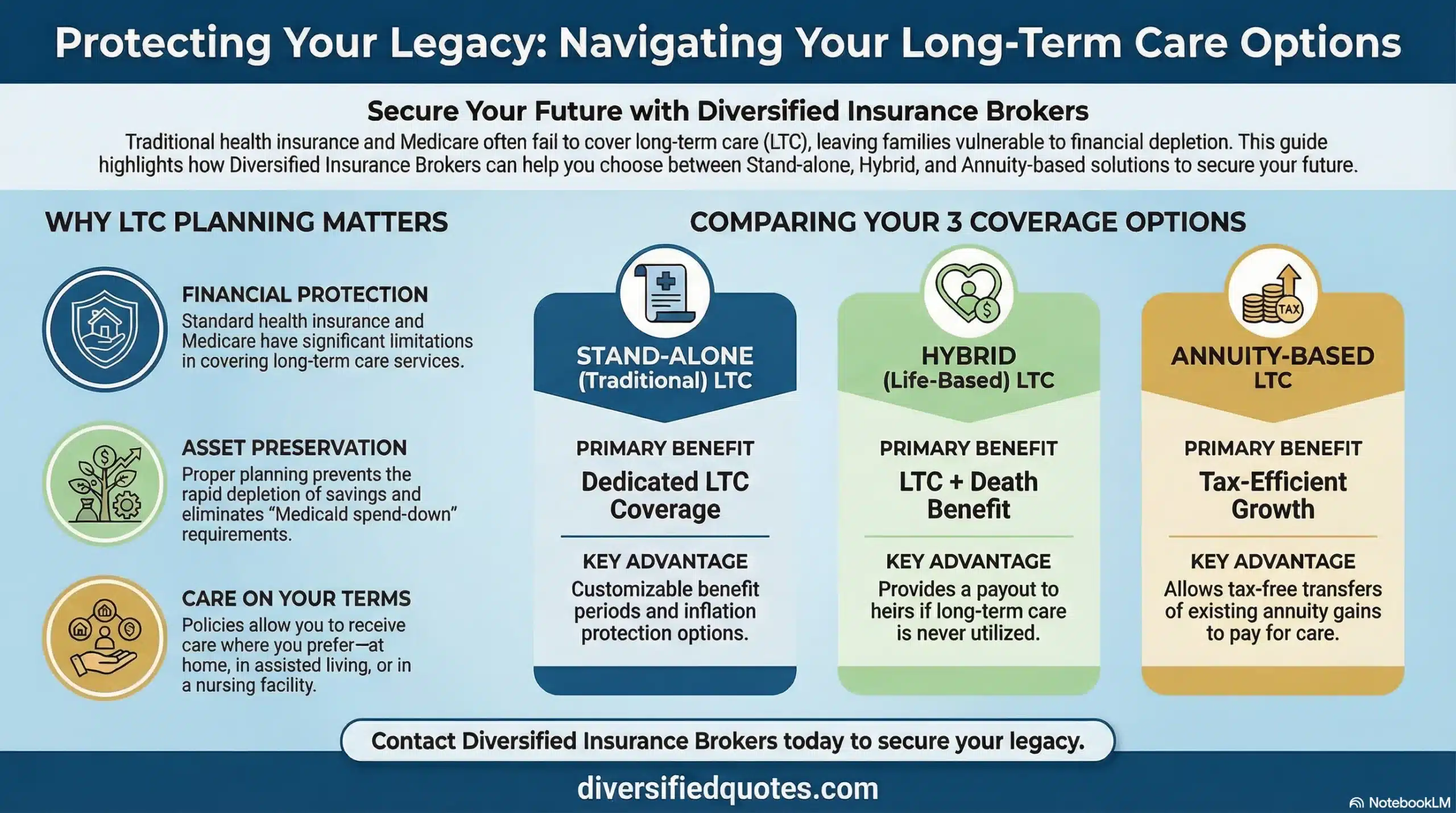
We help families compare LTC insurance, hybrid LTC strategies, and annuity-based care funding options that can help cover services like adult daycare.
Request Your Long-Term Care ReviewWhat Adult Daycare Provides
Adult daycare programs typically combine social programming, basic personal care assistance, and health observation into one structured daily environment. While every center is different, most operate with the same general goal: maintaining independence while reducing risk. Seniors typically attend during working hours, often between morning and late afternoon, allowing caregivers to maintain normal work schedules or daily responsibilities.
Social engagement is one of the most valuable components of adult daycare. Many seniors experience isolation after retirement, loss of a spouse, or mobility changes that limit outside activity. Adult daycare provides structured social interaction through group meals, games, exercise classes, music therapy, and conversation groups. These activities are not just recreational — they help preserve cognitive function, reduce depression risk, and maintain routine.
Many programs also provide nutritional monitoring. Meals and snacks are often prepared to meet dietary restrictions, including diabetic or heart-healthy meal plans. Staff can monitor hydration, appetite changes, and overall wellness trends that families may not notice at home.
Personal care support varies by facility licensing and staffing level. Some centers provide only supervision and social programming. Others provide help with mobility, toileting reminders, grooming assistance, and medication oversight. Higher-level programs, often referred to as Adult Day Health Care (ADHC), may include nurse supervision, chronic condition monitoring, and coordination with healthcare providers.
Transportation is another key feature in many programs. For families balancing work and caregiving, transportation services can be the difference between a workable care plan and an unsustainable one.
Who Adult Daycare Is Best For
Adult daycare works best for seniors who are still living at home but require supervision or structured engagement during daytime hours. Many participants are physically stable but may have memory issues, mobility limitations, or medication management needs that make being home alone unsafe.
It is also extremely valuable for seniors who are socially isolated. Mental and emotional health play a significant role in physical health outcomes. Seniors who participate in structured social environments often maintain independence longer than those who are isolated at home.
For families, adult daycare can provide reliable daytime care coverage. This is especially important when caregivers work full time or have health needs of their own. Instead of forcing immediate placement into residential care, families can often extend home living significantly.
Adult daycare is commonly layered with part-time in-home caregiving to create a full-day support structure without requiring residential care.
How Much Does Adult Daycare Cost?
Costs vary by region, services offered, and medical supervision level, but adult daycare is consistently among the most affordable long-term care solutions available. Even medically supervised day programs typically cost far less than residential assisted living or nursing facility care.
This cost advantage makes adult daycare a critical part of retirement care planning. Long-term care expenses often create the largest financial risk retirees face. Using lower-cost care layers when appropriate can preserve retirement savings significantly longer.
For families paying privately, adult daycare can extend the time before transitioning into higher-cost care environments. For families using long-term care insurance, adult daycare often qualifies for reimbursement once policy benefit triggers are met.
See If Your LTC Policy Covers Adult Daycare
Many long-term care policies reimburse adult daycare once ADL or cognitive triggers are met. We help you review your coverage and planning options.
Request Your Long-Term Care ReviewDoes Long-Term Care Insurance Pay for Adult Daycare?
Most modern long-term care insurance policies do cover adult daycare services once benefit triggers are met. These triggers typically include needing assistance with activities of daily living or qualifying cognitive impairment.
Facilities must typically meet licensing and documentation standards, and services usually need to be part of a documented care plan. Families exploring eligibility can learn more through resources like how to qualify for long-term care insurance.
Some hybrid life insurance and annuity-based LTC strategies also allow benefit dollars to be used for adult daycare expenses, depending on policy structure.
Adult Daycare for Dementia and Alzheimer’s Support
Adult daycare is often one of the earliest structured care tools used for dementia and Alzheimer’s support. Memory-focused programs provide structured cognitive engagement, safe facility layouts, trained dementia staff, and medication supervision.
Early use of structured care environments can slow functional decline, improve daily stability, and reduce caregiver burnout. Many families are able to delay memory care placement significantly when adult daycare is introduced early.
How Adult Daycare Supports Family Caregivers
Family caregivers face significant physical and emotional strain. Adult daycare provides reliable daily support that allows caregivers to maintain employment, manage personal health, and reduce burnout risk. Caregiving sustainability is one of the most overlooked parts of long-term care planning.
Adult daycare often becomes the foundation that makes home living possible long term. When combined with flexible care funding strategies, it can dramatically improve overall retirement care stability.
Plan for Long-Term Care While You Have the Most Options
We help families compare traditional LTC insurance, hybrid LTC policies, and annuity-based care strategies designed for real-world care needs.
Request Your Long-Term Care ReviewRelated Long-Term Care Education
Explore additional long-term care planning and care level comparison resources.
Talk With an Advisor Today
Choose how you’d like to connect—call or message us, then book a time that works for you.
Schedule here:
calendly.com/jason-dibcompanies/diversified-quotes
Licensed in all 50 states • Fiduciary, family-owned since 1980
FAQs: Adult Daycare
What is adult daycare?
Adult daycare is a supervised daytime program that provides social activities, meals, personal care, and health monitoring for older adults who cannot stay home safely during the day.
Who benefits most from adult daycare?
Adults with early cognitive decline, mobility challenges, social isolation, or daytime supervision needs benefit most. It also supports working caregivers.
What services are included?
Most programs provide meals, activities, help with daily tasks, medication cues, transportation, and basic health checks. Medical daycare centers offer therapy and nursing oversight.
Does long-term care insurance pay for adult daycare?
Many policies cover adult daycare once benefit triggers are met, including the need for help with activities of daily living or cognitive impairment.
Is adult daycare good for dementia patients?
Yes. Structured memory programs help maintain cognitive skills, reduce wandering risk, and give caregivers essential relief.
How much does adult daycare cost?
Costs vary by program type and location but are generally more affordable than in-home care, assisted living, or skilled nursing.
Is transportation provided?
Many adult daycare centers provide door-to-door transportation, making participation easier for families.
What is the difference between adult daycare and adult day health care?
Adult Day Health Care (ADHC) adds medical oversight and therapy services, while traditional adult daycare focuses more on supervision, meals, and activities.
Can adult daycare delay the need for assisted living?
Yes. Adult daycare provides structured support that often delays transitions to more intensive—and more costly—care settings.
How do I choose the right program?
Consider staff training, program structure, safety measures, medical support, transportation availability, and whether they specialize in memory care.
About the Author:
Jason Stolz, CLTC, CRPC and Chief Underwriter at Diversified Insurance Brokers (NPN 20471358), is a senior insurance and retirement professional with more than two decades of real-world experience helping individuals, families, and business owners protect their income, assets, and long-term financial stability. As a long-time partner of the nationally licensed independent agency Diversified Insurance Brokers, Jason provides trusted guidance across multiple specialties—including fixed and indexed annuities, long-term care planning, personal and business disability insurance, life insurance solutions, Group Health, and short-term health coverage. Diversified Insurance Brokers maintains active contracts with over 100 highly rated insurance carriers, ensuring clients have access to a broad and competitive marketplace.
His practical, education-first approach has earned recognition in publications such as VoyageATL, highlighting his commitment to financial clarity and client-focused planning. Drawing on deep product knowledge and years of hands-on field experience, Jason helps clients evaluate carriers, compare strategies, and build retirement and protection plans that are both secure and cost-efficient. Visitors who want to explore current annuity rates and compare options across multiple insurers can also use this annuity quote and comparison tool.
